


Secondary sourcePainting1782
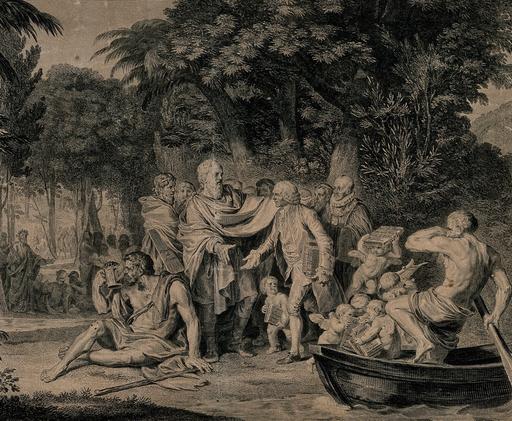
Rousseau Greeted by Socrates, Montaigne and Plutarch
Jean Michel Moreau · 1782
A 1782 engraving by C.F. Macret after J.M. Moreau showing Rousseau arriving at the Elysian Fields, where Plutarch appears among the figures who greet him.
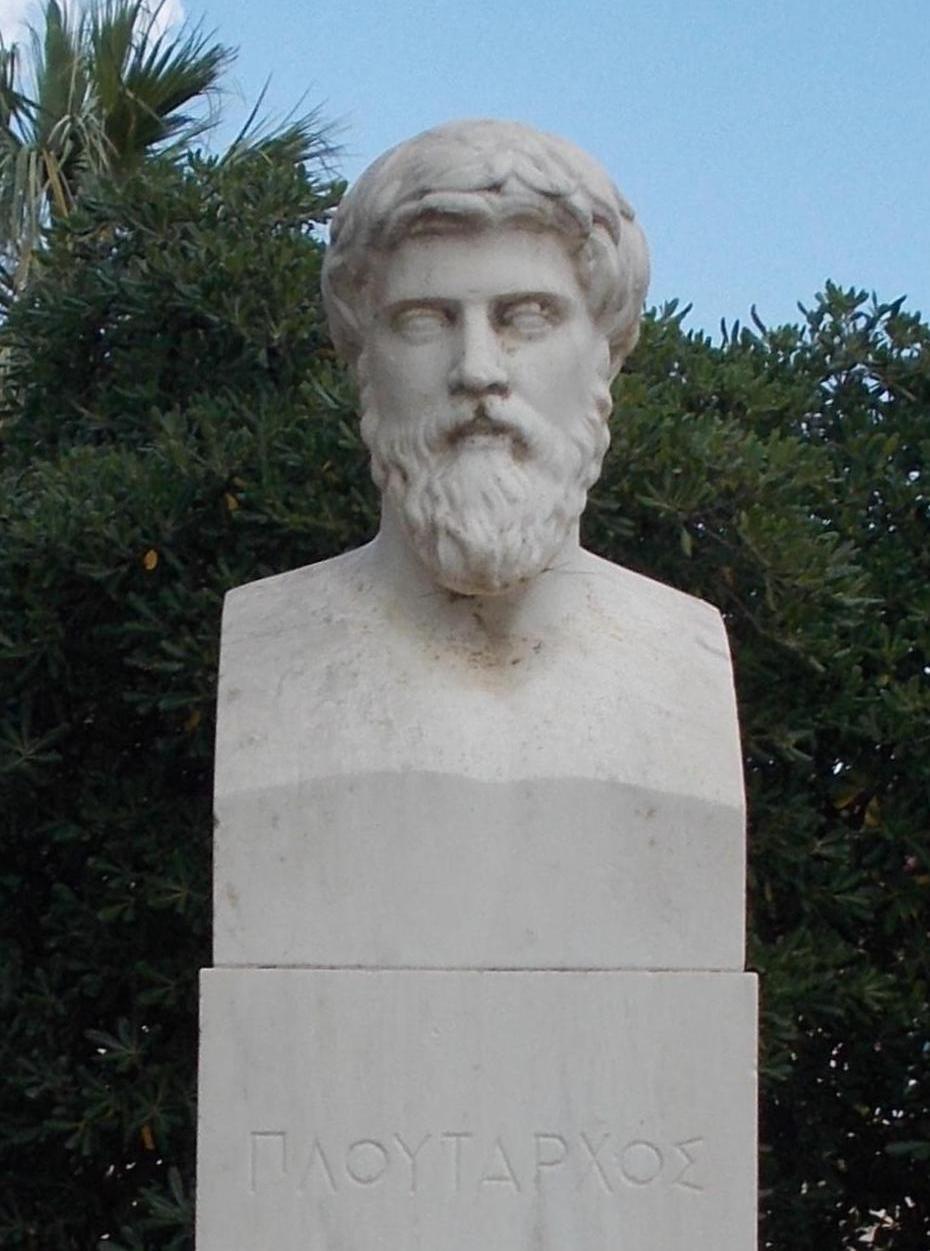
Plutarch appears symbolically as one of the figures greeting Rousseau, so the print shows how later artists used him.
About this source
What it is
This is a sepia engraving of a landscape with tall trees and palms. A bearded man in classical robes greets a man in 18th-century dress, and other figures stand around them. Cherubs crowd a boat in the right foreground, and a seated bare-chested man rests on the left. The lettering names the scene as the arrival of J.J. Rousseau at the Champs Elysees. The drawing is by J.M. Moreau le Jeune and the engraving is by C.F. Macret. It is held by the Wellcome Collection.
Why it matters
The print imagines the afterlife of Jean-Jacques Rousseau, an 18th-century French writer. It places him among classical figures such as Socrates, Montaigne and Plutarch. Rousseau admired the ancient world, and the engraving shows how 18th-century readers used ancient thinkers as models and companions. Plutarch appears here only as a symbol, not as a true portrait.
Look closer
- Who is shown welcoming Rousseau, and how can you tell which figure is the classical one?
- Why would an 18th-century artist place Rousseau among ancient thinkers?
- What does the scene leave out about Rousseau's real life and about the people who worked on the print?
This painting is part of the curated material that grounds the AI version of Plutarch on Humy.ai — when students ask about related events, the AI can quote it and cite it.
More Plutarch sources
Browse all 90 →

Ready when you are
Start chatting with Plutarch now.
20 messages free · No credit card · Available in 50+ languages.