


Secondary sourcePainting14th century
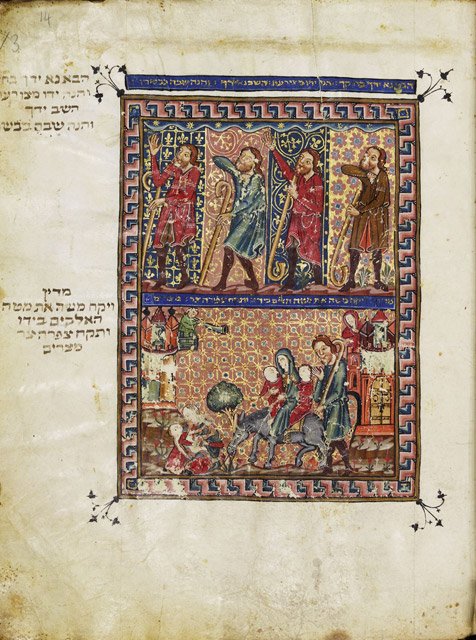
Rylands Haggadah: Moses' Leprous Arm and Return to Egypt
14th century
A medieval illuminated manuscript page from the Rylands Haggadah showing Moses healing his arm and his return to Egypt with his family.
This manuscript page shows two episodes from Moses's life, including his healing and family story.
About this source
What it is
This is a page from the Rylands Haggadah, an illuminated 14th-century Jewish manuscript now held at the John Rylands Library in Manchester. The upper register shows the healing of Moses's leprous arm, and the lower register shows his return to Egypt and his wife Zipporah circumcising their son.
Why it matters
The Haggadah is a text used in the Jewish Passover ritual, which retells the story of the Exodus led by Moses. This page shows how medieval Jewish communities illustrated biblical narratives, combining religious practice with rich visual storytelling, and preserving lesser-known episodes from Moses's story.
Look closer
- Why might the artist have divided the page into two separate scenes?
- What do the colors and gold background suggest about how precious this manuscript was meant to be?
- What do these episodes reveal about Moses's family life that isn't always emphasized in retellings?
This painting is part of the curated material that grounds the AI version of Moses on Humy.ai — when students ask about related events, the AI can quote it and cite it.
More Moses sources
Browse all 85 → Book
Secondary source
Deuteronomy
Deuteronomist · 7th–5th century BCE
 Artifact
Primary source
Ketef Hinnom scrolls
c. 600 BCE
 Sculpture
Primary source
Moses
Michelangelo · c. 1513-1515
 Painting
Secondary source
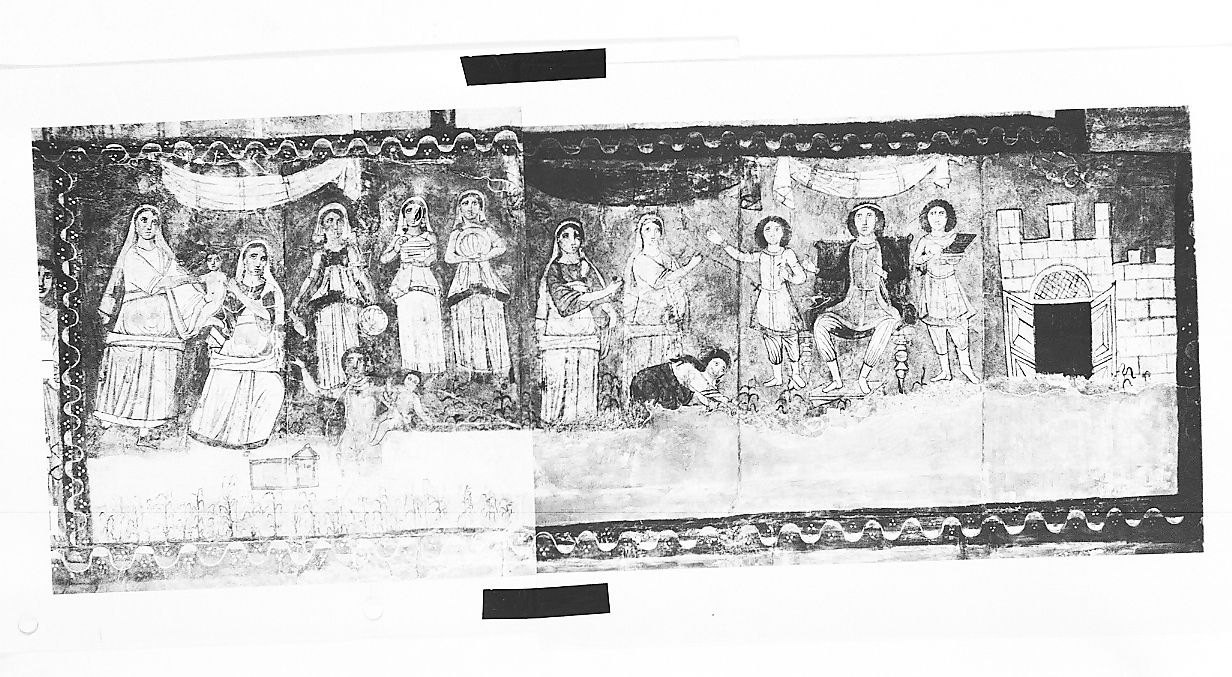
Iconographic Scene WC4, Dura-Europos Synagogue
240 CE
Free account
Read every Moses source
Sign up free →
Ready when you are
Start chatting with Moses now.
20 messages free · No credit card · Available in 50+ languages.