


Primary sourcePainting
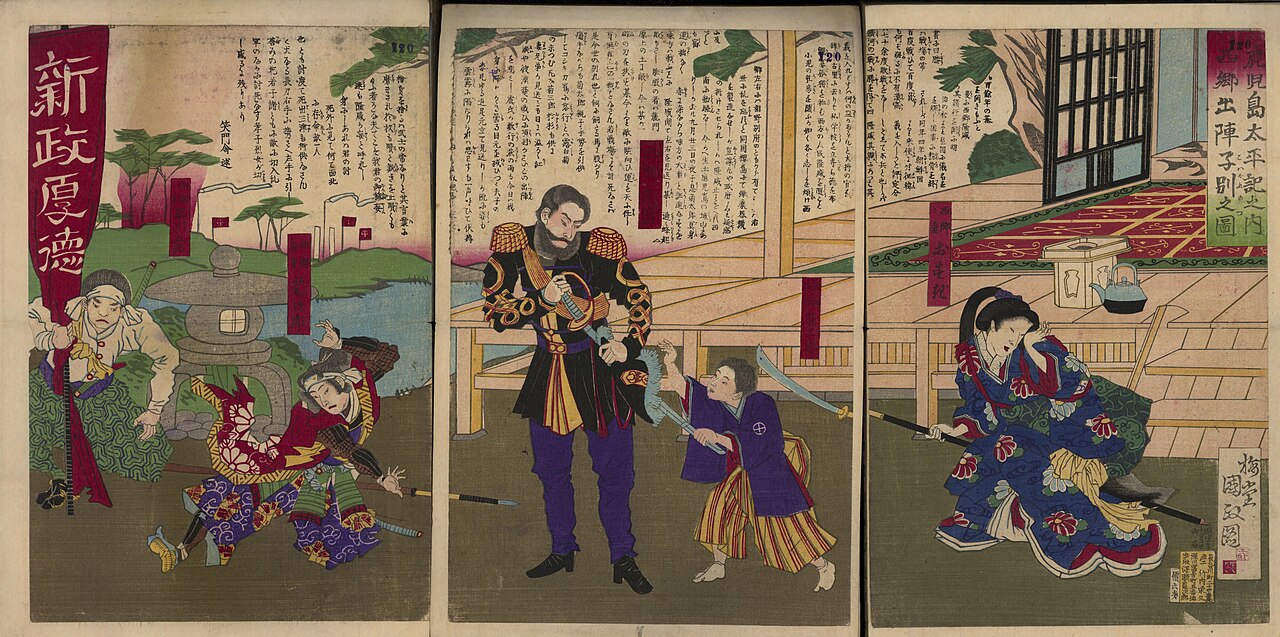
Saigō Departs for Battle, Leaving His Children
Utagawa Kunimasa V
A woodblock triptych showing Saigō Takamori leaving for the Satsuma Rebellion, parting from his household and family.
The central figure departing for battle in this print represents Saigō Takamori leaving for the Satsuma Rebellion.
About this source
What it is
This three-panel woodblock print by the artist Utagawa Kunimasa V shows a scene connected to Saigō Takamori's departure for the Satsuma Rebellion. The central panel shows a bearded man in dark military uniform with gold epaulettes holding a sword, with a child reaching toward him. Other panels show a garden setting and a woman kneeling beside a sword on a veranda. Japanese text runs down the panels.
Why it matters
Made in the style of the period, likely during Saigō's lifetime, this print dramatizes the personal cost of his decision to lead the rebellion, imagining the family he left behind. It reflects how popular print artists turned current political events into emotional scenes for a wide audience.
Look closer
- What emotions does the artist try to create by including the child reaching for the departing man?
- Why might the artist have included a domestic, family scene alongside a military subject?
- Since this is a dramatized print rather than a photograph, how much can we trust it as a record of what actually happened?
This painting is part of the curated material that grounds the AI version of Saigō Takamori on Humy.ai — when students ask about related events, the AI can quote it and cite it.
More Saigō Takamori sources
Browse all 79 →Secondary source
Nanshūō Ikun
Saigō Takamori · 1890
 Artifact
Primary source
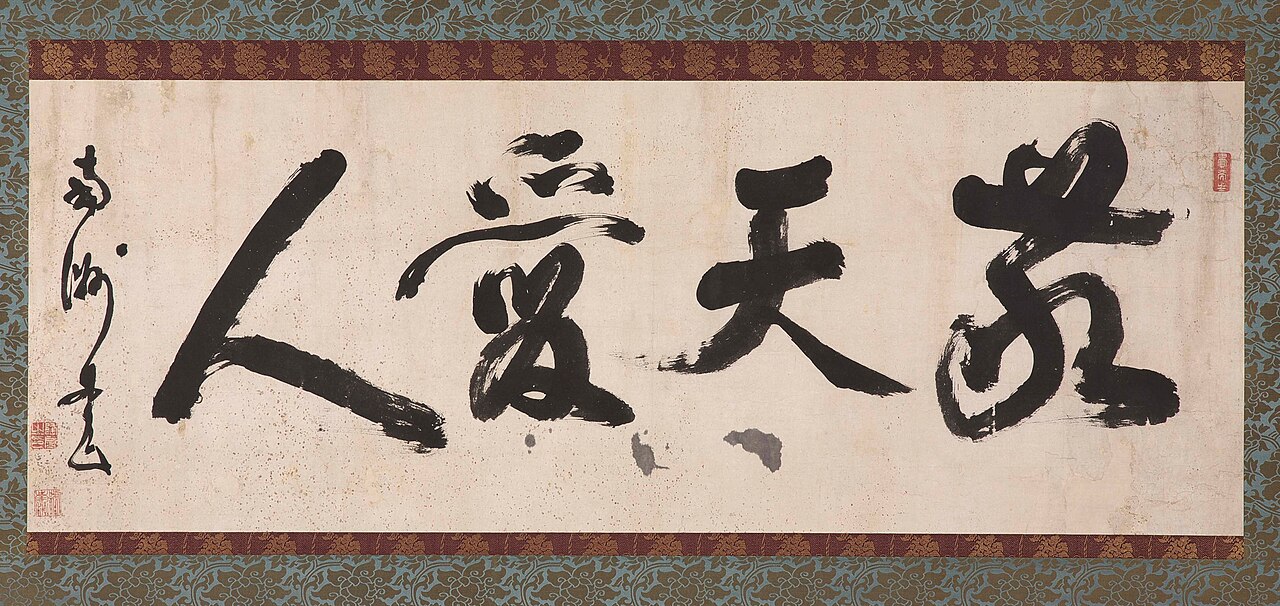
Keiten Aijin
Saigō Takamori
 Painting
Secondary source
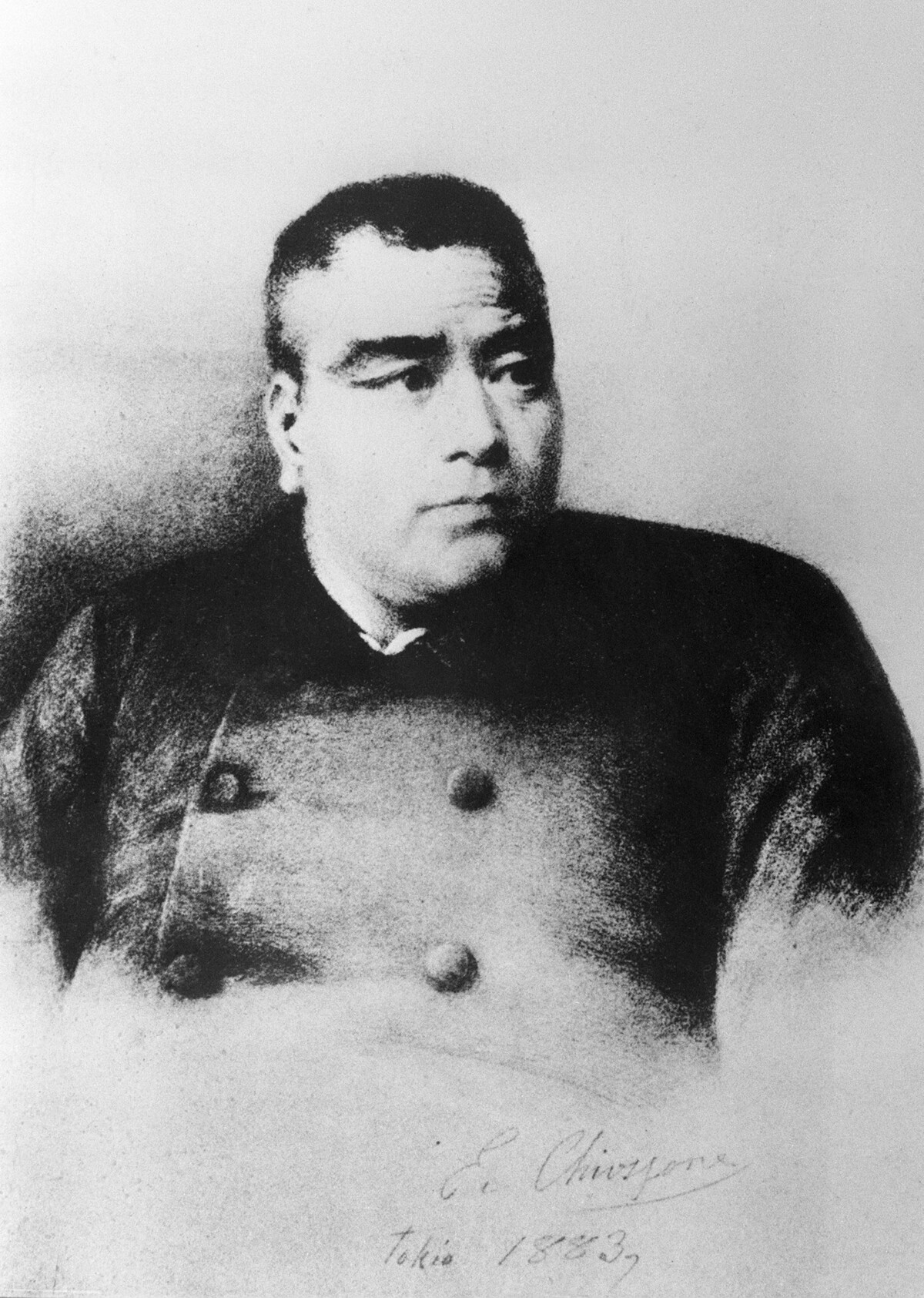
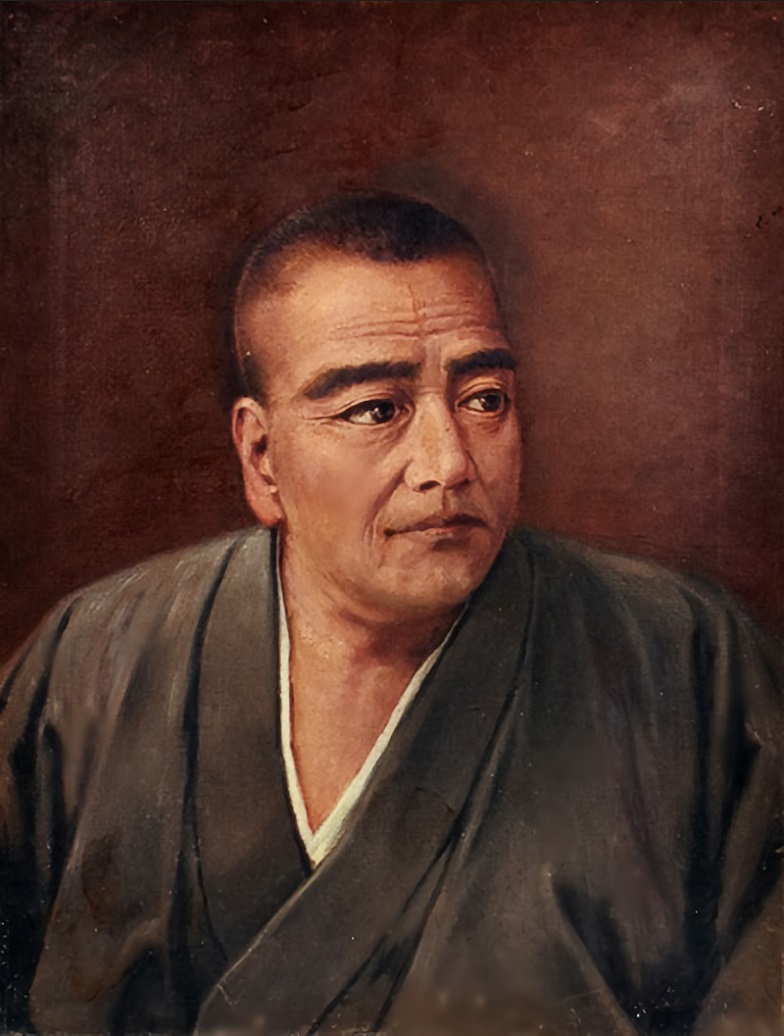
Portrait of Saigō Takamori
Edoardo Chiossone · 1883
 Sculpture
Secondary source
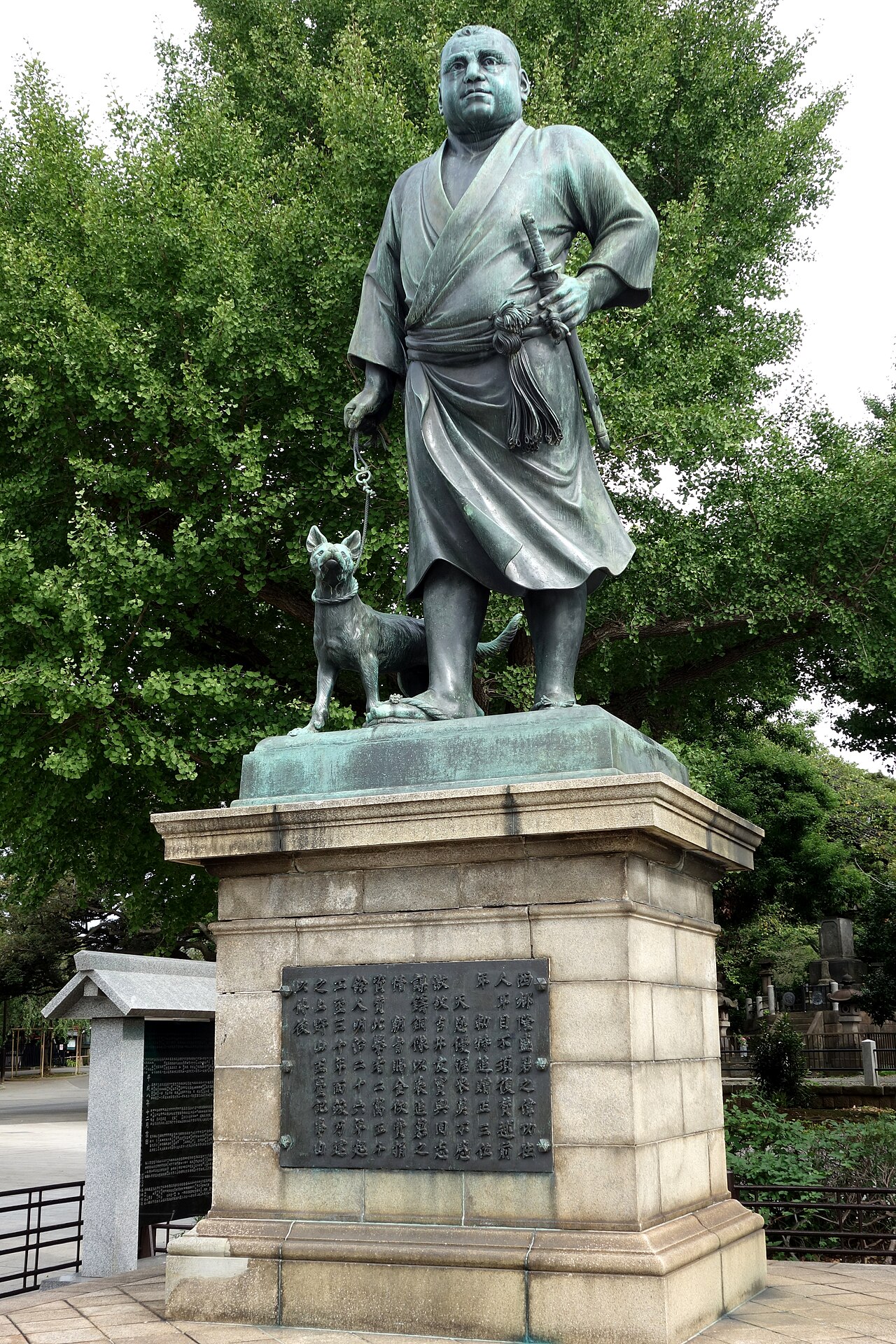
Statue of Saigō Takamori
Takamura Kōun · 1898
Free account
Read every Saigō Takamori source
Sign up free →
Ready when you are
Start chatting with Saigō Takamori now.
20 messages free · No credit card · Available in 50+ languages.