


Secondary sourcePainting1520
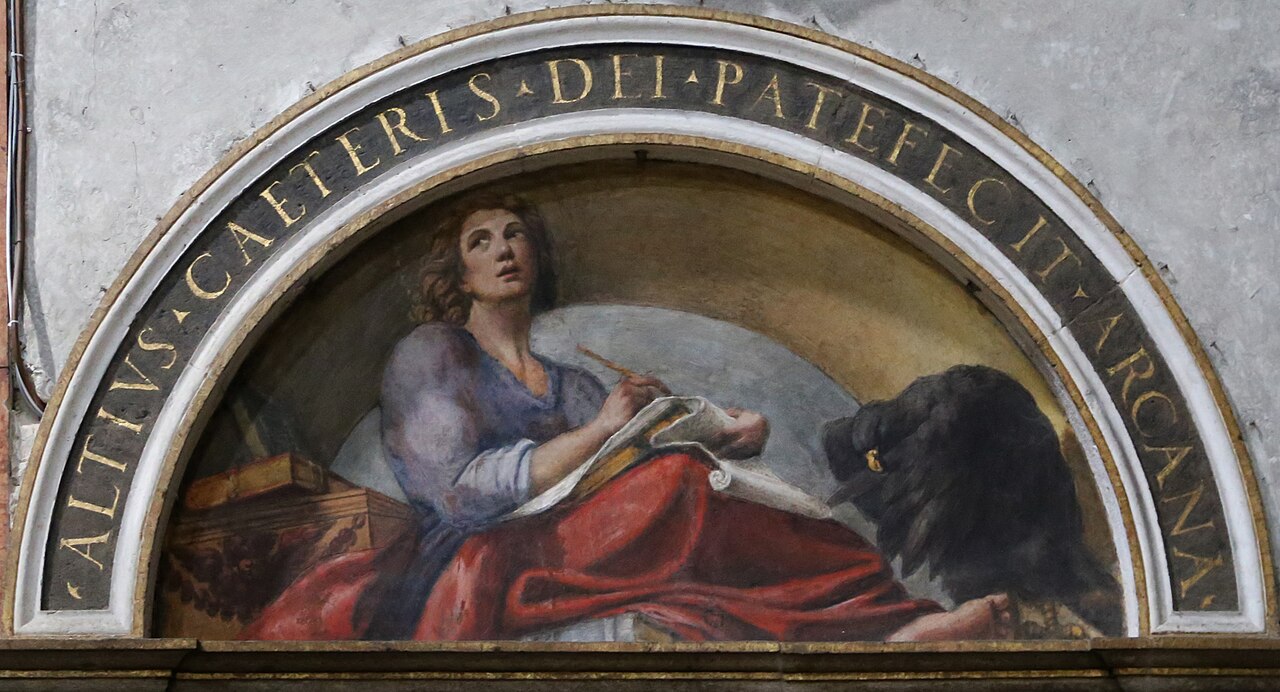
Saint John and the Eagle
Antonio da Correggio · 1520
A fresco by Correggio in a Parma church showing John the Evangelist writing with his symbolic eagle beside him.
This fresco portrays John the Evangelist writing with his symbolic eagle, in the church dedicated to him.
About this source
What it is
This fresco was painted by Antonio da Correggio in 1520 in the church of San Giovanni Evangelista in Parma. It shows a young man in robes looking upward and writing on a scroll, with a large eagle and a book nearby, set beneath an inscribed arch.
Why it matters
The eagle is John's traditional symbol as an evangelist, said to represent the soaring, visionary nature of his gospel. The fresco was created for the church dedicated to him, showing how deeply his identity as a writer and visionary was built into Renaissance religious art and architecture.
Look closer
- What is John doing in the image, and what does that tell you about how he was remembered?
- Why might the artist have placed an eagle next to him?
- What does the Latin inscription above suggest about the message the church wanted visitors to receive?
This painting is part of the curated material that grounds the AI version of John the Apostle on Humy.ai — when students ask about related events, the AI can quote it and cite it.
More John the Apostle sources
Browse all 87 →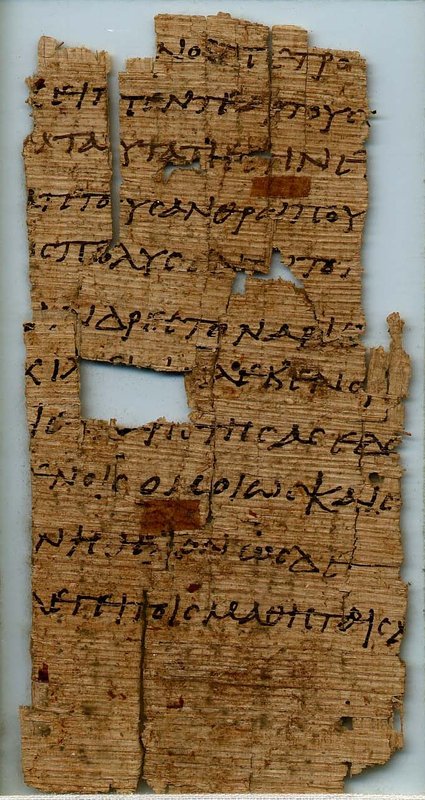 Book
Secondary source
Gospel of John
John the Evangelist · c. AD 90-100
 Book
Primary source
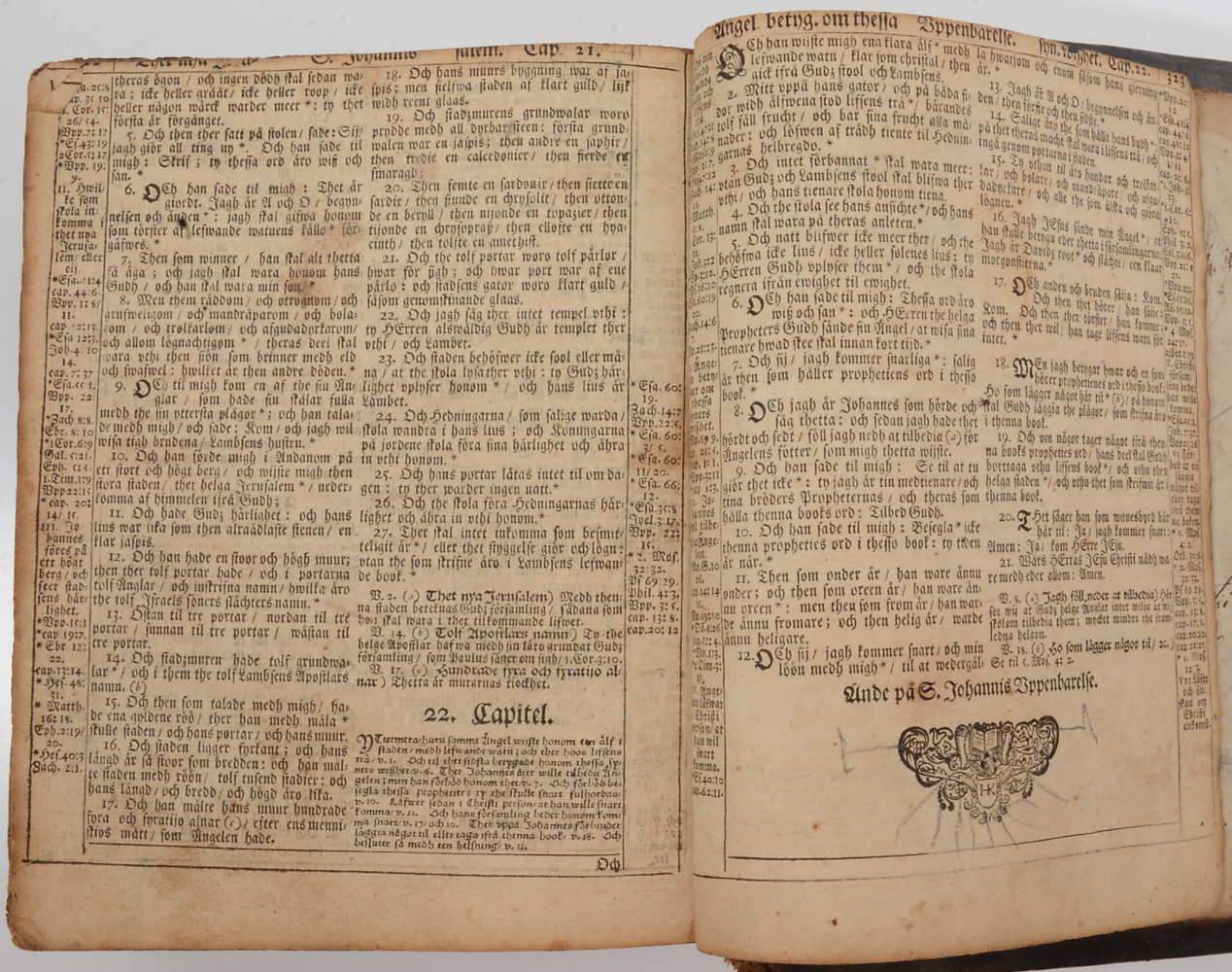
Book of Revelation
John of Patmos · c. 95 AD
 Letter
Secondary source
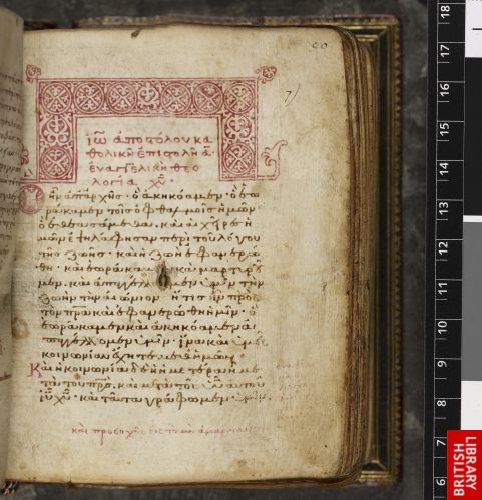
First Epistle of John
John the Presbyter · c. 95-110 AD
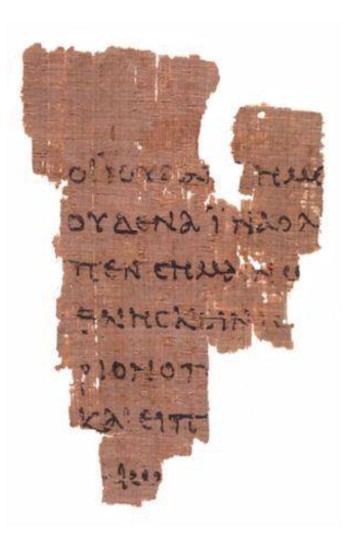 Document
Secondary source
Rylands Library Papyrus P52
c. 125-175 AD
Free account
Read every John the Apostle source
Sign up free →
Ready when you are
Start chatting with John the Apostle now.
20 messages free · No credit card · Available in 50+ languages.