


Secondary sourcePaintingbetween 1700 and 1799
Saint Lucy
Unknown · between 1700 and 1799
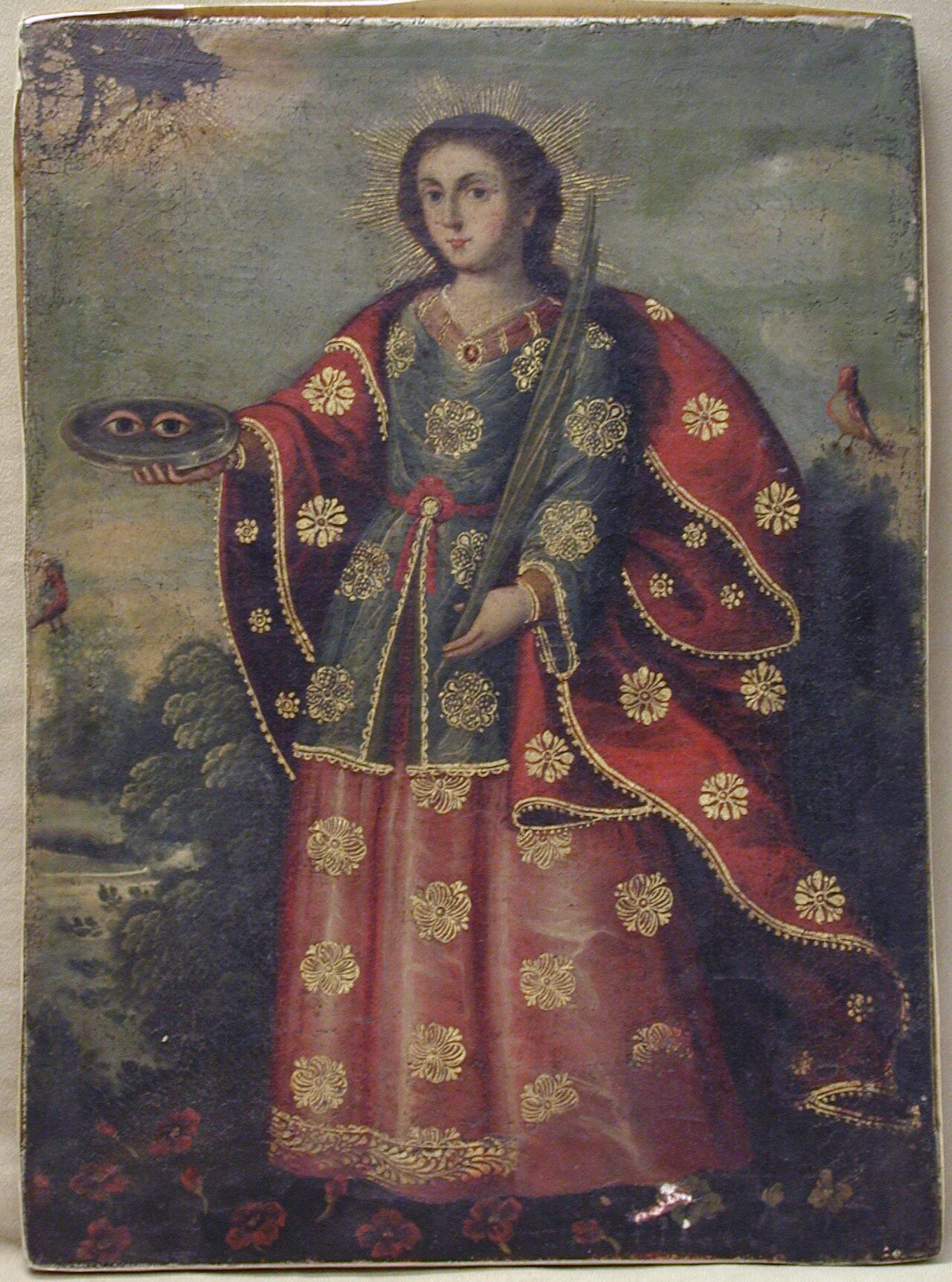
An 18th-century painting showing Saint Lucy with her traditional symbols: a palm frond and a plate holding two eyes.
This later painting shows Lucy with her traditional symbols, reflecting how she was remembered and venerated centuries after her death.
About this source
What it is
This is an anonymous painting from the 1700s showing a young woman saint with a gold halo, dressed in a red mantle with gold embroidery over a blue-grey gown. She holds a plate with two eyes and a palm frond, with a green landscape and birds behind her.
Why it matters
The painting was made many centuries after Lucy's lifetime, and shows how artists imagined and honoured her long after her death. The symbols chosen by the unknown painter — the eyes and palm frond — are the standard way Lucy was depicted across Christian art, showing how her story was passed down and standardized over time.
Look closer
- Why do you think the artist placed eyes on a plate in her hands?
- What does the calm landscape behind her suggest about how the painter wanted viewers to feel?
- What is missing from this image that might tell us about Lucy's actual life?
This painting is part of the curated material that grounds the AI version of Saint Lucy on Humy.ai — when students ask about related events, the AI can quote it and cite it.
More Saint Lucy sources
Browse all 93 →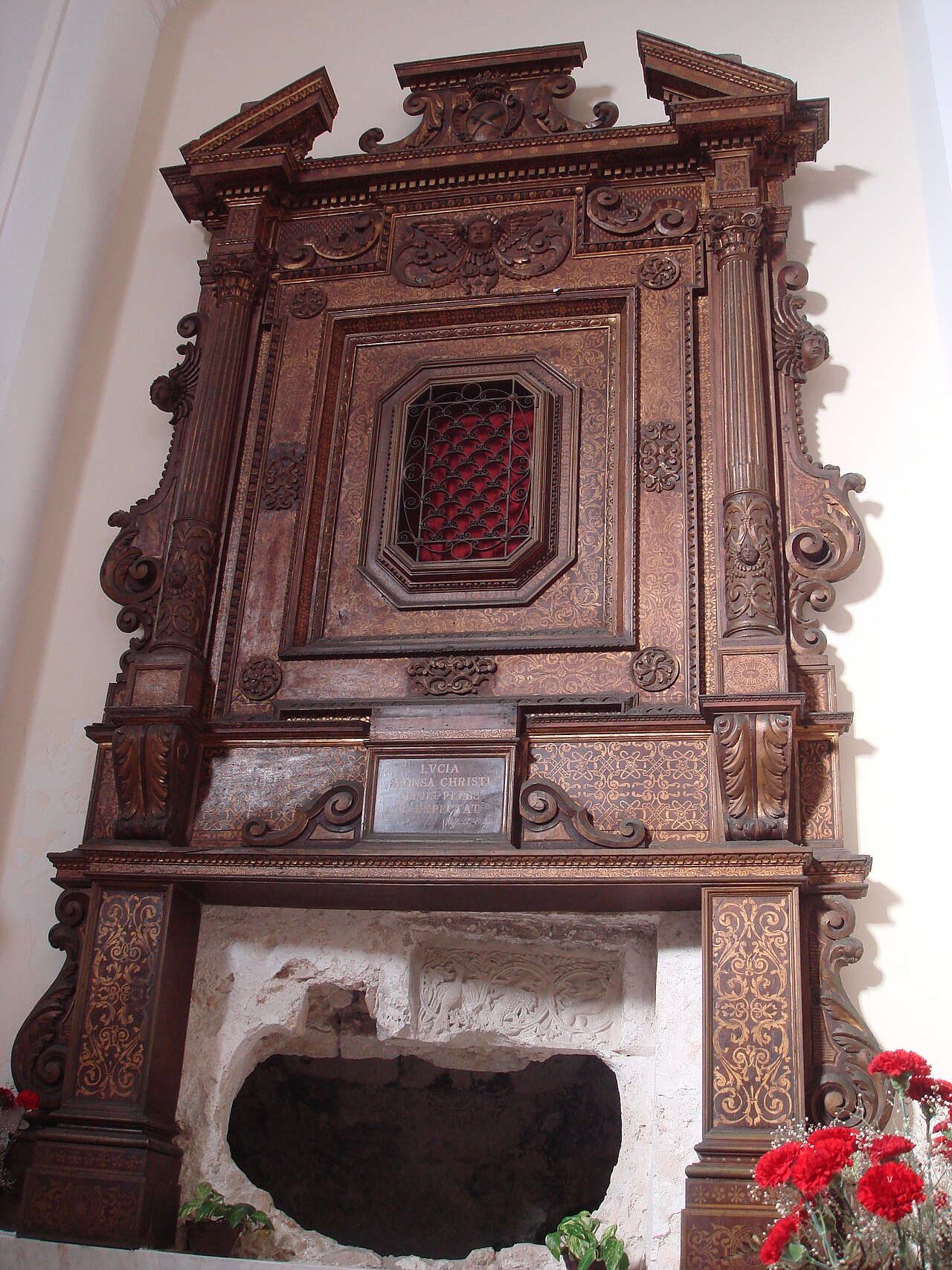 Artifact
Secondary source
First Grave of Santa Lucia
 Artifact
Secondary source
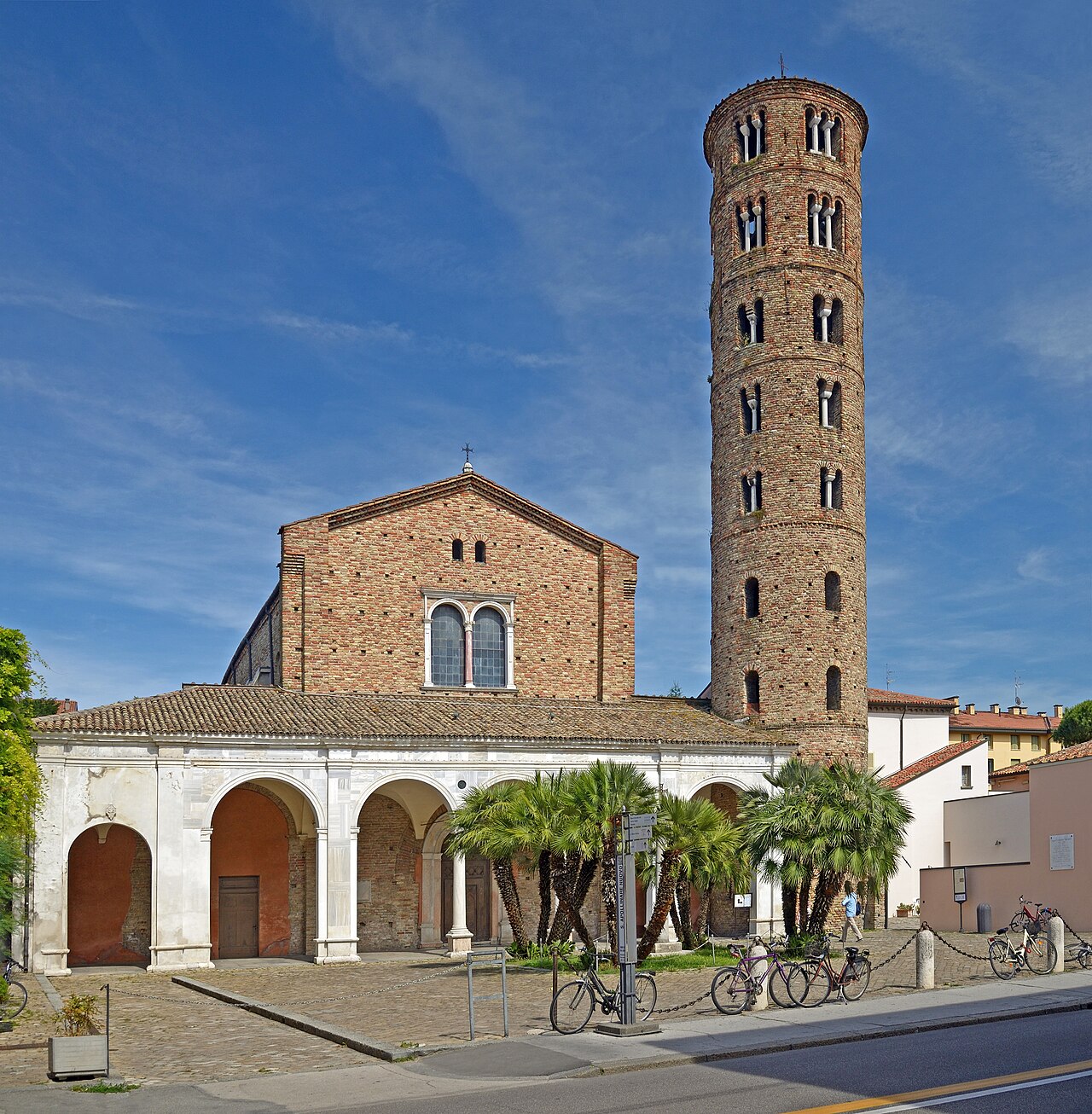
Basilica of Sant'Apollinare Nuovo
505
 Book
Secondary source
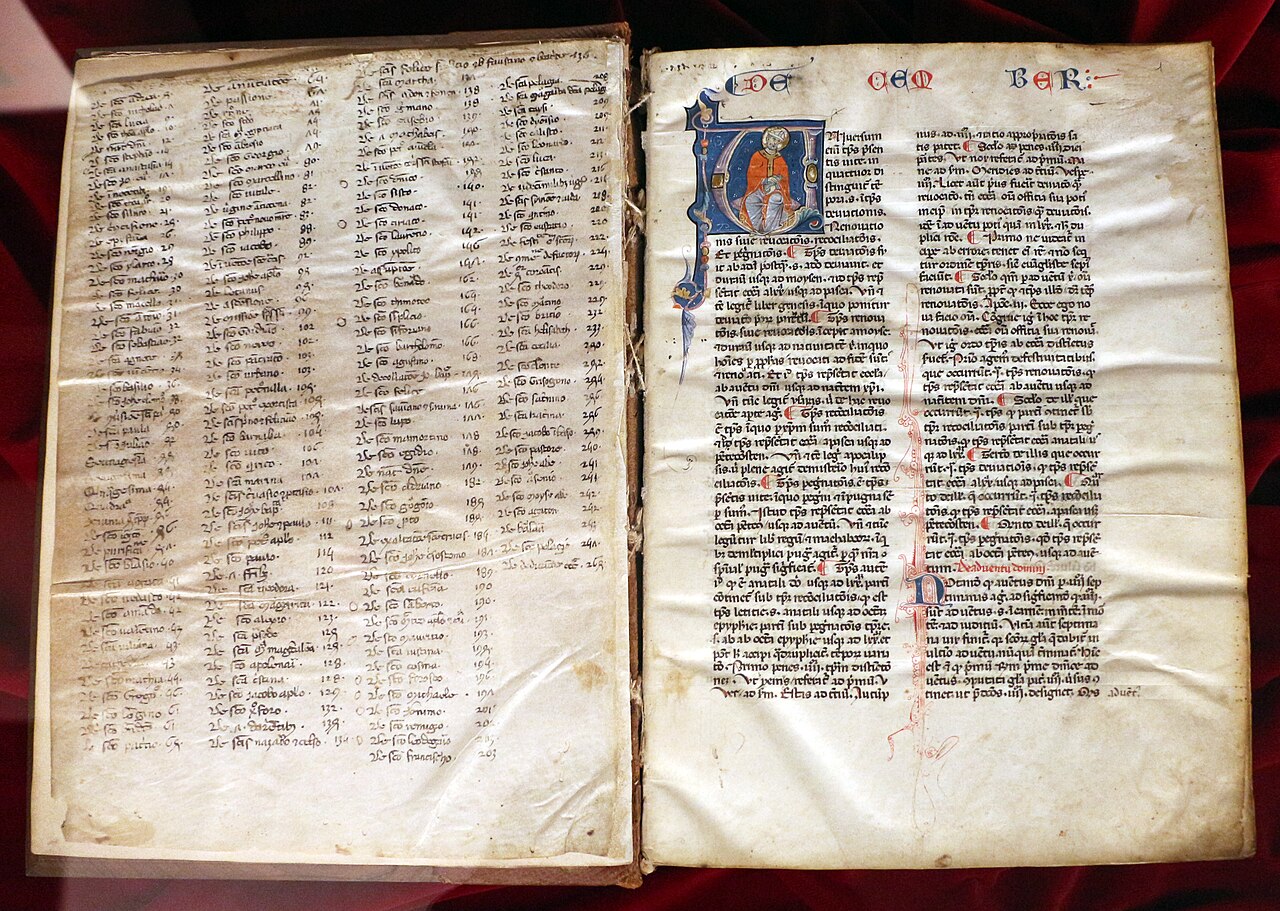
Golden Legend
Jacobus de Voragine · c. 1259–1266
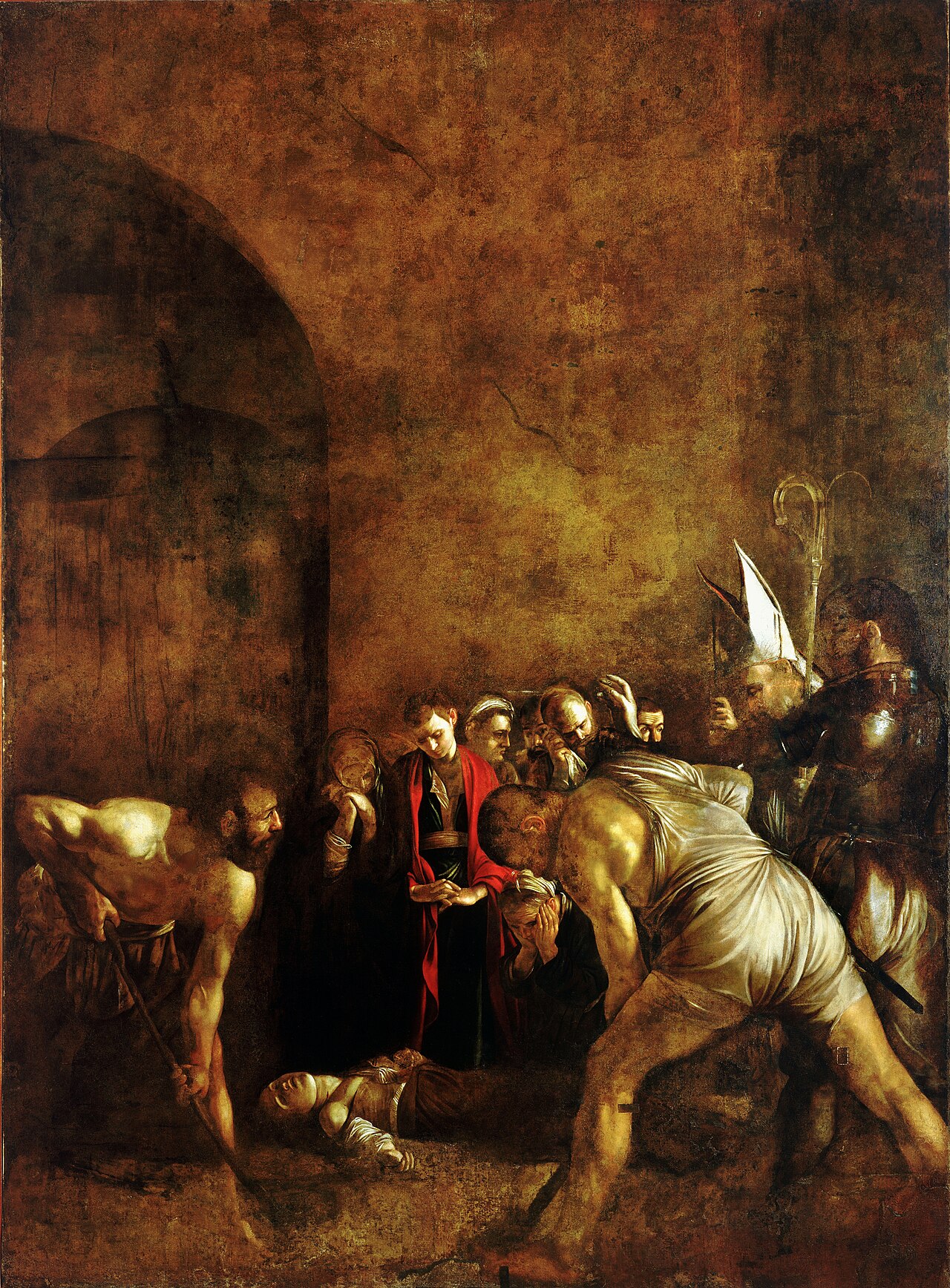 Painting
Primary source
The Burial of Saint Lucy
Caravaggio · 1608
Free account
Read every Saint Lucy source
Sign up free →
Ready when you are
Start chatting with Saint Lucy now.
20 messages free · No credit card · Available in 50+ languages.