


Secondary sourcePaintingc. 1450
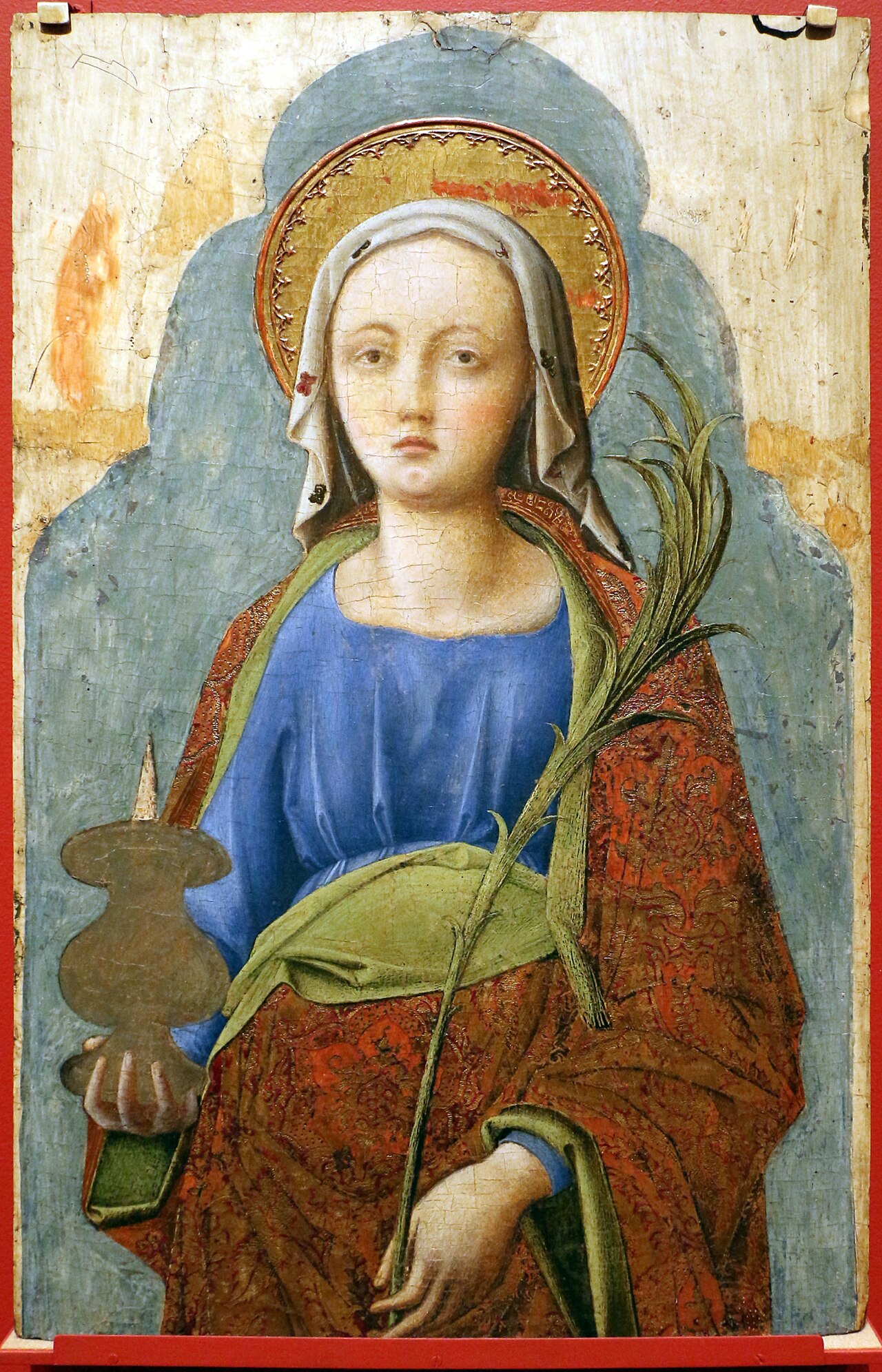
Saint Lucy
Bartolomeo Vivarini · c. 1450
A panel from the Vivarini workshop showing Saint Lucy holding a palm frond and a lamp, typical of Venetian altarpieces of her time.
Lucy is shown alone with her traditional symbols, the palm of martyrdom and a lamp.
About this source
What it is
This painting comes from the workshop of Antonio and Bartolomeo Vivarini, made around 1450. It shows Saint Lucy as a single standing figure, likely once part of a larger multi-panel altarpiece (polyptych). It is now held by the Cincinnati Art Museum.
Why it matters
Panels like this were common in Venice, where artists such as the Vivarini family produced many altarpieces with standard saints arranged in sections. Lucy's palm frond marks her martyrdom, while the lamp she carries connects to her later association with light and sight. The painting shows how saints were standardized visually so worshippers could recognize them instantly.
Look closer
- What do the objects Lucy holds tell us about how she was remembered?
- Why might artists repeat the same symbols for a saint across many different paintings?
- What clues suggest this panel was once part of a larger artwork?
This painting is part of the curated material that grounds the AI version of Saint Lucy on Humy.ai — when students ask about related events, the AI can quote it and cite it.
More Saint Lucy sources
Browse all 93 →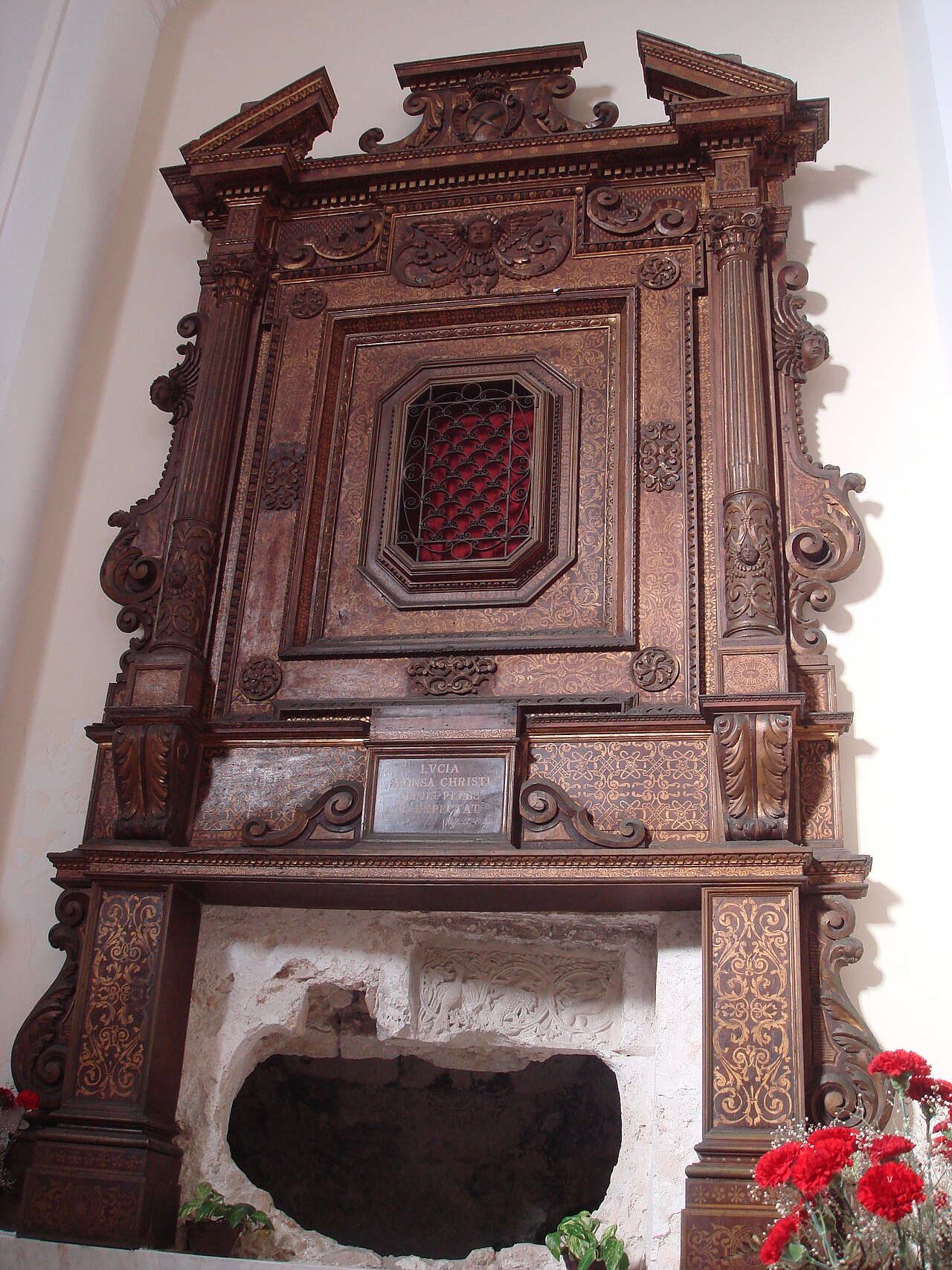 Artifact
Secondary source
First Grave of Santa Lucia
 Artifact
Secondary source
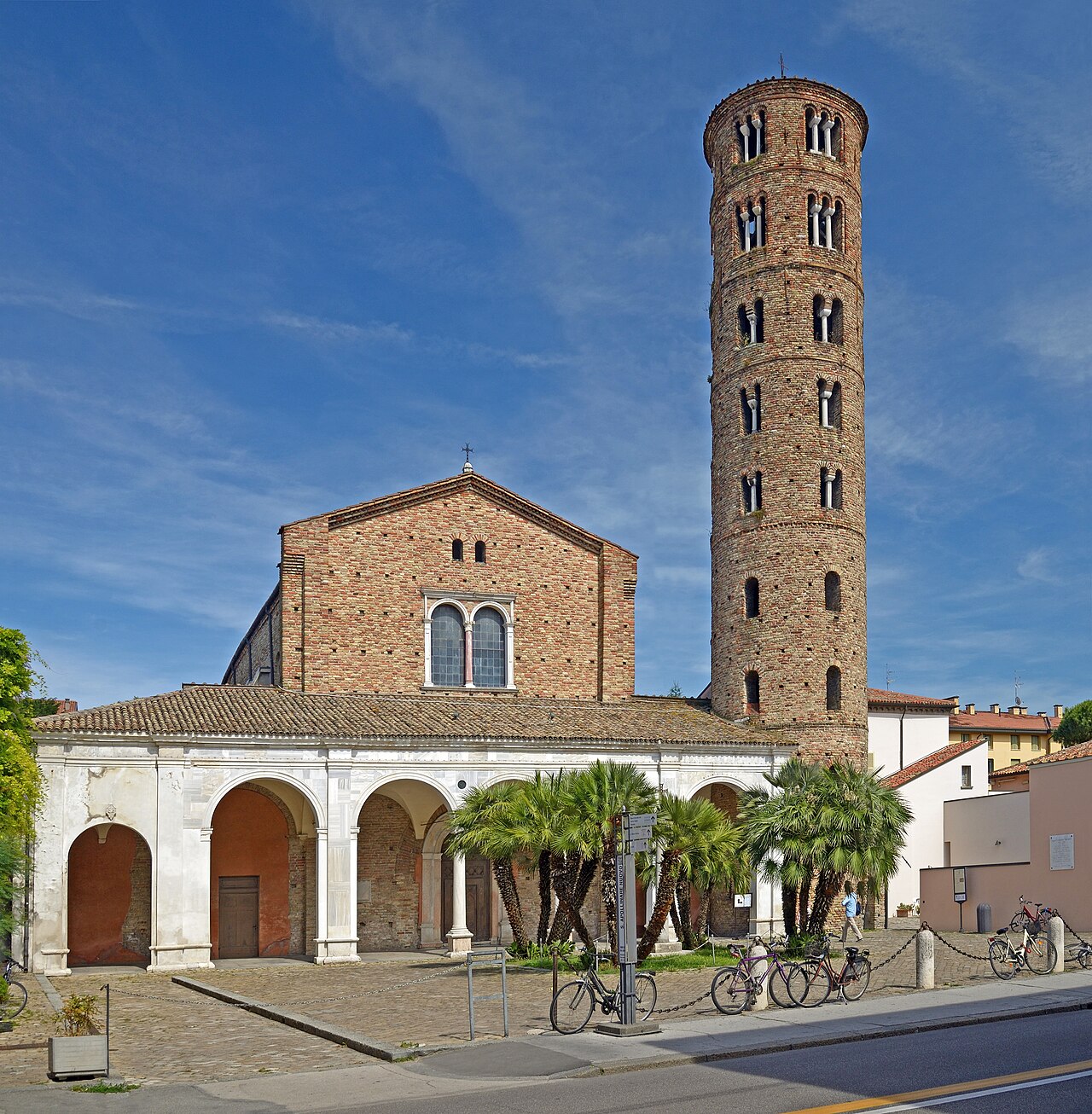
Basilica of Sant'Apollinare Nuovo
505
 Book
Secondary source
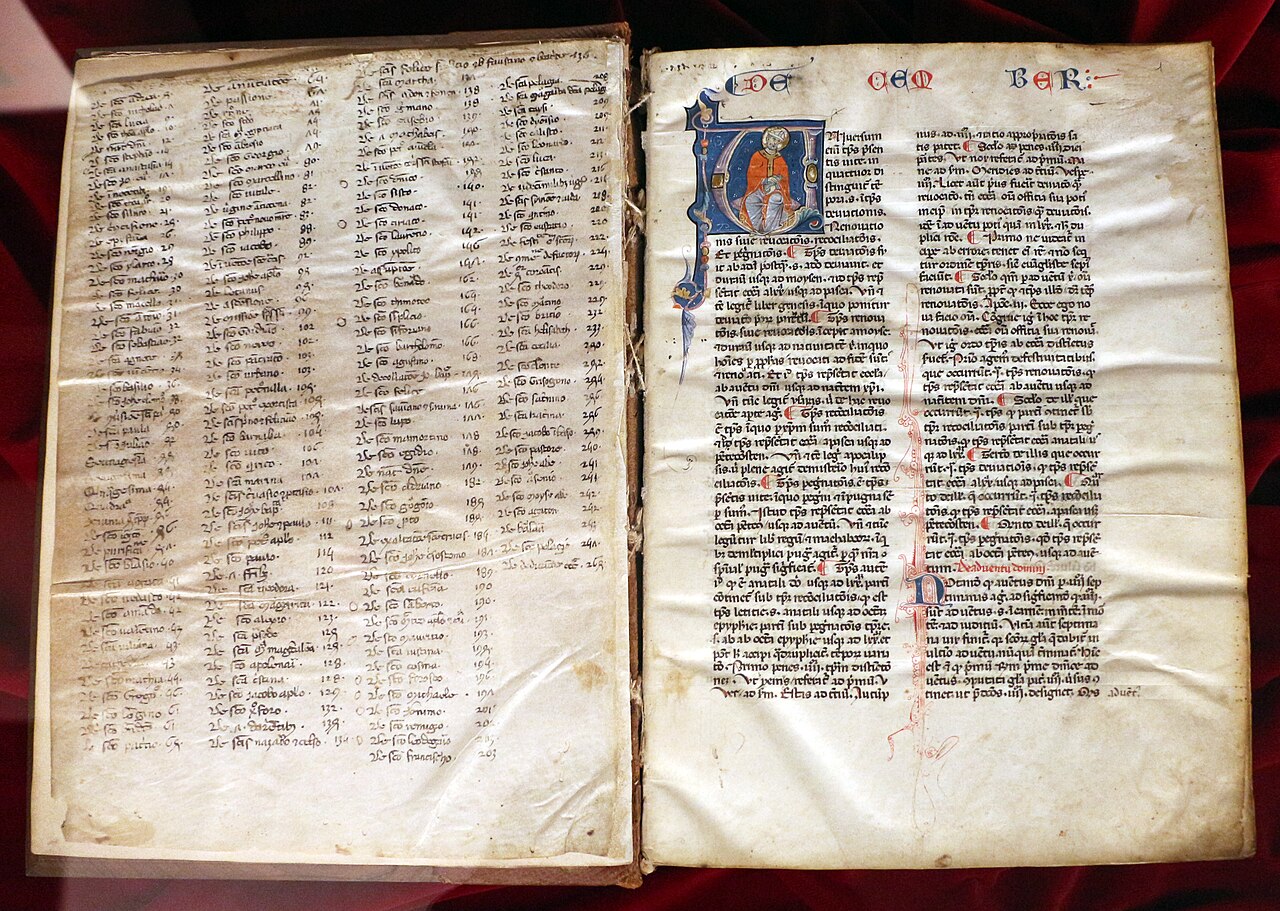
Golden Legend
Jacobus de Voragine · c. 1259–1266
 Painting
Primary source
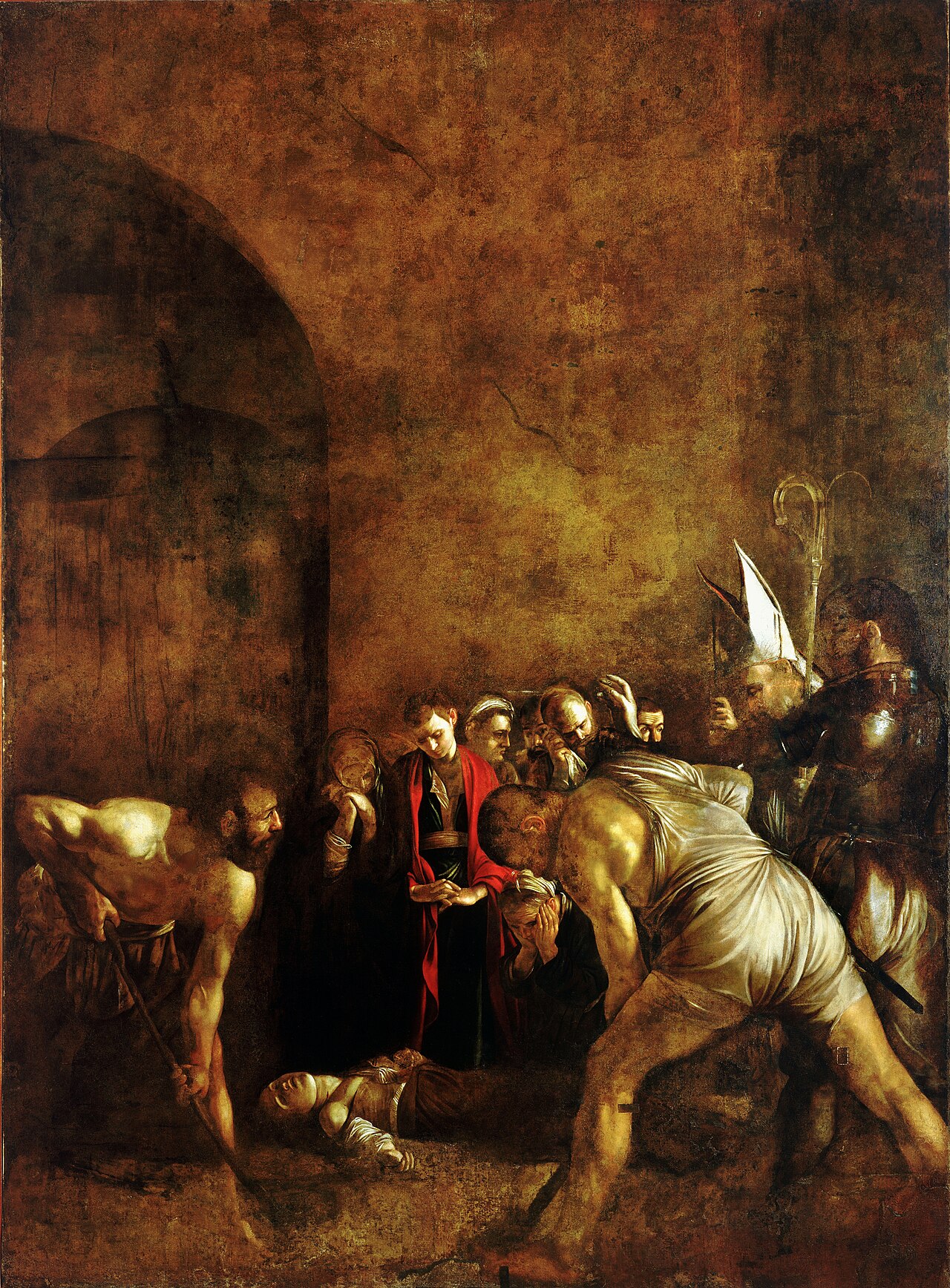
The Burial of Saint Lucy
Caravaggio · 1608
Free account
Read every Saint Lucy source
Sign up free →
Ready when you are
Start chatting with Saint Lucy now.
20 messages free · No credit card · Available in 50+ languages.