


Secondary sourcePainting1476
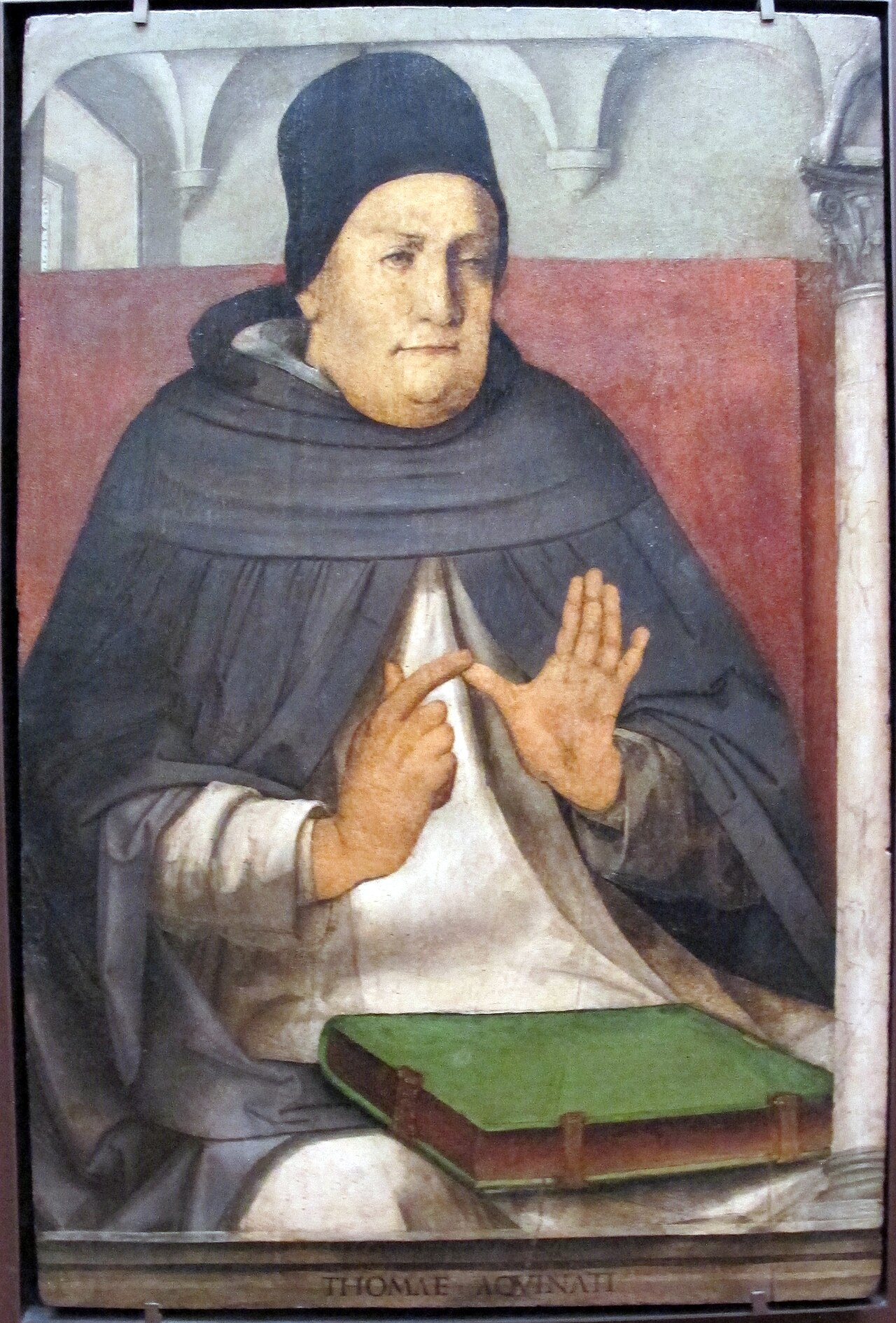
Saint Thomas Aquinas
Justus van Gent · 1476
A panel from the Urbino studiolo series of famous men, showing Thomas Aquinas seated with a book among humanist cultural heroes.
This panel places Aquinas among a Renaissance gallery of famous men of learning in the Urbino studiolo.
About this source
What it is
This painting, from 1476, is attributed in part to Justus van Gent (with Pedro Berruguete) and is held in the Department of Paintings of the Louvre. It shows a bearded man in a black hood and dark cloak, seated before a green-covered book, with the inscription 'THOMAE AQVINATI' on the frame.
Why it matters
This panel was part of a series made for the studiolo, a private study, in Urbino, which gathered portraits of famous men of learning. Placing Aquinas among such figures shows how, by the Renaissance, he was honoured not only as a saint but as one of history's great intellectuals, alongside humanist heroes.
Look closer
- Why might Renaissance patrons want Aquinas pictured with humanist thinkers rather than only other saints?
- What does his pose, with hands raised and a book before him, suggest about how he is being presented?
- What does the Latin inscription add that the image alone does not?
This painting is part of the curated material that grounds the AI version of Saint Thomas Aquinas on Humy.ai — when students ask about related events, the AI can quote it and cite it.
More Saint Thomas Aquinas sources
Meet the AI Saint Thomas Aquinas →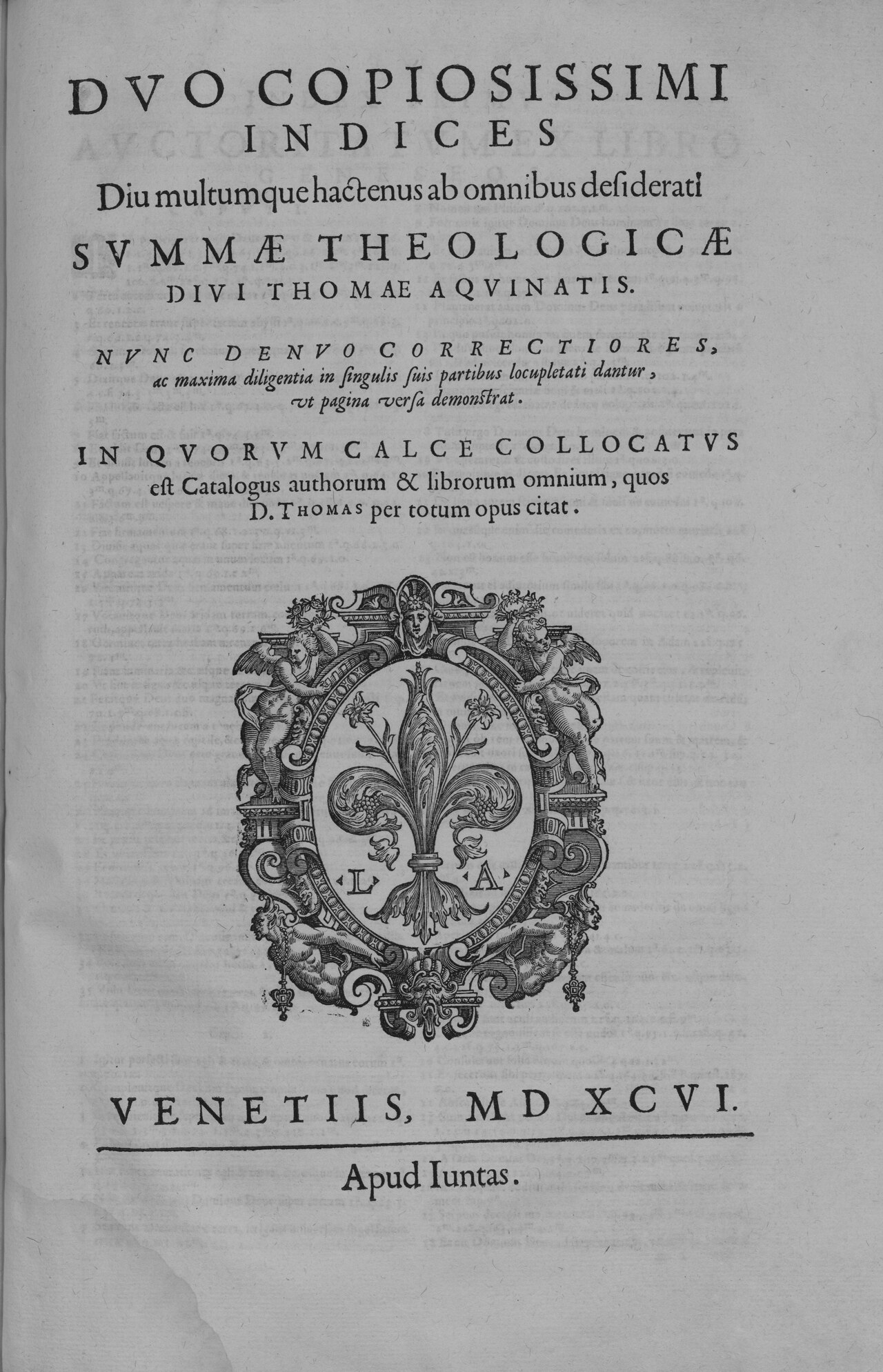 Book
Primary source
Summa Theologica
Thomas Aquinas · 1274
 Painting
Secondary source
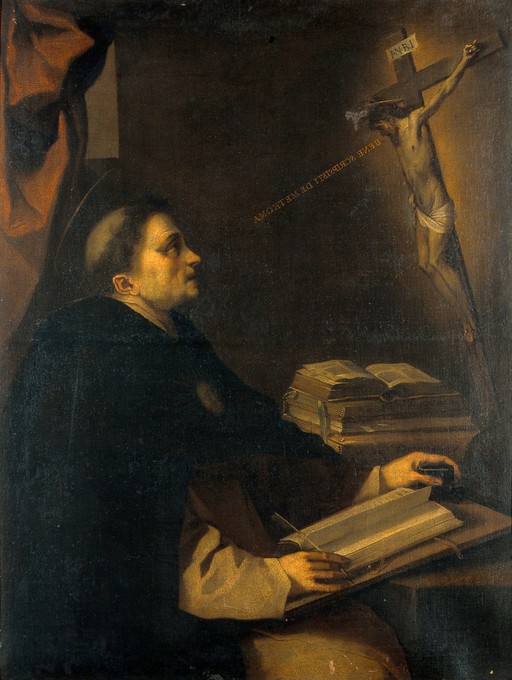
St Thomas Aquinas, 17th-century Italian oil painting
17th century
Primary source
Pange Lingua Gloriosi Corporis Mysterium
Thomas Aquinas · 1263
 Painting
Secondary source
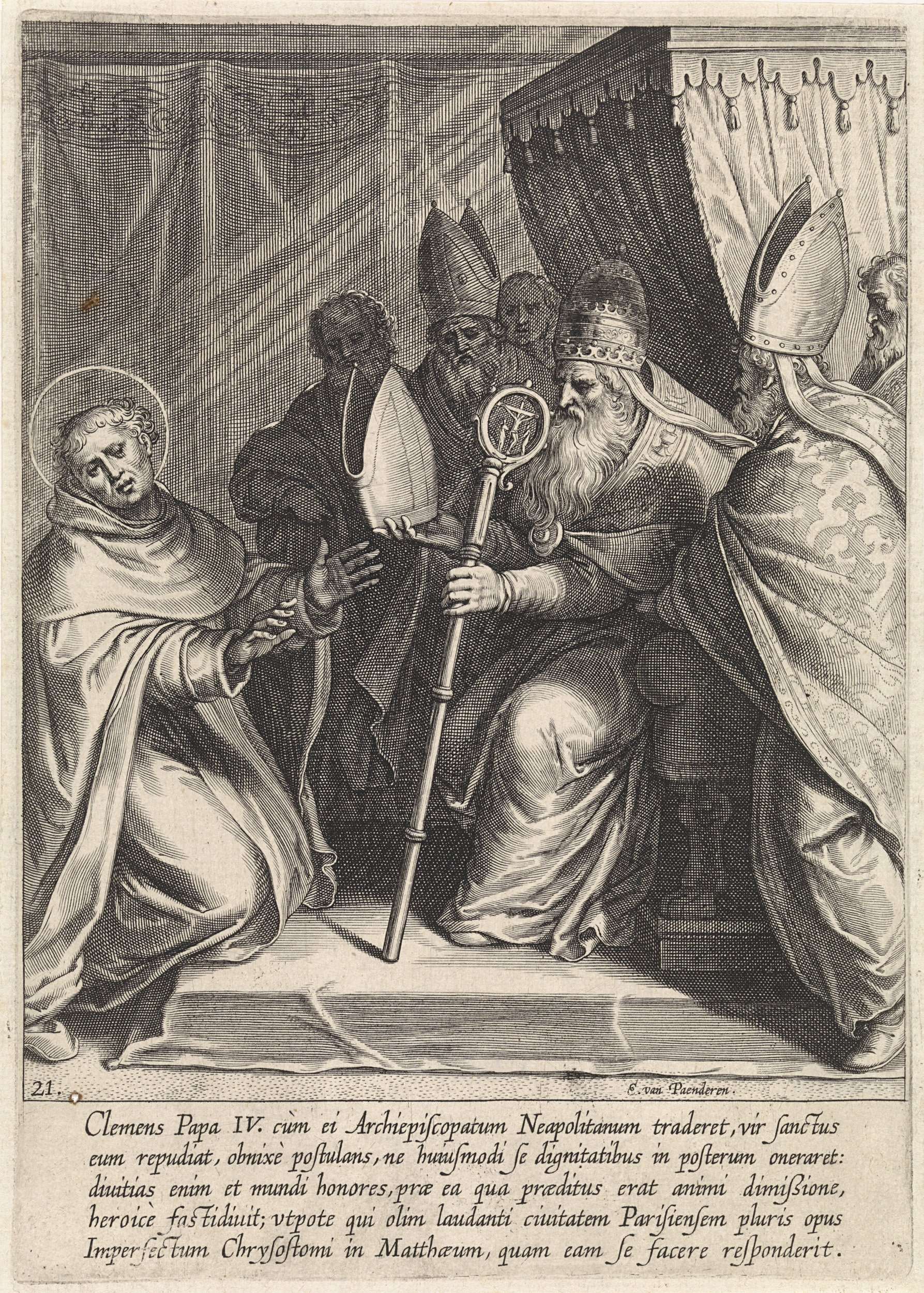
Thomas Aquinas Refuses the Archbishopric of Naples
1610
 Painting
Secondary source
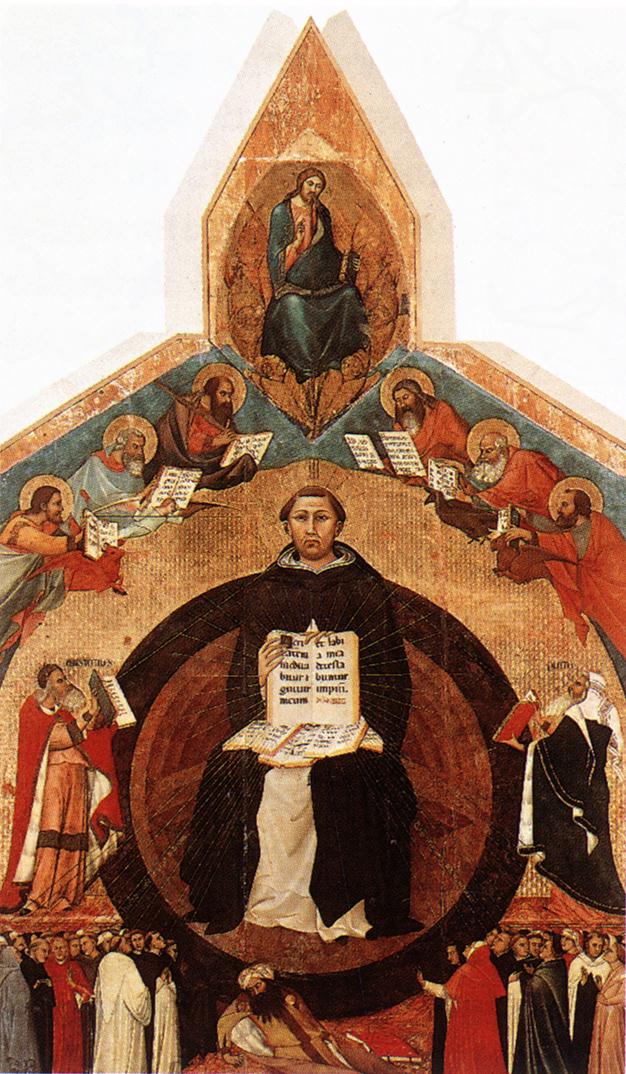
Triumph of Saint Thomas Aquinas
Lippo Memmi · 1340
Ready when you are
Start chatting with Saint Thomas Aquinas now.
20 messages free · No credit card · Available in 50+ languages.