


Secondary sourcePainting1403
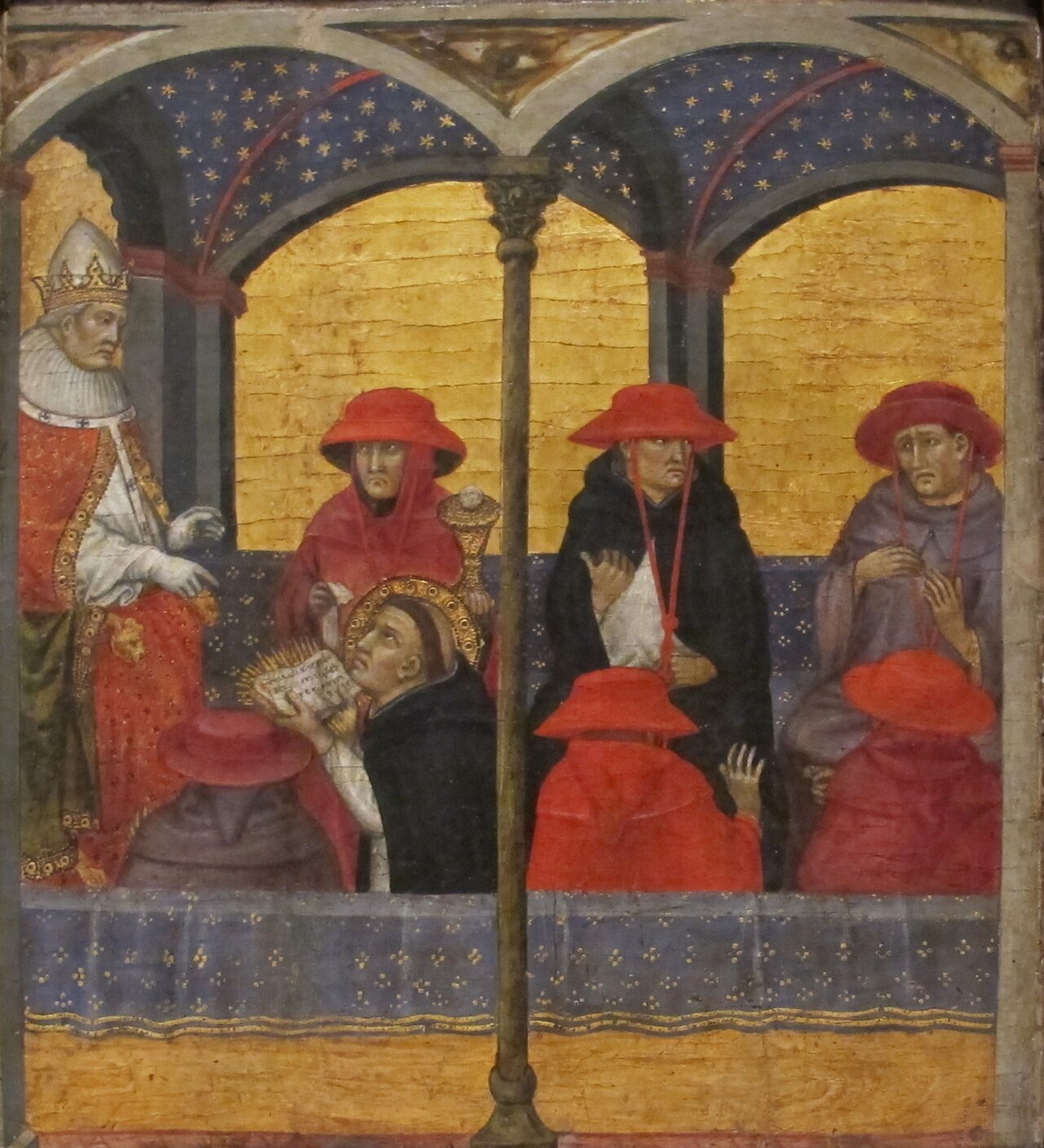
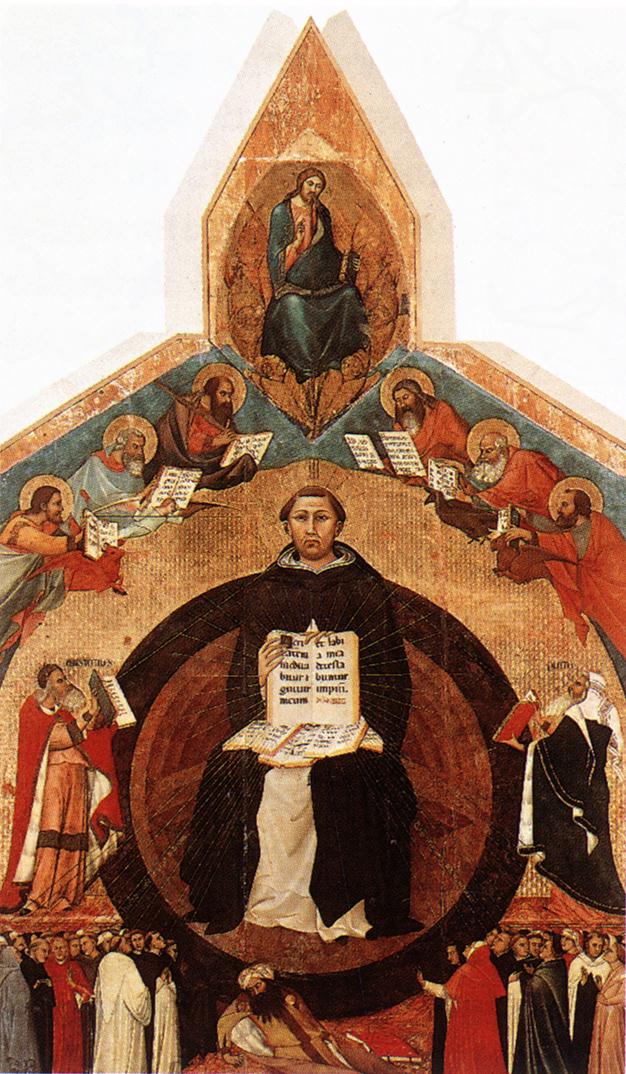
Saint Thomas Aquinas Submitting His Office of Corpus Domini to Pope Urban IV
Taddeo di Bartolo · 1403
A 1403 panel painting by Taddeo di Bartolo showing Aquinas presenting his Corpus Christi liturgy to the pope.
This painting commemorates Aquinas presenting his Corpus Christi liturgy to the pope, shaping his sainted image.
About this source
What it is
This gold-ground panel painting, made by Taddeo di Bartolo in 1403, depicts the moment Thomas Aquinas presented his newly composed Office of Corpus Christi to Pope Urban IV. It is held today by the Philadelphia Museum of Art.
Why it matters
Painted more than a century after Aquinas's death, the image shows how he was remembered: as a humble, haloed friar kneeling before the pope, his book radiating light, watched by cardinals. It reflects his later reputation as a saint and the Church's memory of his service composing the Corpus Christi liturgy discussed in other sources here.
Look closer
- Why is Aquinas shown kneeling and small compared to the pope and cardinals?
- What do the golden rays coming from his book suggest the artist wanted viewers to believe about his writing?
- Painted in 1403, over a century after the event — what does that tell you about how later generations shaped the image of Aquinas?
This painting is part of the curated material that grounds the AI version of Saint Thomas Aquinas on Humy.ai — when students ask about related events, the AI can quote it and cite it.
More Saint Thomas Aquinas sources
Meet the AI Saint Thomas Aquinas →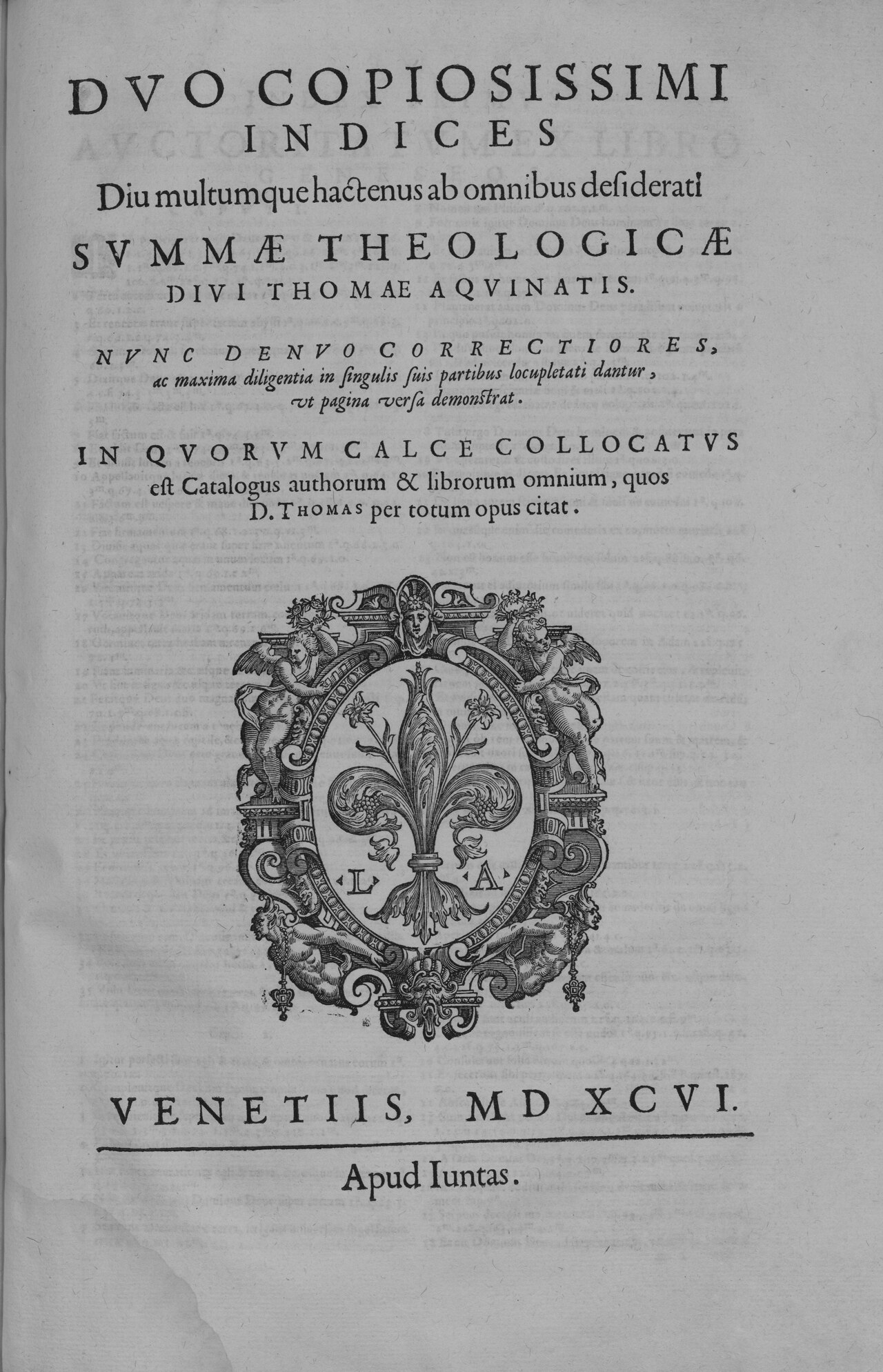 Book
Primary source
Summa Theologica
Thomas Aquinas · 1274
 Painting
Secondary source
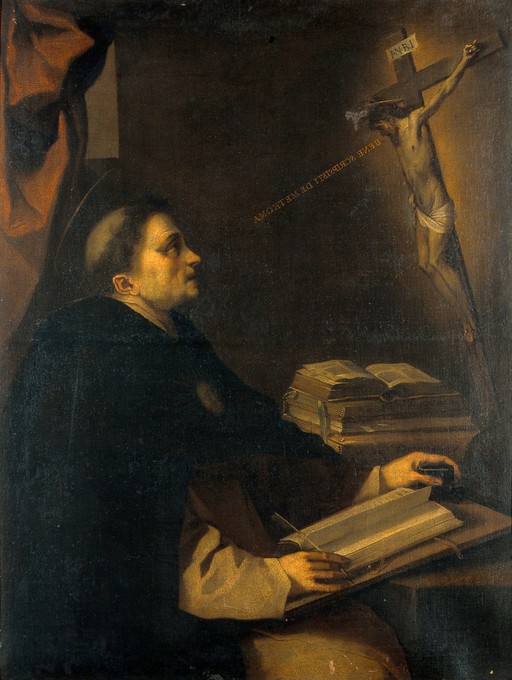
St Thomas Aquinas, 17th-century Italian oil painting
17th century
Primary source
Pange Lingua Gloriosi Corporis Mysterium
Thomas Aquinas · 1263
 Painting
Secondary source
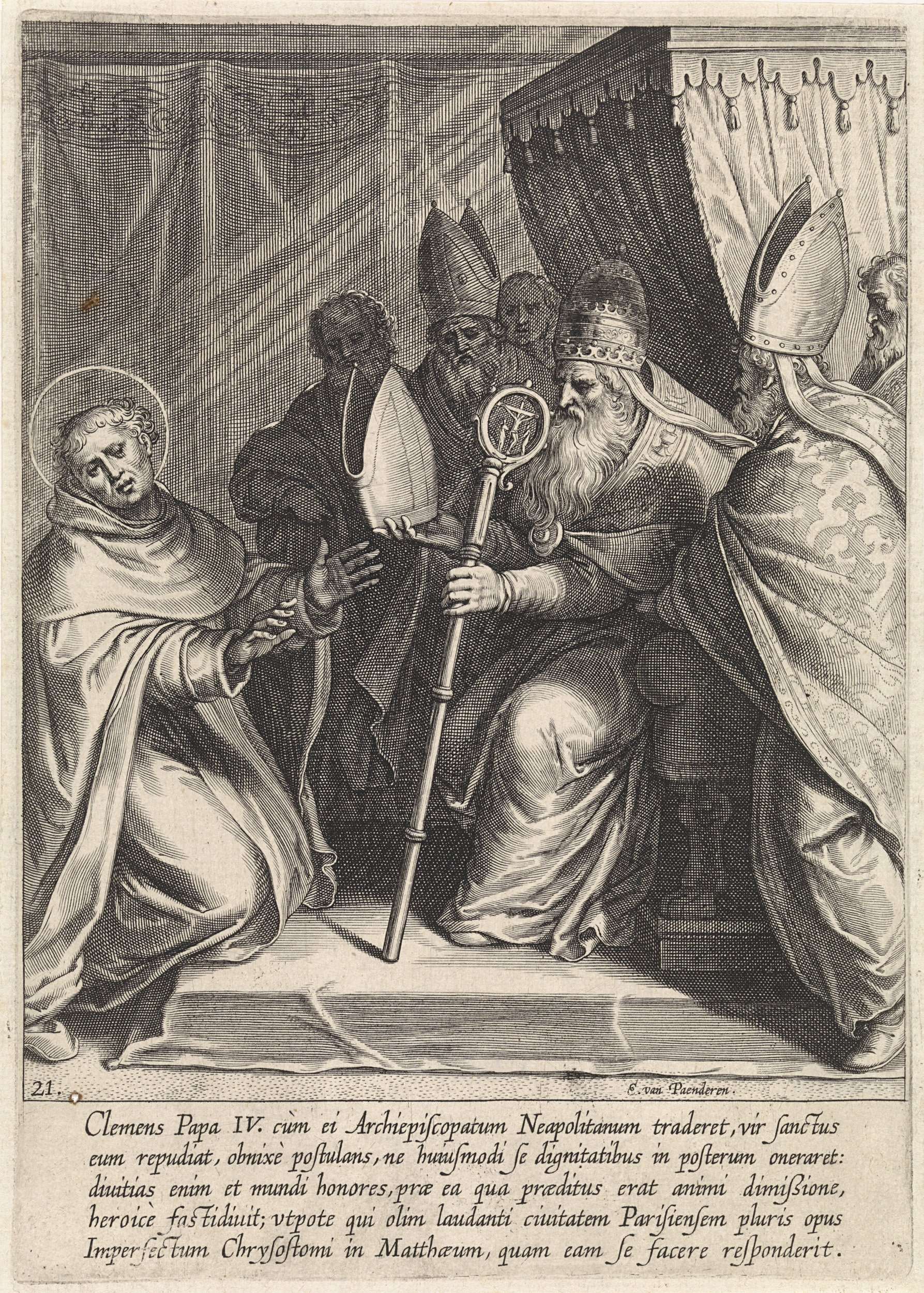
Thomas Aquinas Refuses the Archbishopric of Naples
1610
 Painting
Secondary source
Triumph of Saint Thomas Aquinas
Lippo Memmi · 1340
Ready when you are
Start chatting with Saint Thomas Aquinas now.
20 messages free · No credit card · Available in 50+ languages.