


Secondary sourceSculpture1852
Sappho
James Pradier · 1852
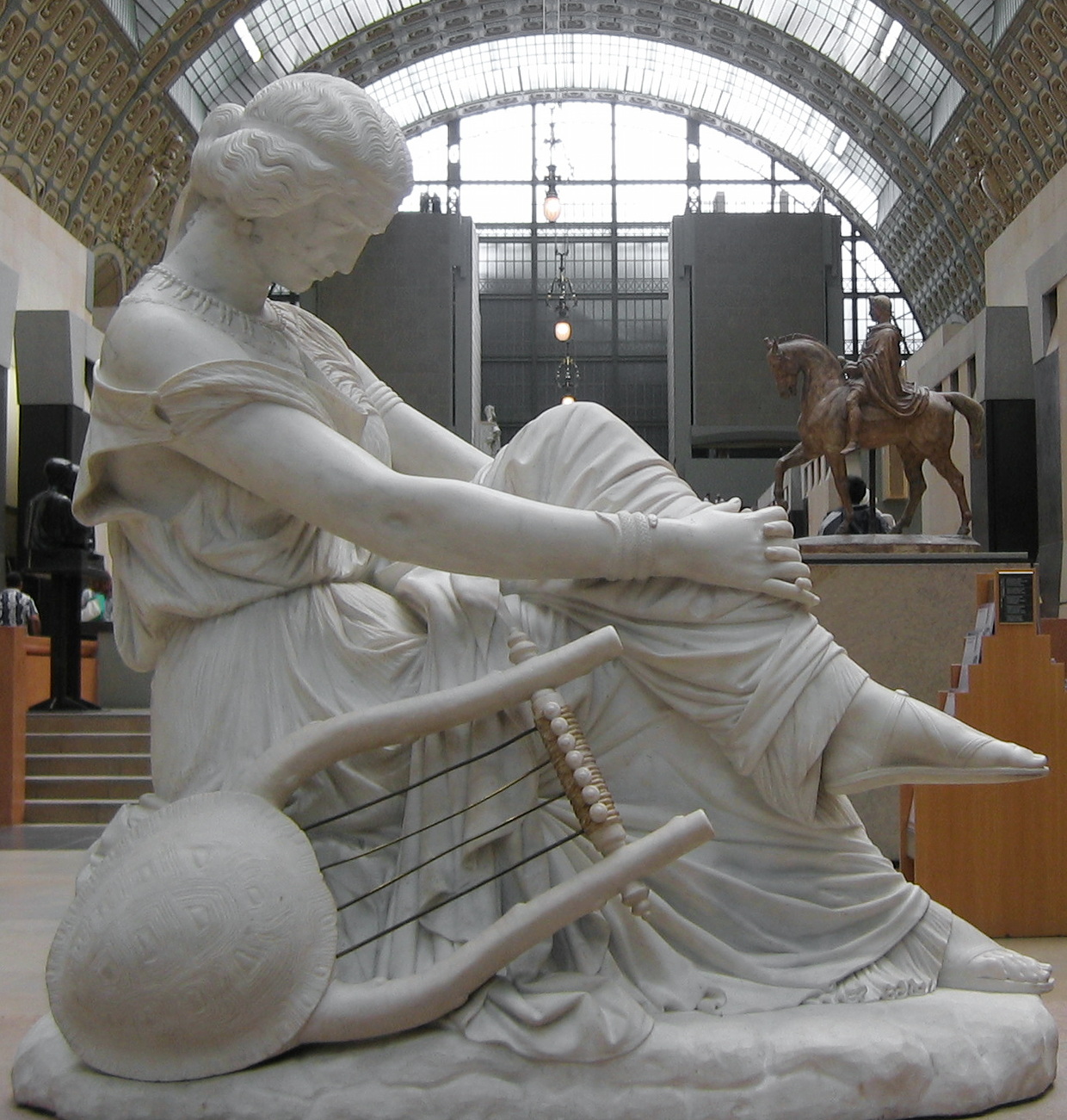
An 1852 marble statue by James Pradier showing Sappho seated with her lyre, exhibited at the Paris Salon.
A 19th-century sculptural image of Sappho as the melancholic abandoned poet, a common later stereotype.
About this source
What it is
This marble sculpture was made in 1852 by the French sculptor James Pradier and exhibited at the Salon that year. It is now held by the Musée d'Orsay in Paris. It shows a seated woman in classical draped robes holding a lyre.
Why it matters
The sculpture reflects a typical 19th-century image of Sappho as a melancholic, abandoned poet, her lyre fallen idle. This was one of many ways European artists reimagined her as a tragic romantic figure rather than focusing on her actual surviving verses.
Look closer
- What does the pose and expression suggest about how the sculptor wanted viewers to feel about Sappho?
- Why might 19th-century artists have preferred to show Sappho as sorrowful rather than as a working poet?
- How does the choice of material, marble, and classical dress shape our impression of her?
This sculpture is part of the curated material that grounds the AI version of Sappho on Humy.ai — when students ask about related events, the AI can quote it and cite it.
More Sappho sources
Browse all 89 →



Ready when you are
Start chatting with Sappho now.
20 messages free · No credit card · Available in 50+ languages.