


Secondary sourcePainting1864
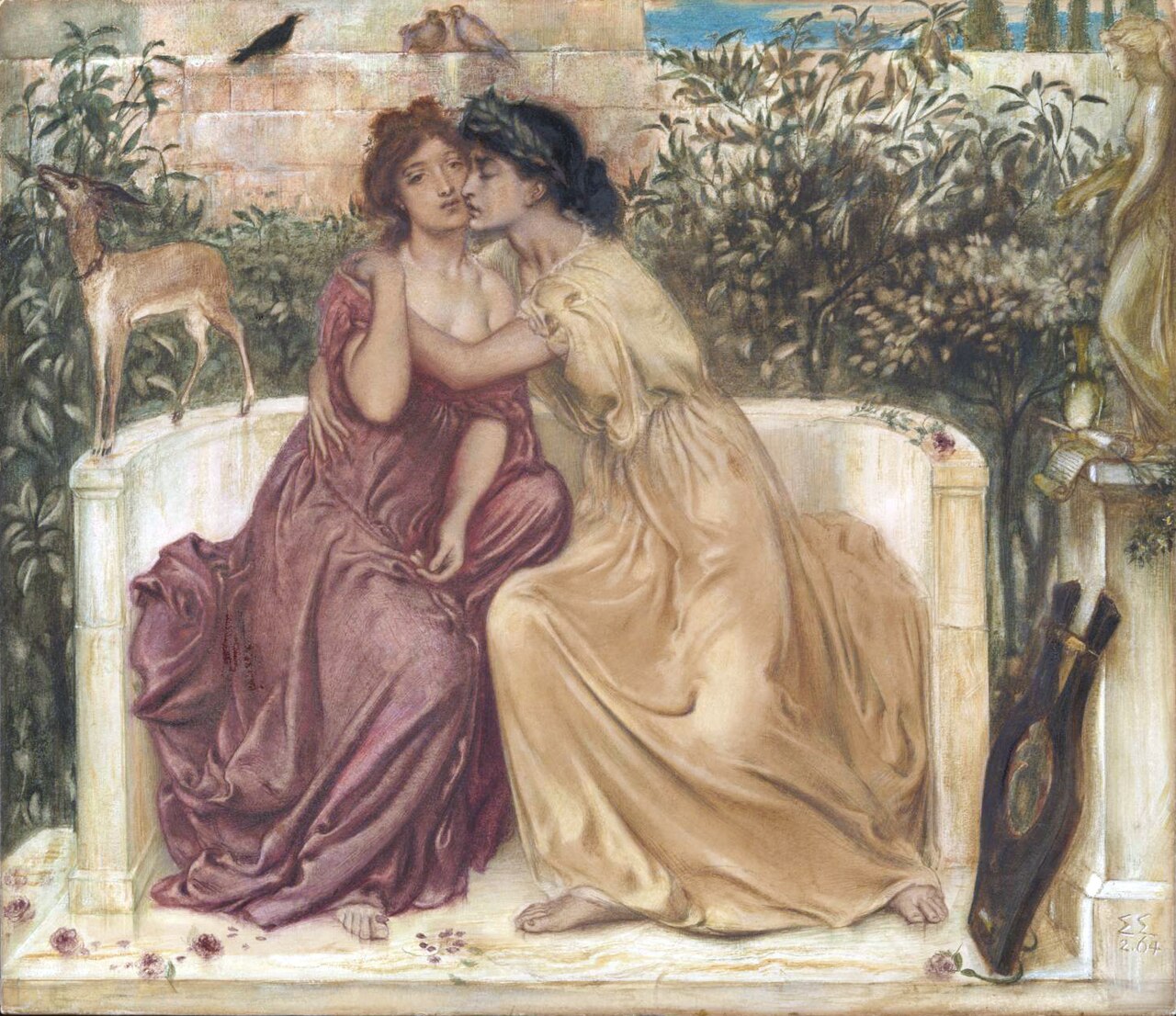
Sappho and Erinna in a Garden at Mytilene
Simeon Solomon · 1864
An 1864 watercolour by Simeon Solomon showing Sappho embracing the poet Erinna in a garden on Lesbos.
A 19th-century artist's imagining of Sappho in an intimate same-sex relationship, countering the Phaon myth.
About this source
What it is
This watercolour was painted in 1864 by Simeon Solomon and is now held by Tate Britain. It shows Sappho, in a yellow robe, embracing the poet Erinna, in a pink robe, in a garden setting on the island of Lesbos. Objects around them, including a lyre and a scroll, are traditionally linked to Sappho.
Why it matters
Solomon was inspired by the writing of Algernon Swinburne and believed, following a common 19th-century assumption, that Erinna was Sappho's companion on Lesbos, though it is now thought Erinna lived centuries later and elsewhere. The painting is an early openly homoerotic depiction of Sappho, offering an alternative to the heterosexual Phaon legend that dominated much of her later reception.
Look closer
- What symbols has the artist included, and what might they suggest about the relationship between the two women?
- How does this image differ from paintings that show Sappho in despair over a man?
- Why might an artist in the 1860s have chosen to depict Sappho this way?
This painting is part of the curated material that grounds the AI version of Sappho on Humy.ai — when students ask about related events, the AI can quote it and cite it.
More Sappho sources
Browse all 89 →

Ready when you are
Start chatting with Sappho now.
20 messages free · No credit card · Available in 50+ languages.