


Secondary sourcePaintingc.420 BC
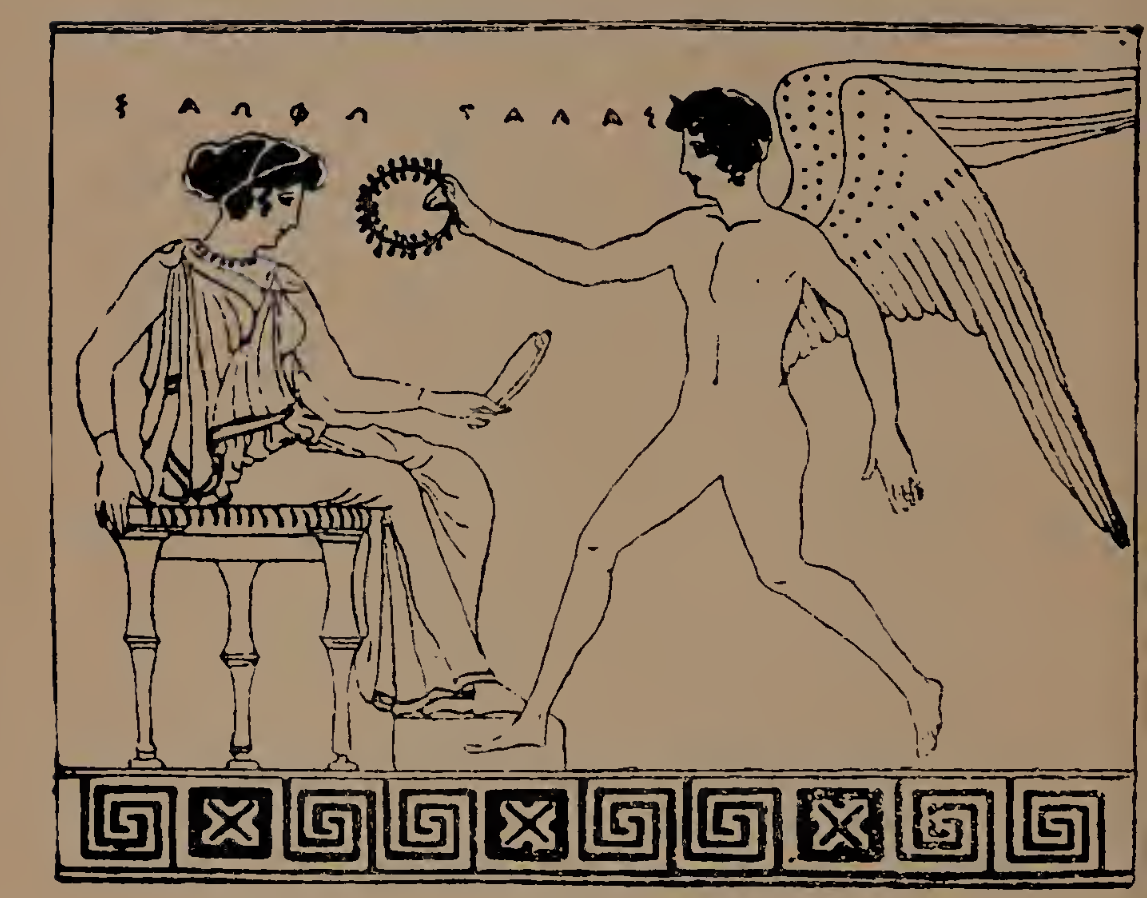
Sappho and Eros on a Lost Krater
D.M. Robinson · c.420 BC
A line drawing by D.M. Robinson, published in 1924, of an ancient Greek vase said to show Sappho with Eros. The identification is doubted by scholars.
Shows a vase traditionally labelled as Sappho, illustrating how later people linked images to the poet and how scholars question those links.
About this source
What it is
This is a line drawing made by D.M. Robinson and published in his book Sappho and Her Influence in 1924. It copies a bell krater, a Greek mixing vessel, dated to about 420 BC. The vessel is now lost and was once in the Middleton Collection. It shows a seated woman in a long draped garment and headband, holding a small object, facing a winged nude youth who offers her a wreath. Greek letters appear above the figures, and a meander and cross pattern runs along the bottom border.
The inscription that names the seated woman as Sappho is doubted by Beazley, a leading scholar of Greek vases, in his book Greek Vases in Poland (1928). So this drawing is a copy of a lost object, and its label may be wrong.
Why it matters
Sappho lived around 600 BC, and this vase was made about two hundred years later. Its label shows that people in later antiquity wanted to connect images with famous poets. The debate between Robinson and Beazley shows how historians test whether an object really shows the person it is said to show.
Look closer
- What does the inscription add to the picture, and why might a scholar doubt it?
- Who is offering what to whom, and what might that suggest about the relationship between the figures?
- Because the vase is lost, what can this drawing not tell us about the original object?
This painting is part of the curated material that grounds the AI version of Sappho on Humy.ai — when students ask about related events, the AI can quote it and cite it.
More Sappho sources
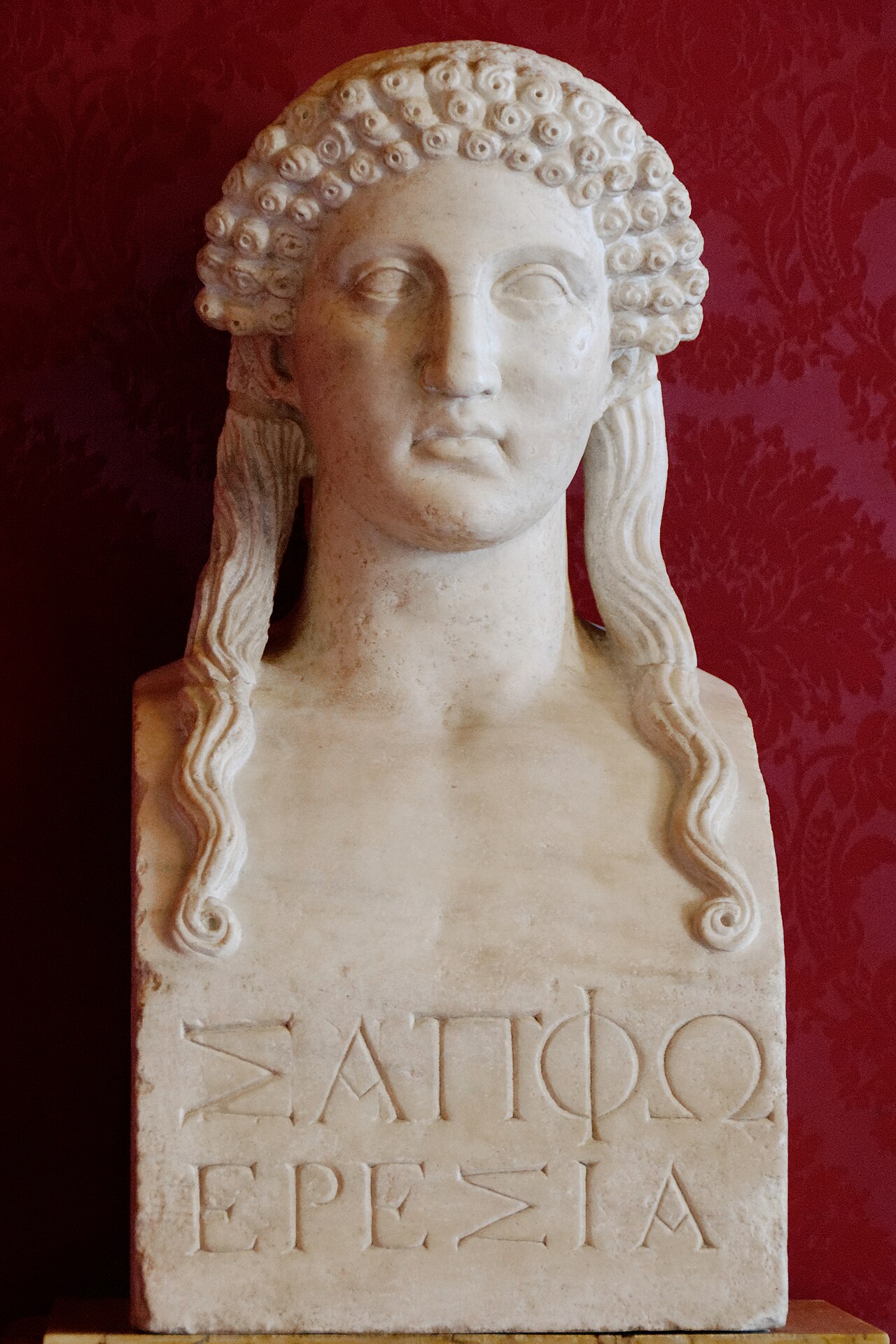
Browse all 89 →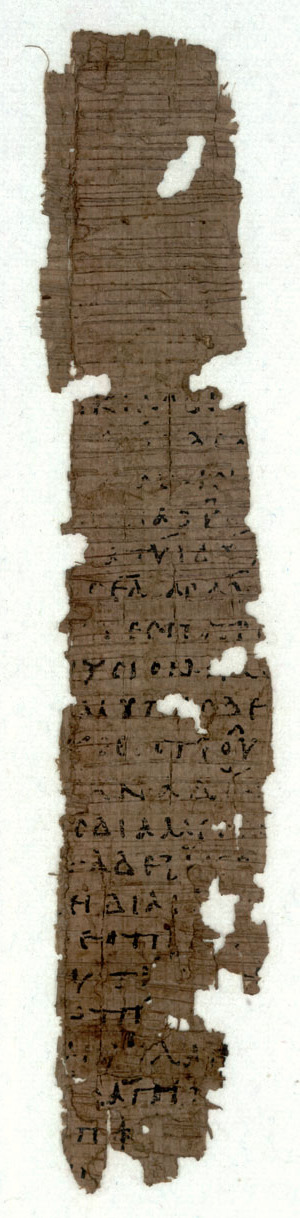

Ready when you are
Start chatting with Sappho now.
20 messages free · No credit card · Available in 50+ languages.