


Secondary sourceSculpture1801
Sappho
Claude Ramey · 1801
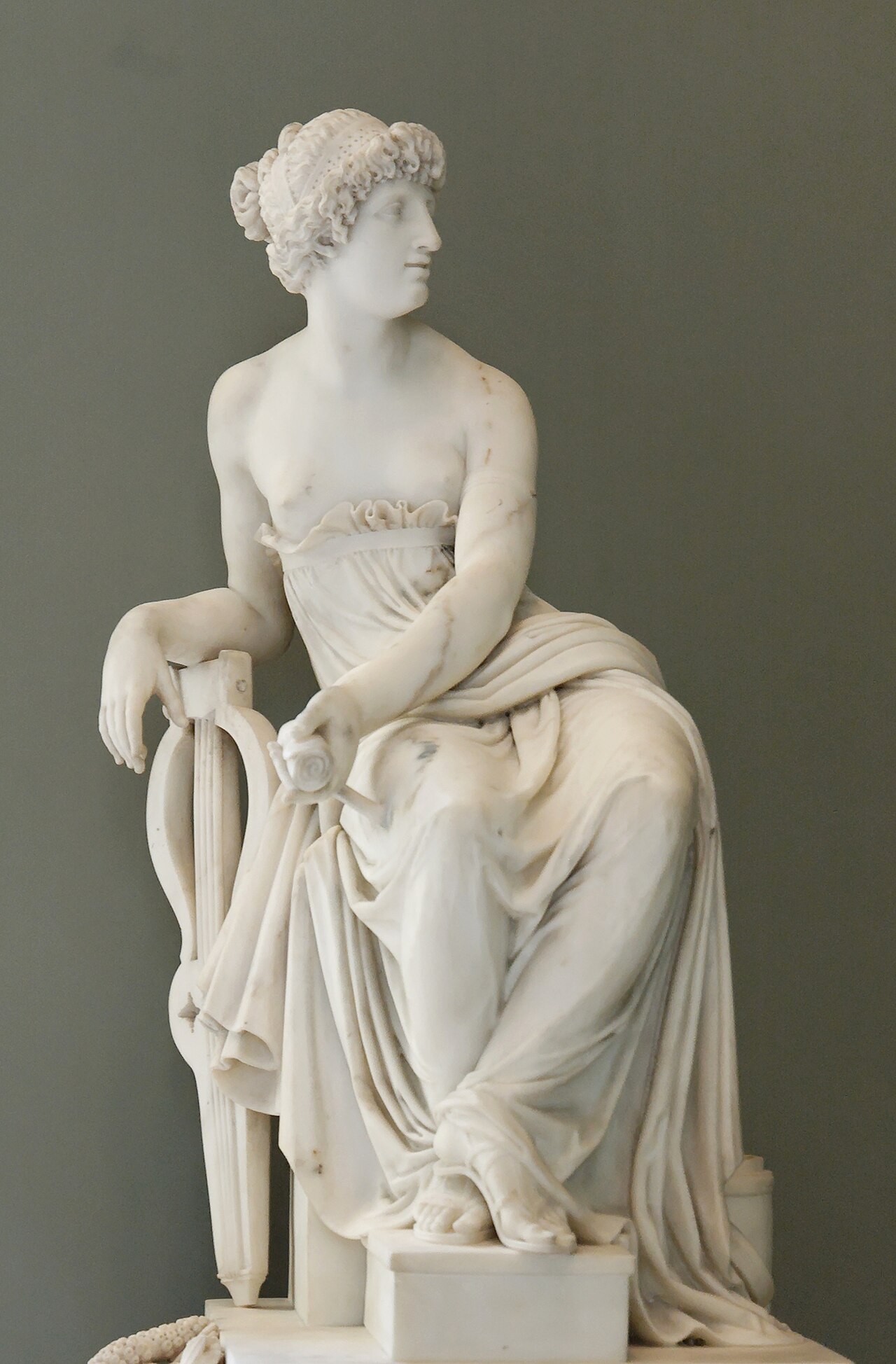
A Neoclassical marble statue presenting Sappho as a dignified classical poet, made during the Napoleonic era.
A Neoclassical statue honoring Sappho as a dignified 'Tenth Muse' figure.
About this source
What it is
A marble statue of Sappho carved in 1801 by the French sculptor Claude Ramey. It is held in the Department of Sculptures of the Louvre.
Why it matters
Made during the Napoleonic period, the statue reflects French Neoclassical admiration for Sappho as the 'Tenth Muse,' a revered poetic ancestor rather than a tragic or scandalous figure. It shows how different eras reshaped her image to fit their own ideals.
Look closer
- How does the calm, dignified pose compare to more dramatic 19th-century images of Sappho?
- Why might Ramey include a lyre and a rose as symbols?
- What do changes in how Sappho is shown over time tell us about each era's values?
This sculpture is part of the curated material that grounds the AI version of Sappho on Humy.ai — when students ask about related events, the AI can quote it and cite it.
More Sappho sources
Browse all 89 →



Ready when you are
Start chatting with Sappho now.
20 messages free · No credit card · Available in 50+ languages.