


Secondary sourcePainting1867
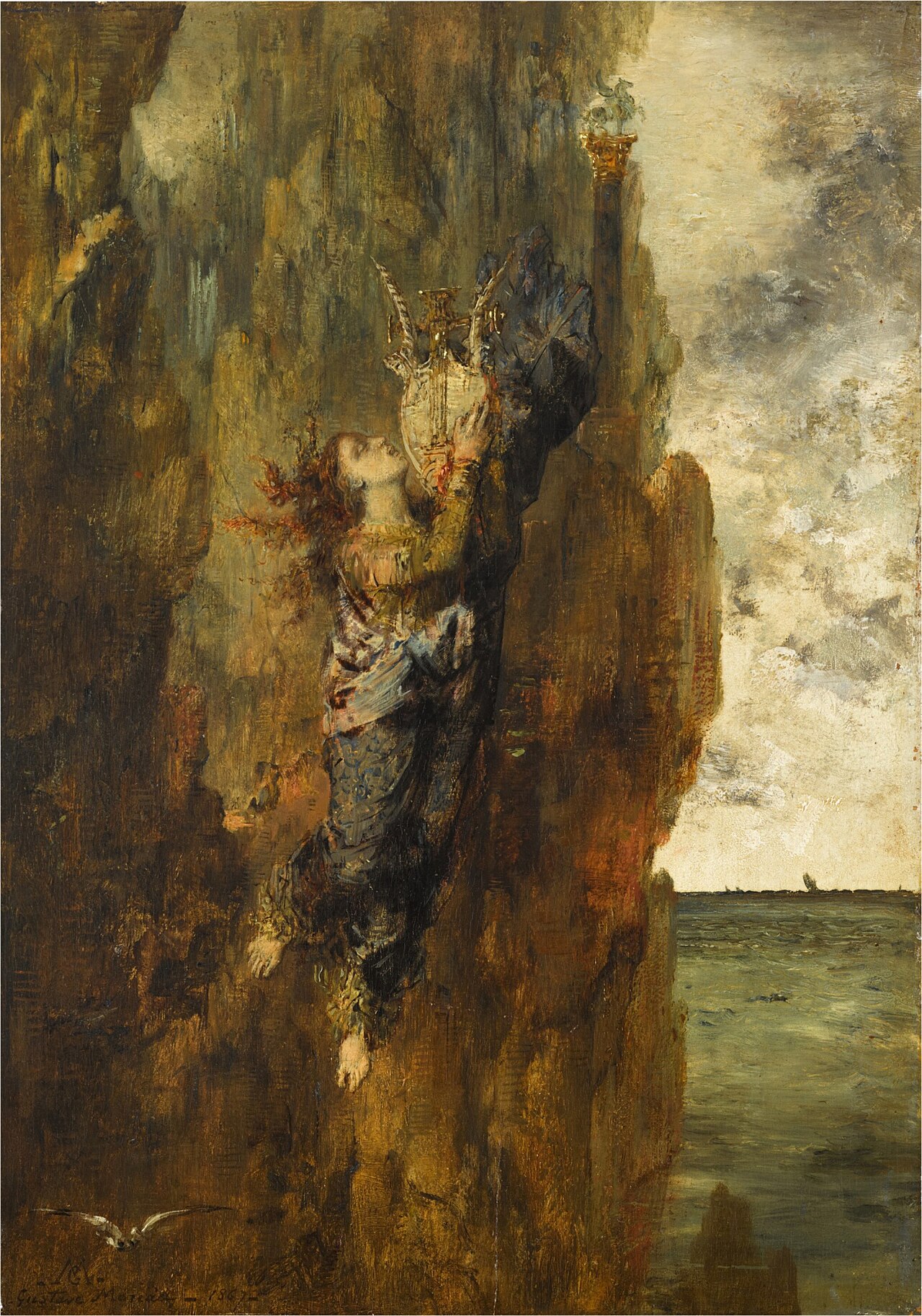
Sappho Falling into the Abyss
Gustave Moreau · 1867
An 1867 painting by Gustave Moreau shows Sappho clinging to a cliff with her lyre, above the sea. It imagines the legend of her fall from the Leucadian cliff.
Shows a later artist's imagined fall of Sappho from the Leucadian cliff, not a record of her life.
About this source
What it is
This is an 1867 painting by Gustave Moreau. It shows a woman with a lyre clinging to a steep brown rocky cliff, her head thrown back. She wears blue and grey drapery. A column with a flame stands on top of the cliff, and the sea and a distant sail lie to the right under a pale sky. A bird flies at lower left.
Why it matters
The painting shows the legend of Sappho's fall from the Leucadian cliff, a story told long after her lifetime around 600 BCE. Moreau was a French painter who often drew on classical myth and legend. His picture shows how nineteenth-century artists turned the poet's supposed death into a symbol of passion and tragedy.
Look closer
- What do the lyre, the flame and the cliff suggest about Sappho's story?
- Why might Moreau want to show her falling rather than writing or singing?
- What does this image leave out about the historical evidence for the legend?
This painting is part of the curated material that grounds the AI version of Sappho on Humy.ai — when students ask about related events, the AI can quote it and cite it.
More Sappho sources
Browse all 89 →


Ready when you are
Start chatting with Sappho now.
20 messages free · No credit card · Available in 50+ languages.