


Secondary sourcePaintingcirca 1893
Sappho
Gustave Moreau · circa 1893
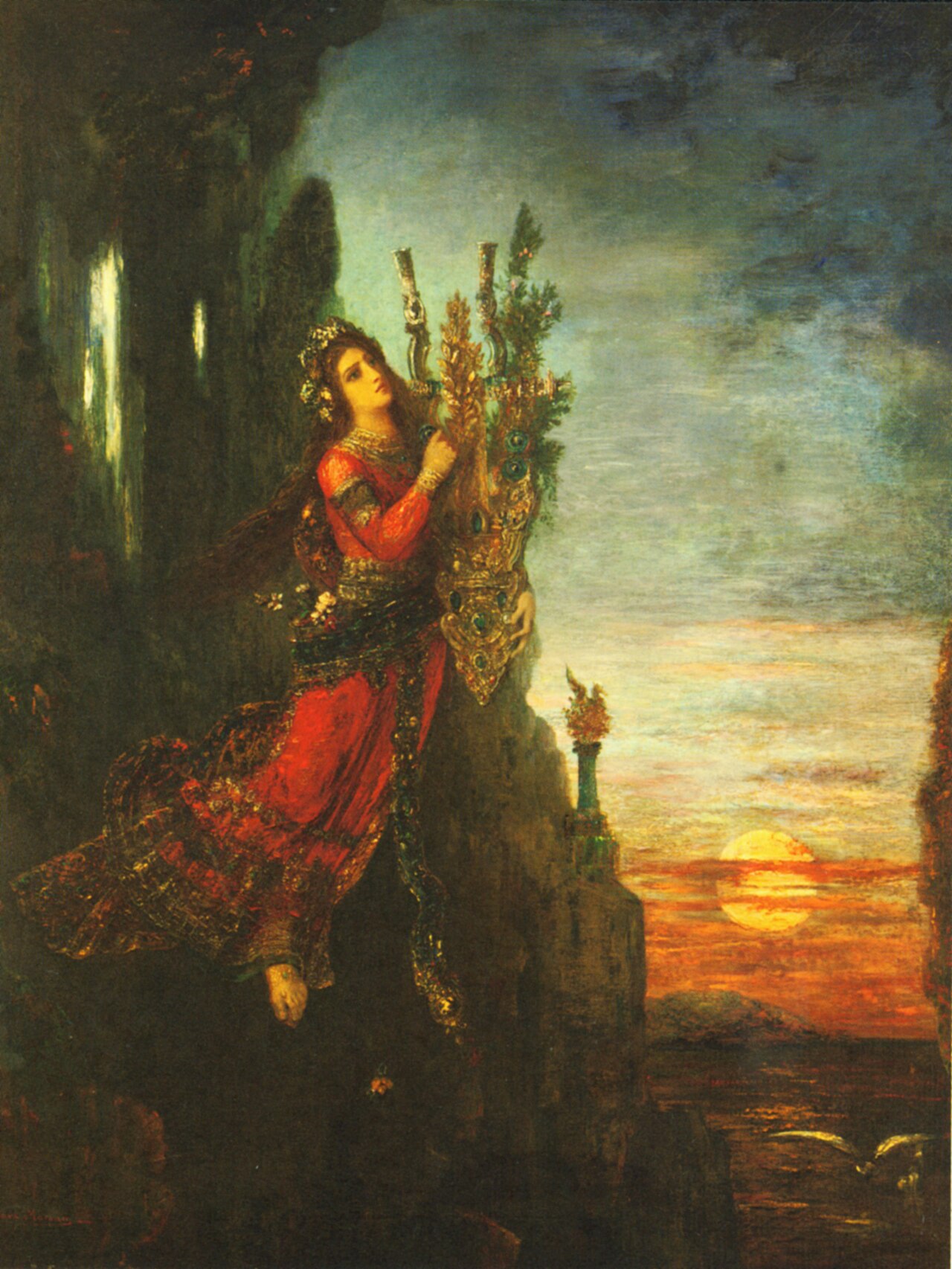
A Symbolist painting of Sappho by Gustave Moreau, made around 1893. It presents the poet with a golden lyre against a sunset sea.
Shows Sappho as reimagined by a Symbolist painter around 1893, turning the ancient poet into a figure of myth and mood.
About this source
What it is
This is a painting by Gustave Moreau, dated around 1893. It shows a woman in a flowing red and gold gown, with flowers in her hair, leaning against a rocky cliff and holding an ornate golden lyre. She gazes upward. A large orange sun sets over the sea on the right, and a small burning brazier stands on a pedestal beside her.
The curator's note describes the work as Symbolist, a late nineteenth-century style that used myth and symbols to express mood and ideas.
Why it matters
Moreau painted Sappho more than two thousand years after she lived. His picture shows how late nineteenth-century artists turned the ancient poet into a symbol of art, passion and isolation. It tells us as much about Moreau's time and its taste as it does about Sappho herself.
Look closer
- Which objects in the painting, such as the lyre, the flowers and the fire, seem to carry meaning?
- Why might a painter of the 1890s want to show a Greek poet in such a dramatic setting?
- What does this painting leave out about Sappho's actual poems and her life on Lesbos?
This painting is part of the curated material that grounds the AI version of Sappho on Humy.ai — when students ask about related events, the AI can quote it and cite it.
More Sappho sources
Browse all 89 →


Ready when you are
Start chatting with Sappho now.
20 messages free · No credit card · Available in 50+ languages.