


Secondary sourcePainting1924 (drawing of a vase from c. 510 BC)
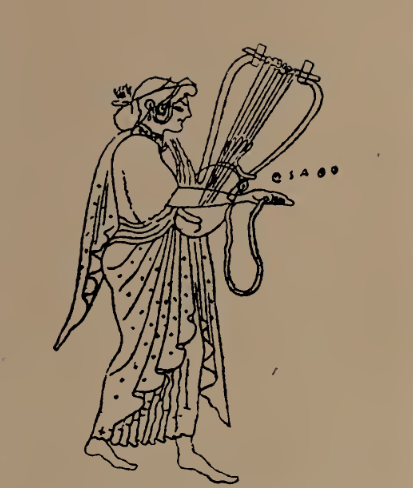
Sappho Holding a Barbitos
D.M. Robinson · 1924 (drawing of a vase from c. 510 BC)
A line drawing after an ancient Greek vase from about 510 BC, the earliest known depiction of Sappho.
A drawing of the earliest known image of Sappho, from an ancient Greek vase showing her with a lyre.
About this source
What it is
This is a line drawing made in 1924 by D.M. Robinson, copying an image from an ancient Greek vase (a kalpis) dated to about 510 BC. The vase itself, decorated by the so-called Sappho painter, shows a woman holding a barbitos, a type of lyre, and is now held in the National Museum of Warsaw.
Why it matters
This vase painting is the earliest surviving image of Sappho, made more than a century after she lived. It shows how Sappho was remembered in ancient Greek art as a musician and poet, long before modern scholars studied her life.
Look closer
- Why might an ancient artist choose to show Sappho holding a musical instrument?
- This is a drawing of a vase painting made over a century after Sappho died — what does that tell us about how reliable it is as evidence of her real appearance?
- What details in the drawing suggest the artist's idea of how a poet should look?
This painting is part of the curated material that grounds the AI version of Sappho on Humy.ai — when students ask about related events, the AI can quote it and cite it.
More Sappho sources
Browse all 89 →

Ready when you are
Start chatting with Sappho now.
20 messages free · No credit card · Available in 50+ languages.