


Secondary sourcePaintingcirca 1829
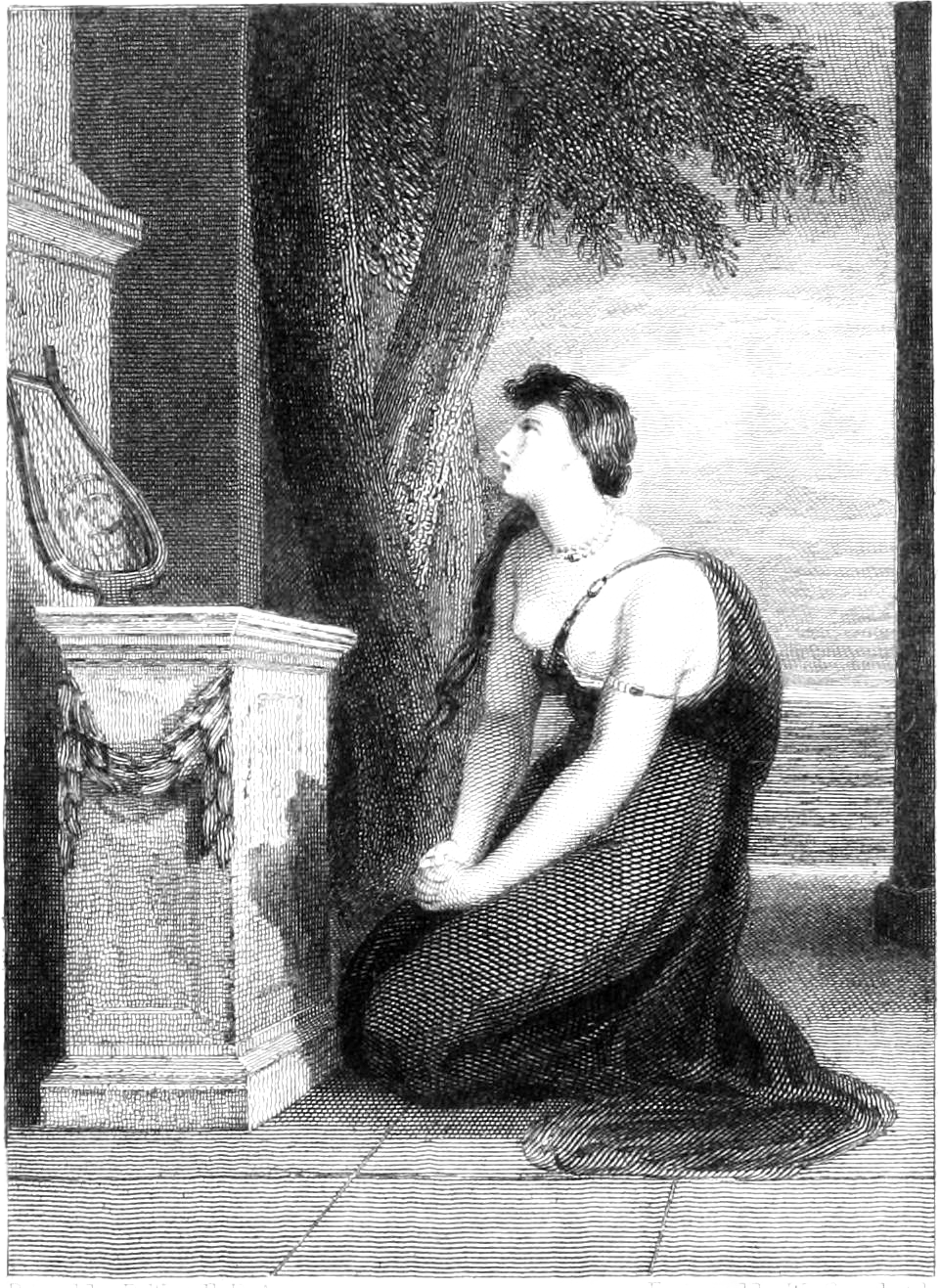
Sappho Kneeling beside a Harp
Richard Westall · circa 1829
An engraving after a painting by Richard Westall, showing Sappho kneeling by a pedestal with a lyre. It reflects how British artists of the early 1800s pictured the poet.
Shows a later artist's imagined scene of Sappho with her lyre, which helps students see how her story was visualised long after her time.
About this source
What it is
This is an engraving of Sappho kneeling beside a harp, after a painting by Richard Westall, dated circa 1829. It was engraved by Greatbatch. It shows a woman with short dark hair kneeling on a stone floor beside a stone pedestal with a carved garland, gazing upward. A lyre hangs on the pedestal's left side, and a tree and a column stand behind her.
Why it matters
The image was made long after Sappho's lifetime, so it records how artists imagined the poet, not how she looked. Because it was engraved, it could be copied and sold widely, which helped spread this picture of Sappho as a poet connected to the lyre.
Look closer
- What gestures and expression does the figure show, and what feeling might the artist want to create?
- What role does the lyre play in identifying Sappho in this image?
- What would you ask about the engraver and the original painting to understand how the image was made?
This painting is part of the curated material that grounds the AI version of Sappho on Humy.ai — when students ask about related events, the AI can quote it and cite it.
More Sappho sources
Browse all 89 →

Ready when you are
Start chatting with Sappho now.
20 messages free · No credit card · Available in 50+ languages.