


Secondary sourcePainting1791
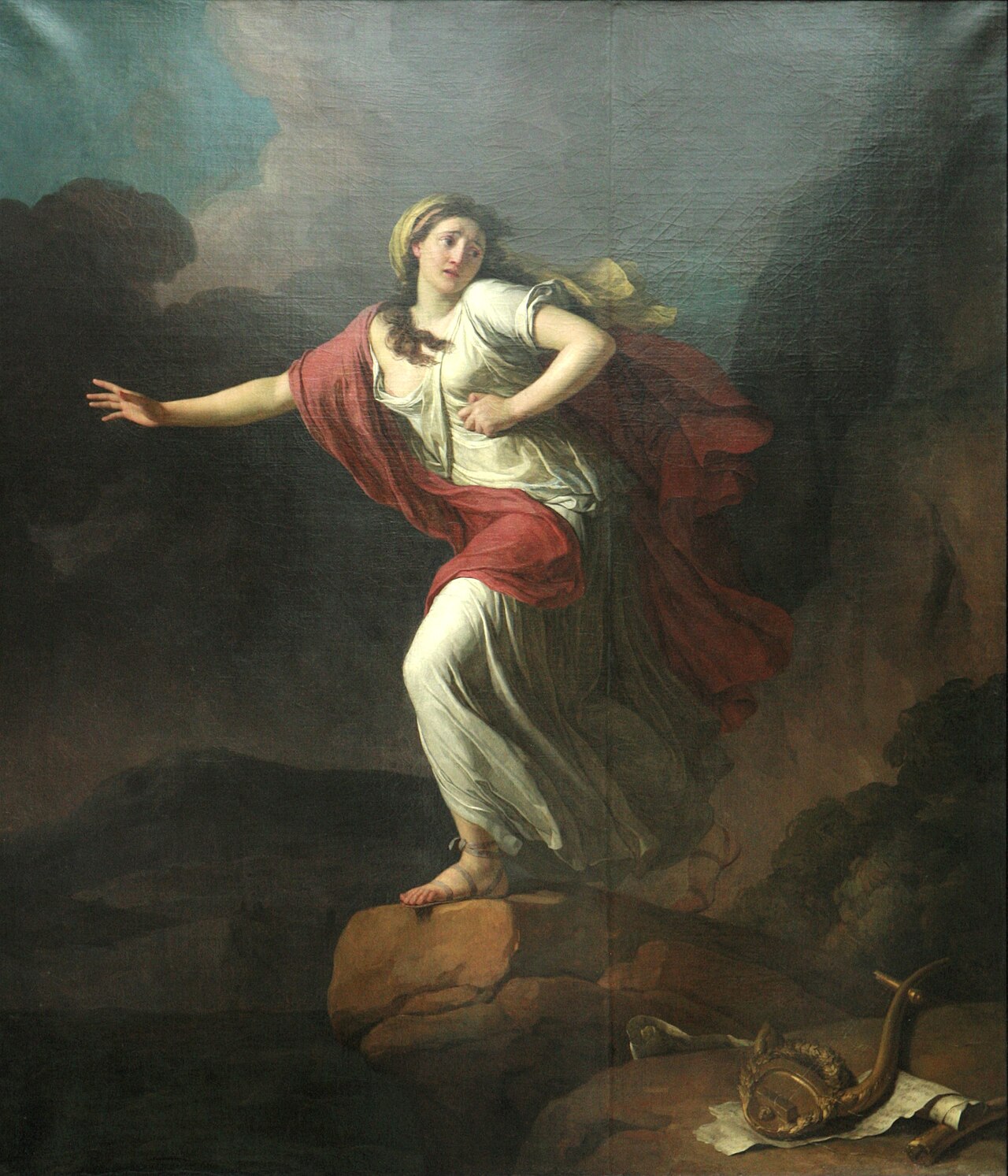
Sappho rushing to the sea
Jean-Joseph Taillasson · 1791
An 1791 painting by Jean-Joseph Taillasson showing Sappho running toward a cliff edge, illustrating the legendary Leucadian leap tied to Phaon.
Depicts the legendary suicide leap that later writers attached to Sappho's biography.
About this source
What it is
This painting was made in 1791 by the French artist Jean-Joseph Taillasson and is held by the Musée des Beaux-Arts de Brest. It shows a woman with outstretched arms running toward a cliff edge, with a lyre, laurel wreath and scroll left behind at her feet.
Why it matters
The scene illustrates the legend that Sappho leapt to her death from the cliffs of Leucas over her unrequited love for Phaon, a story that originated in later comic poetry rather than in Sappho's own verses. This legend became treated as part of her accepted life story and was used to frame her as heterosexual, shaping how later generations understood her.
Look closer
- What objects has the artist placed at Sappho's feet, and why might they be significant?
- Why do you think an invented comic-poetry story became accepted as part of Sappho's biography?
- What does this painting leave out about Sappho's actual poetry and life?
This painting is part of the curated material that grounds the AI version of Sappho on Humy.ai — when students ask about related events, the AI can quote it and cite it.
More Sappho sources
Browse all 89 →

Ready when you are
Start chatting with Sappho now.
20 messages free · No credit card · Available in 50+ languages.