


Secondary sourceArtifact13 September 2007
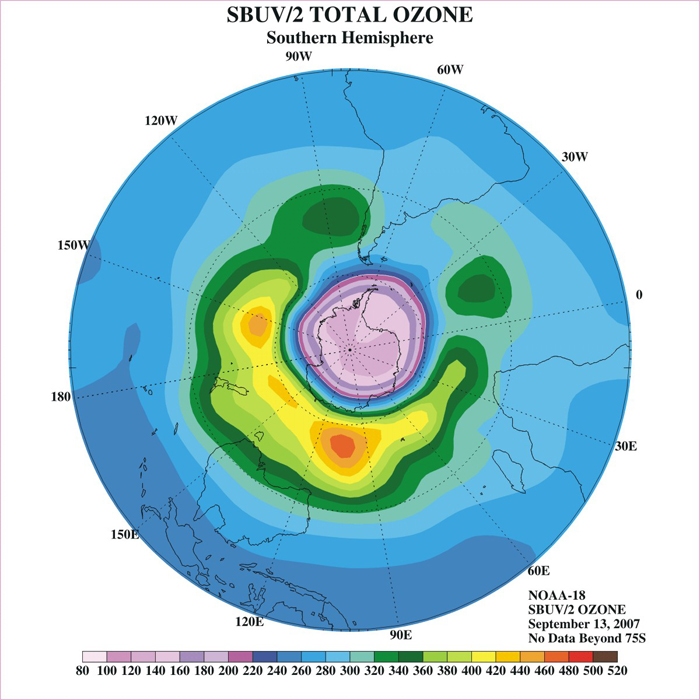
Satellite Image of Ozone Hole in 2007
National Oceanic & Atmospheric Administration (NOAA) · 13 September 2007
A 2007 NOAA satellite map of the Antarctic ozone hole, showing the long-term phenomenon Mario Molina's research first identified decades earlier.
A later satellite record of the ozone hole phenomenon Molina's chemistry had identified and explained decades earlier.
About this source
What it is
This polar map was produced using data from a Solar Backscatter Ultraviolet instrument aboard the NOAA-18 weather satellite. Dated 13 September 2007, it shows the ozone hole over the Antarctic continent using a color scale of ozone concentration.
Why it matters
This image was made decades after the discoveries of chemists including Mario Molina, who first explained how certain chemicals could destroy stratospheric ozone. By 2007, international agreements like the Montreal Protocol had already begun restricting those chemicals, and continued satellite monitoring like this let scientists track how the ozone layer was responding.
Look closer
- How does this image compare to earlier ozone hole images from the 1970s and 1980s?
- Why is long-term monitoring important for judging whether a scientific policy, like the Montreal Protocol, is working?
- What questions does a single snapshot like this leave unanswered about long-term trends?
This artifact is part of the curated material that grounds the AI version of Mario Molina on Humy.ai — when students ask about related events, the AI can quote it and cite it.
More Mario Molina sources
Browse all 17 →Primary source
Montreal Protocol
1987
 Artifact
Primary source
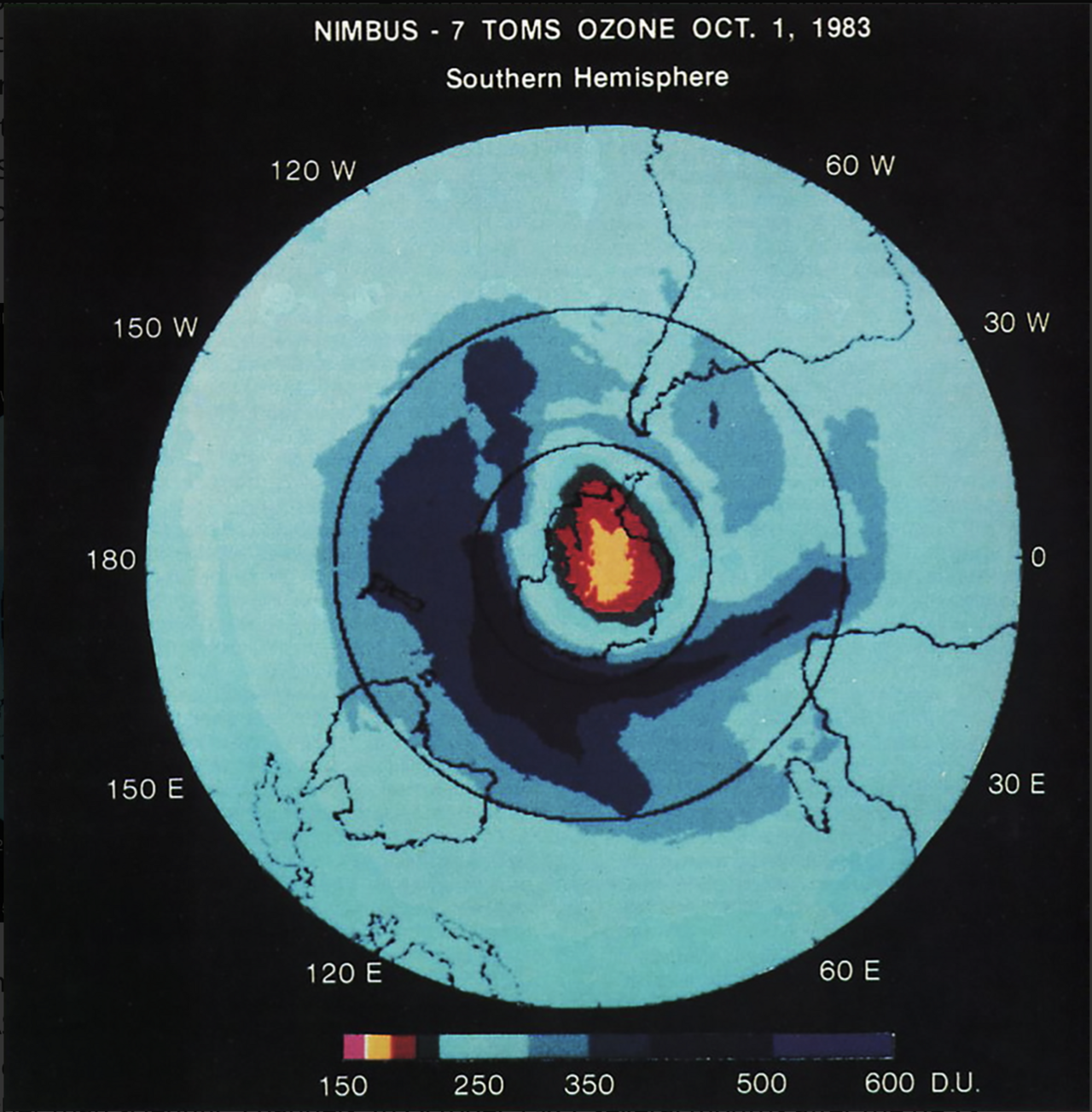
Satellite Map of Ozone over Antarctica, 1983
NASA · 1 October 1983
Secondary source
Presidential Medal of Freedom Recipient: Mario Molina
The White House · 2013
 Photograph
Primary source
Portrait of Mario Molina
2011

Free account
Read every Mario Molina source
Sign up free →
Ready when you are
Start chatting with Mario Molina now.
20 messages free · No credit card · Available in 50+ languages.