


Primary sourceDocument1971
Schilb v. Kuebel
Thurgood Marshall · 1971
A 1971 concurring opinion by Justice Thurgood Marshall supporting Illinois's bail reform, which cut the bondsmen's fee from 10 percent to 1 percent.
Shows Marshall supporting bail reform for defendants who could not afford high fees, in a short concurrence he wrote on the Court.
About this source
What it is
This is a concurring opinion written by Justice Thurgood Marshall in Schilb v. Kuebel, argued on October 12, 1971 and decided on December 20, 1971, reported at 404 U.S. 357. Marshall joins the Court's opinion and adds a few words of his own. The text is preserved on Wikisource, and the copy there is a transcription of the opinion.
Why it matters
The case concerned an Illinois law that restricted professional bail bondsmen, who had customarily collected 10 percent of each bond as a fee and kept it regardless of the outcome. Marshall writes that the new scheme reduces the cost of liberty for people awaiting trial. He says that in the evolving struggle for meaningful bail reform, he cannot find the Illinois move to be unconstitutional. Justice Douglas dissented.
Look closer
- Who paid the old 10 percent fee, and how did the new law change what they paid?
- Why does Marshall describe the law as an effort to reduce 'the cost of liberty'?
- What does this short concurrence leave out about bail bondsmen's own views?
This document is part of the curated material that grounds the AI version of Thurgood Marshall on Humy.ai — when students ask about related events, the AI can quote it and cite it.
More Thurgood Marshall sources
Meet the AI Thurgood Marshall →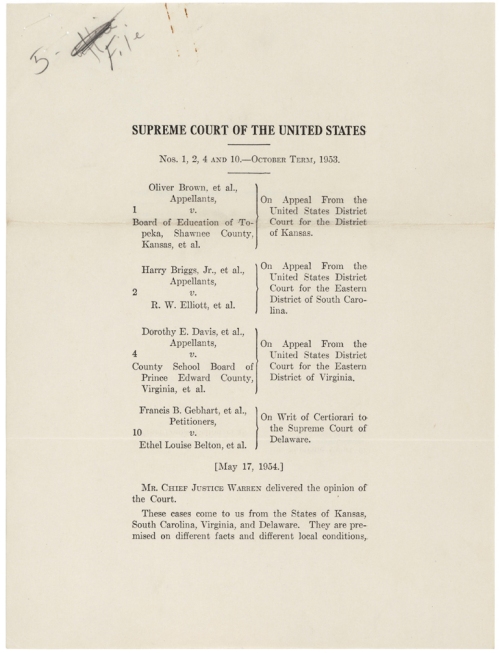 Document
Primary source
Brown v. Board of Education
Earl Warren · 17 May 1954
 Painting
Primary source
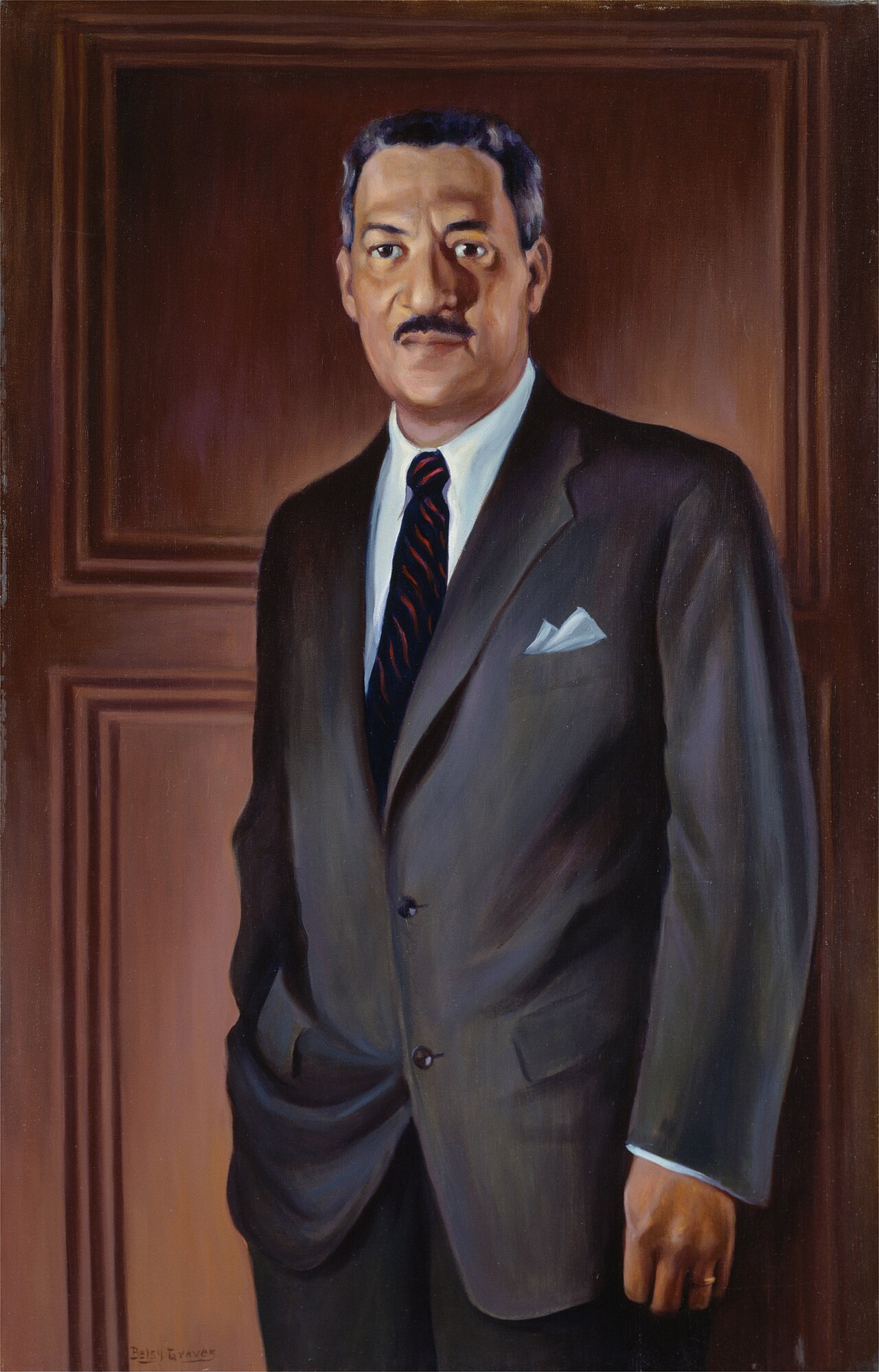
Thurgood Marshall
Betsy Graves Reyneau · 1956
 Photograph
Primary source
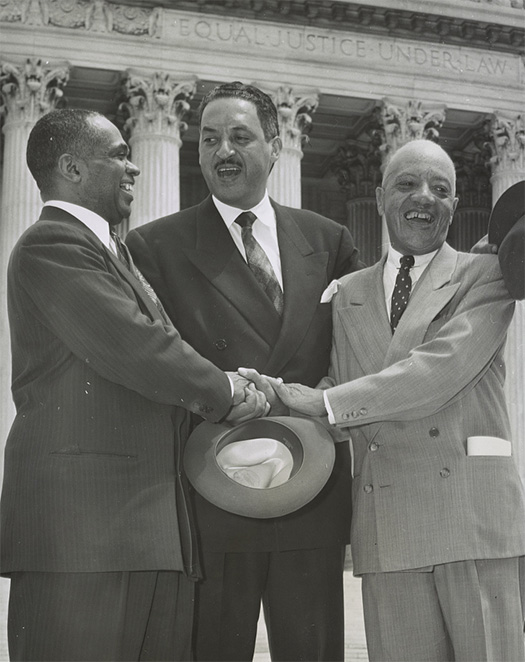
George Edward Chalmer Hayes, Thurgood Marshall, and James Nabrit in 1954 winning Brown case
1954
 Photograph
Primary source
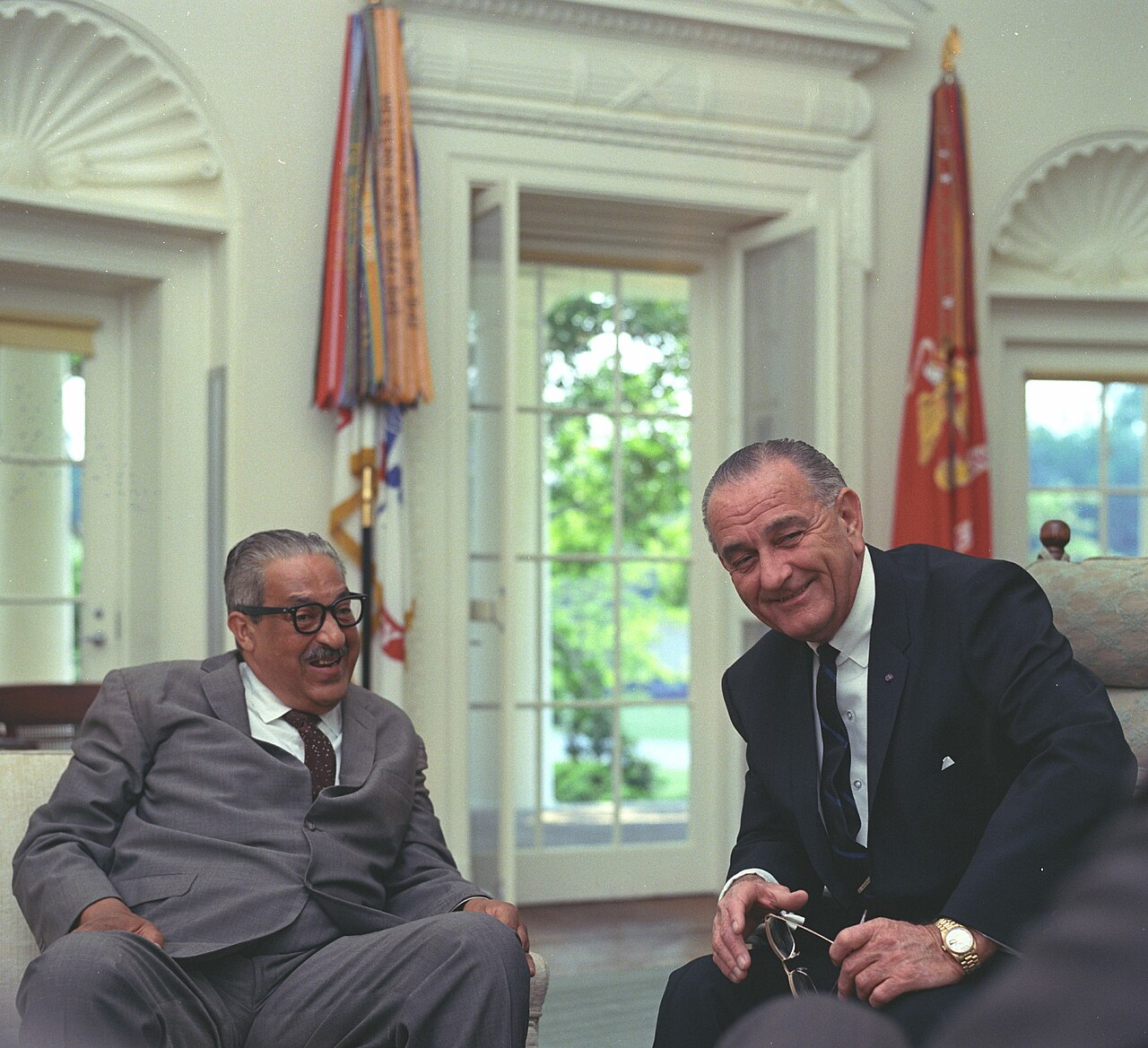
Thurgood Marshall and President Lyndon B. Johnson, June 13, 1967
Frank Wolfe · 13 June 1967
Primary source
Cooper v. Aaron
12 September 1958
Ready when you are
Start chatting with Thurgood Marshall now.
20 messages free · No credit card · Available in 50+ languages.