


Secondary sourceArtifactbetween 1847 and 1932
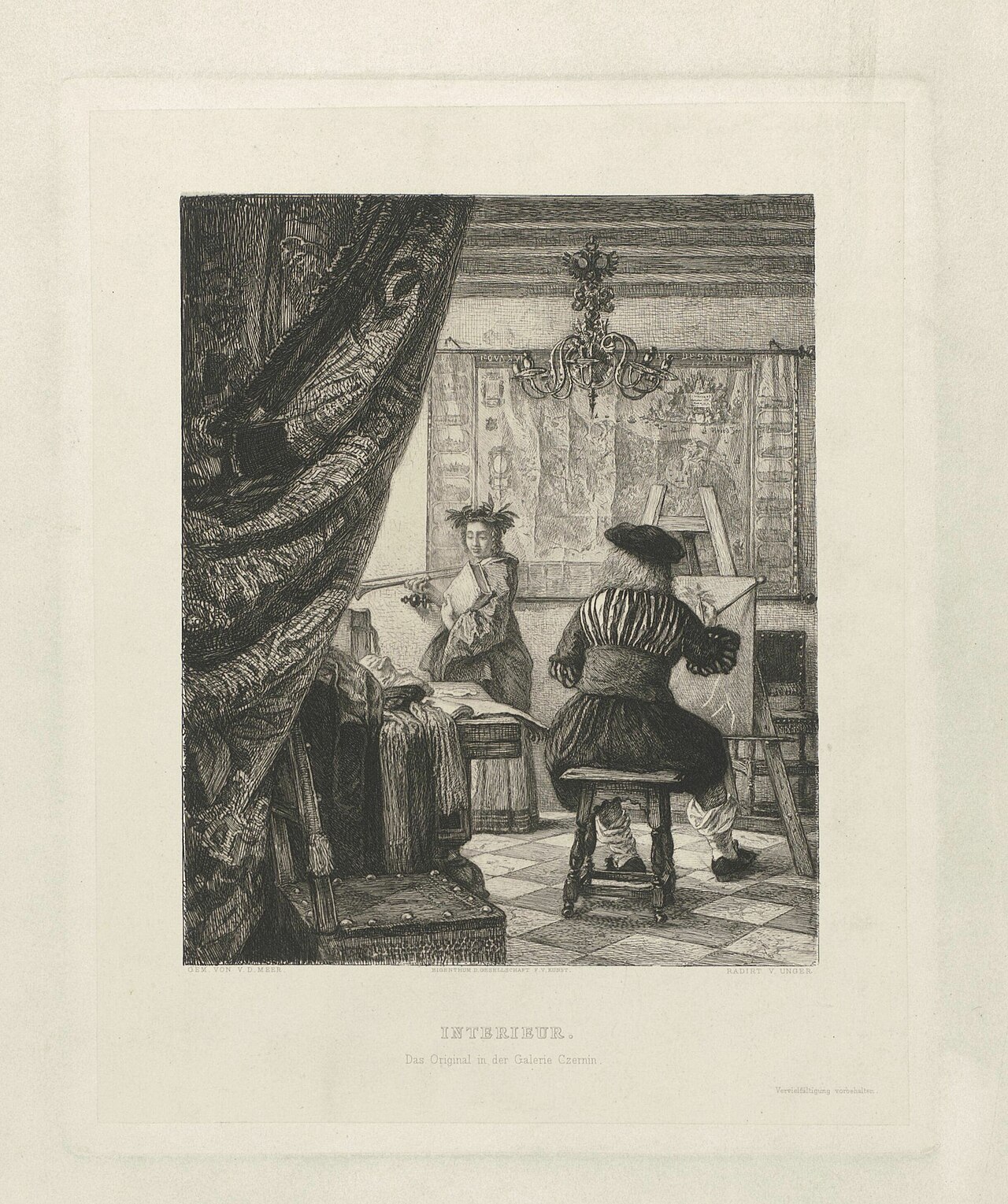
Schilderkunst (The Art of Painting), print by William Unger
William Unger · between 1847 and 1932
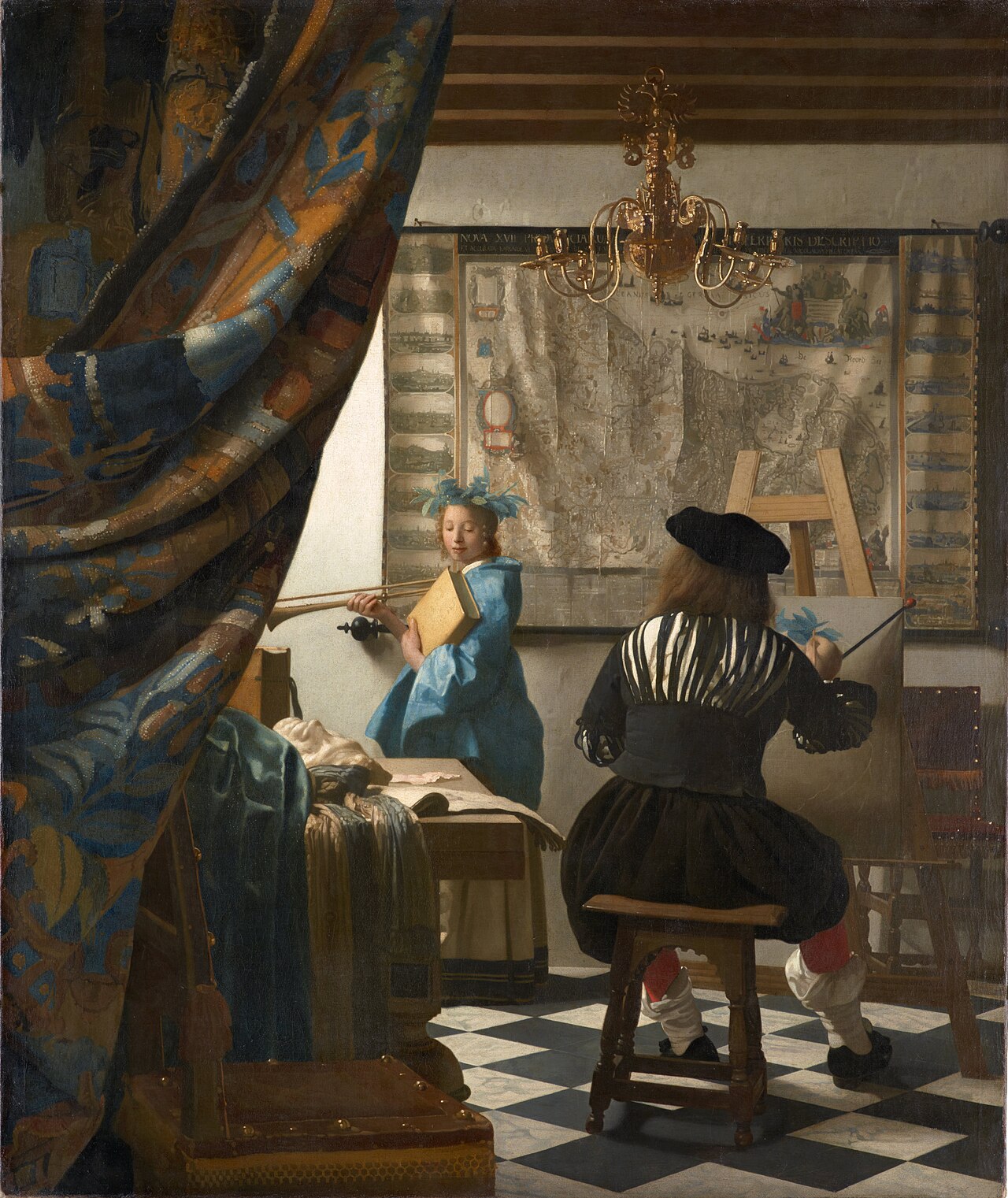
An etching by William Unger after Vermeer's The Art of Painting, showing a painter at an easel in a studio. The print reproduces the composition of the original painting.
This etching reproduces Vermeer's The Art of Painting, showing how his studio scene was copied and circulated in later centuries.
About this source
What it is
This is a black-and-white etching titled Interieur, made by William Unger after a painting by Johannes Vermeer that hangs in the Kunsthistorisches Museum in Vienna. It shows a painter in a striped jacket and wide hat seated before an easel, seen from behind, while a woman in a headdress holds a sheet and a long pole. A chandelier hangs above, with a tapestry and curtain at the left. The Rijksmuseum dates it from 1847 to 1932 and records it as made in Germany.
Why it matters
Vermeer's painting was rediscovered and copied by printmakers in the nineteenth century, and this etching shows how his studio scenes reached new audiences. Unger's version is a reproduction, so it changes the tones and surface of the original. It also shows how artists in Germany studied and passed on Dutch painting.
Look closer
- Who is the painter in the scene, and what is he doing with his back to the viewer?
- What objects in the room suggest the wealth or role of the household, and what might the print leave out?
- Why would a printmaker in the nineteenth century choose to copy a seventeenth-century painting?
This artifact is part of the curated material that grounds the AI version of Johannes Vermeer on Humy.ai — when students ask about related events, the AI can quote it and cite it.
More Johannes Vermeer sources
Browse all 95 →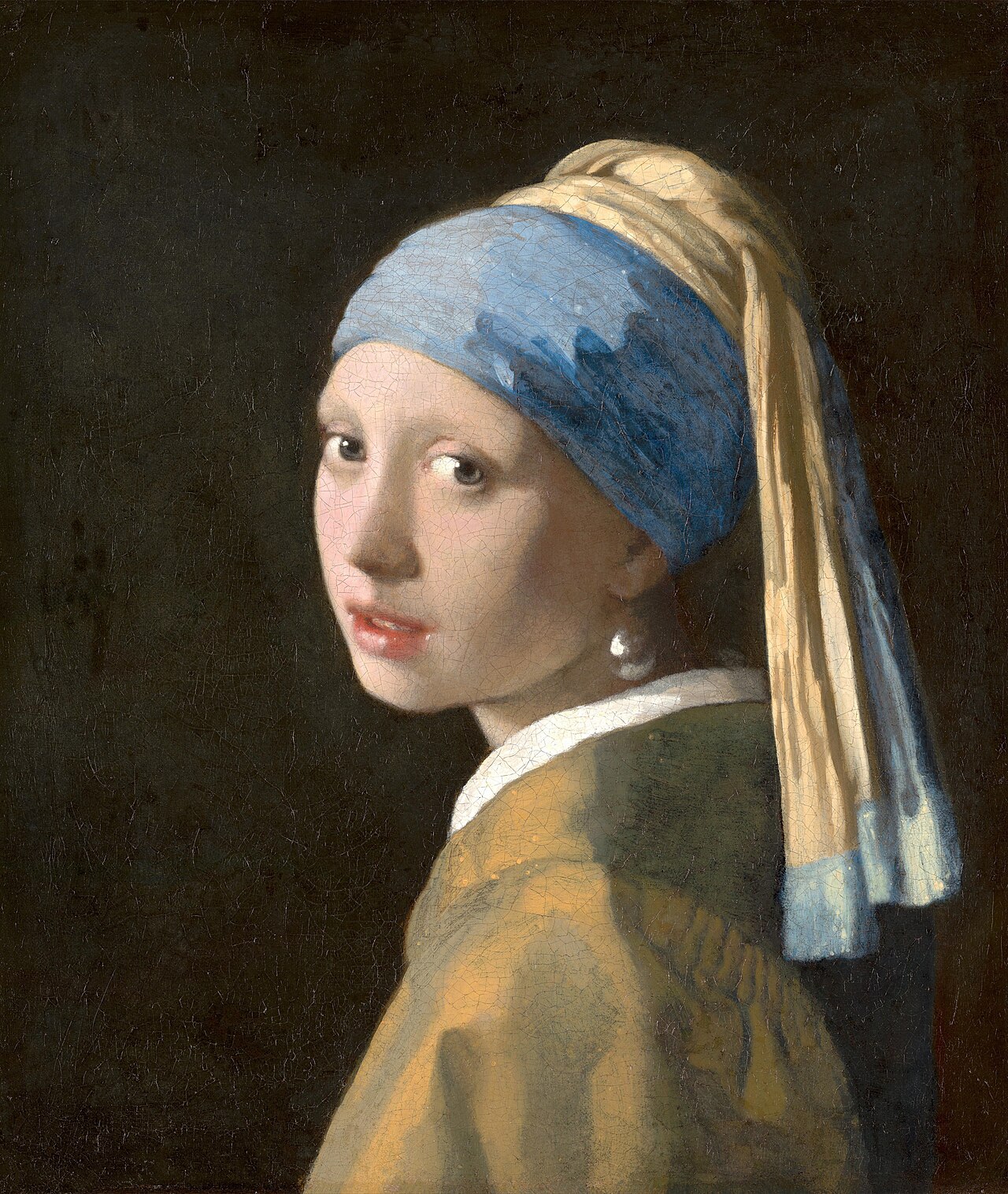 Painting
Primary source
Girl with a Pearl Earring
Johannes Vermeer · c. 1665
 Painting
Primary source
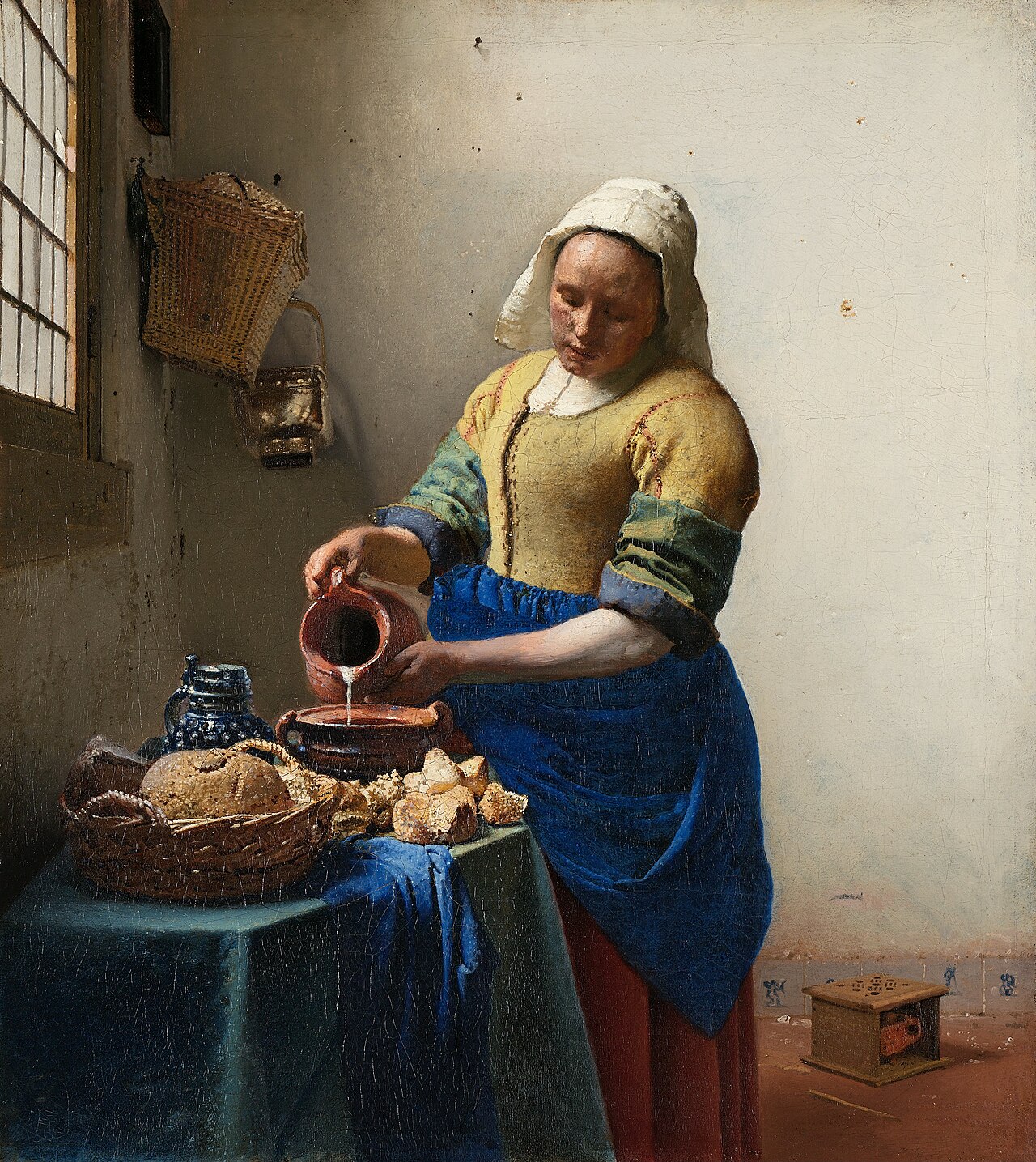
The Milkmaid
Johannes Vermeer · c. 1658-1661
 Painting
Primary source
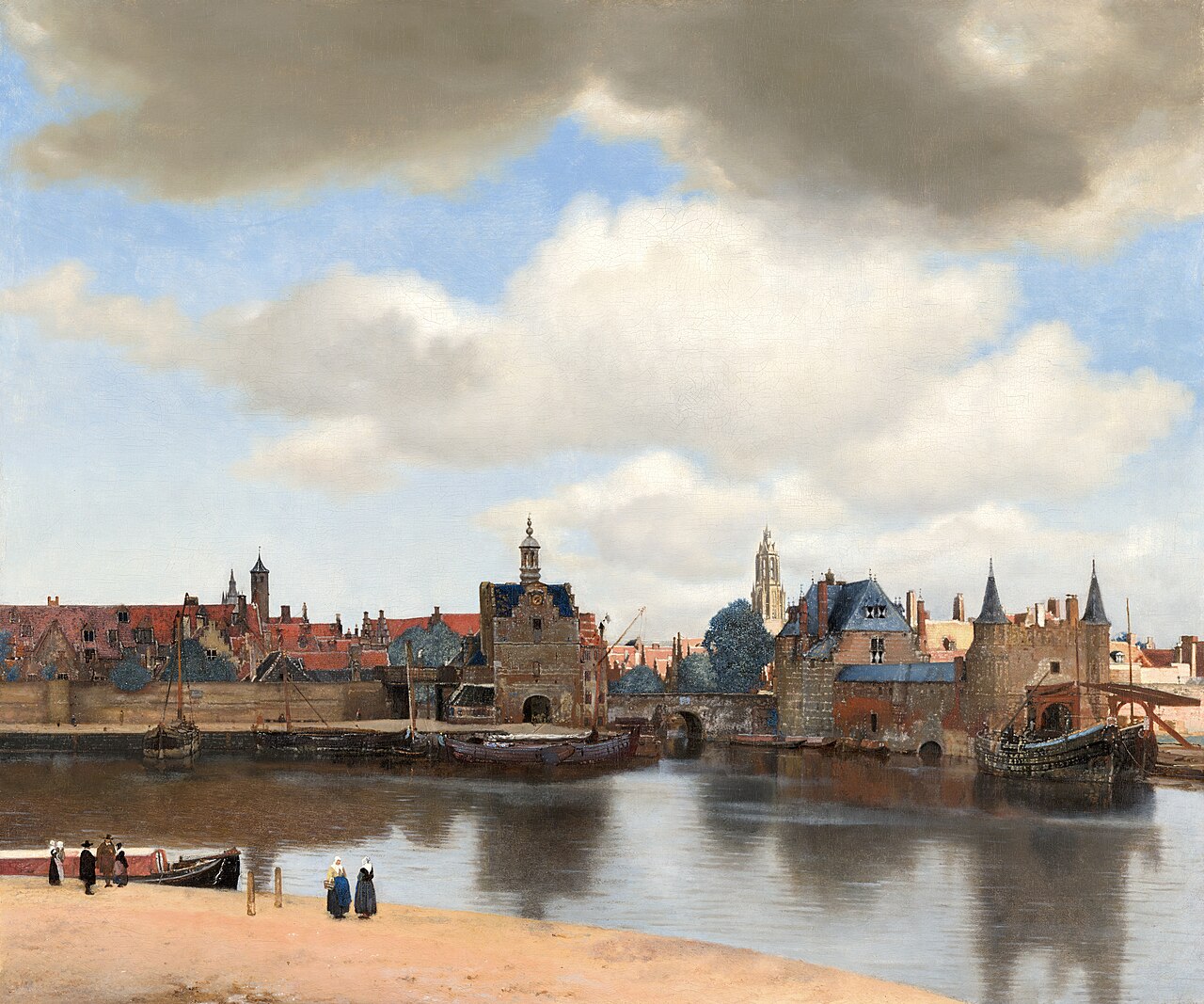
View of Delft
Johannes Vermeer · c. 1659-1661
 Painting
Primary source
The Art of Painting
Johannes Vermeer · c. 1665-1668
Free account
Read every Johannes Vermeer source
Sign up free →
Ready when you are
Start chatting with Johannes Vermeer now.
20 messages free · No credit card · Available in 50+ languages.