


Primary sourcePainting4 November 1789
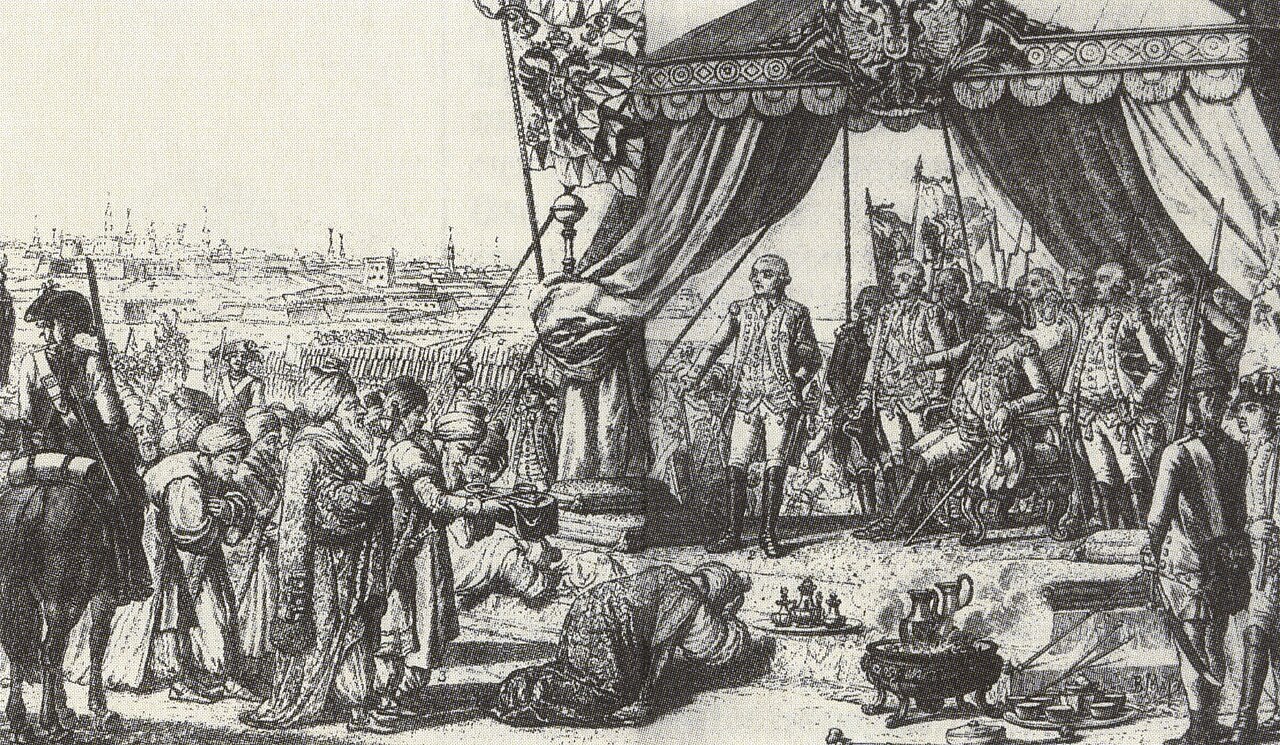
Сдача Бендер Потёмкину
Carl Schütz · 4 November 1789
An engraving showing the Ottoman surrender of the fortress of Bender to Potyomkin in 1789, one of his military victories.
The engraving commemorates Potyomkin's victory at Bender, one of his achievements as Russian commander-in-chief.
About this source
What it is
This black-and-white engraving by Carl Schütz shows the surrender of the Turkish fortress of Bender to Prince Potyomkin on 4 November 1789. Uniformed officers stand under a canopy on the right while turbaned men kneel or bow before them on the left, with a city skyline of minarets in the background.
Why it matters
Potyomkin served as commander-in-chief of Russian forces during the war against the Ottoman Empire, and the capture of Bender was one of his notable victories. Images like this celebrated Russian military success and shaped how the war was presented to the public at the time.
Look closer
- How does the print use composition to show who held power in this scene?
- What details suggest this was made soon after the event, rather than much later?
- What might the print leave out about the human cost of the siege and surrender?
This painting is part of the curated material that grounds the AI version of Grigory Potemkin on Humy.ai — when students ask about related events, the AI can quote it and cite it.
More Grigory Potemkin sources
Browse all 74 →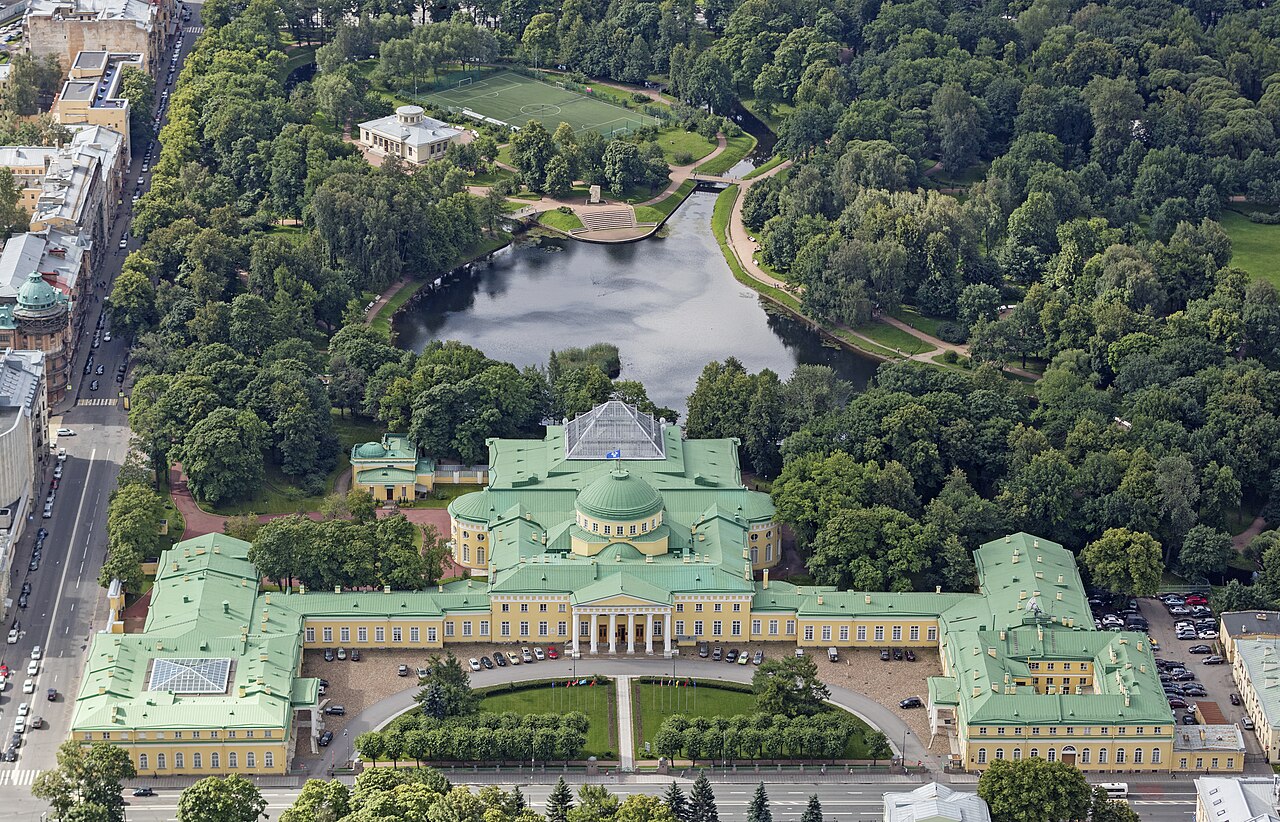 Artifact
Primary source
Tauride Palace
Ivan Starov · 1783
 Artifact
Primary source
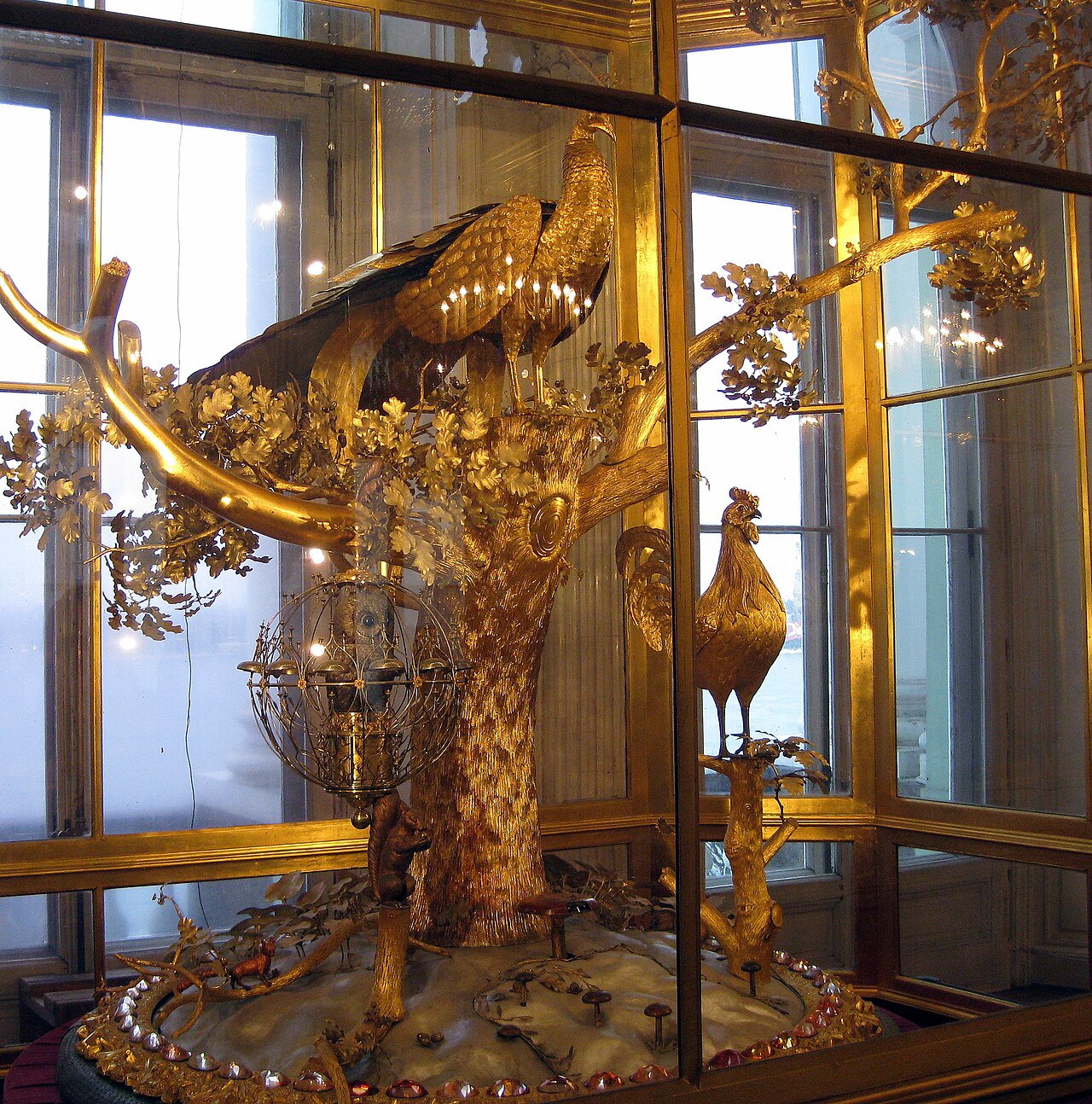
Peacock Clock
James Cox · 1772
 Document
Primary source
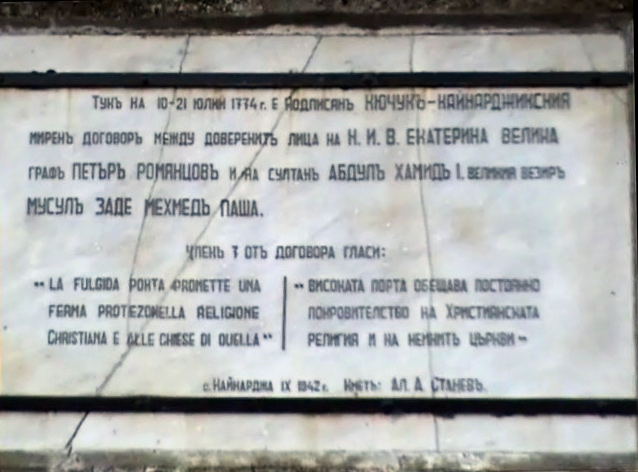
Treaty of Küçük Kaynarca
21 July 1774
 Painting
Primary source
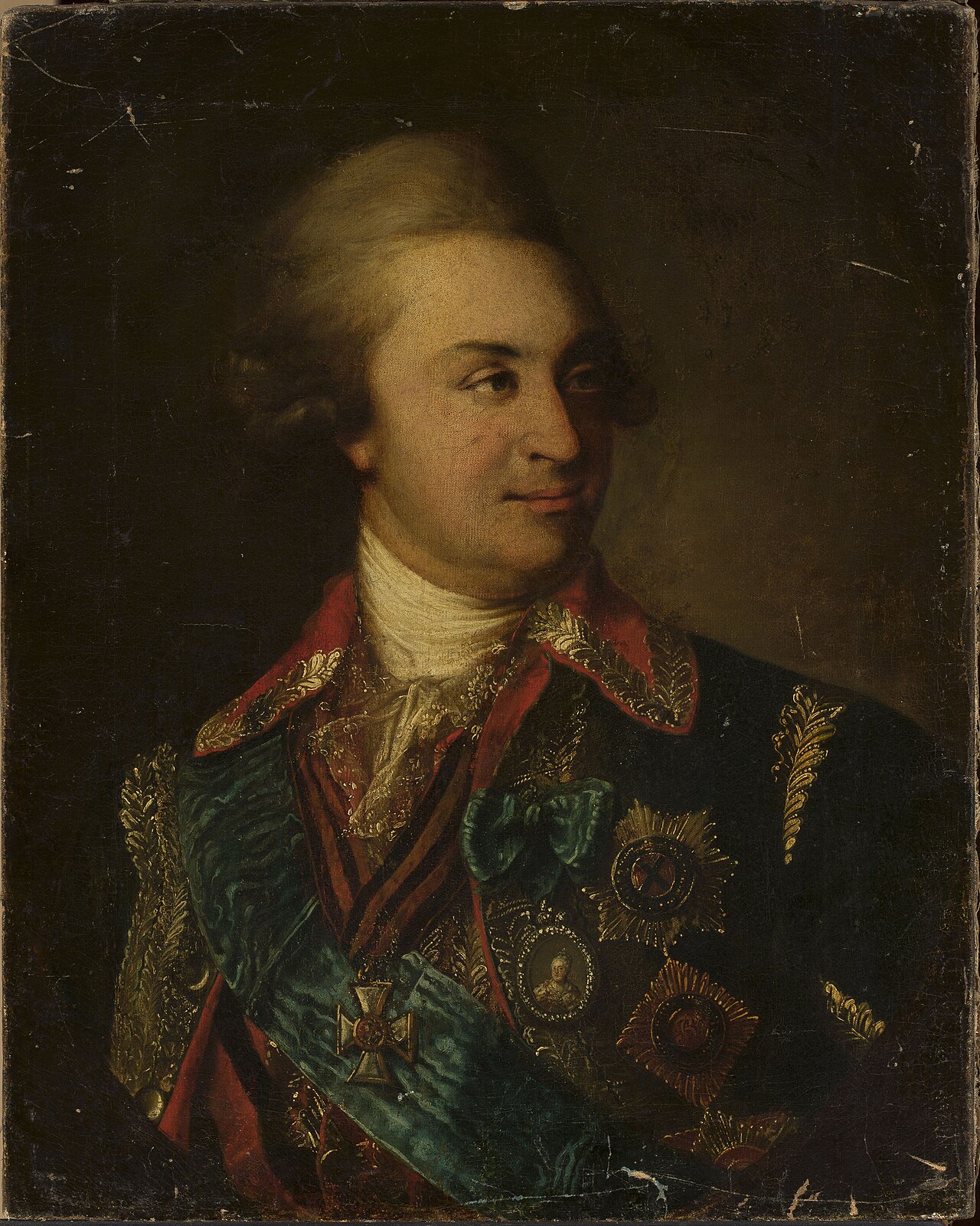
Portrait of Prince Grigory Potemkin with a miniature of Catherine II
1790
Free account
Read every Grigory Potemkin source
Sign up free →
Ready when you are
Start chatting with Grigory Potemkin now.
20 messages free · No credit card · Available in 50+ languages.