


Primary sourceDocument
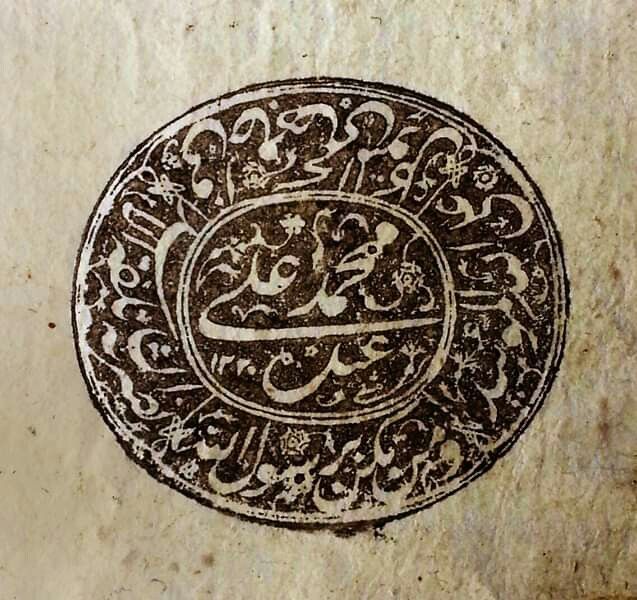
Seal of Muhammad Ali
Muhammad Ali of Egypt
The personal seal he used to authenticate his orders as ruler of Egypt and Sudan.
His personal seal, used to authenticate his orders, is a direct physical trace of his authority as ruler.
About this source
What it is
This is an impression of Muhammad Ali's personal seal, stamped in ink, with Arabic calligraphy filling a central oval and a dense decorative border, and a date in the Islamic calendar.
Why it matters
Seals like this served the same purpose as a signature, authenticating official documents and orders. Because Muhammad Ali governed largely through verbal command and relied on scribes and officials for written administration, his seal is a direct physical trace of his authority rather than his handwriting.
Look closer
- Why might a ruler rely on a seal rather than a handwritten signature?
- What does the elaborate calligraphy of the seal suggest about how rulers wanted their authority to appear?
- What questions does a seal leave unanswered about who actually wrote the document it was stamped on?
This document is part of the curated material that grounds the AI version of Muhammad Ali of Egypt on Humy.ai — when students ask about related events, the AI can quote it and cite it.
More Muhammad Ali of Egypt sources
Browse all 84 → Artifact
Primary source
Muhammad Ali Mosque
1848
 Painting
Primary source
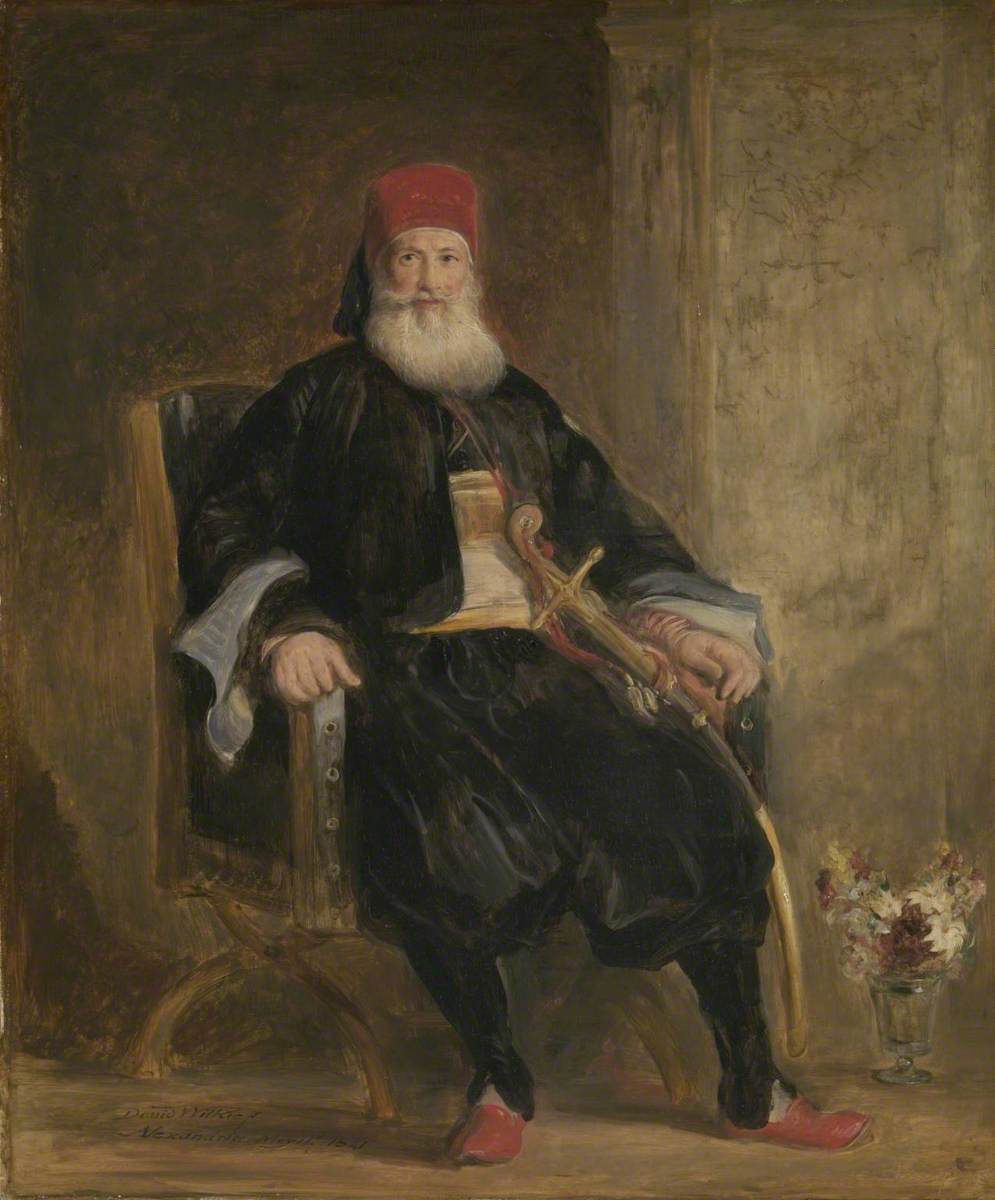
His Highness Muhemed Ali, Pacha of Egypt
David Wilkie · 1841
 Painting
Primary source
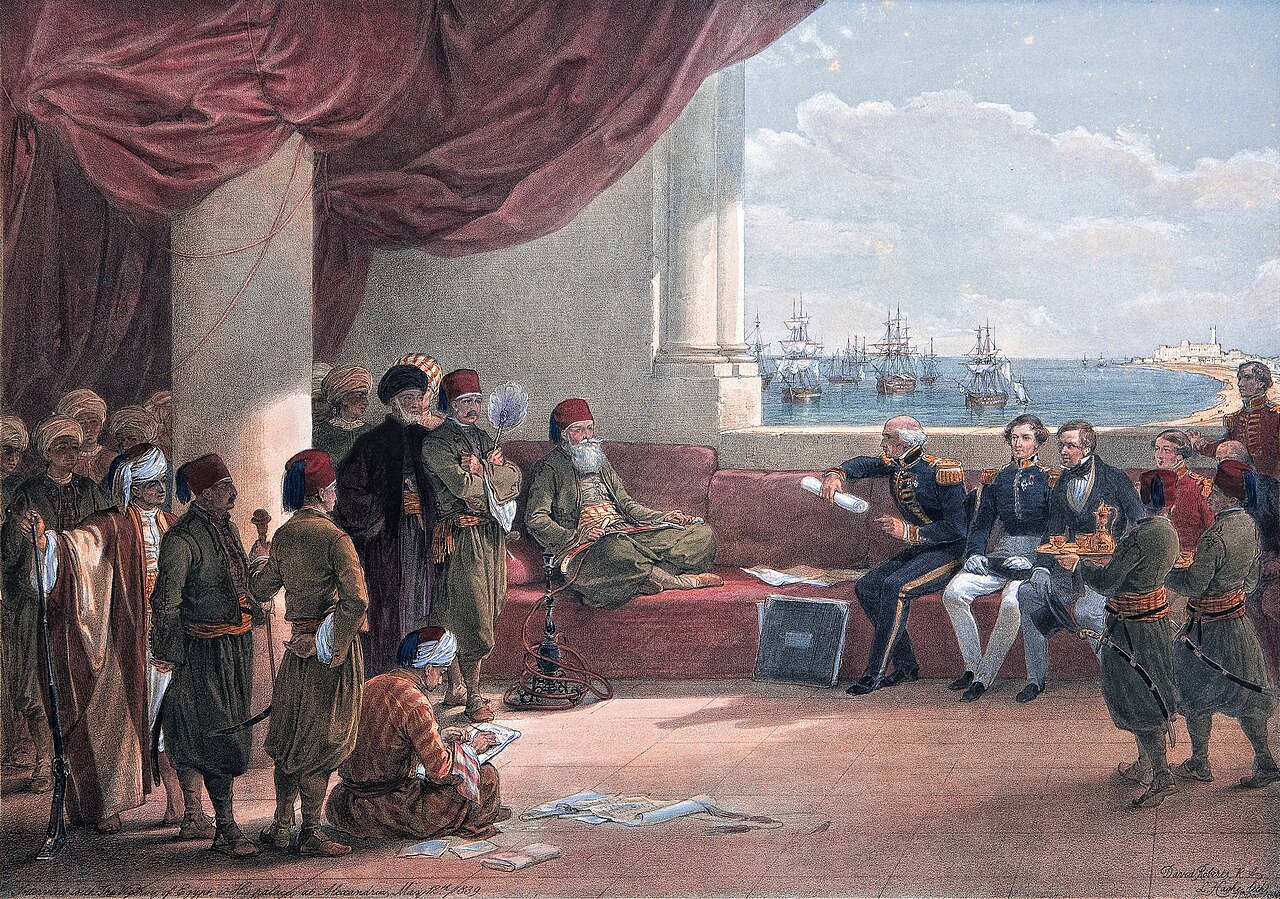
Interview with Mehemet Ali in his Palace at Alexandria
David Roberts and Louis Haghe · 12 May 1839
 Photograph
Primary source
Portrait of Muhammad Ali
Bernard Gotfryd · c. 1975
Free account
Read every Muhammad Ali of Egypt source
Sign up free →
Ready when you are
Start chatting with Muhammad Ali of Egypt now.
20 messages free · No credit card · Available in 50+ languages.