


Secondary sourcePaintingEarly Ming Dynasty (1368–1644)
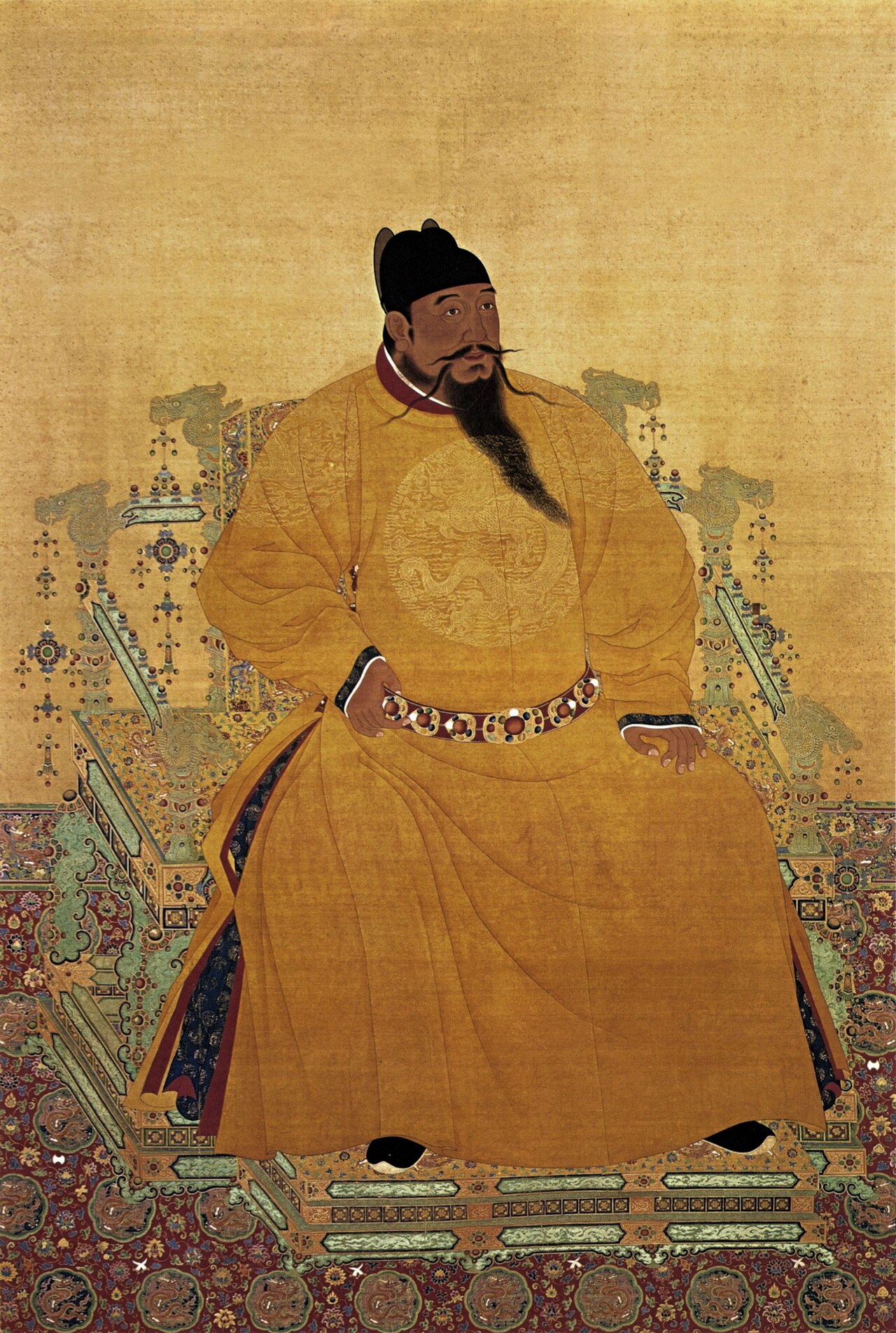
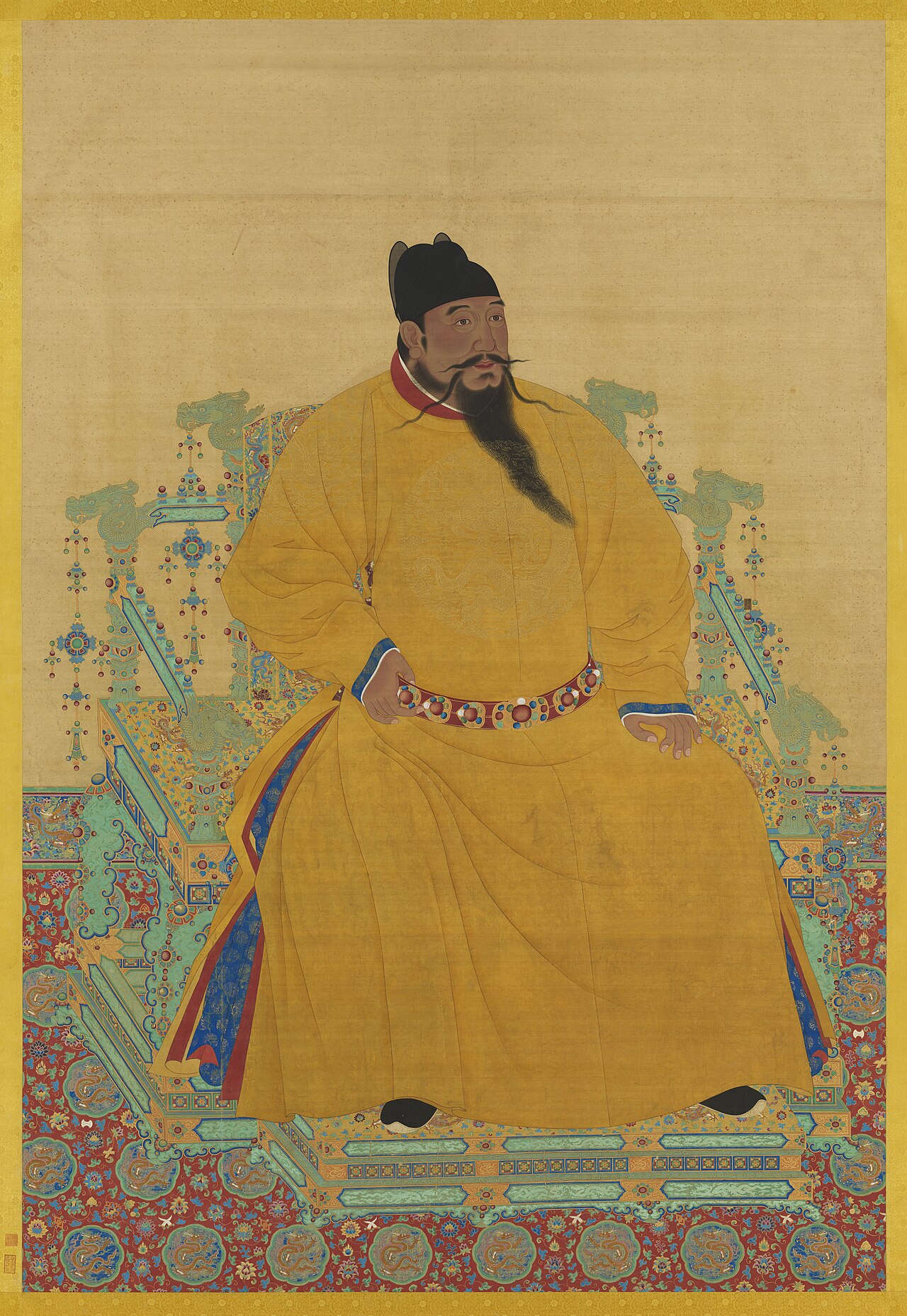
Seated Portrait of Emperor Chengzu on the Dragon Chair
Unknown · Early Ming Dynasty (1368–1644)
A large hanging scroll portrait showing the Yongle Emperor (known by his temple name Chengzu) seated on an ornate dragon throne.
This formal court portrait depicts the Yongle Emperor seated on his dragon throne, emphasizing his imperial authority.
About this source
What it is
This hanging scroll, painted in ink and colour on silk, shows the emperor seated formally in the 'Dragon' chair. It dates from the early Ming dynasty and is held today by the National Palace Museum in Taipei. The painter is unknown.
Why it matters
Formal court portraits like this were made to present the emperor's authority rather than capture a casual likeness. The dragon imagery on the throne and robe connects the emperor directly to symbols of imperial power used throughout Chinese history.
Look closer
- What details in the robe, throne, and setting are meant to show power and status?
- Why might the painter be unknown while the subject is so carefully recorded?
- How does a formal portrait like this differ from a casual likeness of a person?
This painting is part of the curated material that grounds the AI version of Yongle Emperor on Humy.ai — when students ask about related events, the AI can quote it and cite it.
More Yongle Emperor sources
Meet the AI Yongle Emperor →
Ready when you are
Start chatting with Yongle Emperor now.
20 messages free · No credit card · Available in 50+ languages.