


Primary sourceDocument26 October 1218
Seckau diocese foundation charter of 1218
Frederick II (issued in his name) · 26 October 1218
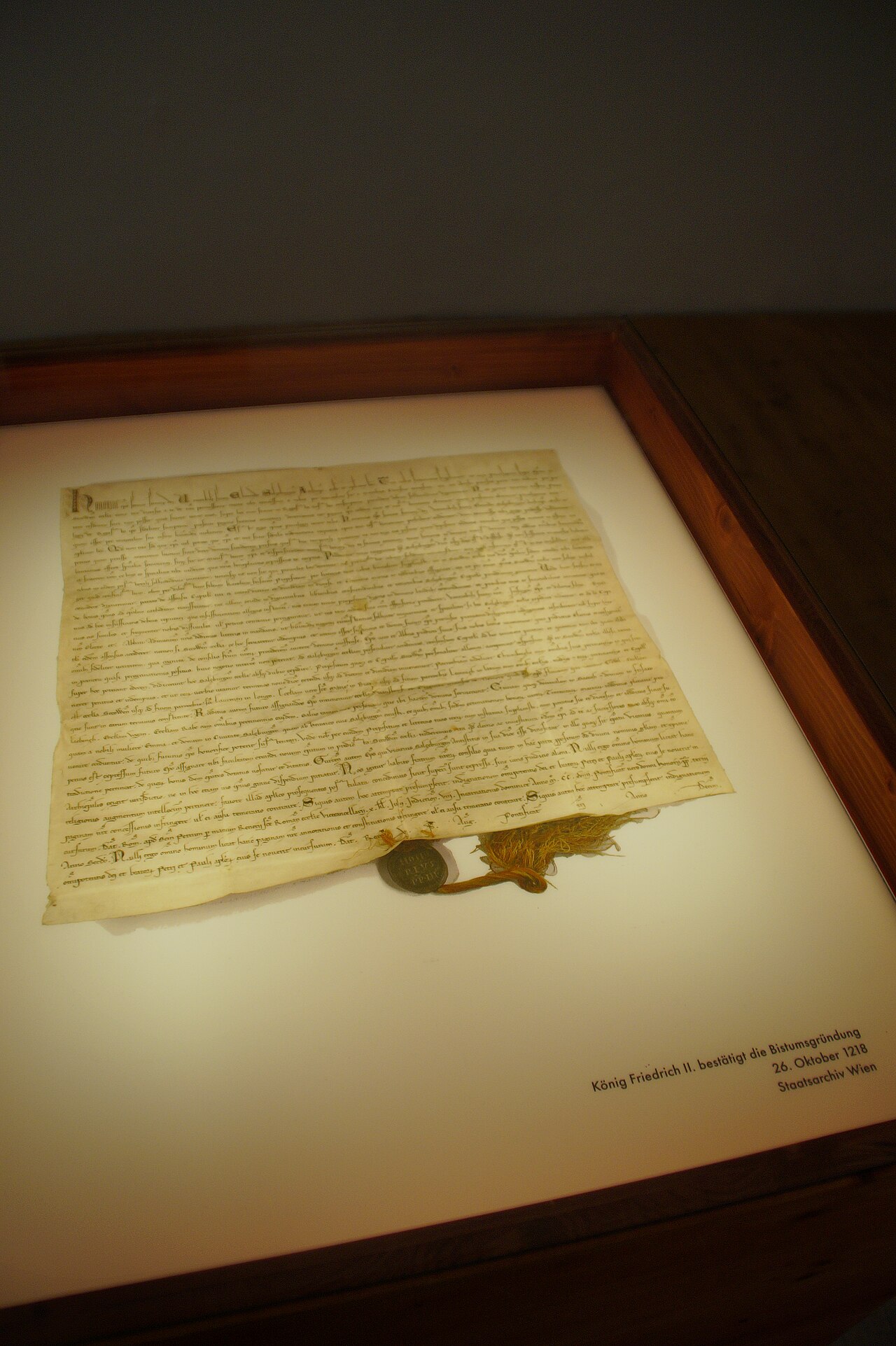
A 1218 Latin charter issued in Frederick II's name confirming the founding of the Seckau diocese. This photograph shows it in an exhibition.
This charter was issued in Frederick II's name and confirms the founding of a diocese, showing him as an authority who approved church structures.
About this source
What it is
This is a photograph of a medieval parchment charter with handwritten Latin script, displayed under glass in a wooden frame, with a round wax seal hanging from its lower edge by orange cords. The collection record says it is one of three surviving charters from 1218, the year the Seckau diocese was founded, and that King Frederick II confirmed the founding on 26 October 1218. The photograph was taken at the exhibition 800 Jahre Diözese Graz-Seckau in Seckau. The German caption on the display names the Staatsarchiv Wien.
Why it matters
A diocese is a church district led by a bishop, and its founding needed official approval from a ruler. This charter shows Frederick, then acting as king, using written authority to confirm a church institution. Such documents show how rulers and church leaders worked together in the early thirteenth century.
Look closer
- What can the wax seal and the script tell you about how official the charter was?
- Why would a king need to confirm a new church district, and who else might have wanted this?
- What does a display photograph show about the document, and what can it not show, such as the text itself?
This document is part of the curated material that grounds the AI version of Frederick II, Holy Roman Emperor on Humy.ai — when students ask about related events, the AI can quote it and cite it.
More Frederick II, Holy Roman Emperor sources
Browse all 87 →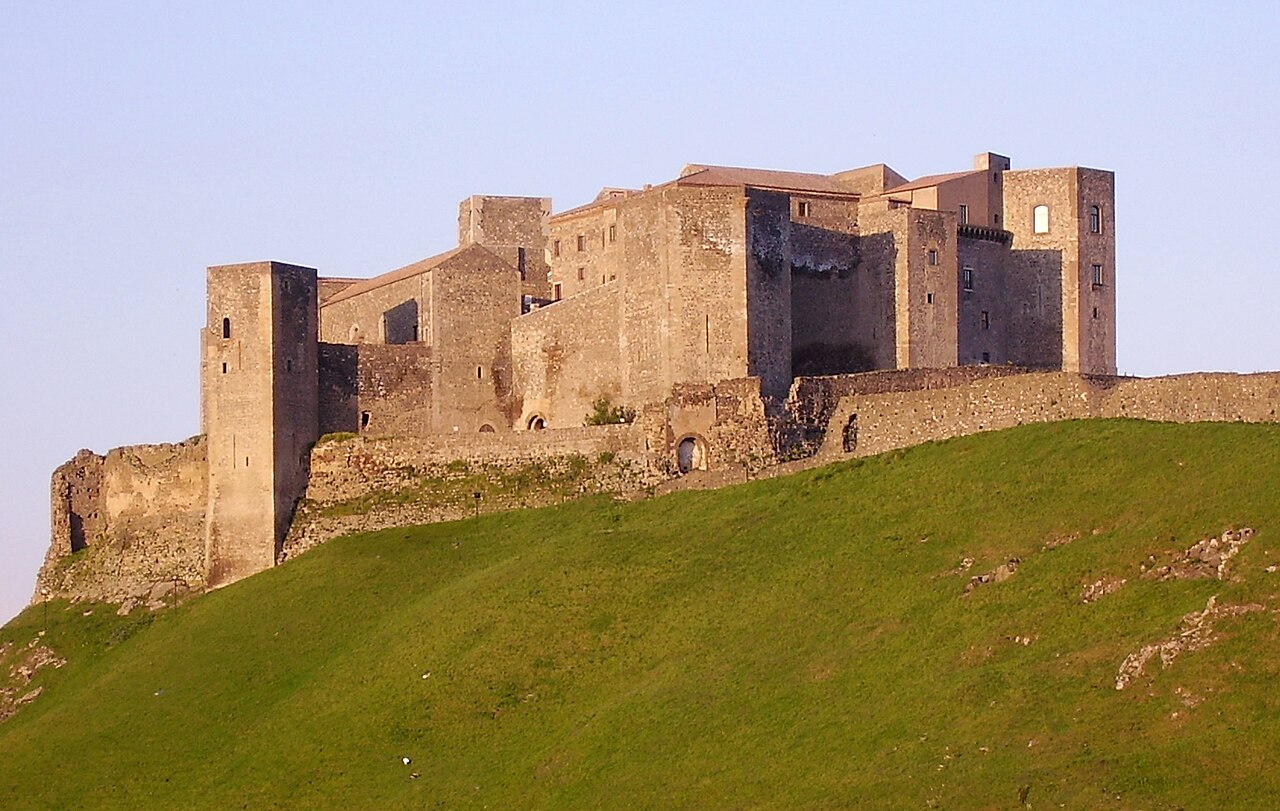 Document
Primary source
Constitutions of Melfi
Frederick II, Holy Roman Emperor · 1 September 1231
 Document
Primary source
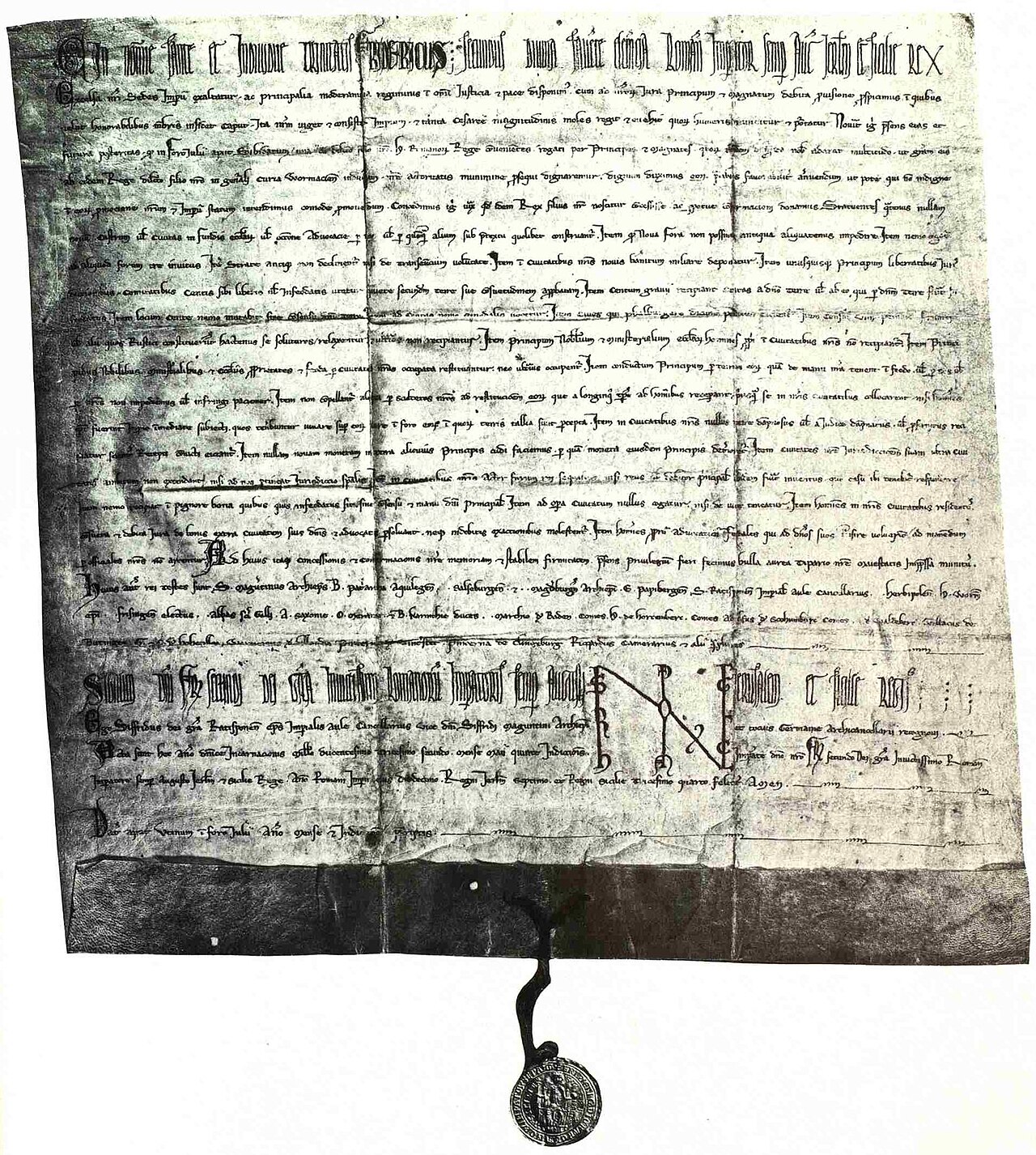
Statutum in favorem principum
Henry (VII) of Germany · 1231, confirmed 1232
 Document
Primary source
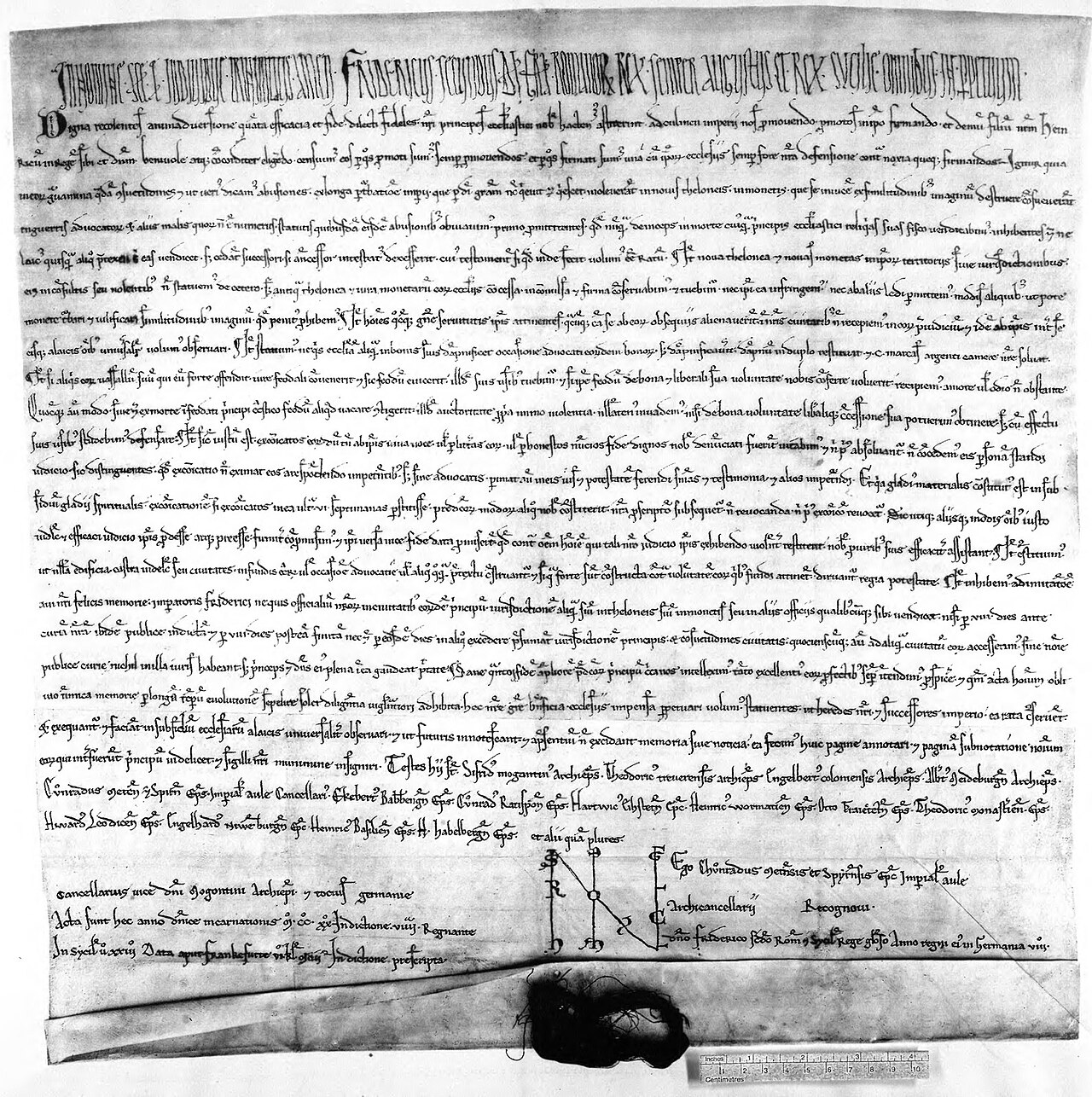
Confoederatio cum principibus ecclesiasticis
Frederick II, Holy Roman Emperor · 26 April 1220
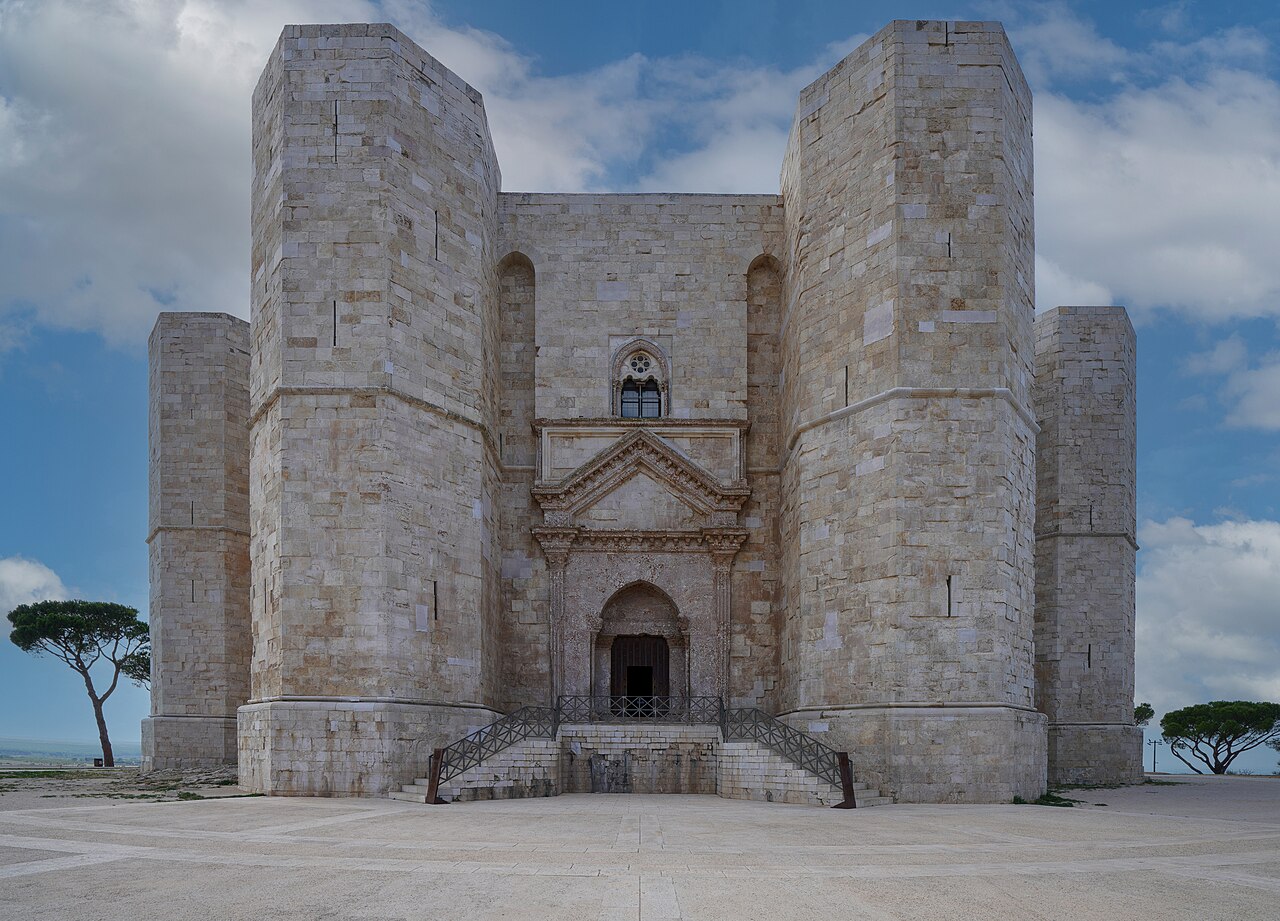 Artifact
Primary source
Castel del Monte
1240s
Free account
Read every Frederick II, Holy Roman Emperor source
Sign up free →
Ready when you are
Start chatting with Frederick II, Holy Roman Emperor now.
20 messages free · No credit card · Available in 50+ languages.