


Primary sourceArtifact22 July 1814
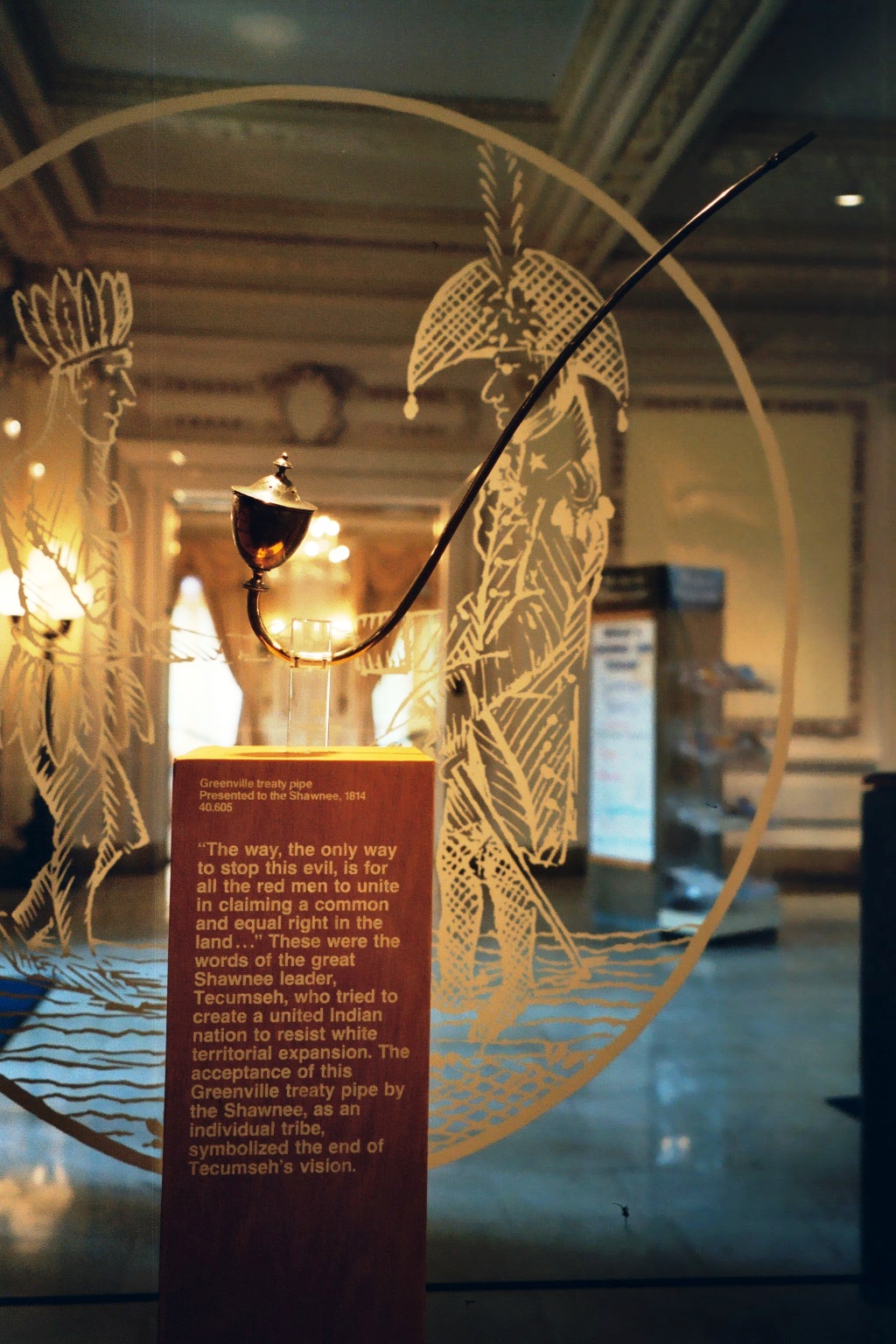
Second Treaty of Greenville Pipe
22 July 1814
A ceremonial pipe presented to the Shawnees by the United States at the second Treaty of Greenville in 1814, shortly after Tecumseh's death.
Marks the treaty that ended Native resistance in the region less than a year after Tecumseh's death.
About this source
What it is
This metal pipe was presented to the Shawnee and other tribes by the United States government at the second Treaty of Greenville, signed on 22 July 1814. It is now preserved and displayed in a museum case.
Why it matters
The treaty was signed less than a year after Tecumseh was killed at the Battle of the Thames. It bound Shawnee and other tribal leaders to peace with the United States, effectively marking the collapse of the Native confederacy Tecumseh had built.
Look closer
- What might a ceremonial pipe symbolize in treaty negotiations?
- Why would the United States present such an object at this treaty?
- What does this object suggest about the balance of power after Tecumseh's death?
This artifact is part of the curated material that grounds the AI version of Tecumseh on Humy.ai — when students ask about related events, the AI can quote it and cite it.
More Tecumseh sources
Meet the AI Tecumseh →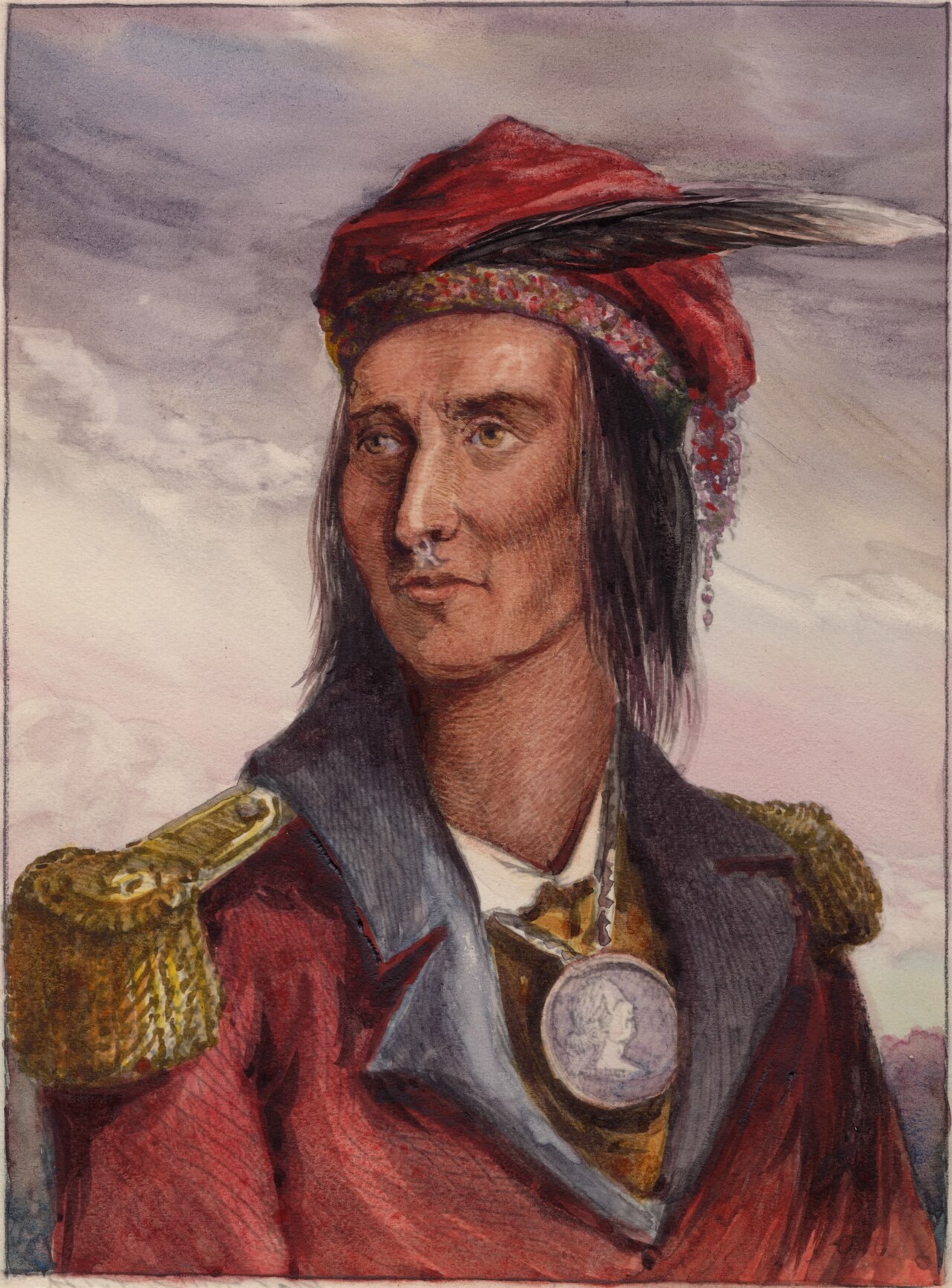 Painting
Secondary source
Portrait of Tecumseh
Pierre Le Dru (original sketch); reworked by Benson Lossing, 1868 · 1868 (after an earlier sketch)
 Document
Primary source
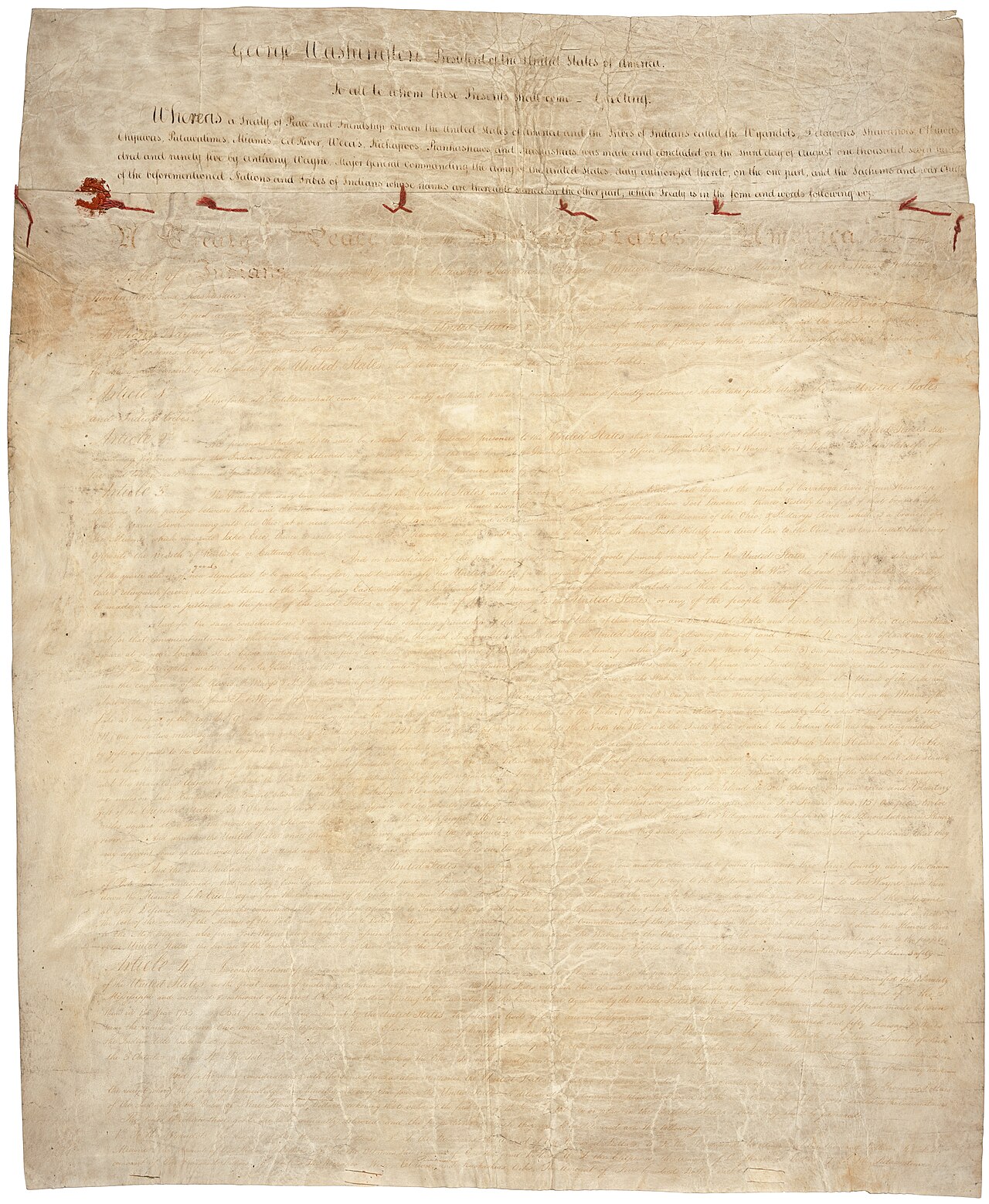
Treaty of Greenville
3 August 1795
 Document
Primary source
Messages and Letters of William Henry Harrison
William Henry Harrison; ed. Logan Esarey · 1800-1816 (published 1922)
 Document
Primary source
Northwest Ordinance
Confederation Congress · 13 July 1787
 Document
Primary source
Treaty of Paris
3 September 1783
Ready when you are
Start chatting with Tecumseh now.
20 messages free · No credit card · Available in 50+ languages.