


Secondary sourcePainting19th century (late Edo era)
Sekigahara Kassen Byōbu
Unidentified artist · 19th century (late Edo era)
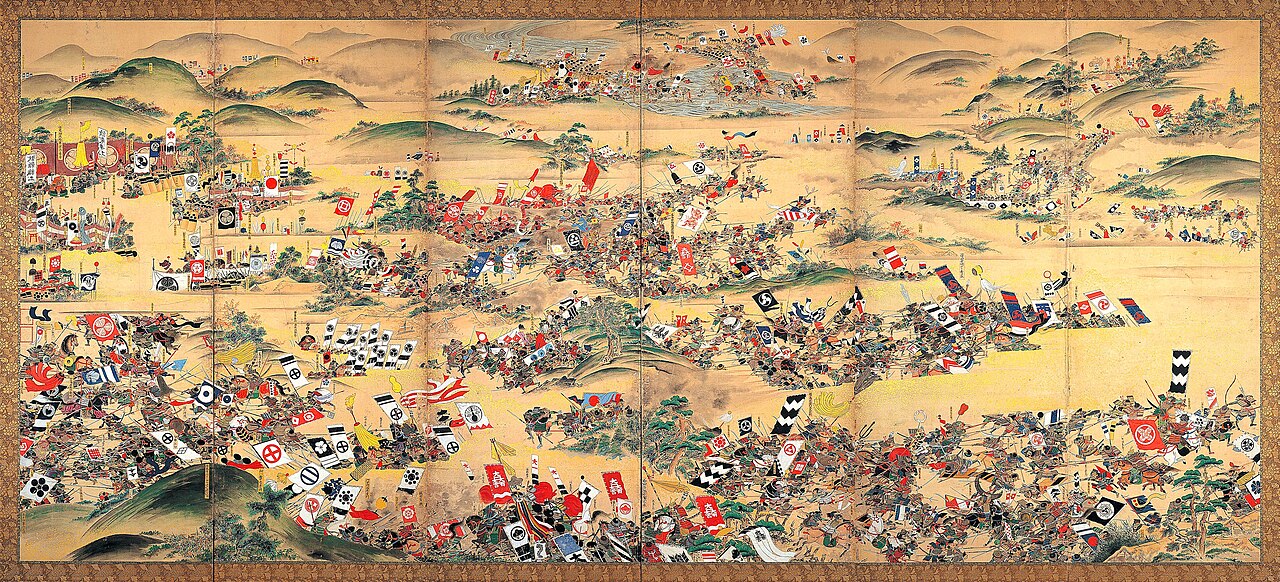
A late Edo-period folding screen depicting the Battle of Sekigahara (1600), a major conflict from the era in which Musashi lived.
A later depiction of the Battle of Sekigahara, part of the historical backdrop of Musashi's early life.
About this source
What it is
This gold-leaf folding screen, held by the City of Gifu Museum of History, depicts the Battle of Sekigahara. It was painted in the late Edo period, long after the battle itself, and is considered rare because it shows the battlefield from the north, unlike most other Sekigahara screens.
Why it matters
The Battle of Sekigahara in 1600 was a turning point in Japanese history, and some accounts place the young Musashi near such conflicts during his lifetime. This screen does not show Musashi directly, but it helps illustrate the scale and chaos of the battles that shaped the world he grew up in as a swordsman.
Look closer
- What details show the organisation of armies, such as banners and crests?
- Why might this screen have been painted so long after the battle took place?
- What can and can't a painted battle scene tell us about real historical events?
This painting is part of the curated material that grounds the AI version of Musashi Miyamoto on Humy.ai — when students ask about related events, the AI can quote it and cite it.
More Musashi Miyamoto sources
Meet the AI Musashi Miyamoto →

Ready when you are
Start chatting with Musashi Miyamoto now.
20 messages free · No credit card · Available in 50+ languages.