


Secondary sourceArtifact1844
Sepulchral Plaque of Giacomo Leopardi, San Vitale, Naples
1844
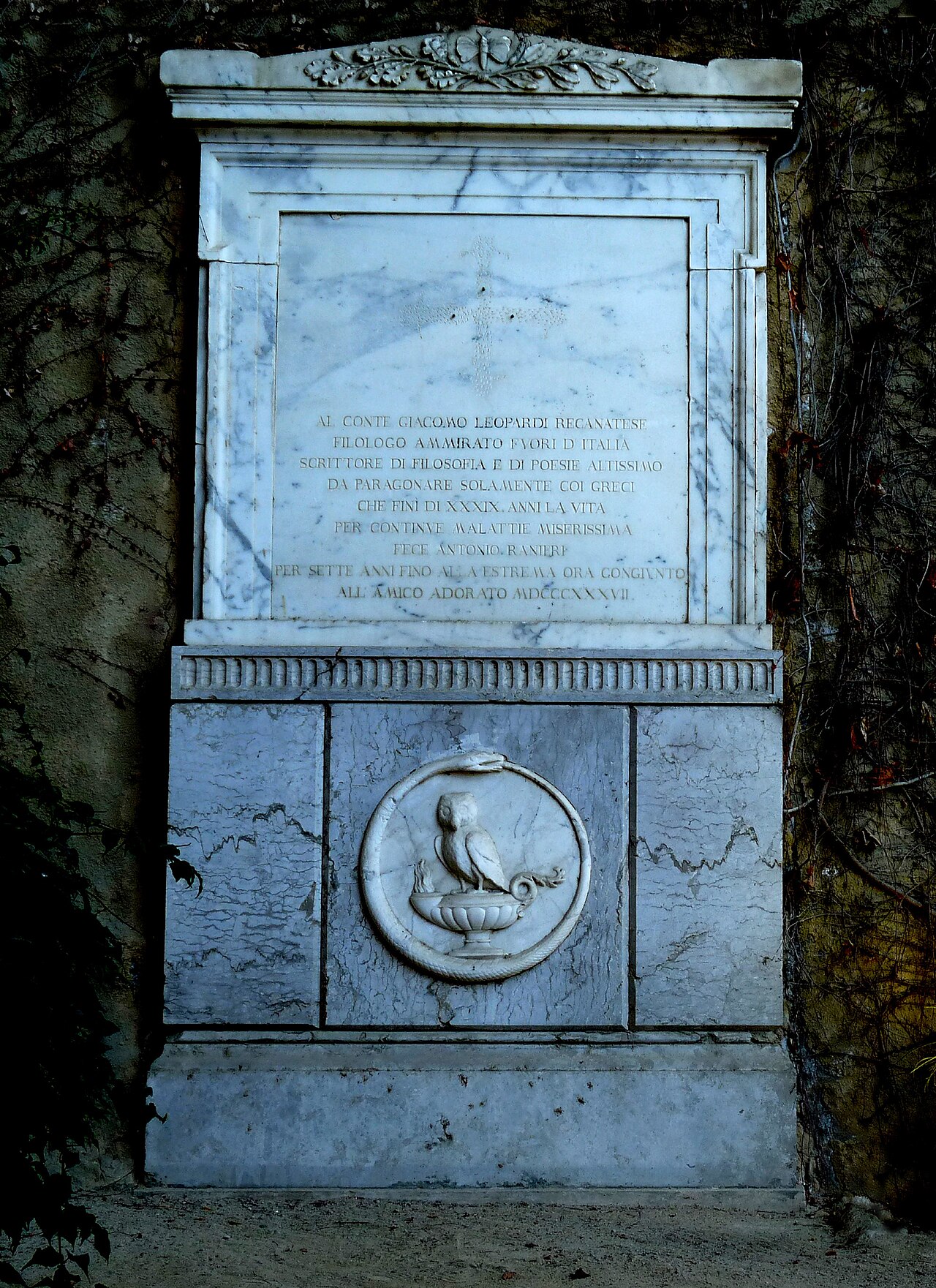
A marble funerary plaque of 1844 for Leopardi, with an inscription by Pietro Giordani commissioned by his friend Ranieri and carved symbols such as an owl and a serpent.
This monument is Leopardi's own funerary plaque, commissioned by his friend Ranieri, and it shows how his death was remembered.
About this source
What it is
This is a marble funerary monument of 1844 for the poet Giacomo Leopardi. A pediment with a carved floral wreath tops a tablet with a cross and an inscription in Italian and Latin that honours him as a count from Recanati, a philologist and a writer. Below, a round relief shows an owl on an urn, with a serpent around it. The Commons record also mentions a lamp, a butterfly and a laurel branch among its symbols. The inscription was commissioned by his friend Ranieri and its text was by Pietro Giordani. The plaque stood in the entrance hall of the church of San Vitale until 1939.
Why it matters
Leopardi died in Naples in 1837, during a cholera epidemic in the city. The monument shows how his friends chose to remember him: as a poet admired outside Italy, and as a man whose life was marked by illness. Its symbols and Latin-style wording show the taste for classical allusion in the mid-nineteenth century.
Look closer
- Which words on the inscription describe Leopardi, and which words describe his illness?
- What might the owl, the serpent and the laurel branch each be meant to suggest?
- Who chose the wording, and what might they have wanted readers to remember?
This artifact is part of the curated material that grounds the AI version of Giacomo Leopardi on Humy.ai — when students ask about related events, the AI can quote it and cite it.
More Giacomo Leopardi sources
Browse all 92 →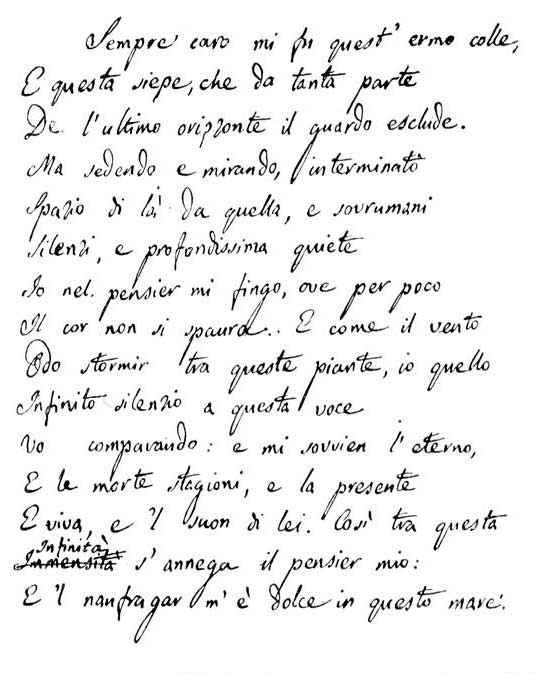 Book
Primary source
L'Infinito
Giacomo Leopardi · 1819
 Book
Primary source
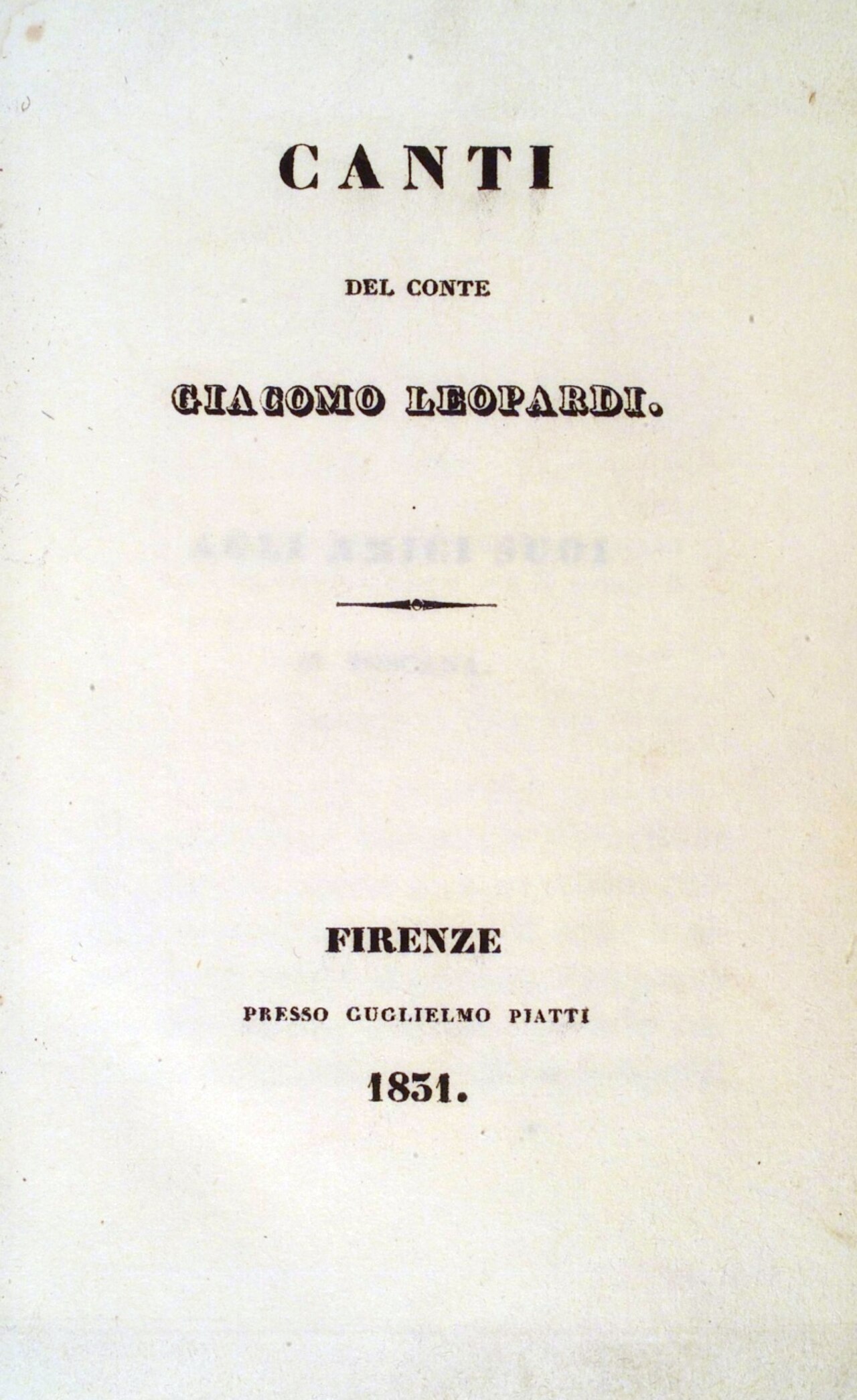
Canti
Giacomo Leopardi · 1831
 Diary entry
Primary source
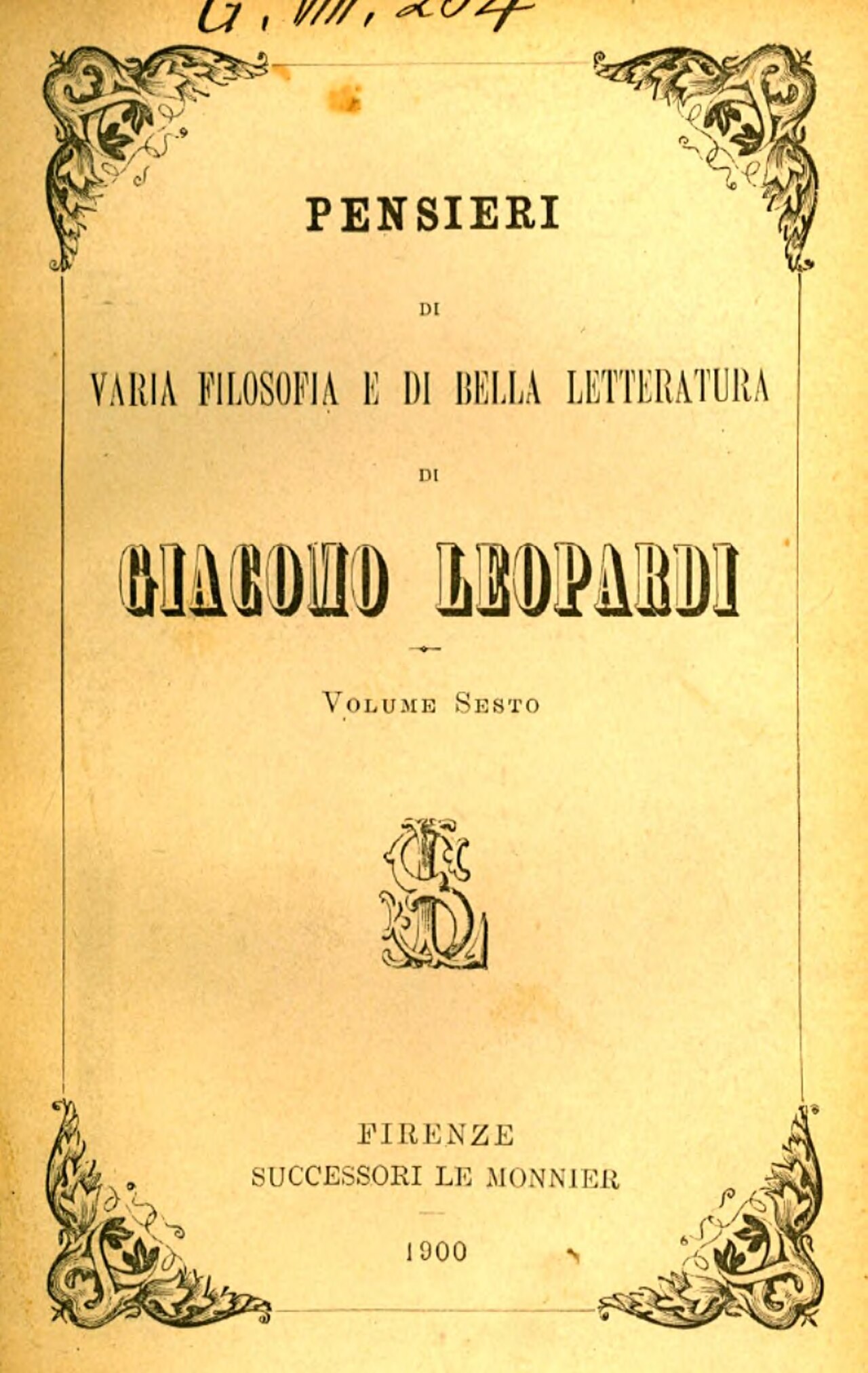
Zibaldone
Giacomo Leopardi · 1817–1832 (printed edition 1898-1900)
 Book
Primary source
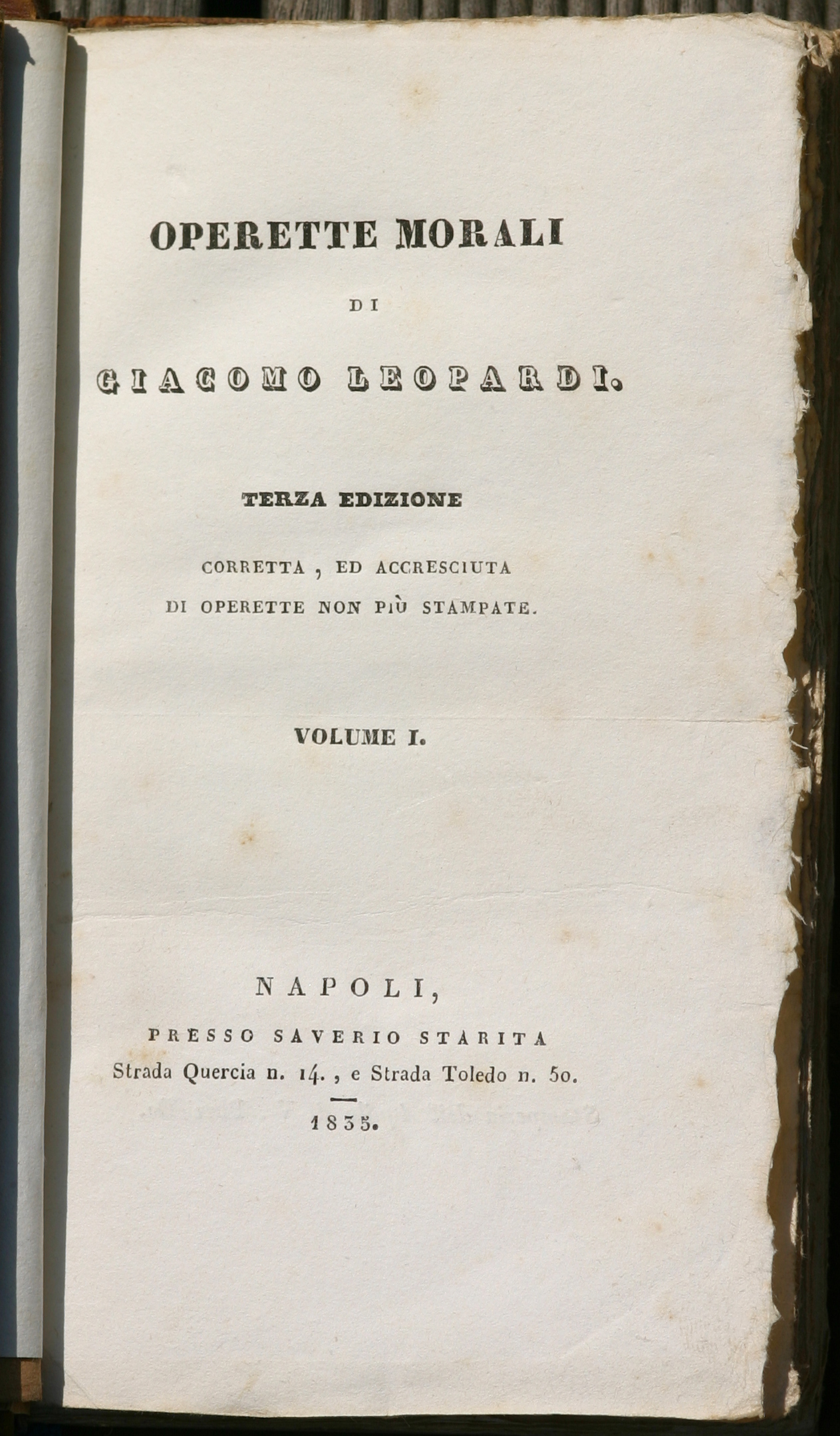
Operette morali
Giacomo Leopardi · 1824–1827 (this edition 1835)
Free account
Read every Giacomo Leopardi source
Sign up free →
Ready when you are
Start chatting with Giacomo Leopardi now.
20 messages free · No credit card · Available in 50+ languages.