


Primary sourceArtifactc. 161
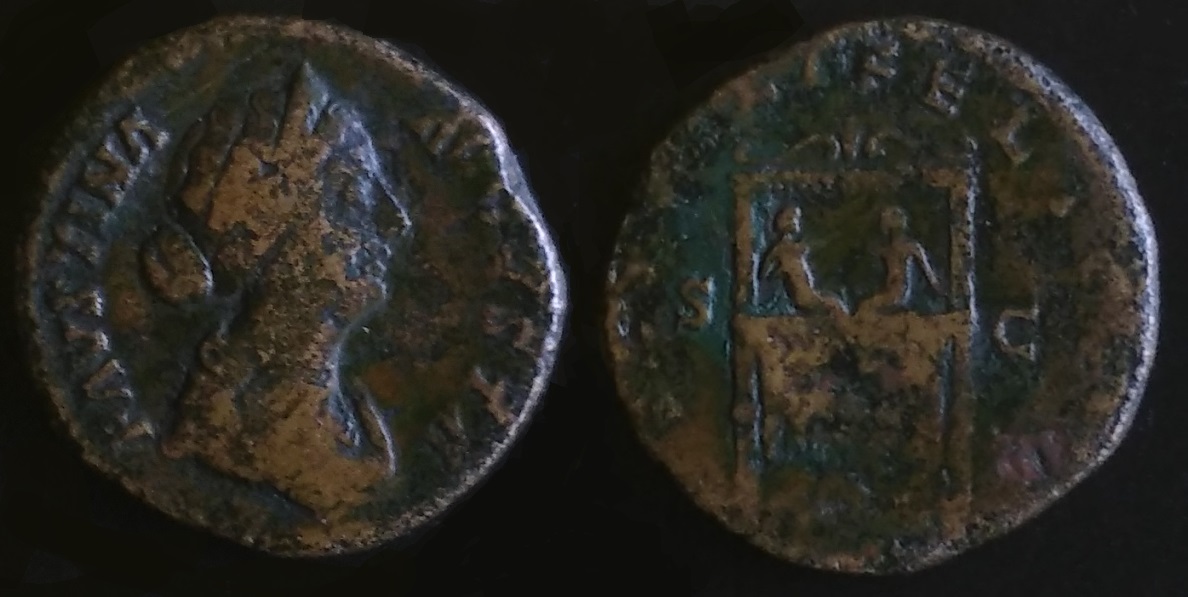
Sestertius celebrating Faustina's twin sons, c. 161
c. 161
A bronze Roman sestertius struck around 161 to celebrate the birth of twin sons to Faustina the Younger, one of whom became the emperor Commodus.
A coin of his reign that announces the birth of twin sons to his wife, one of whom would later rule as emperor.
About this source
What it is
This is a bronze sestertius, a Roman coin, struck around 161. Its obverse shows Faustina the Younger in profile, and its reverse shows two infants seated on a throne, with the legend SAECVLI FELICIT, meaning happiness of the age. The coin was struck to celebrate the birth of Faustina's twin sons, Commodus and Antoninus, in that year. The photograph on Wikimedia Commons shows two coins, one with a diademed female bust and one with a seated figure flanked by the letters S and C. The record notes that the legend is partly worn.
Why it matters
The coin links the emperor's family to the hope for a secure succession. Commodus later succeeded his father Marcus Aurelius in 177, so the coin's celebration of twin sons looks forward to that dynastic future. Coins like this were a way for the court to announce births and to present the royal household as a source of stability. It shows students that the emperor's family was part of the public face of his rule.
Look closer
- Why would the court want to celebrate the birth of children on a coin that many people would handle?
- What does the phrase happiness of the age suggest about how the government wanted its rule to be understood?
- What do we know about the future of these twins from the coin, and what must come from other sources?
This artifact is part of the curated material that grounds the AI version of Marcus Aurelius on Humy.ai — when students ask about related events, the AI can quote it and cite it.
More Marcus Aurelius sources
Meet the AI Marcus Aurelius →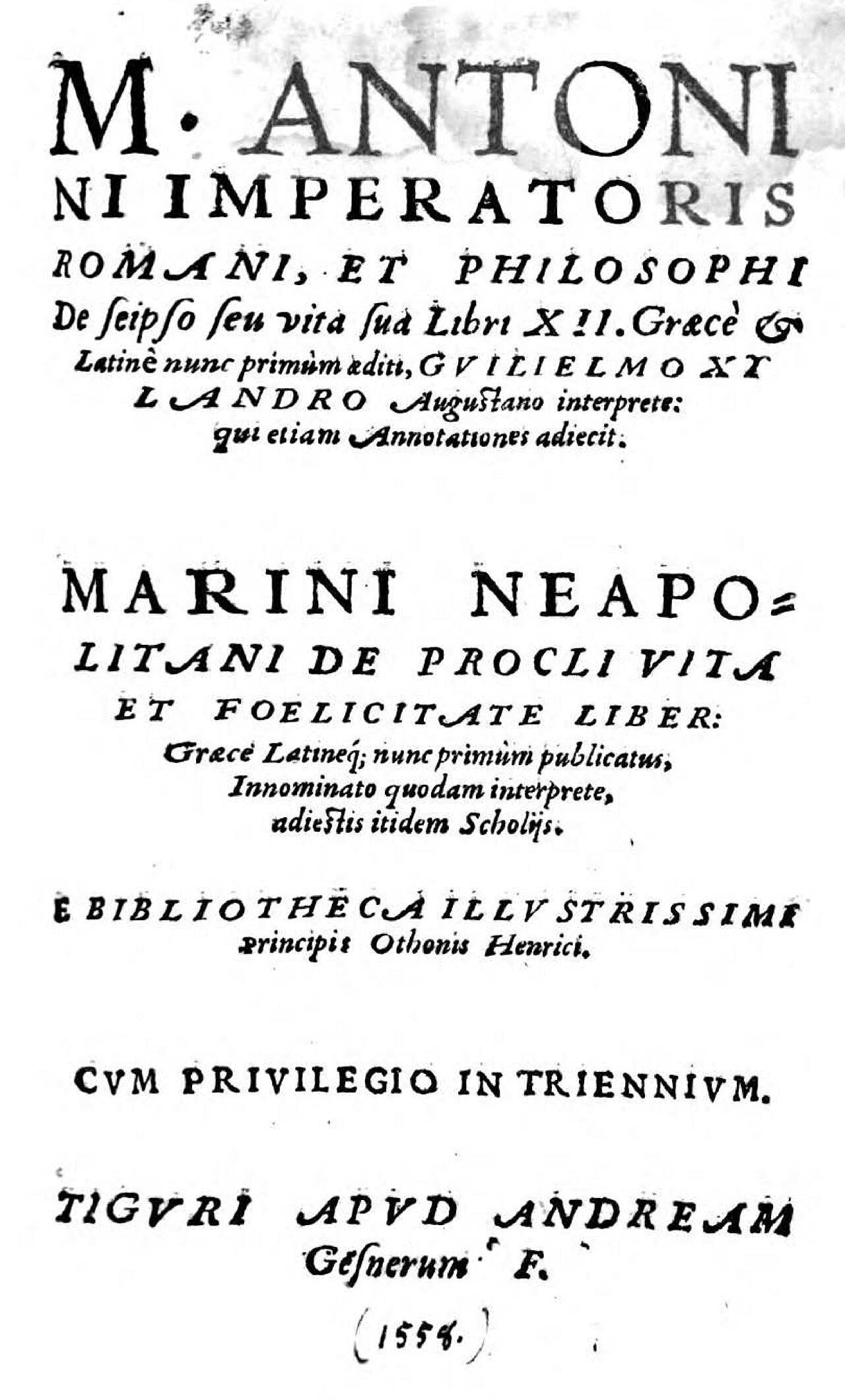 Book
Primary source
Meditations
Marcus Aurelius · c. 170-180 AD (this edition printed 1558)
 Sculpture
Primary source
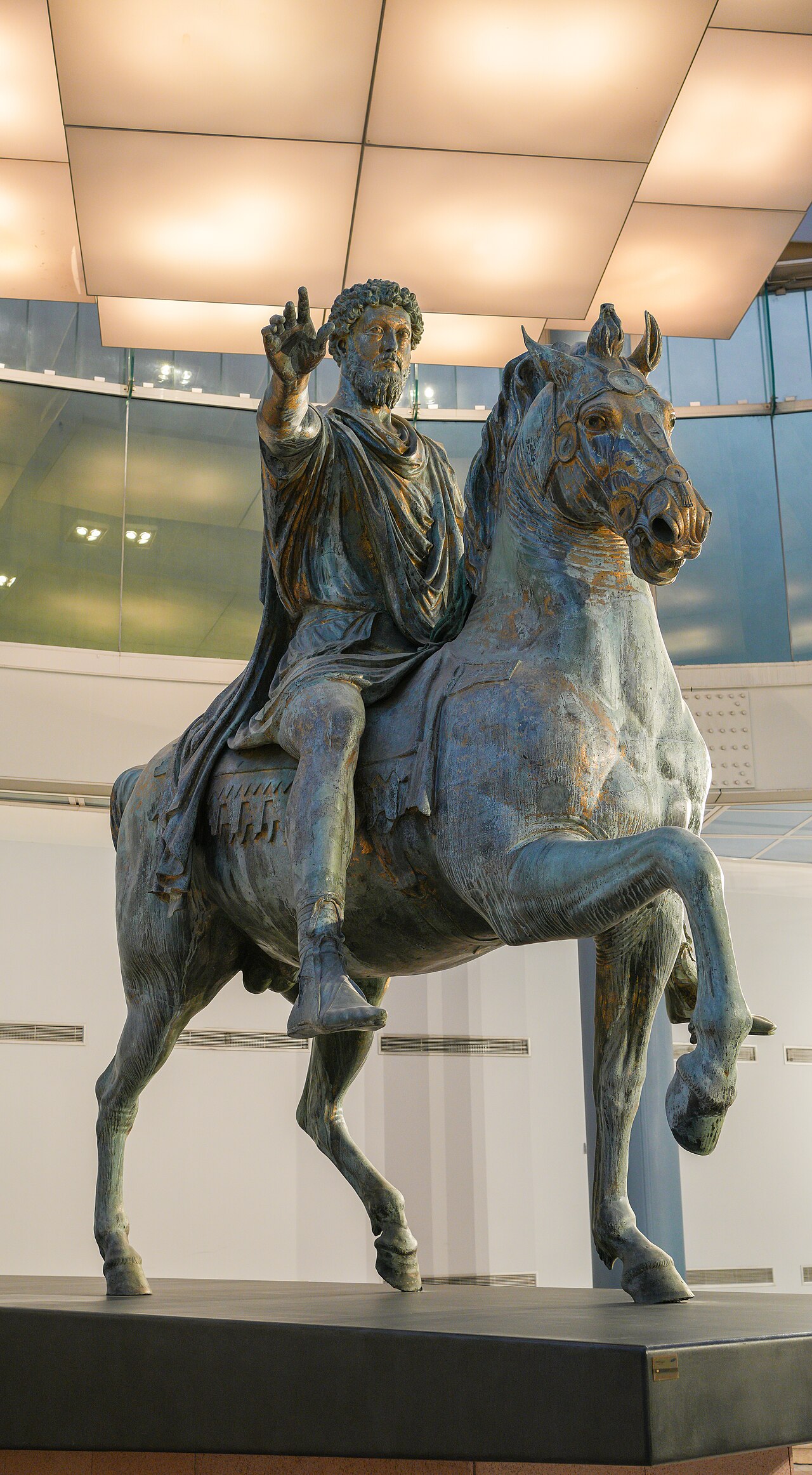
Equestrian Statue of Marcus Aurelius
c. 173 AD
 Artifact
Secondary source
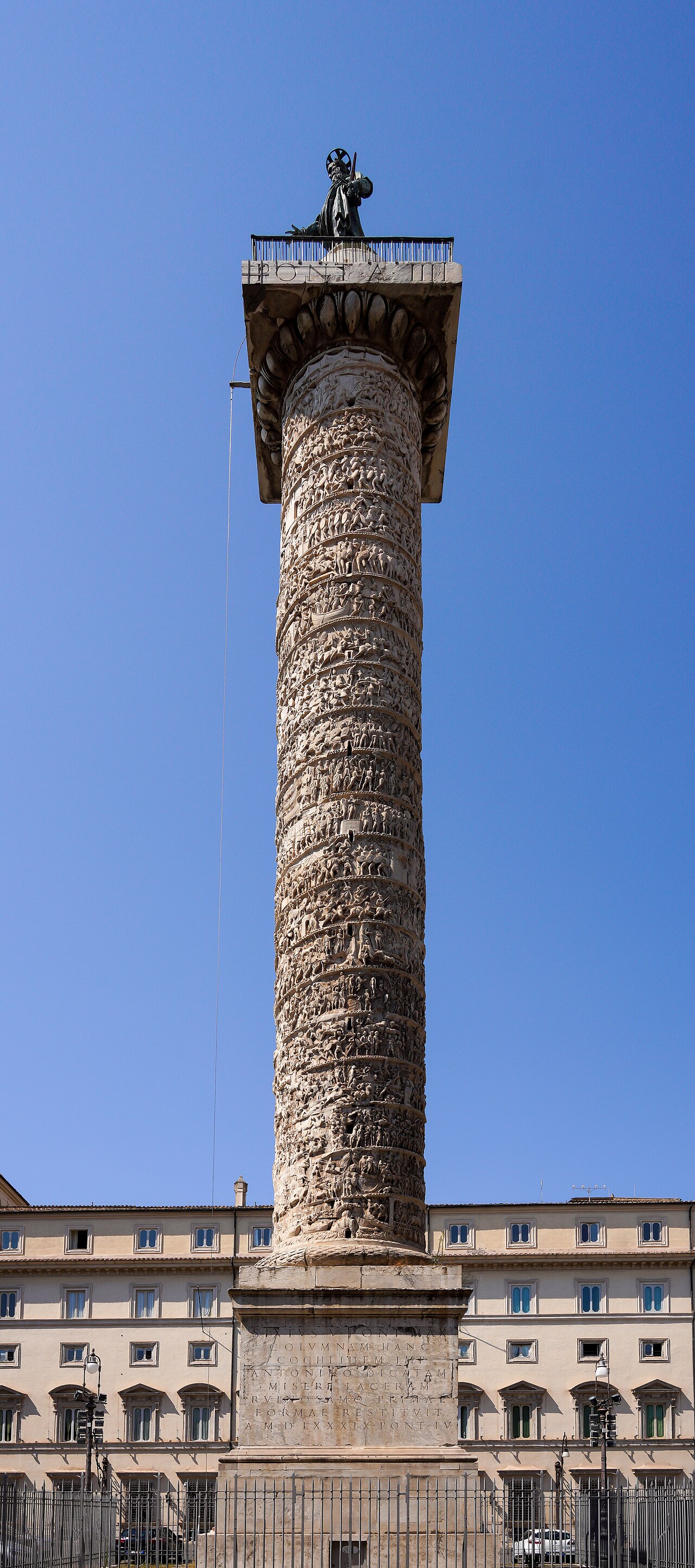
Column of Marcus Aurelius
completed c. 193 AD
Secondary source
Marcus Antoninus (Historia Augusta)
Scriptores Historiae Augustae · probably 4th century AD
 Sculpture
Primary source
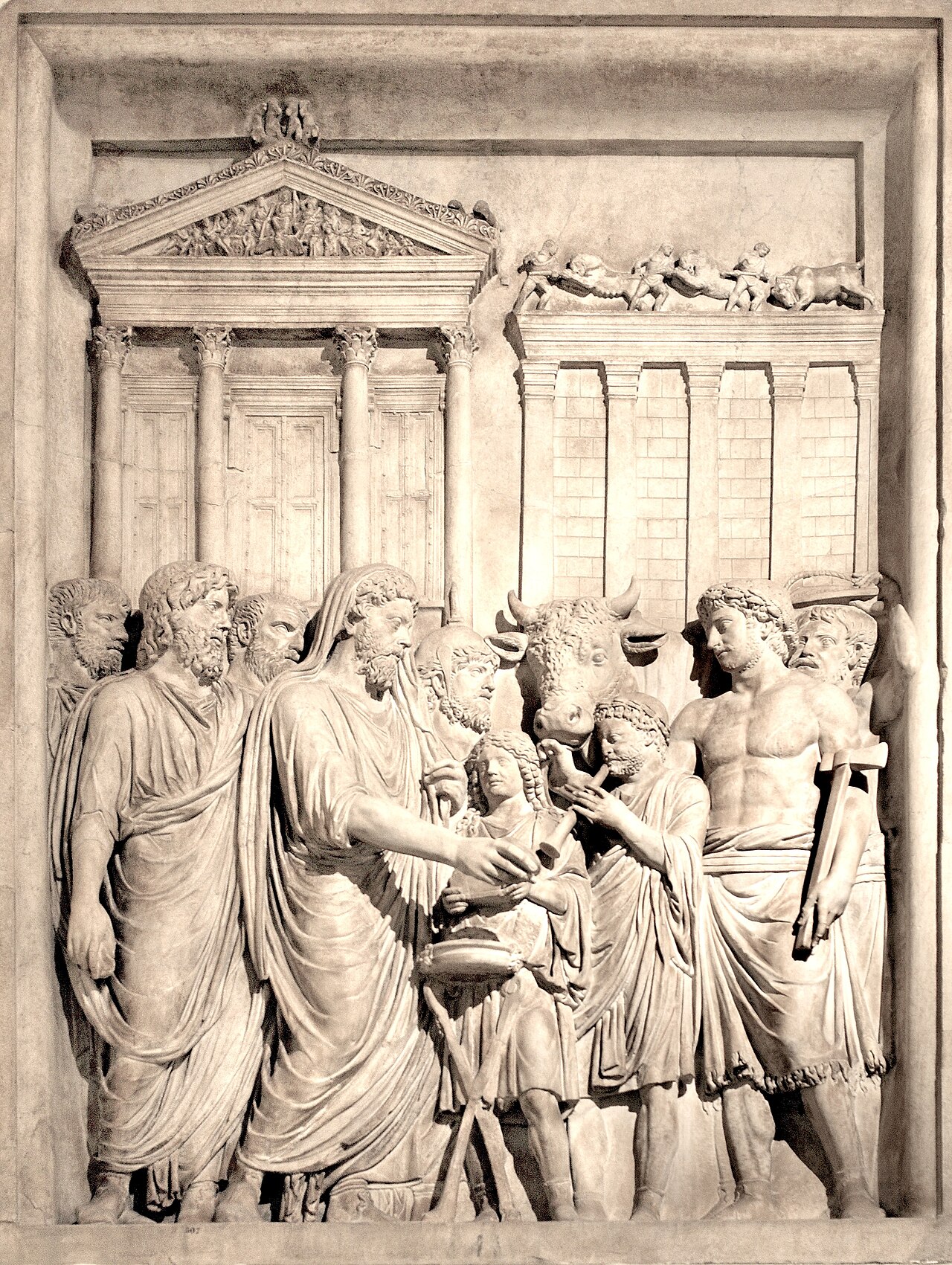
Panel Relief of Marcus Aurelius Sacrificing
Ready when you are
Start chatting with Marcus Aurelius now.
20 messages free · No credit card · Available in 50+ languages.