


Primary sourceArtifactc. 37-38 AD
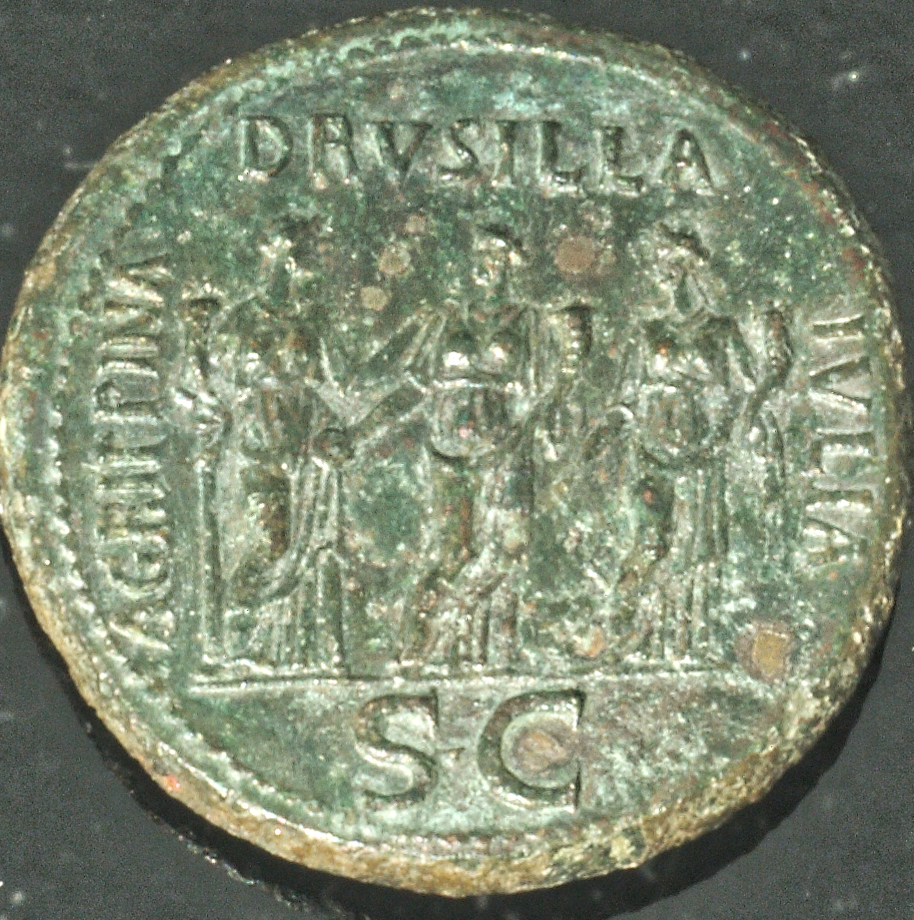
Sestertius of Caligula
c. 37-38 AD
A bronze coin struck in Caligula's reign honoring his three sisters, carrying his official image and authority as emperor.
A coin commissioned during Caligula's reign, carrying his authority and honoring his family.
About this source
What it is
A bronze sestertius coin struck around 37-38 AD during Caligula's reign, now held at the Münzkabinett Berlin. The reverse shows three draped standing female figures identified by inscription as his sisters Drusilla, Julia, and Agrippina the Younger, with the letters SC marking it as issued by the Senate's authority.
Why it matters
Coins were a major way Roman emperors communicated their image and family across the empire. By honoring his sisters on official currency, Caligula publicly elevated his family's status, a choice that reflects how closely he tied his own power to his relatives, including Agrippina the Younger, who would later become an influential figure under Nero.
Look closer
- Why might an emperor choose to put his sisters, rather than himself, on a coin?
- What does the inclusion of SC (Senate authority) tell us about how coins were approved?
- What might be left out of an official coin that we would want to know about these women?
This artifact is part of the curated material that grounds the AI version of Caligula on Humy.ai — when students ask about related events, the AI can quote it and cite it.
More Caligula sources
Browse all 88 →


Ready when you are
Start chatting with Caligula now.
20 messages free · No credit card · Available in 50+ languages.