


Primary sourceArtifact37-38 CE
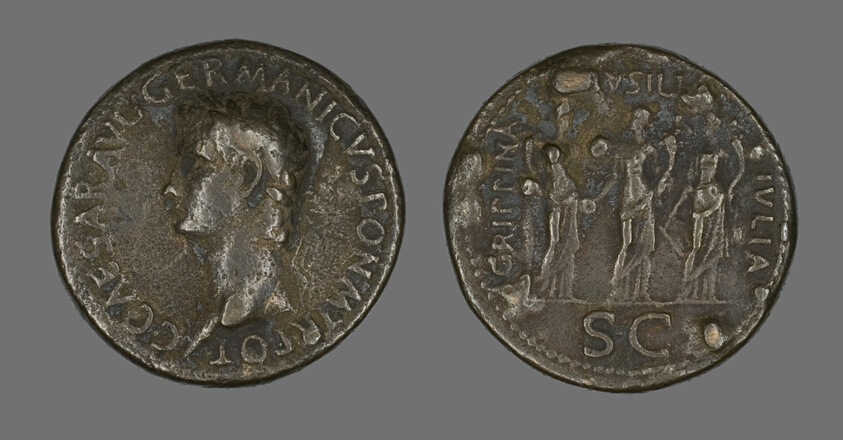
Sestertius Portraying Emperor Gaius (Caligula)
37-38 CE
A bronze coin minted in Rome during Caligula's reign, bearing his portrait and imperial titles.
A bronze coin minted during Caligula's reign carrying his official portrait and titles.
About this source
What it is
This bronze sestertius was minted in Rome in 37–38 CE, during the reign of Caligula. It is held by The Art Institute of Chicago and shows his portrait along with an inscription naming him, including the title Germanicus.
Why it matters
As an official coin issued during his reign, this sestertius is direct evidence of how Caligula's government presented his image and titles to the Roman public. The reverse side, showing standing figures, likely carried an additional political or religious message.
Look closer
- What does the inscription on the coin tell you about Caligula's family connections and titles?
- Why might the government choose to put several figures on the reverse of the coin?
- What does the everyday use of coins tell us about how widely an emperor's image could spread?
This artifact is part of the curated material that grounds the AI version of Caligula on Humy.ai — when students ask about related events, the AI can quote it and cite it.
More Caligula sources
Browse all 88 →
Ready when you are
Start chatting with Caligula now.
20 messages free · No credit card · Available in 50+ languages.