


Secondary sourcePainting
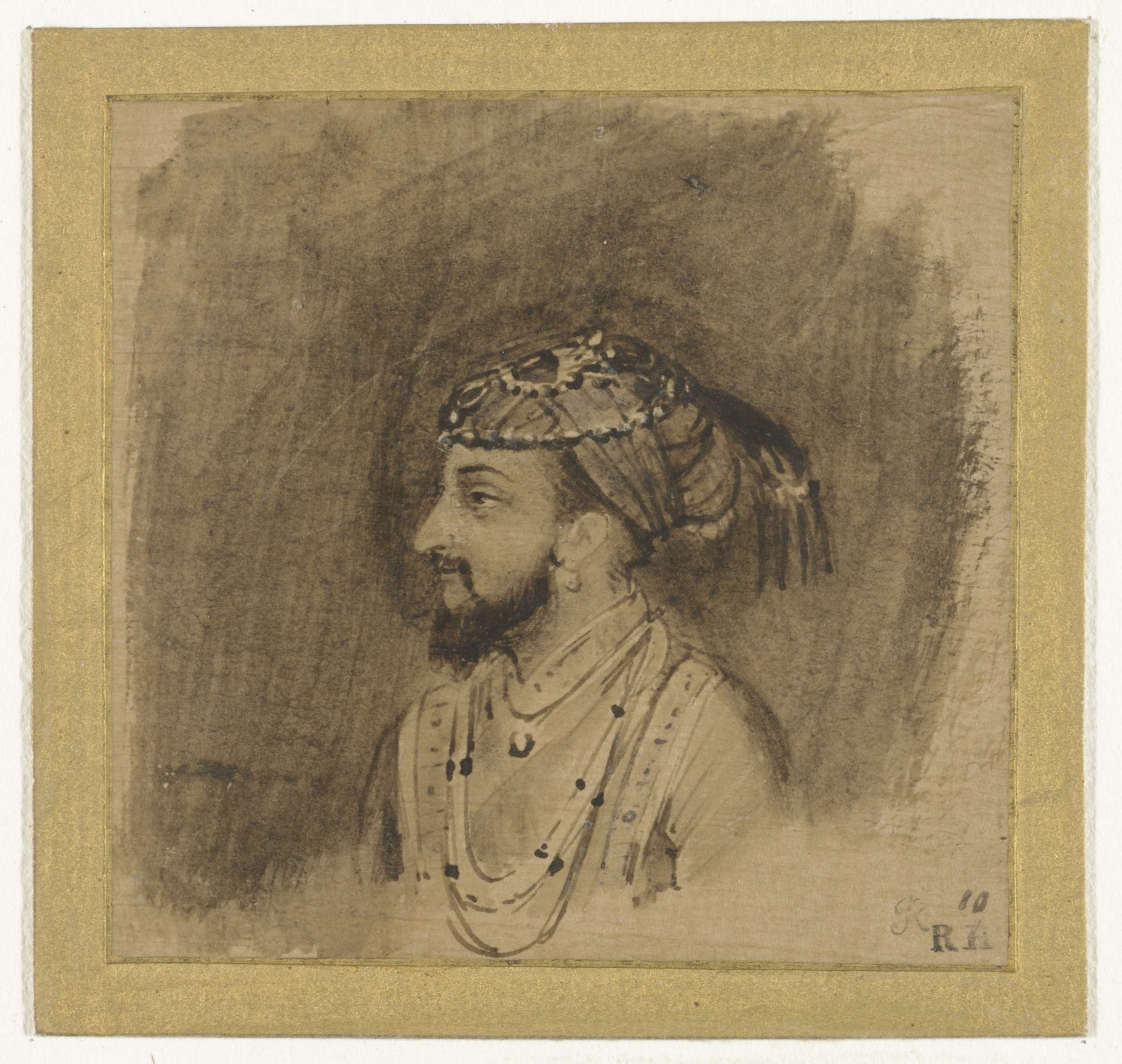
Shah Jahan, Drawing in the Rijksmuseum
A brown ink and wash drawing in profile of a bearded man who is identified as Shah Jahan. Its date and maker are not recorded.
Shows how Shah Jahan was visually represented in later copies held in European collections.
About this source
What it is
This is a brown ink and wash drawing in profile facing left. It shows a bearded man in a turban with a jeweled band, earrings, and a long necklace of pearls or beads over a light robe. A monogram and a date numeral appear in the lower right corner, on a gold-coloured mount. The drawing is held by the Rijksmuseum in the Netherlands. Its maker and date are not given, so it is probably a later copy.
Why it matters
Shah Jahan was the fifth Mughal emperor, reigning from 1628 to 1658. Portraits of Mughal rulers were often copied by artists in India and abroad, and European collectors kept such drawings. Since this drawing cannot be dated or attributed, it shows how images of the emperor circulated among people who never saw him in person.
Look closer
- What clues in the drawing, such as the jewels and pearls, suggest the wealth or status of the man shown?
- Who might have made this copy, and why would someone keep a drawing like this?
- Can you tell from the drawing alone whether it is a likeness, or only a repeated image of a ruler?
This painting is part of the curated material that grounds the AI version of Shah Jahan on Humy.ai — when students ask about related events, the AI can quote it and cite it.
More Shah Jahan sources
Browse all 99 →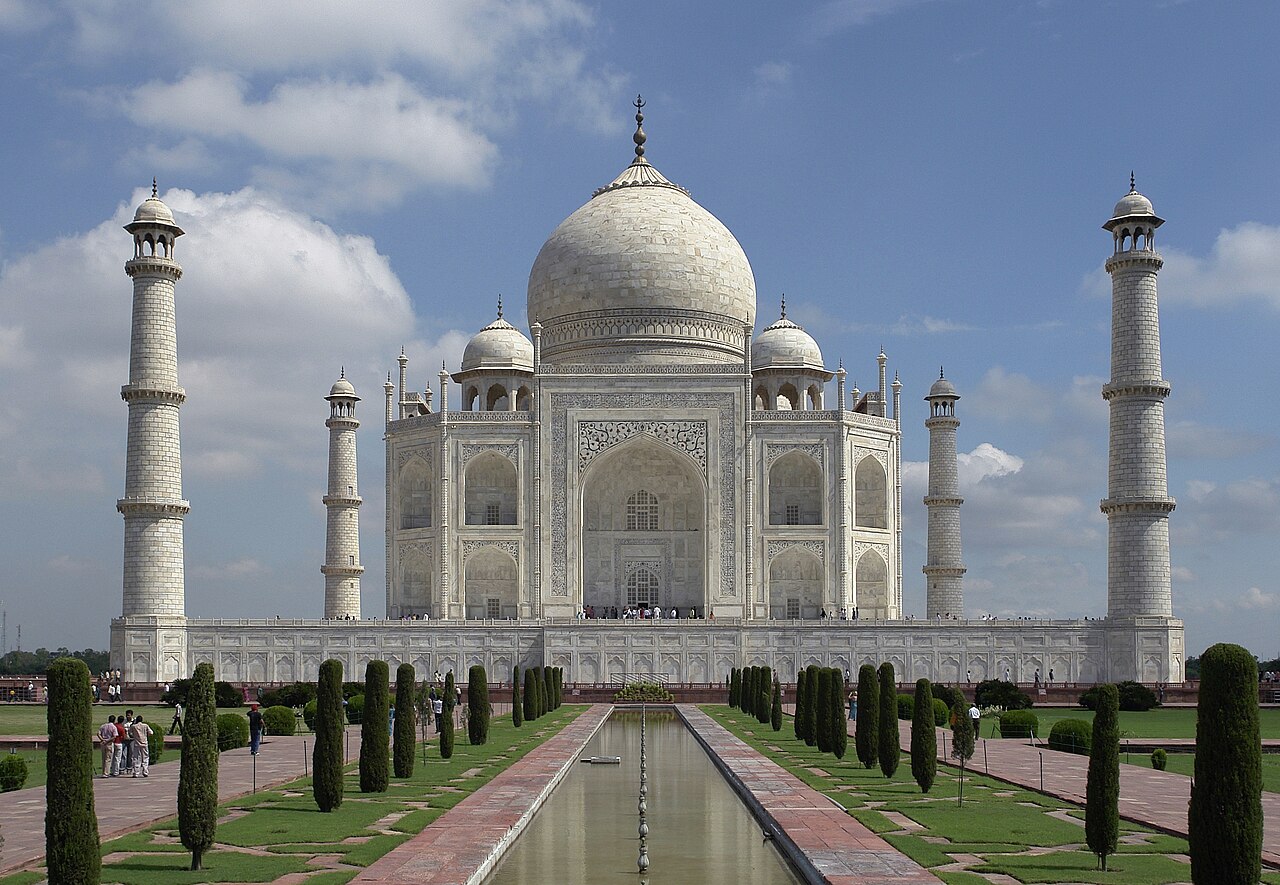 Artifact
Primary source
Taj Mahal
Ustad Ahmad Lahori · 1631-1653
 Book
Primary source
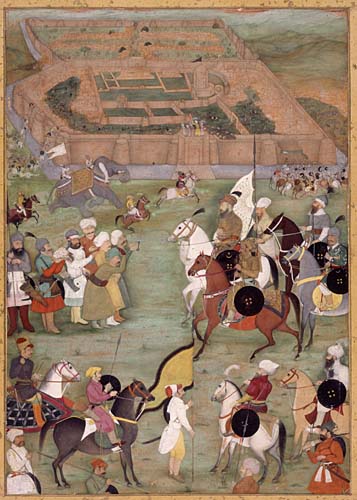
Padshahnama
Abdul Hamid Lahori · 1630-1657
 Artifact
Primary source
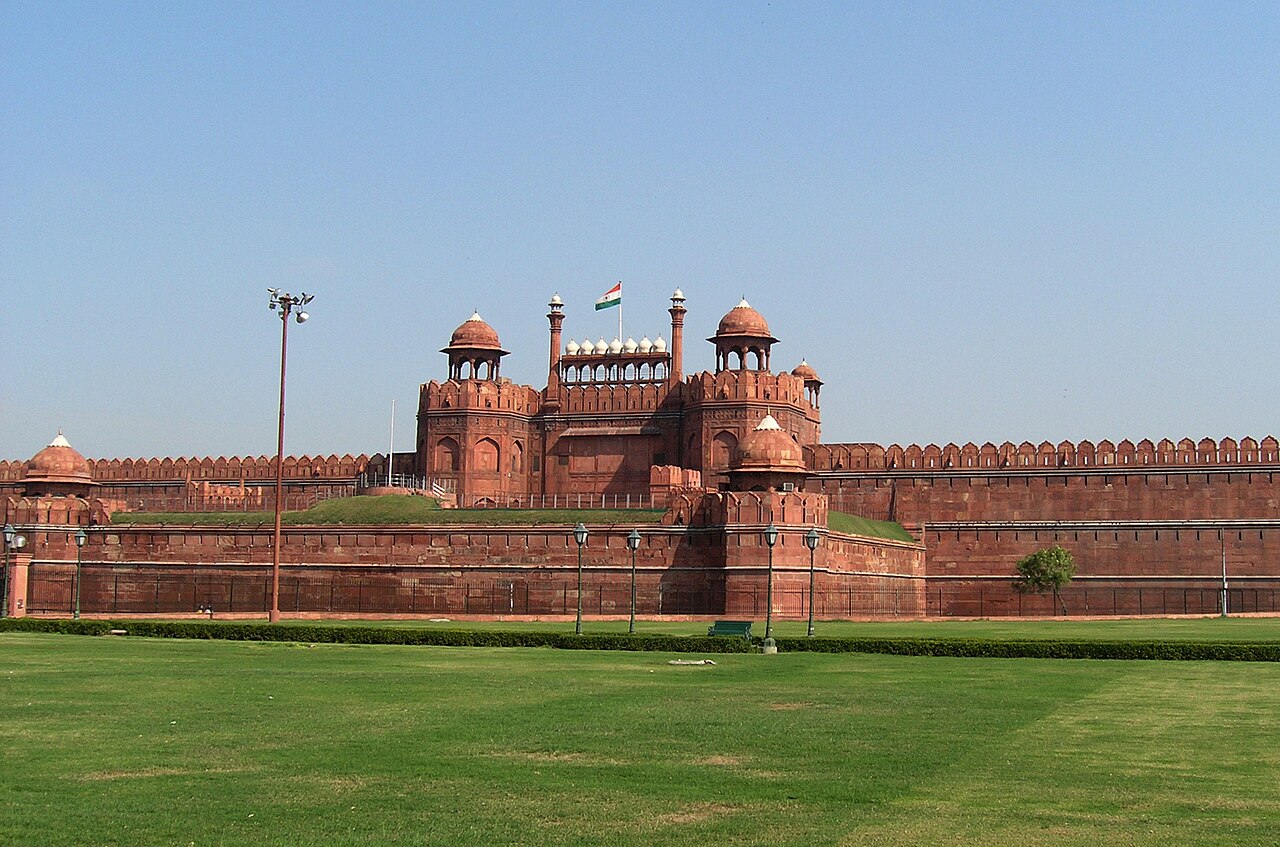
Red Fort
Ustad Ahmad Lahori · 1638-1648
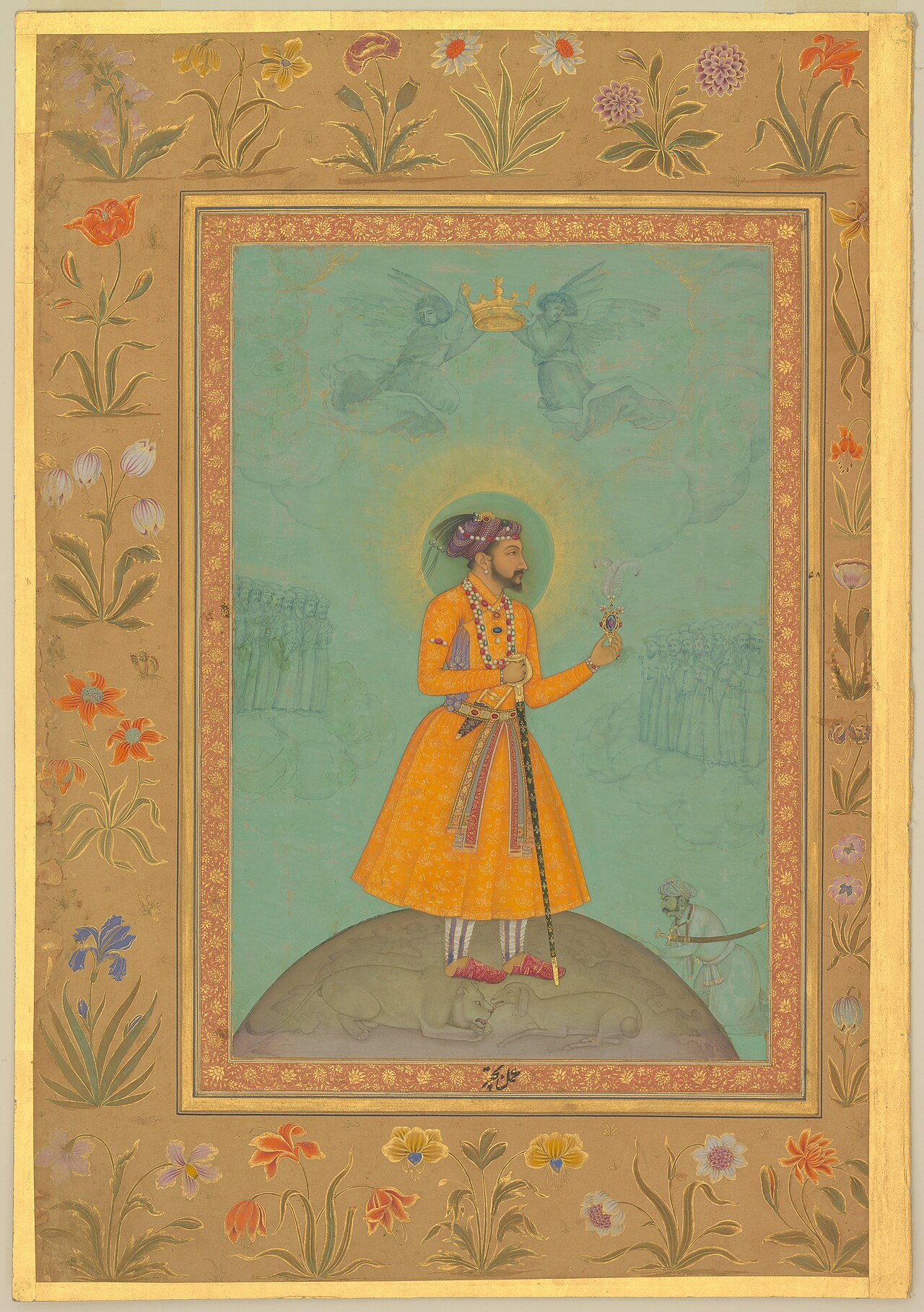 Painting
Primary source
Mughal Emperor Shah Jahan standing on a globe
Bichitr · c. 1630
Free account
Read every Shah Jahan source
Sign up free →
Ready when you are
Start chatting with Shah Jahan now.
20 messages free · No credit card · Available in 50+ languages.