


Secondary sourcePaintingc. 1656-1661
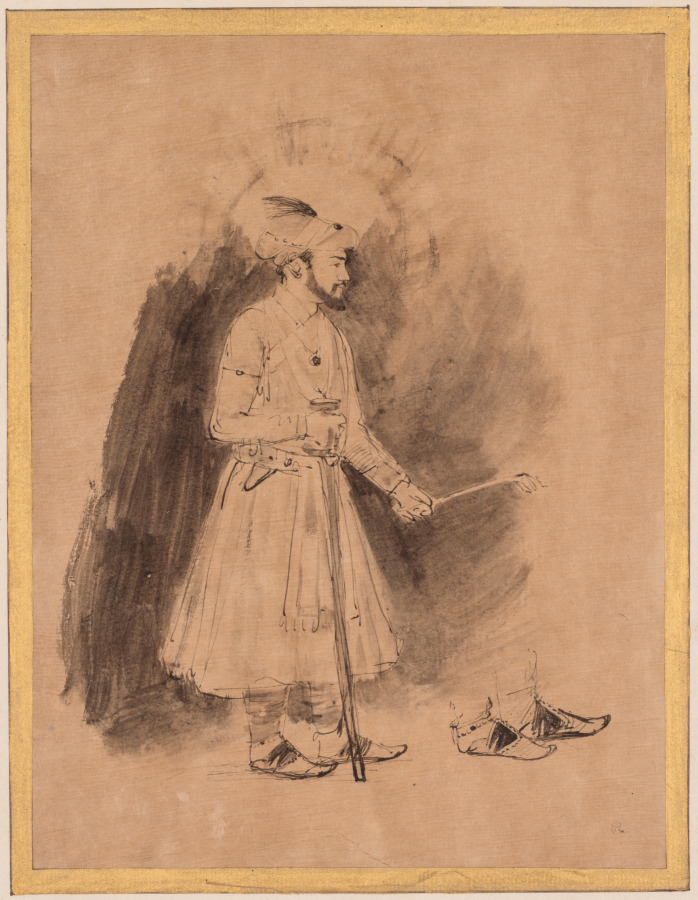
Shah Jahan
Rembrandt · c. 1656-1661
A drawing by Rembrandt copying a Mughal miniature, showing how Shah Jahan's image reached Europe during his own lifetime.
Shows Shah Jahan as he was imagined and copied by a European artist during his own lifetime.
About this source
What it is
An ink and wash drawing on brown paper by the Dutch painter Rembrandt, made after a Mughal miniature, around 1656-61. It shows a bearded man in a turban with a plume, wearing a long robe and sash, holding a staff, with slippers set beside him.
Why it matters
Rembrandt never visited India. He copied Mughal paintings that had made their way to Europe, showing how curious European artists were about Mughal court imagery during Shah Jahan's reign. The drawing tells us more about European fascination with the East than about the emperor himself.
Look closer
- What details suggest this was copied from another image rather than drawn from life?
- Why might a European artist have been interested in copying a Mughal portrait?
- What does this drawing leave out that a Mughal artist would have included?
This painting is part of the curated material that grounds the AI version of Shah Jahan on Humy.ai — when students ask about related events, the AI can quote it and cite it.
More Shah Jahan sources
Browse all 99 →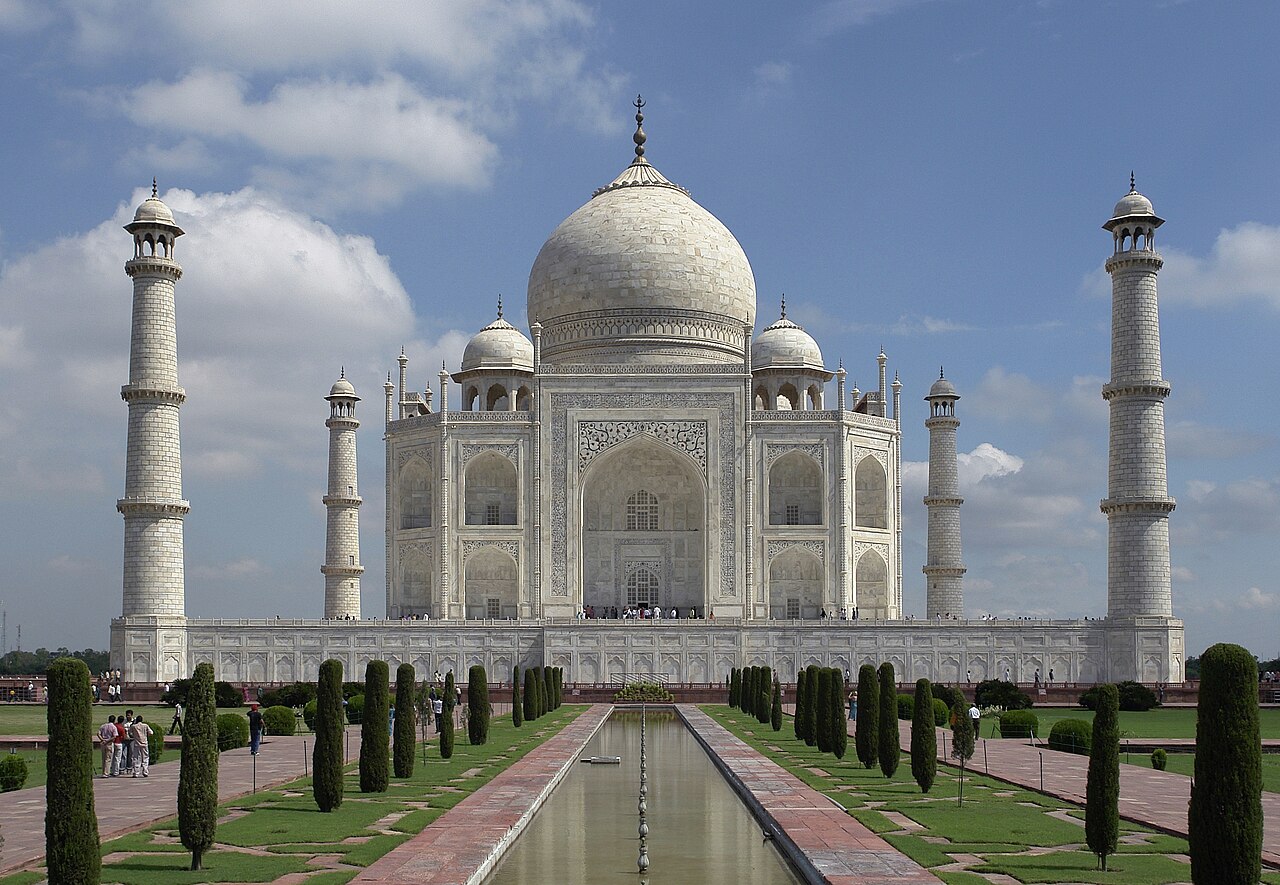 Artifact
Primary source
Taj Mahal
Ustad Ahmad Lahori · 1631-1653
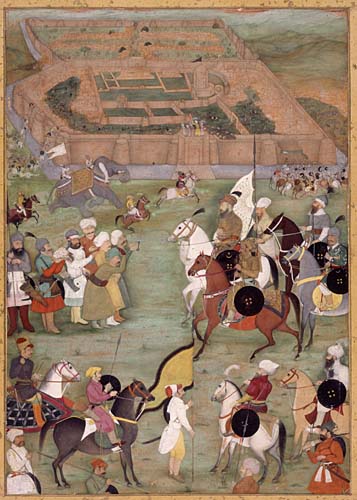 Book
Primary source
Padshahnama
Abdul Hamid Lahori · 1630-1657
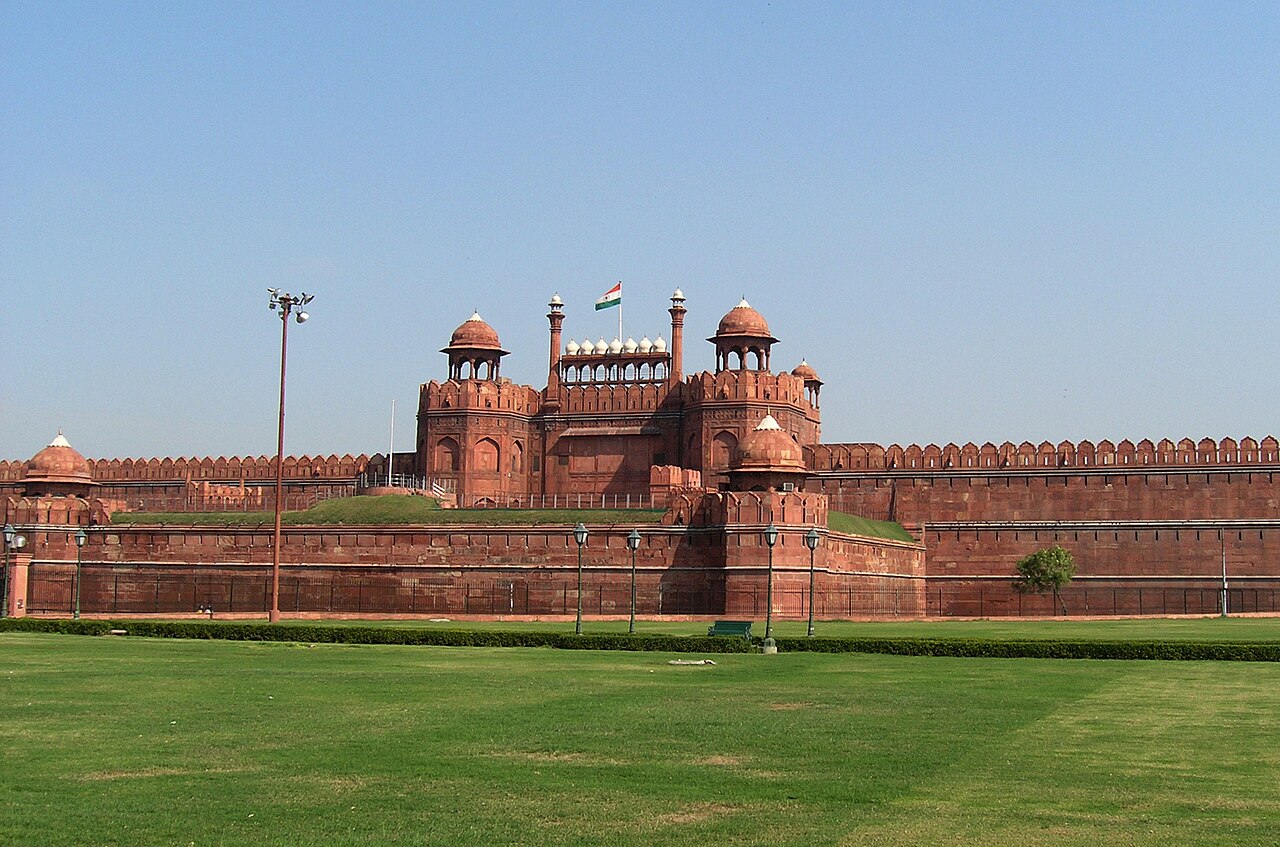 Artifact
Primary source
Red Fort
Ustad Ahmad Lahori · 1638-1648
 Painting
Primary source
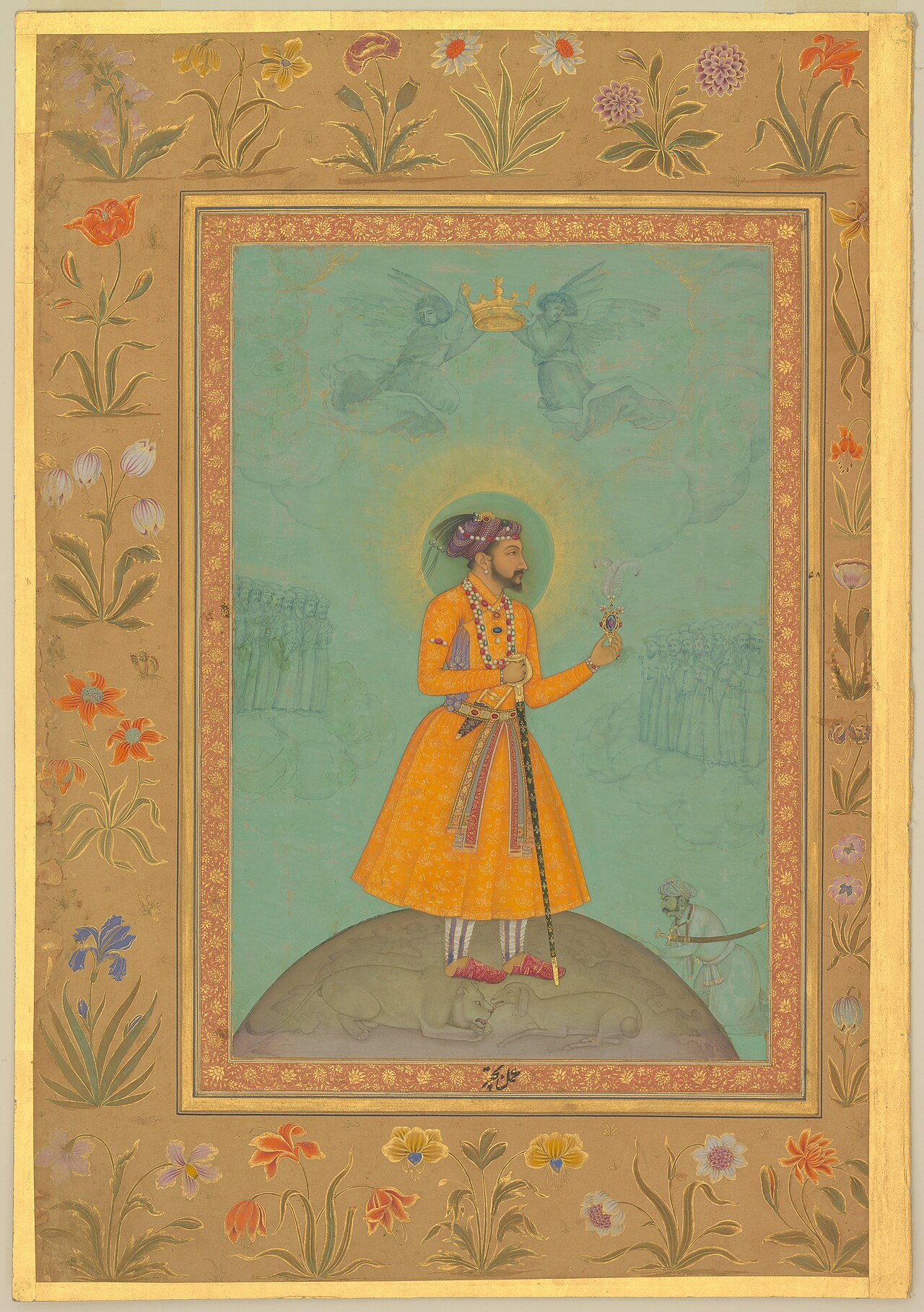
Mughal Emperor Shah Jahan standing on a globe
Bichitr · c. 1630
Free account
Read every Shah Jahan source
Sign up free →
Ready when you are
Start chatting with Shah Jahan now.
20 messages free · No credit card · Available in 50+ languages.