


Primary sourcePaintingc. 1650
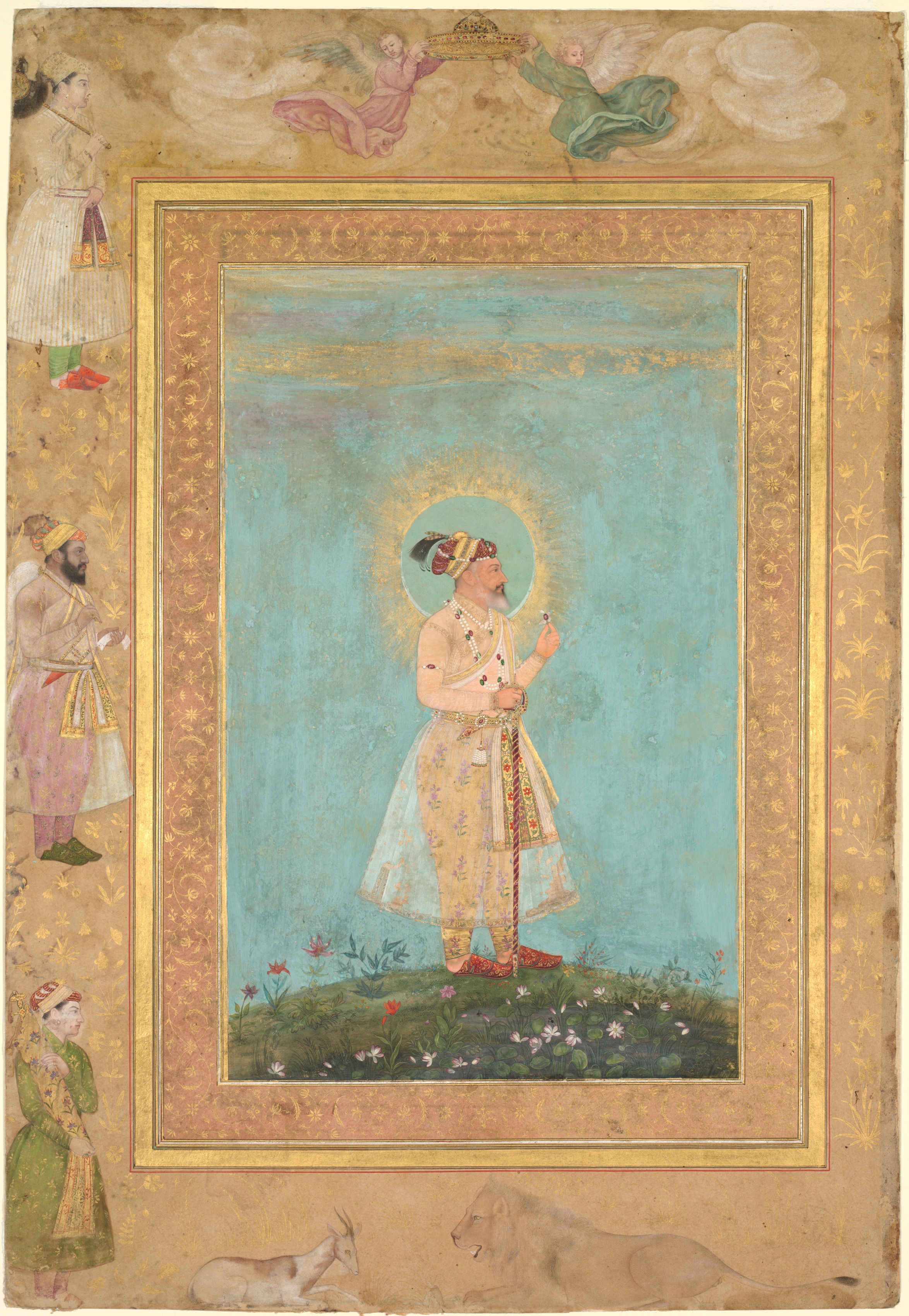
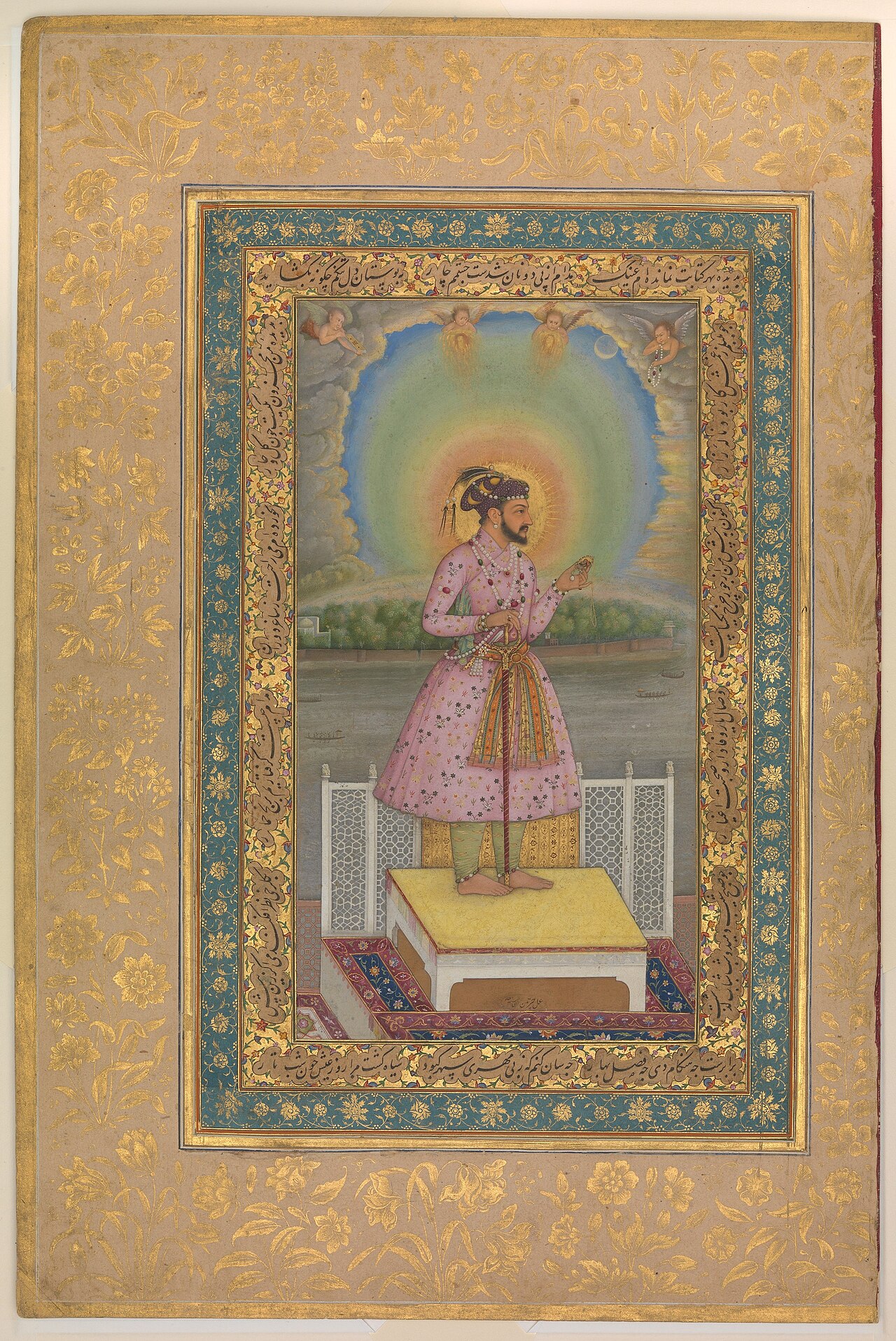
Shah Jahan Holding a Spinel and a Long Deccan Sword
Hashim · c. 1650
An album portrait of Emperor Shah Jahan painted near the end of his reign, showing him holding a spinel and a sword as symbols of imperial power.
This portrait, made near the end of Shah Jahan's reign, shows him displaying symbols of his imperial power and divine sanction.
About this source
What it is
This painting by the artist Hashim shows Shah Jahan standing in a jeweled turban, holding a spinel in one hand and a long sword in the other. It comes from an imperial album made for the emperor toward the end of his reign, around 1650. The page is now held by the Cleveland Museum of Art.
Why it matters
Only portraits of emperors in this album include angels holding a crown above and a predator resting peacefully with its prey below — symbols of divine sanction, peace and justice. Shah Jahan used this imagery to present his rule as blessed and just. The painting shows the refinement Mughal court art reached under his patronage, and the skill of artists like Hashim who worked to flatter and glorify him.
Look closer
- What do the sun and moon behind his head suggest about how he wanted to be seen?
- Why might an emperor want a lion and deer shown together peacefully?
- What does this image leave out about the realities of ruling an empire?
This painting is part of the curated material that grounds the AI version of Shah Jahan on Humy.ai — when students ask about related events, the AI can quote it and cite it.
More Shah Jahan sources
Browse all 99 →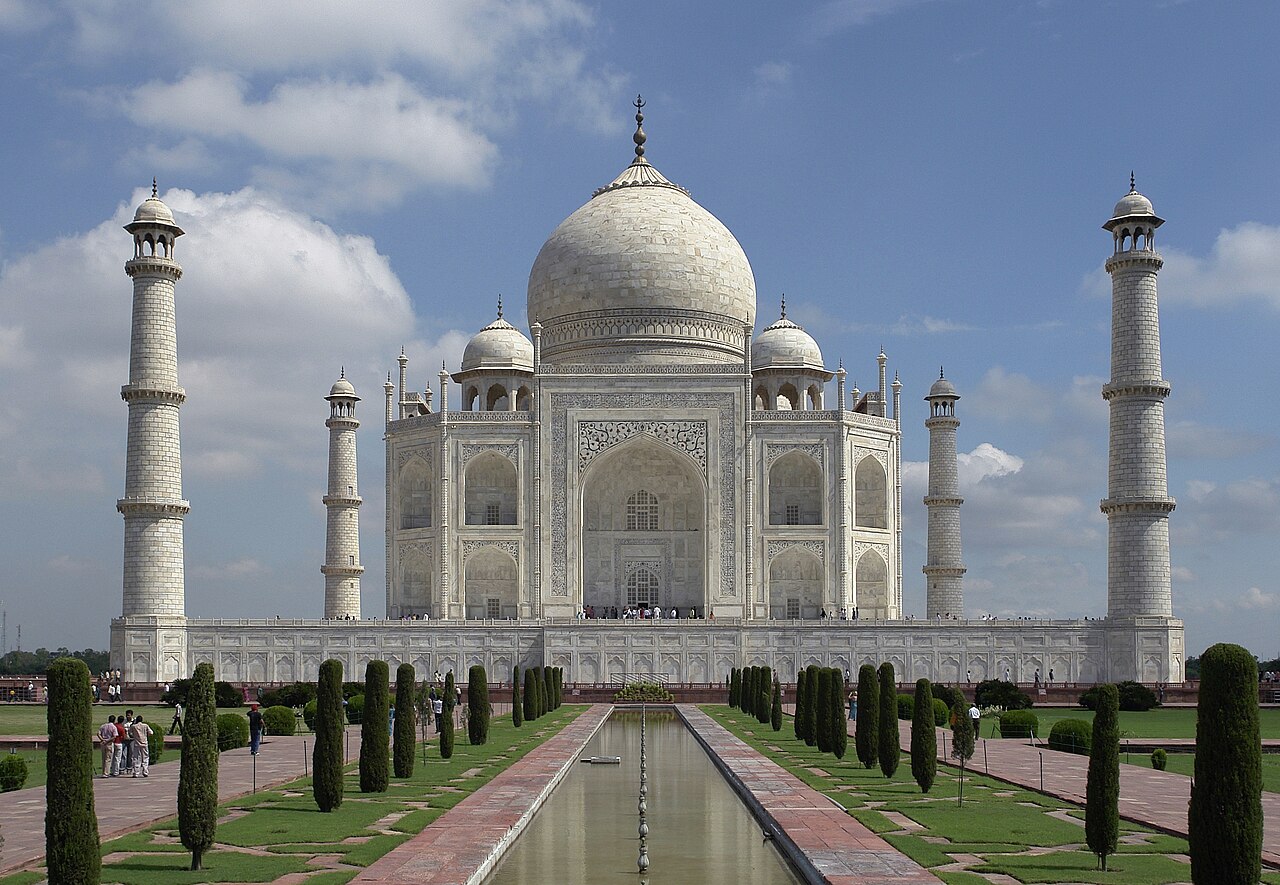 Artifact
Primary source
Taj Mahal
Ustad Ahmad Lahori · 1631-1653
 Book
Primary source
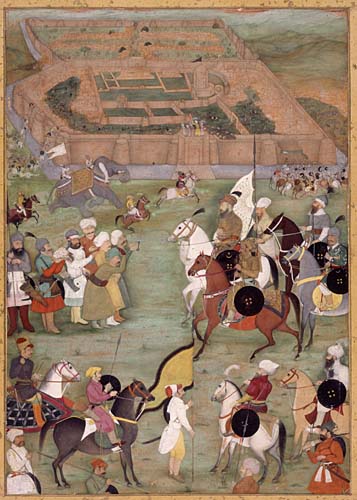
Padshahnama
Abdul Hamid Lahori · 1630-1657
 Artifact
Primary source
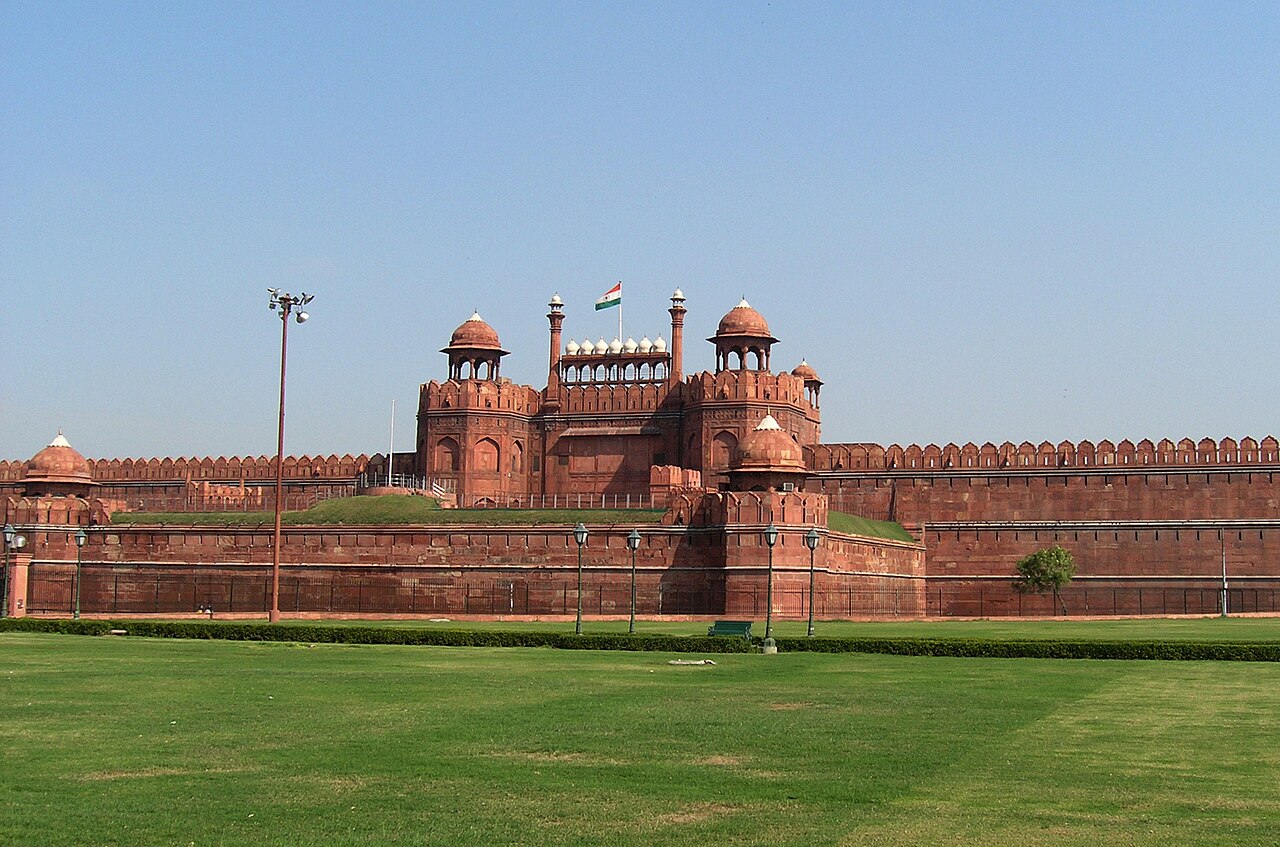
Red Fort
Ustad Ahmad Lahori · 1638-1648
 Painting
Primary source
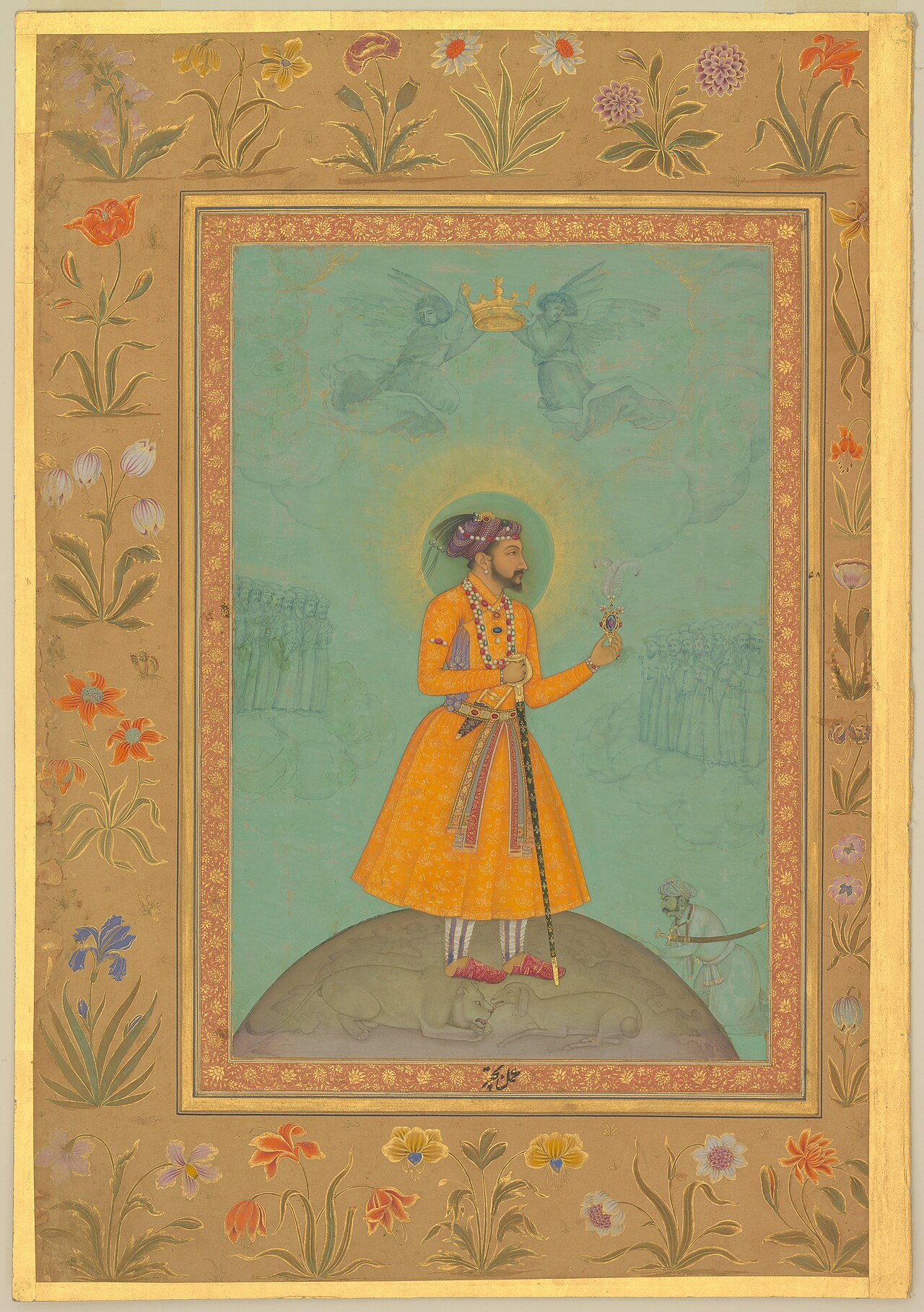
Mughal Emperor Shah Jahan standing on a globe
Bichitr · c. 1630
Free account
Read every Shah Jahan source
Sign up free →
Ready when you are
Start chatting with Shah Jahan now.
20 messages free · No credit card · Available in 50+ languages.