


Primary sourcePaintingc. 1635
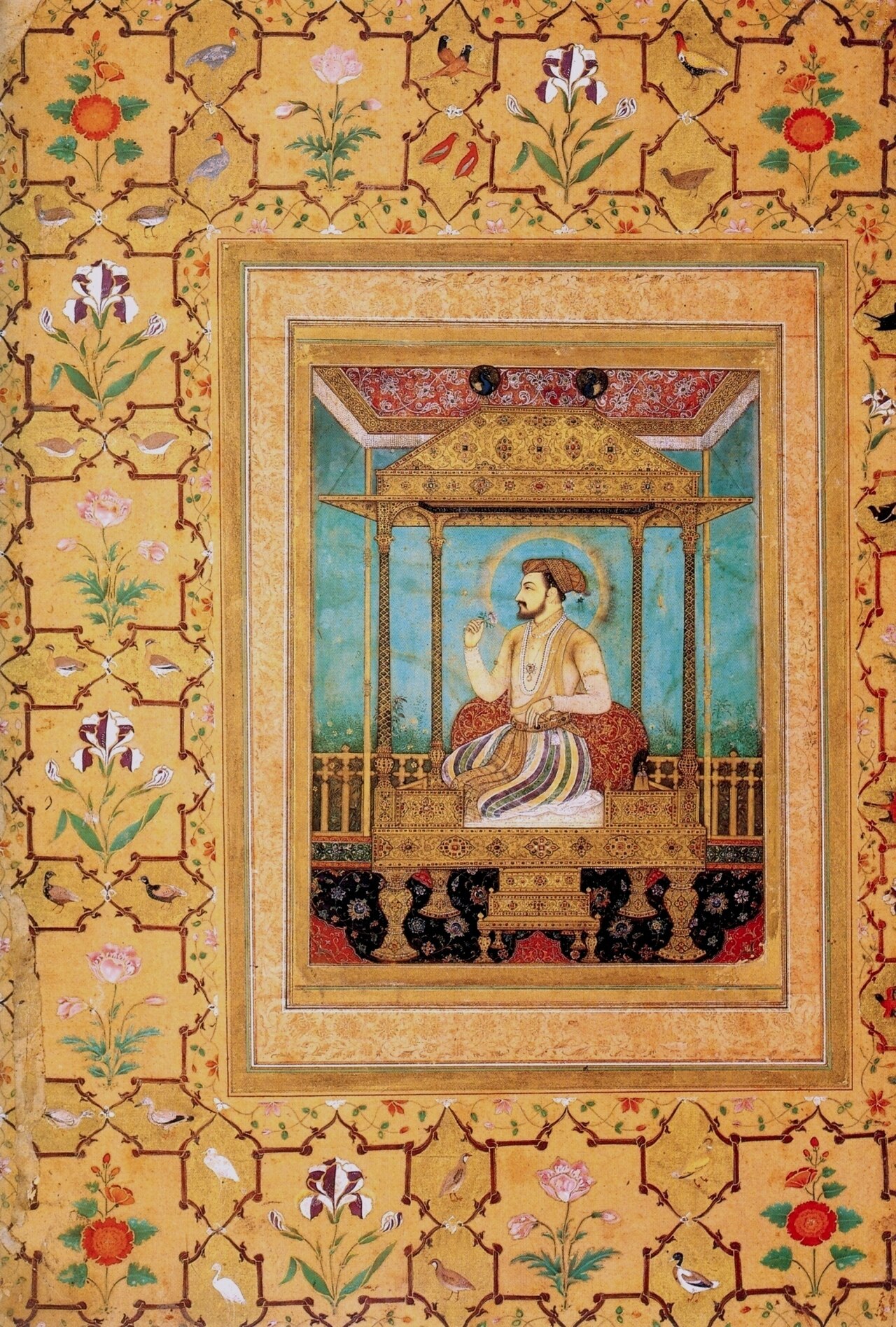
Shah Jahan on The Peacock Throne
Govardhan · c. 1635
A Mughal miniature by Govardhan showing Shah Jahan seated on his legendary jewelled Peacock Throne, a symbol of his empire's wealth.
This portrait shows Shah Jahan enthroned on the Peacock Throne he commissioned, a symbol of his imperial wealth and power.
About this source
What it is
This miniature painting, attributed to the Mughal court artist Govardhan and dated to around 1635, shows Shah Jahan seated cross-legged on his famous Peacock Throne. A halo surrounds his head, and he holds a flower. It is held today at the Museum of Islamic Art in Doha.
Why it matters
The Peacock Throne, which Shah Jahan commissioned, became a legendary symbol of Mughal wealth and power. Showing the emperor enthroned upon it, haloed like a near-divine figure, was a deliberate statement about his authority and the riches of his court. Images like this were part of how Mughal rulers projected their power through art, not just through conquest or decree.
Look closer
- What details in the painting suggest wealth and luxury?
- Why would an emperor want to be painted glowing with a halo?
- What might this image leave out about the real workings of his empire?
This painting is part of the curated material that grounds the AI version of Shah Jahan on Humy.ai — when students ask about related events, the AI can quote it and cite it.
More Shah Jahan sources
Browse all 99 →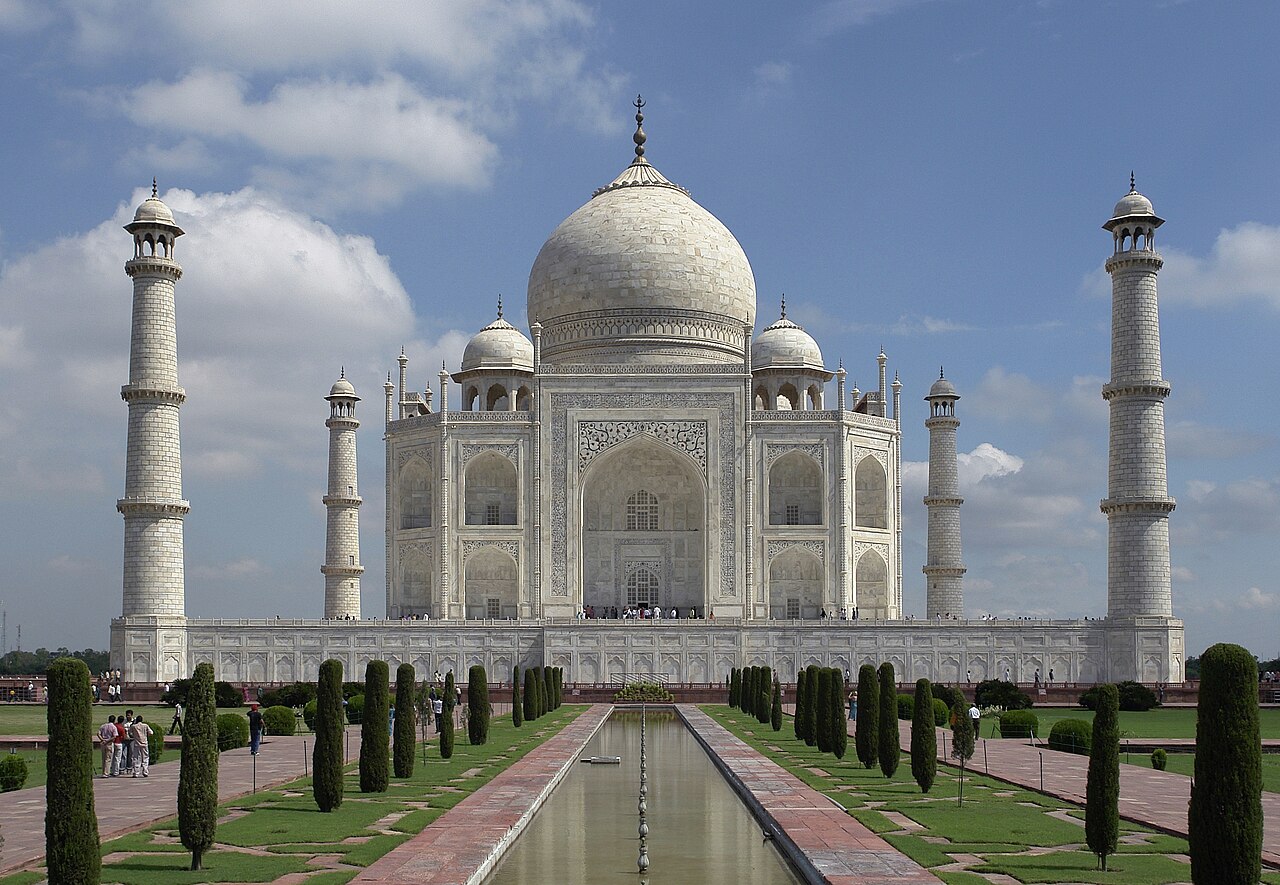 Artifact
Primary source
Taj Mahal
Ustad Ahmad Lahori · 1631-1653
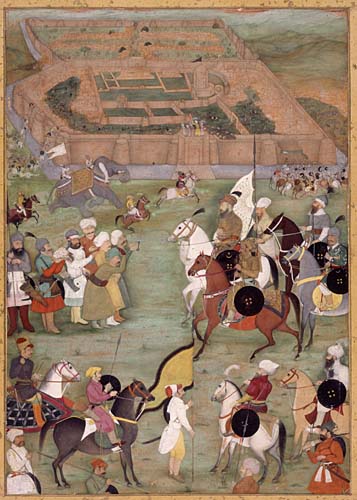 Book
Primary source
Padshahnama
Abdul Hamid Lahori · 1630-1657
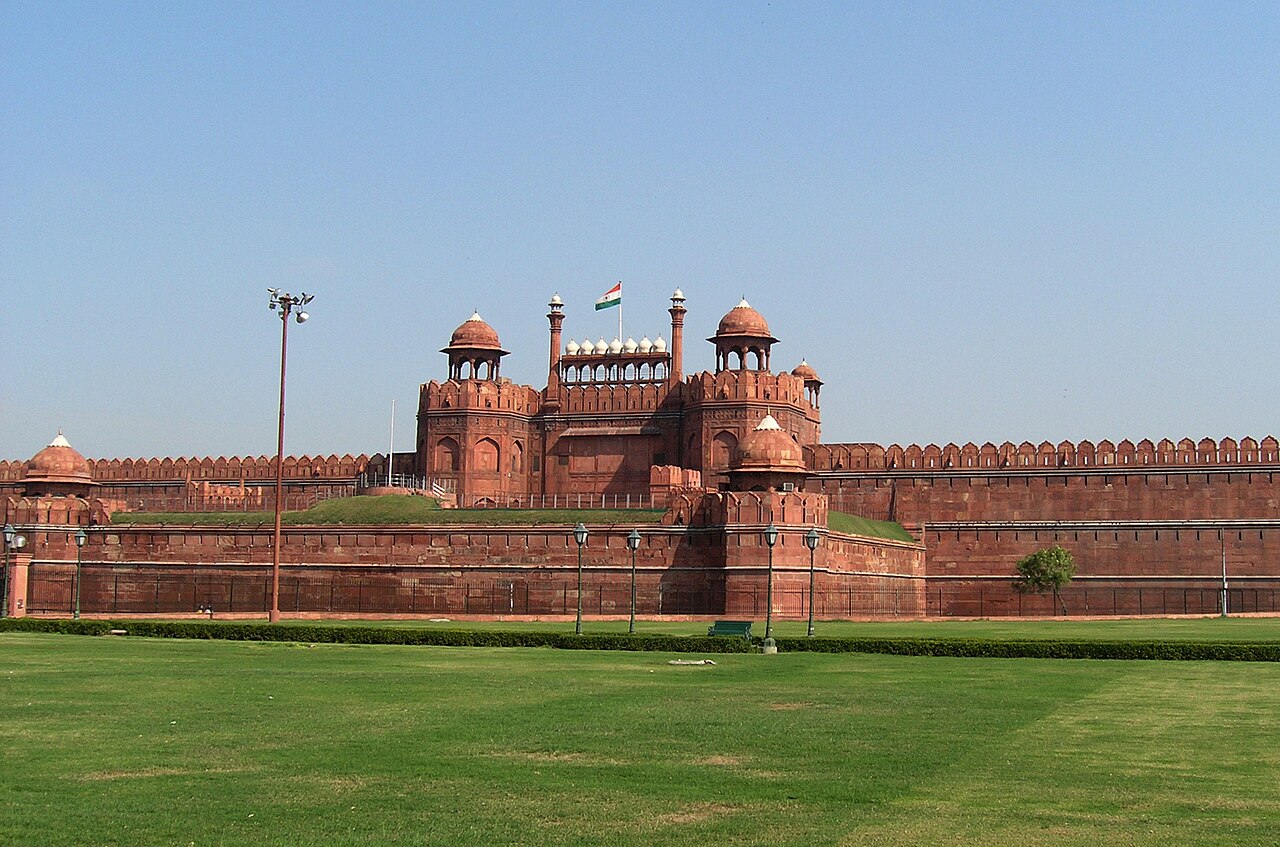 Artifact
Primary source
Red Fort
Ustad Ahmad Lahori · 1638-1648
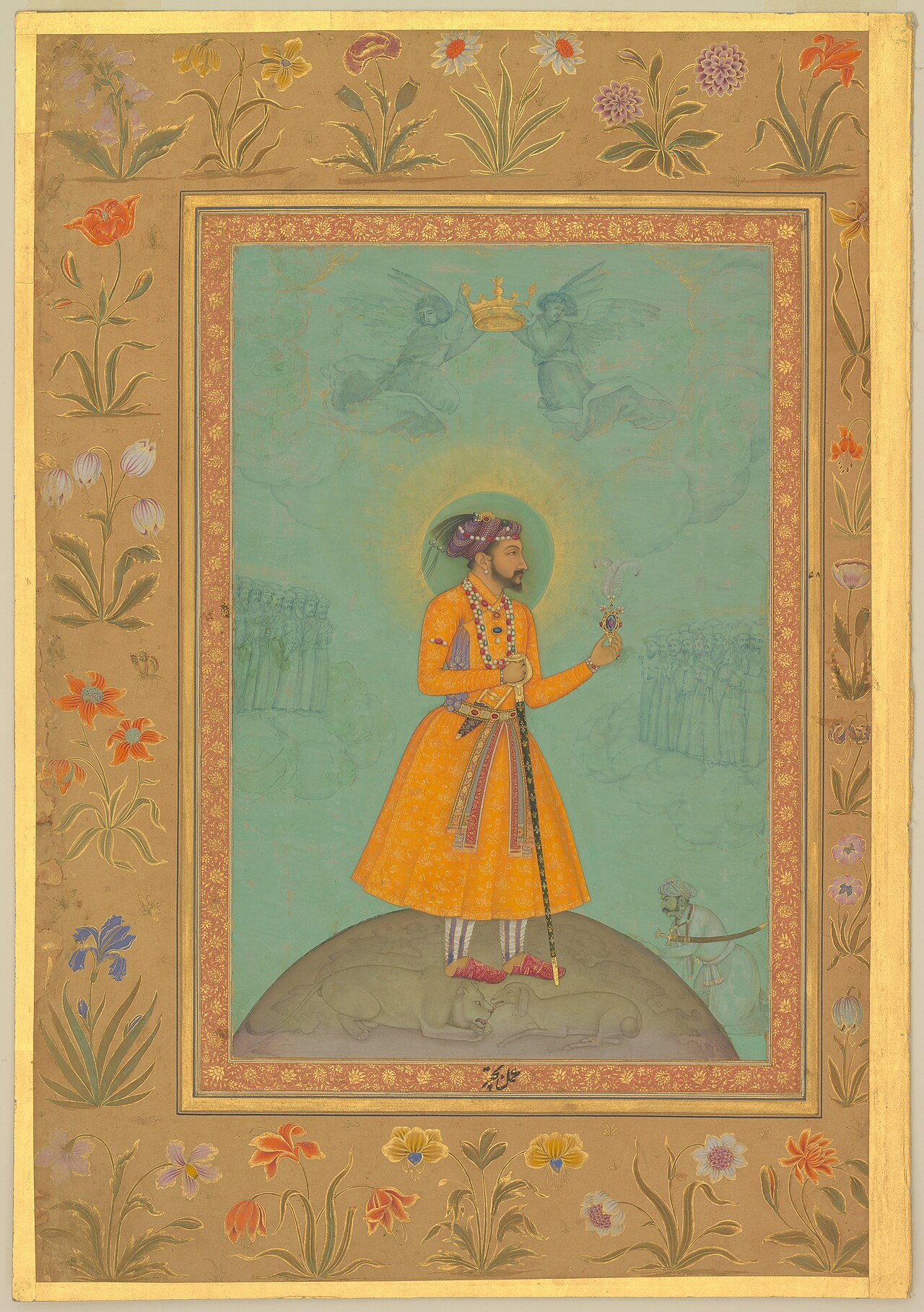 Painting
Primary source
Mughal Emperor Shah Jahan standing on a globe
Bichitr · c. 1630
Free account
Read every Shah Jahan source
Sign up free →
Ready when you are
Start chatting with Shah Jahan now.
20 messages free · No credit card · Available in 50+ languages.