


Primary sourcePaintingc. 1628
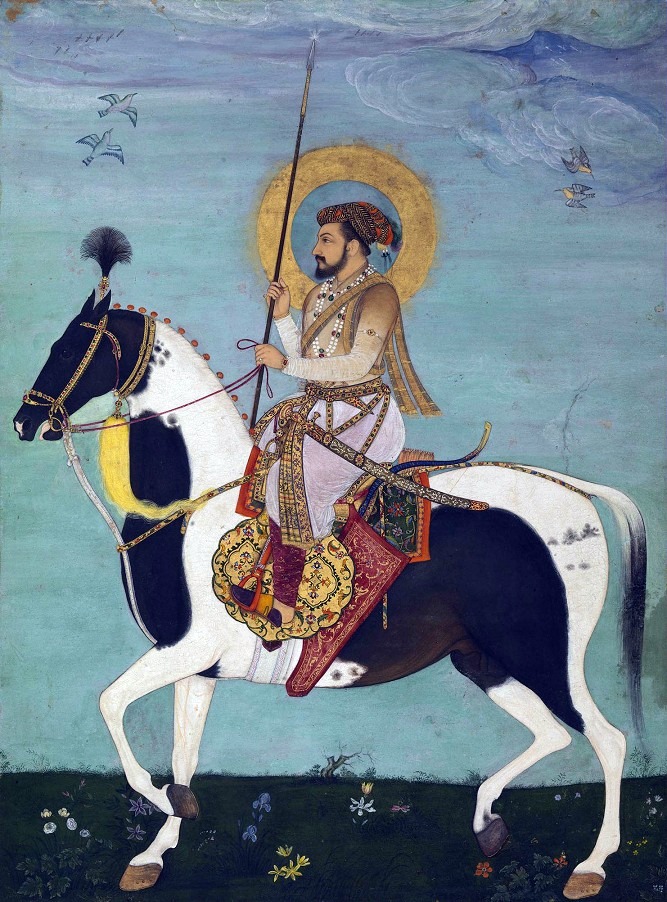
Shah Jahan Riding a Stallion
Payag and Mir Ali · c. 1628
A Mughal court painting from the Kevorkian Album showing Shah Jahan on horseback, made at Agra the year he became emperor.
An early portrait of Shah Jahan on horseback, made in the year he came to the throne.
About this source
What it is
Painted by Payag and Mir Ali at the Mughal court in Agra around 1628, this miniature shows Shah Jahan riding a piebald horse and holding a spear, with a golden halo around his head.
Why it matters
Images of the emperor on horseback, armed and haloed, were a common way for Mughal artists to show royal strength and divine favour. The date, 1628, is the year Shah Jahan took the throne, making this an early portrait of his reign.
Look closer
- Why do you think the artists gave the emperor a golden halo?
- What might the spear and the horse be meant to say about the ruler's character?
- What is left out of this image that a full historical account might include?
This painting is part of the curated material that grounds the AI version of Shah Jahan on Humy.ai — when students ask about related events, the AI can quote it and cite it.
More Shah Jahan sources
Browse all 99 →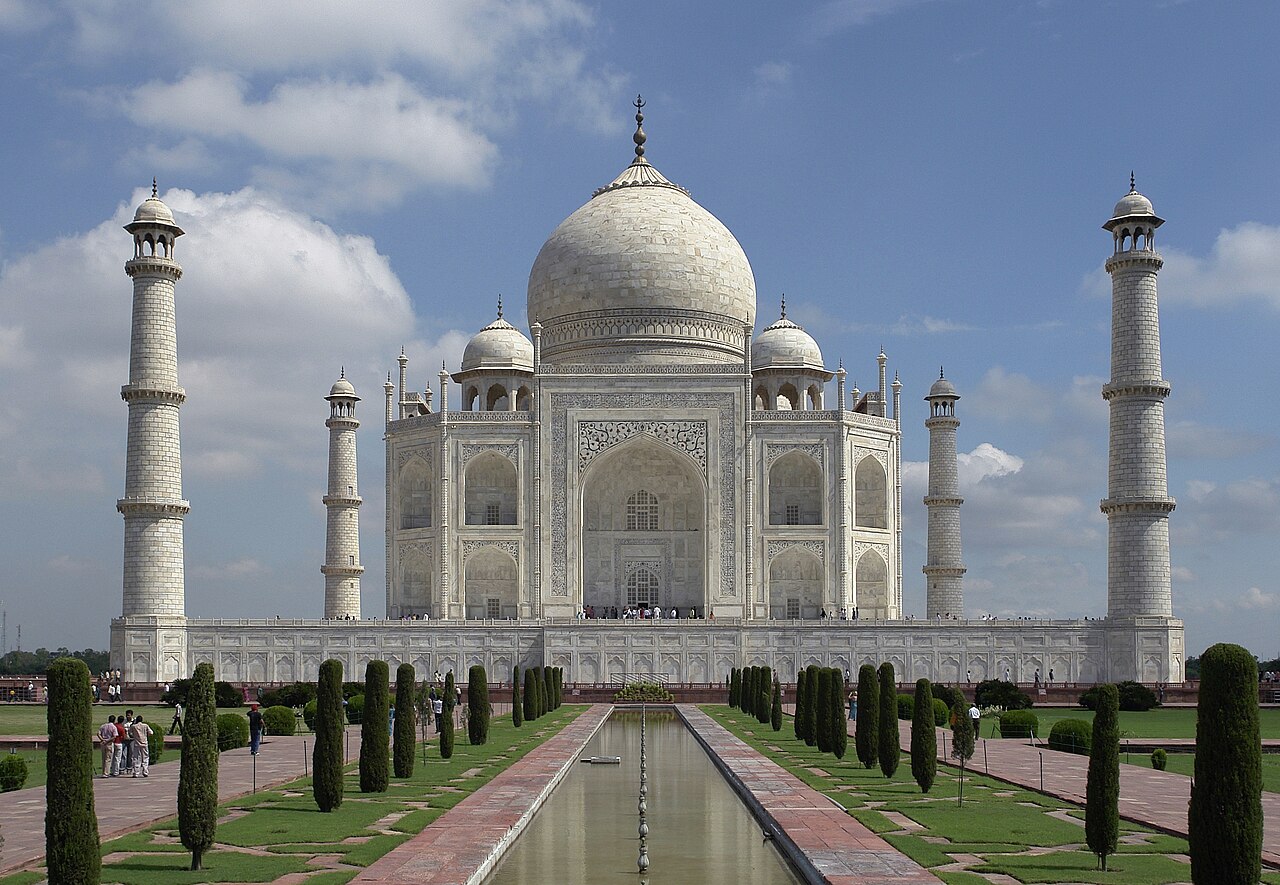 Artifact
Primary source
Taj Mahal
Ustad Ahmad Lahori · 1631-1653
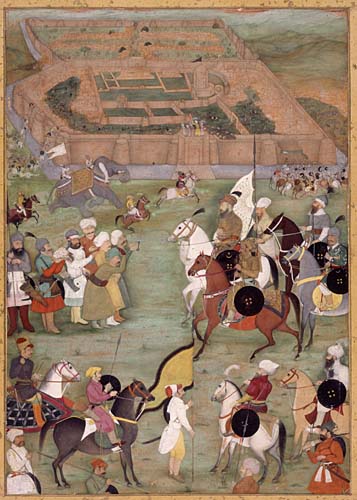 Book
Primary source
Padshahnama
Abdul Hamid Lahori · 1630-1657
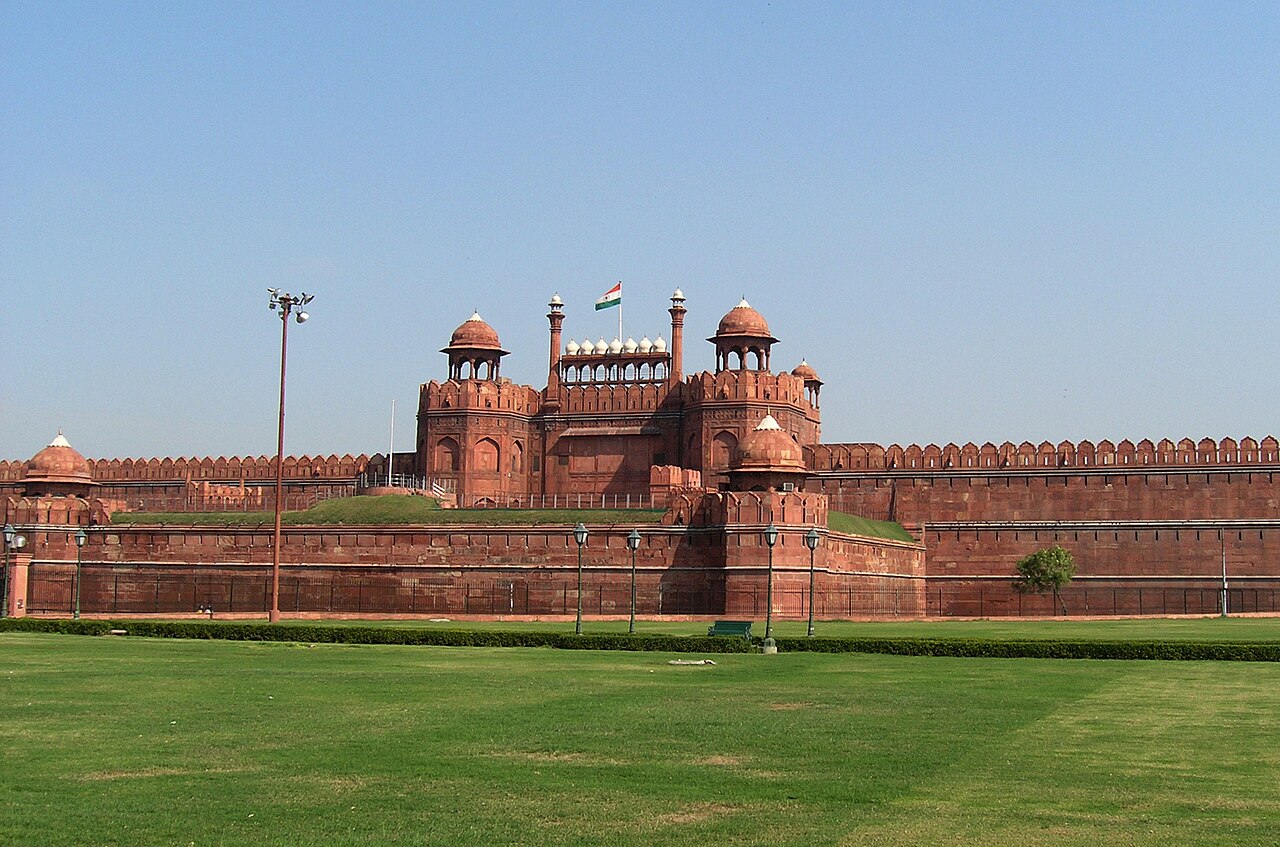 Artifact
Primary source
Red Fort
Ustad Ahmad Lahori · 1638-1648
 Painting
Primary source
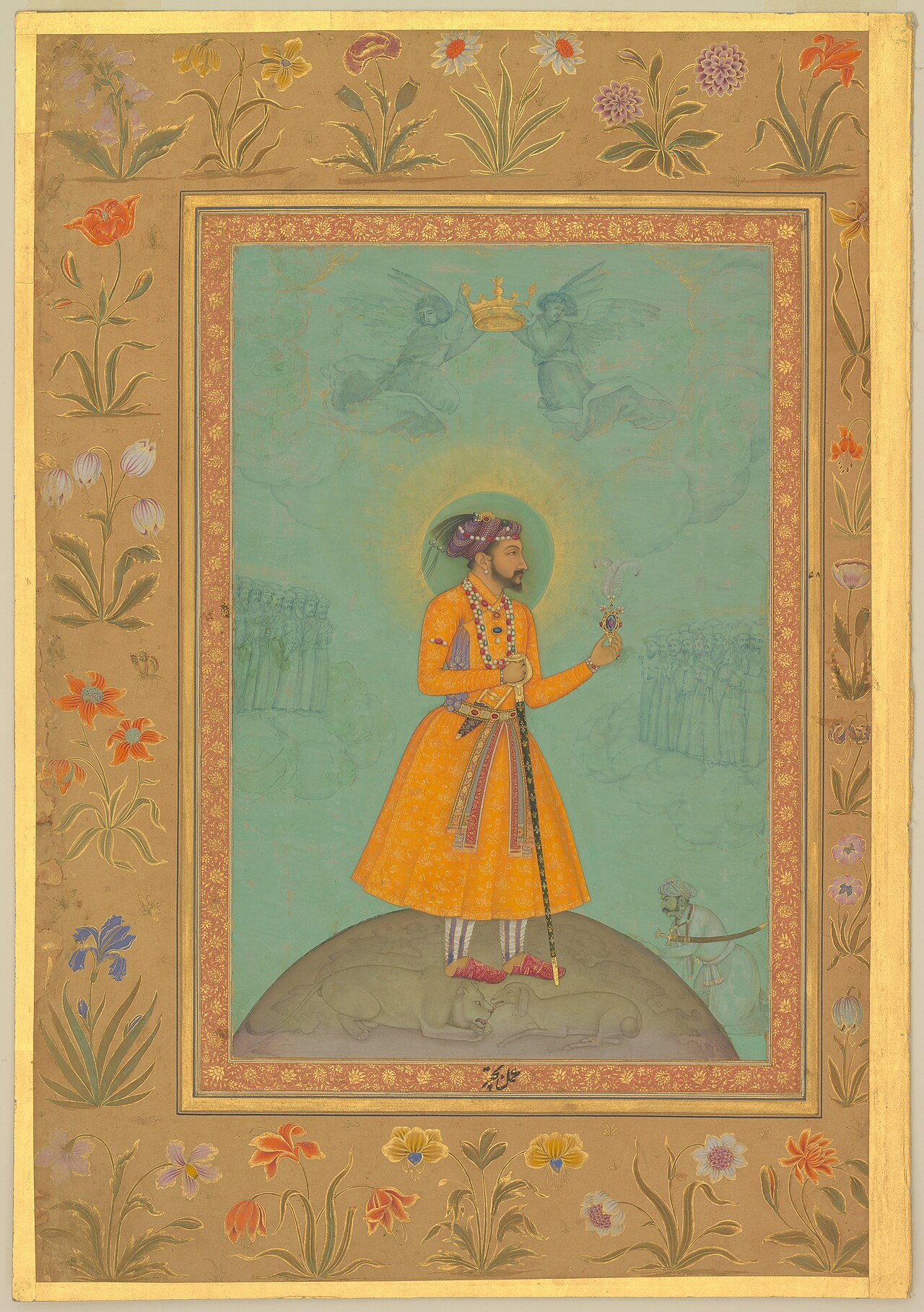
Mughal Emperor Shah Jahan standing on a globe
Bichitr · c. 1630
Free account
Read every Shah Jahan source
Sign up free →
Ready when you are
Start chatting with Shah Jahan now.
20 messages free · No credit card · Available in 50+ languages.