


Primary sourceDocument1948
Shelley v. Kraemer
Supreme Court of the United States · 1948
A 1948 Supreme Court ruling that courts could not enforce racially restrictive housing covenants; Marshall argued the companion case McGhee v. Sipes.
Marshall argued the companion case McGhee v. Sipes, part of the legal effort that led to this ruling against racial housing covenants.
About this source
What it is
This is the Supreme Court's 1948 decision in Shelley v. Kraemer, consolidated with the companion case McGhee v. Sipes. It ruled on whether courts could enforce private agreements barring certain racial groups from owning or occupying property.
The case began when an African-American family, the Shelleys, bought a St. Louis house that was covered by a decades-old racial covenant. A neighbor sued to block them. A similar dispute, McGhee v. Sipes, arose in Detroit. Thurgood Marshall and Loren Miller argued the McGhee case before the Court.
Why it matters
Chief Justice Fred Vinson wrote the unanimous opinion holding that while private parties could agree to such covenants, a court enforcing them was itself an unconstitutional state action under the Fourteenth Amendment. The decision was a major step against legal housing segregation and a key marker in the civil rights legal campaign that Marshall helped lead.
Look closer
- Why might a court enforcing a private agreement count as government action?
- What does this case show about how ordinary families became central to major constitutional battles?
- What might this ruling leave unresolved about housing discrimination?
This document is part of the curated material that grounds the AI version of Thurgood Marshall on Humy.ai — when students ask about related events, the AI can quote it and cite it.
More Thurgood Marshall sources
Meet the AI Thurgood Marshall →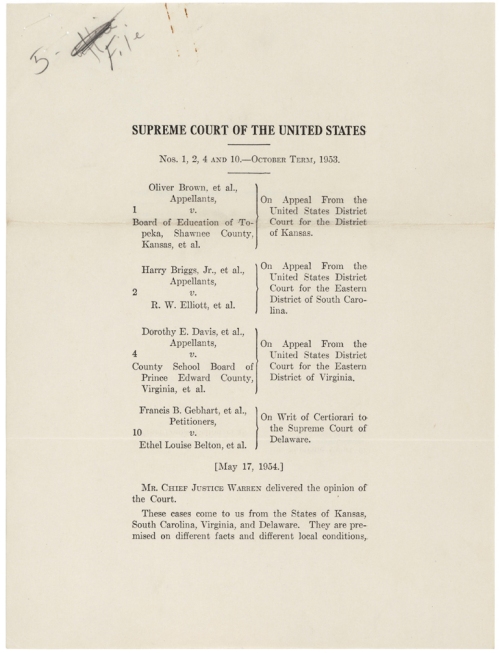 Document
Primary source
Brown v. Board of Education
Earl Warren · 17 May 1954
 Painting
Primary source
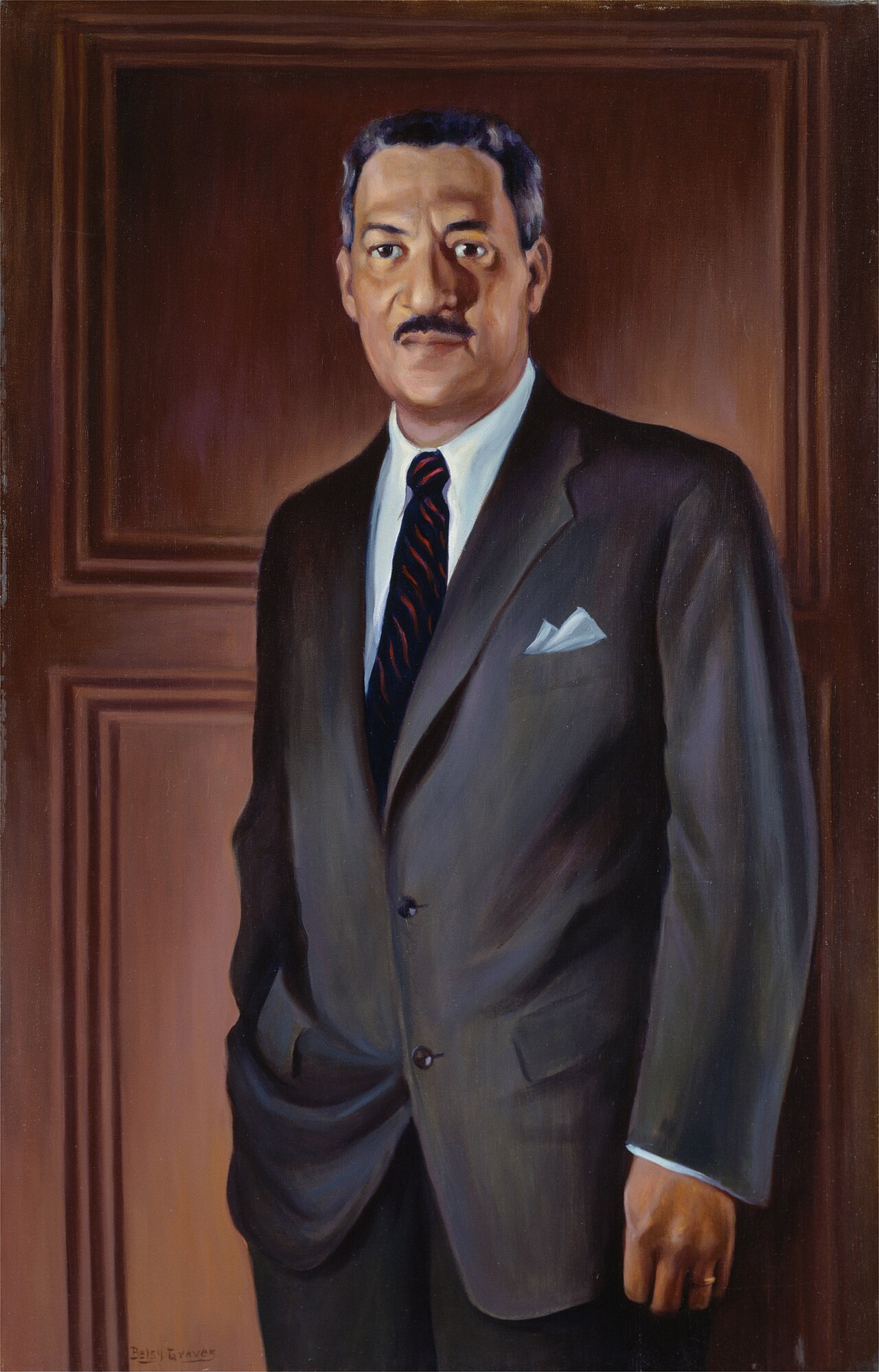
Thurgood Marshall
Betsy Graves Reyneau · 1956
 Photograph
Primary source
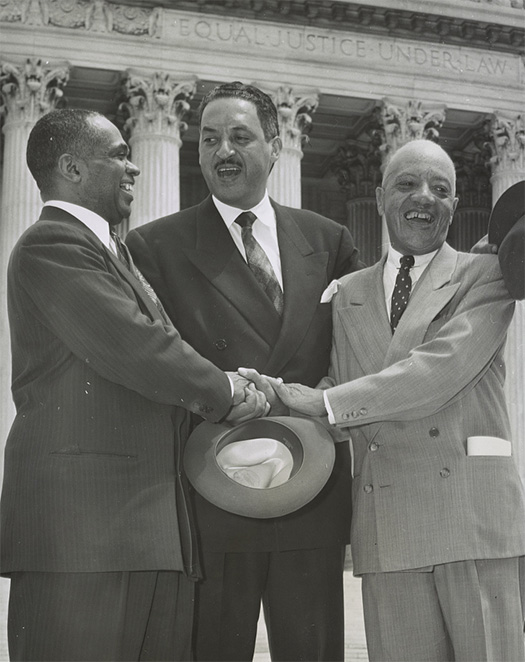
George Edward Chalmer Hayes, Thurgood Marshall, and James Nabrit in 1954 winning Brown case
1954
 Photograph
Primary source
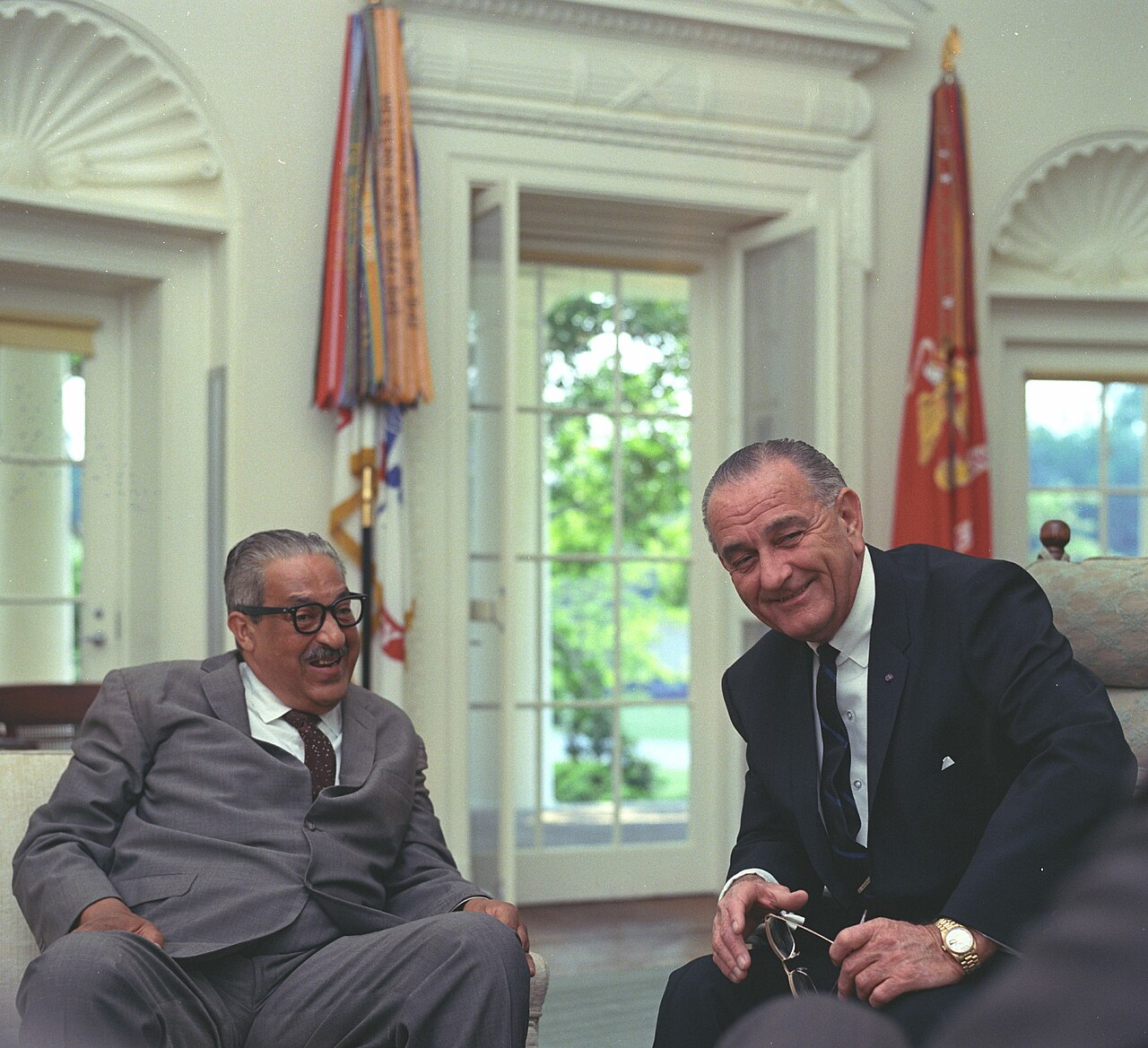
Thurgood Marshall and President Lyndon B. Johnson, June 13, 1967
Frank Wolfe · 13 June 1967
Primary source
Cooper v. Aaron
12 September 1958
Ready when you are
Start chatting with Thurgood Marshall now.
20 messages free · No credit card · Available in 50+ languages.