


Primary sourceDocument
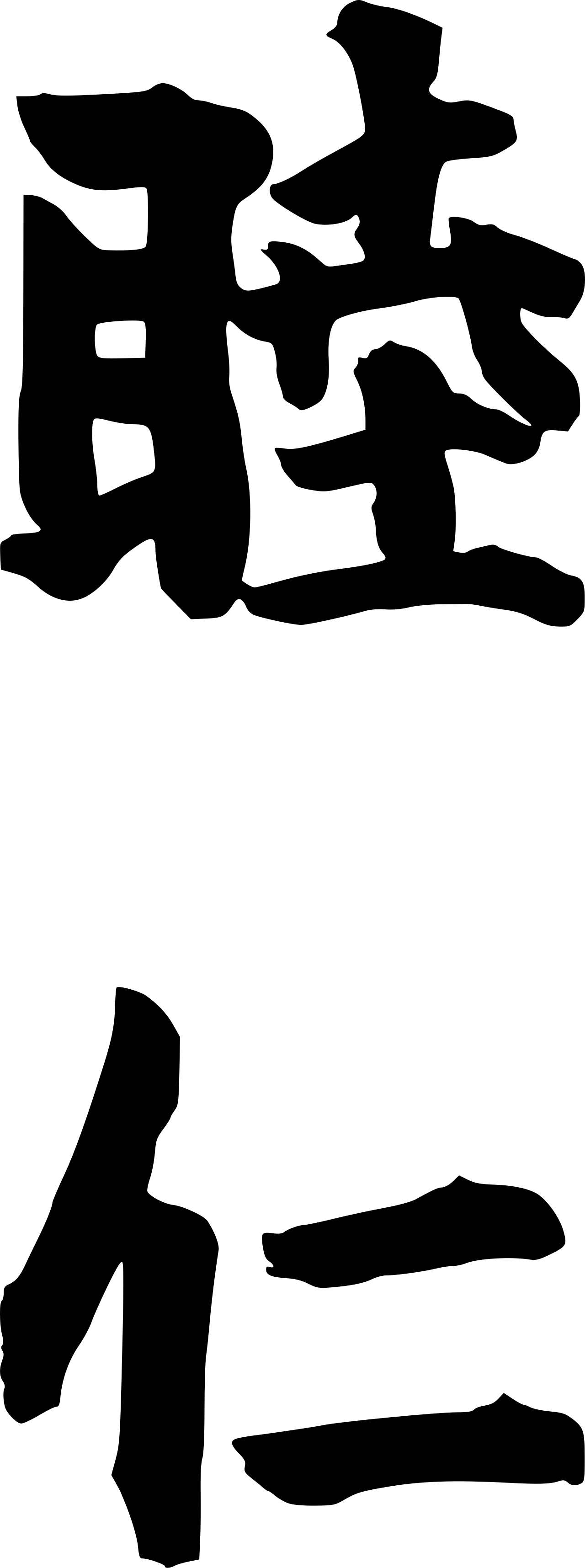
Signature of Emperor Meiji
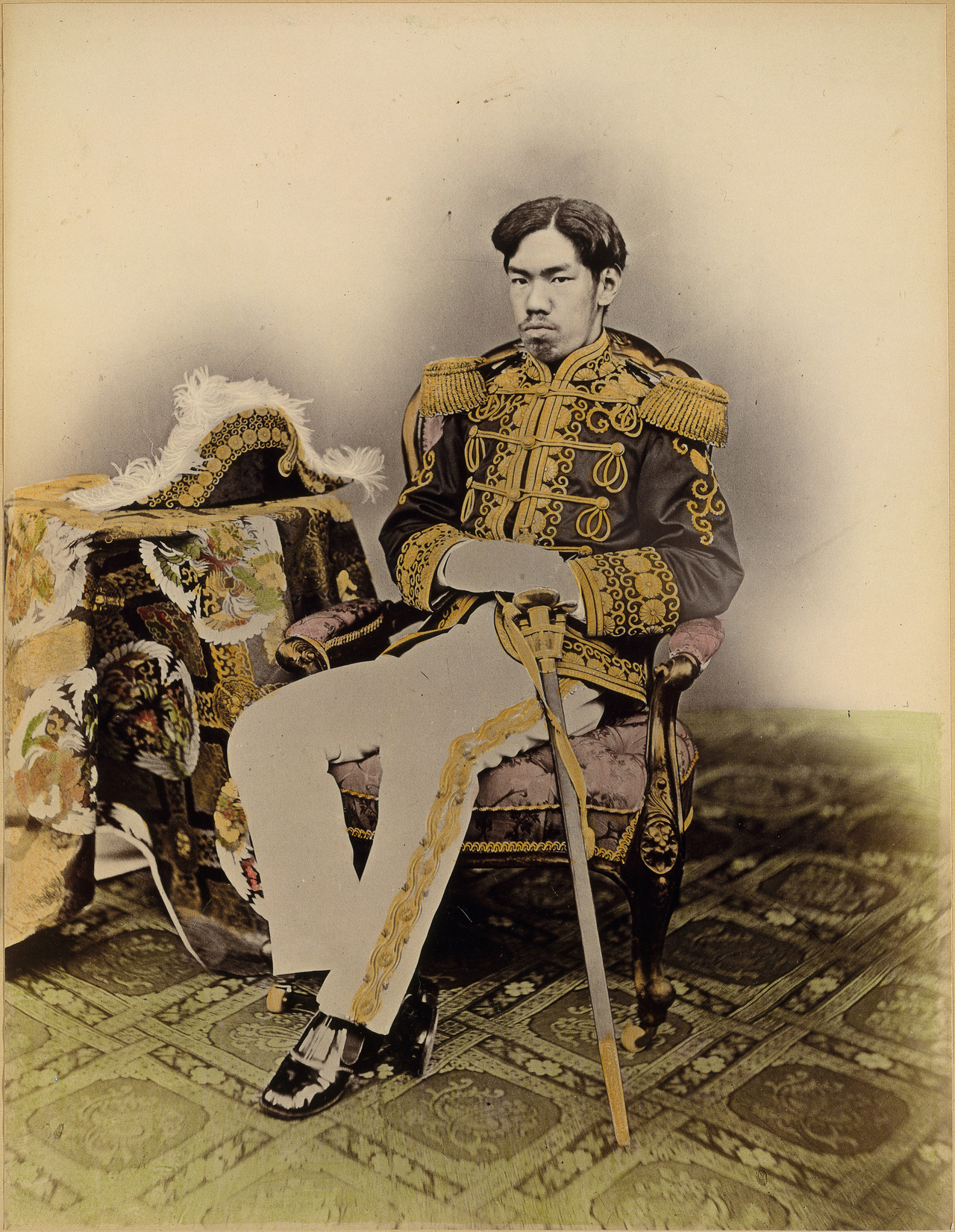
Emperor Meiji
The emperor's own autograph signature (gyomei), the mark of imperial authority placed on laws, treaties and appointments.
His own handwritten signature, the physical mark of imperial sanction on Meiji-era state documents.
About this source
What it is
This is Emperor Meiji's personal signature, known as his gyomei, rendered in brush calligraphy. It is the mark he placed on official state documents during his reign.
Why it matters
In Meiji Japan, the emperor's signature on a law, treaty or appointment carried the force of imperial sanction, turning government decisions into acts of the sovereign himself. Studying this signature shows students how personal authority was expressed through formal writing in a modernizing but still monarchical state.
Look closer
- What does the formality of this brushwork suggest about how emperors were expected to present themselves?
- Why would a signature matter so much in a system where officials actually drafted the documents?
- Compare this signature to the one on the 1905 letter of appointment — are they the same characters?
This document is part of the curated material that grounds the AI version of Emperor Meiji on Humy.ai — when students ask about related events, the AI can quote it and cite it.
More Emperor Meiji sources
Browse all 94 →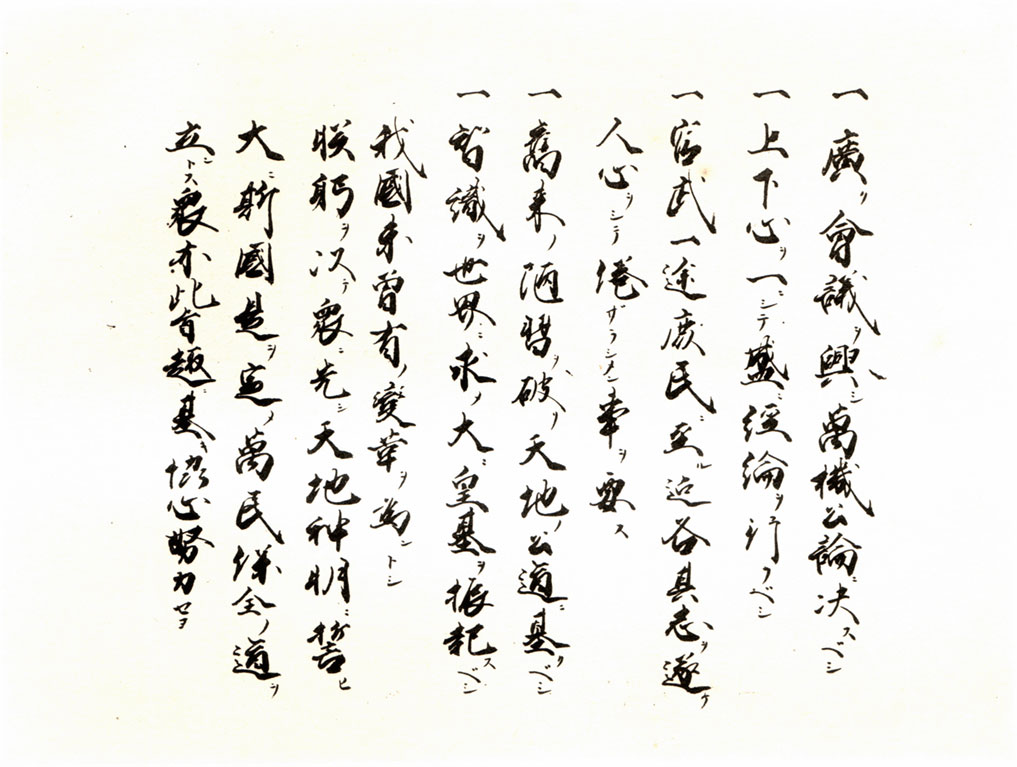 Document
Primary source
Charter Oath
Kido Takayoshi · 6 April 1868
 Document
Primary source
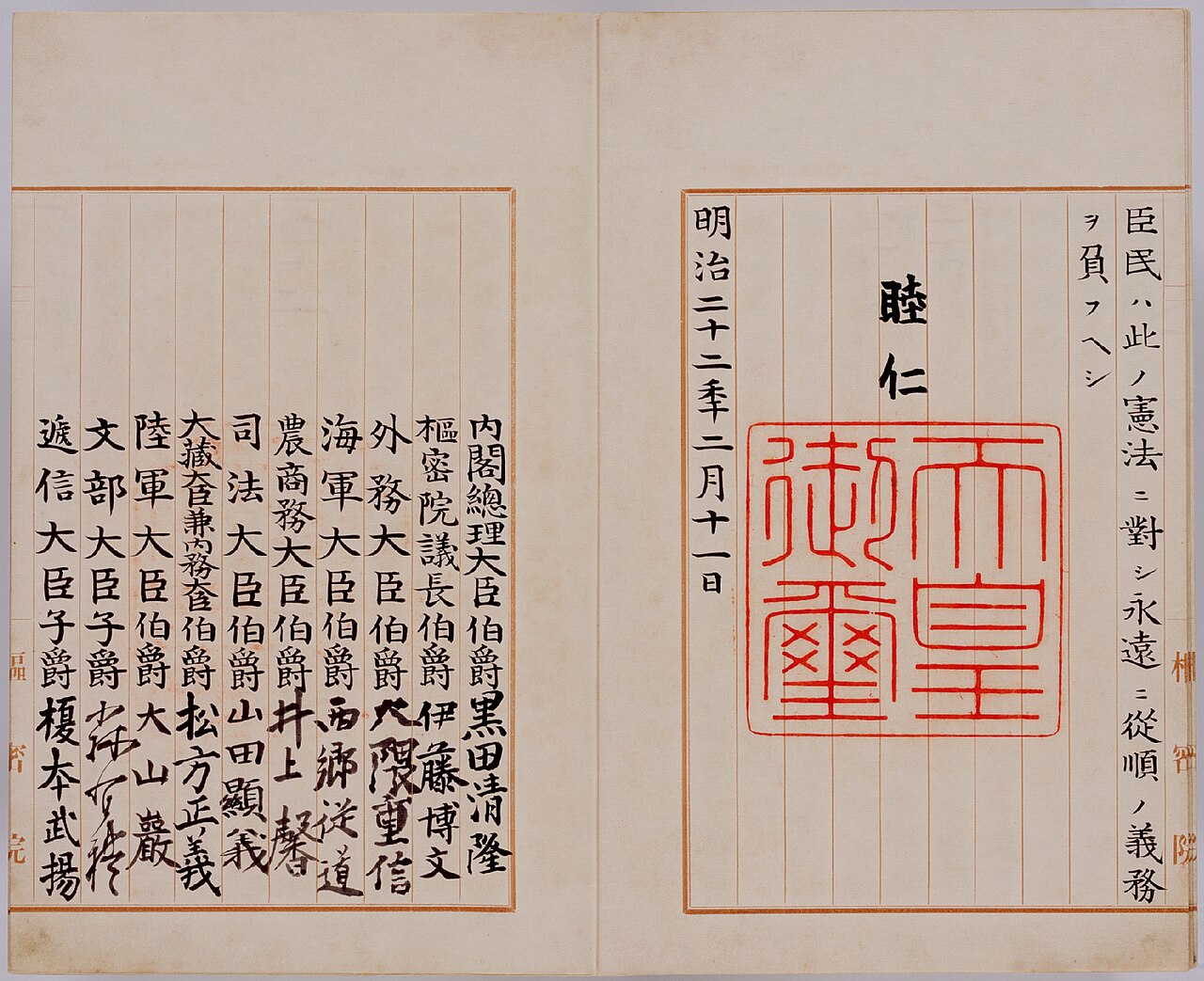
Constitution of the Empire of Japan
11 February 1889
 Document
Primary source
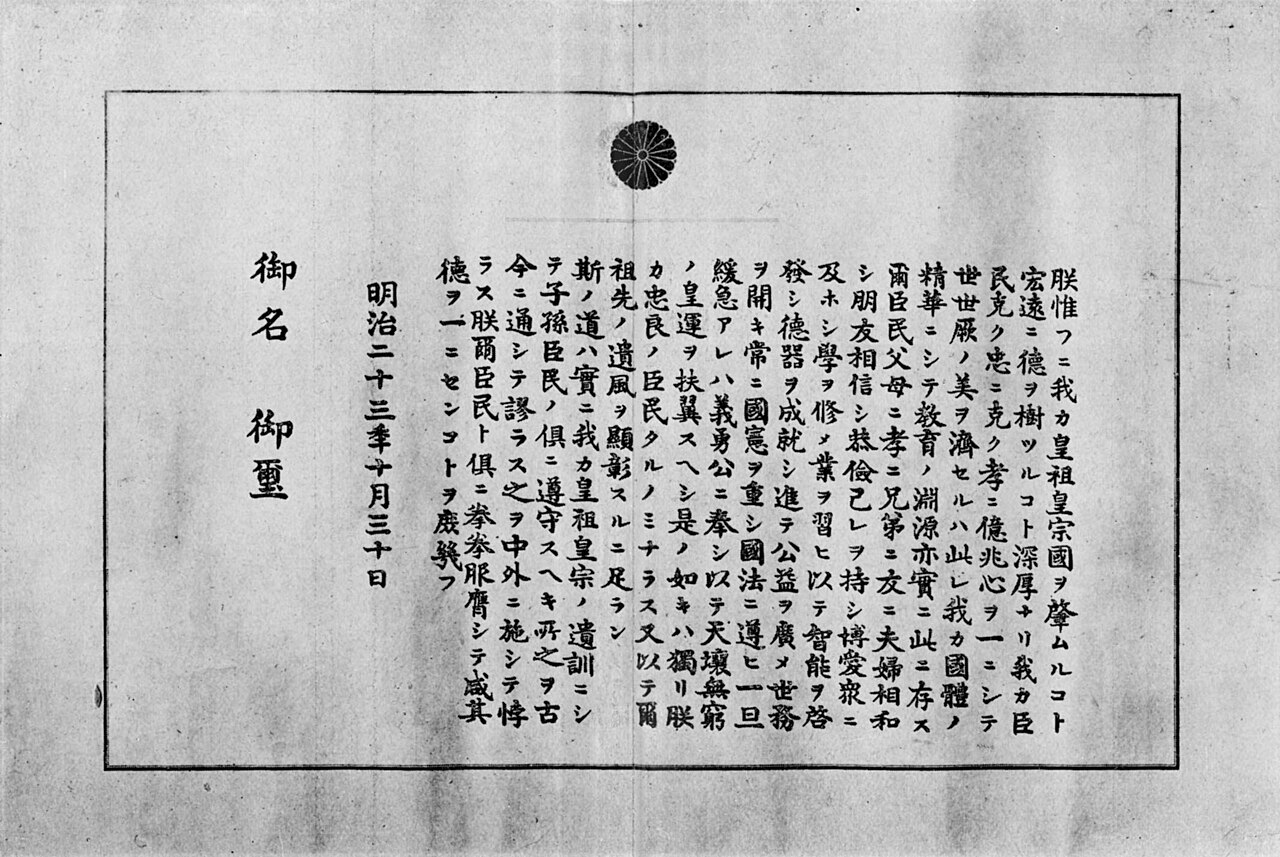
Imperial Rescript on Education
Inoue Kowashi · 30 October 1890
 Document
Primary source
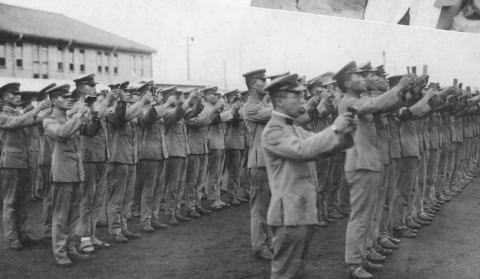
Imperial Rescript to Soldiers and Sailors
Yamagata Aritomo · 4 January 1882
Free account
Read every Emperor Meiji source
Sign up free →
Ready when you are
Start chatting with Emperor Meiji now.
20 messages free · No credit card · Available in 50+ languages.