


Primary sourceDocument9 February 1916
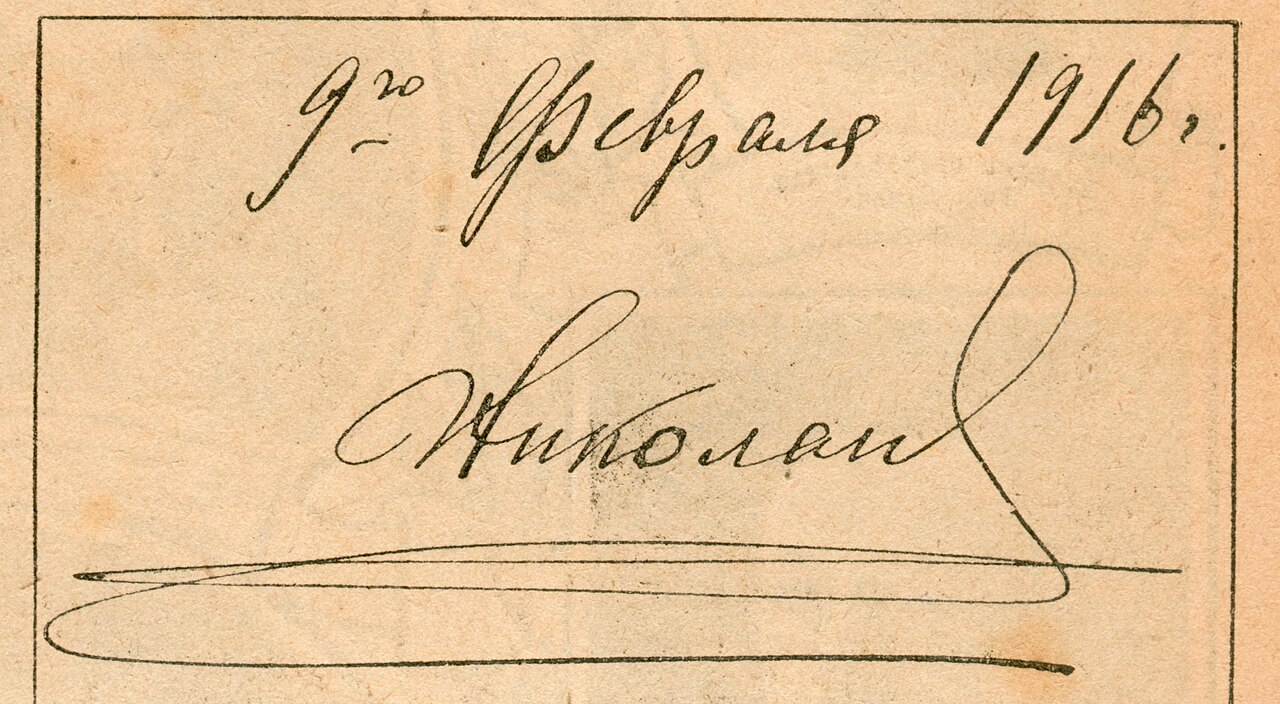
Signature of Nicholas II in the Golden Book of the Duma
Nicholas II of Russia · 9 February 1916
A printed reproduction of the tsar's handwritten signature and date from his visit to the State Duma in February 1916.
This is Nicholas II's own signature, marking his rare personal visit to the Duma he governed alongside.
About this source
What it is
This image, published in the magazine Niva in 1916, shows the signature of Nicholas II in the Golden Book of honoured visitors to the State Duma, dated 9 February 1916. It records his presence at the Tauride Palace, seat of Russia's elected parliament.
Why it matters
Nicholas II ruled as an autocrat and was often uneasy with the Duma, the parliamentary body created after the 1905 revolution. A personal visit and signature from the tsar was unusual and was seen as a symbolic gesture toward the institution, even though he remained distrustful of sharing power. The document shows the tension between imperial authority and the growing demand for representative government in the final years of his reign.
Look closer
- Why might a signature in a visitors' book be considered historically significant?
- What does the choice to visit the Duma at this moment in 1916 suggest about the political pressures Nicholas faced?
- What can't a signature alone tell us about what Nicholas actually thought of the Duma?
This document is part of the curated material that grounds the AI version of Tsar Nicholas II on Humy.ai — when students ask about related events, the AI can quote it and cite it.
More Tsar Nicholas II sources
Meet the AI Tsar Nicholas II →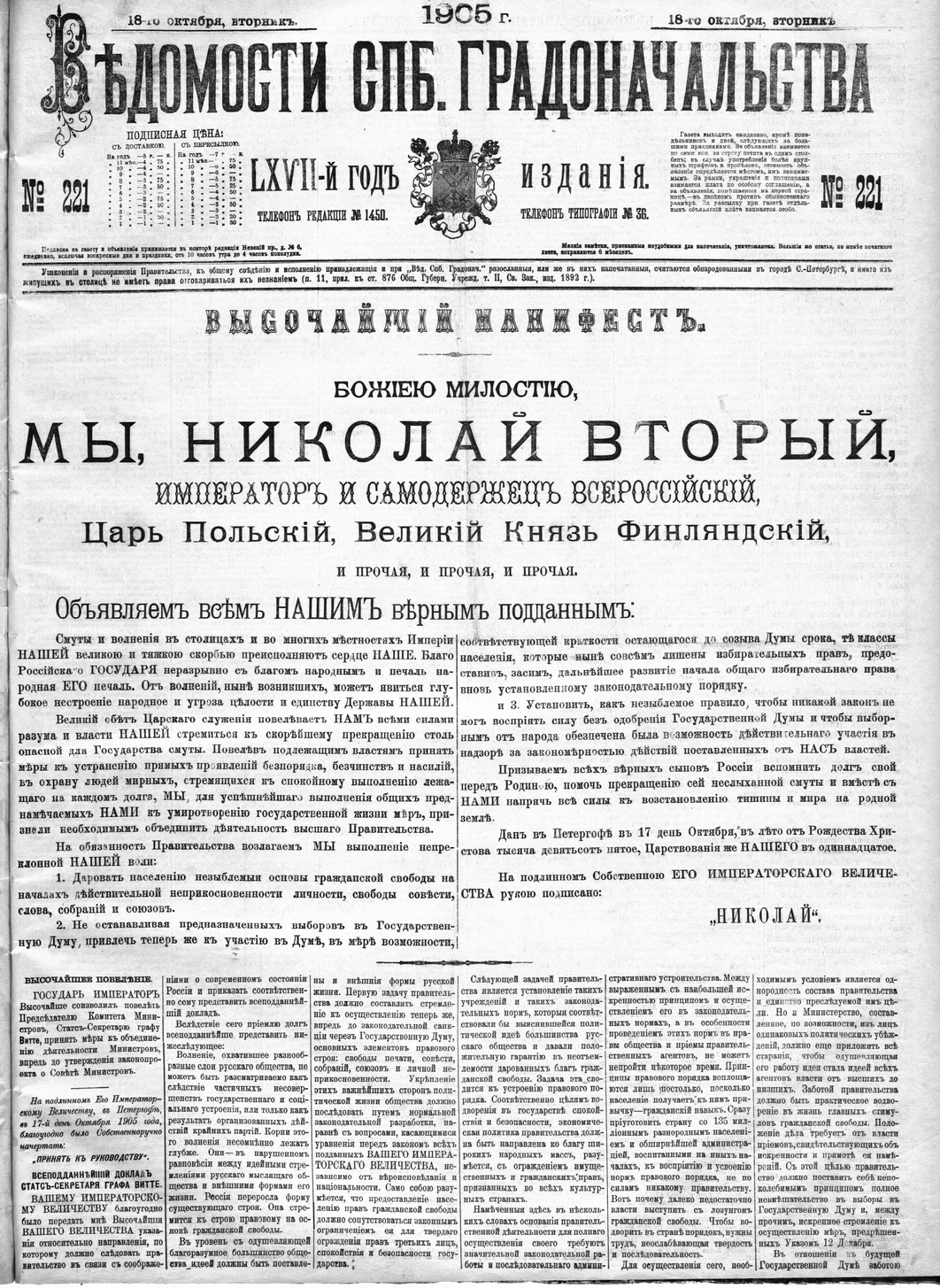 Newspaper article
Primary source
October Manifesto
Nicholas II of Russia · 30 October 1905
 Document
Primary source
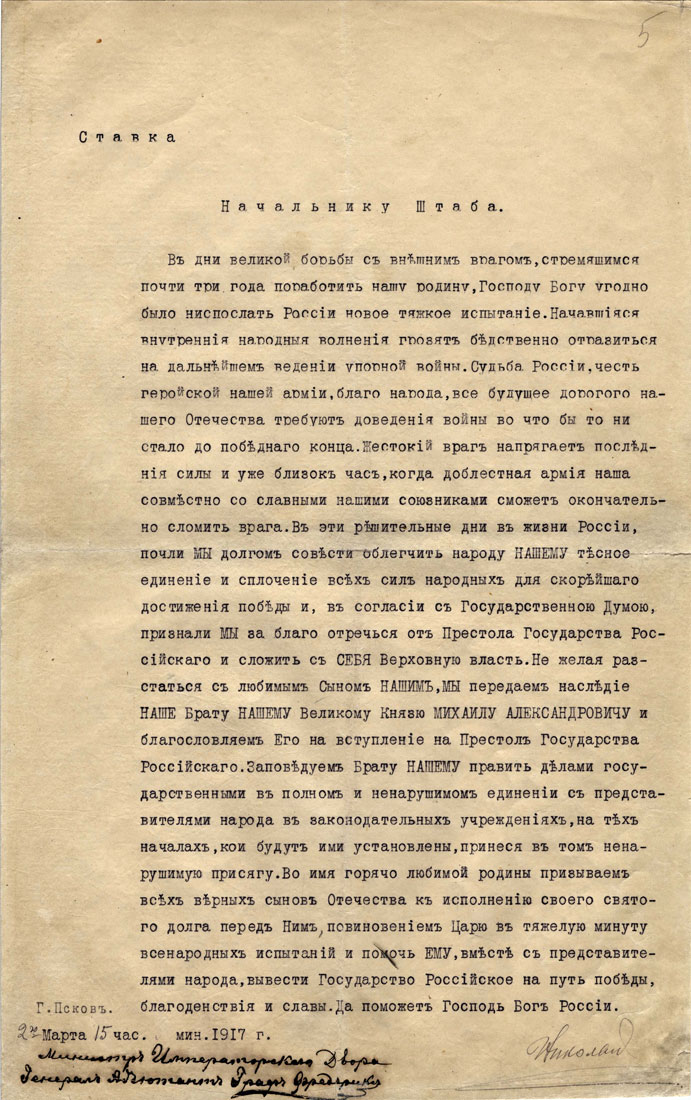
Nicholas II of Russia's abdication
Nicholas II of Russia · 2 March 1917 (O.S.) / 15 March 1917 (N.S.)
 Document
Primary source
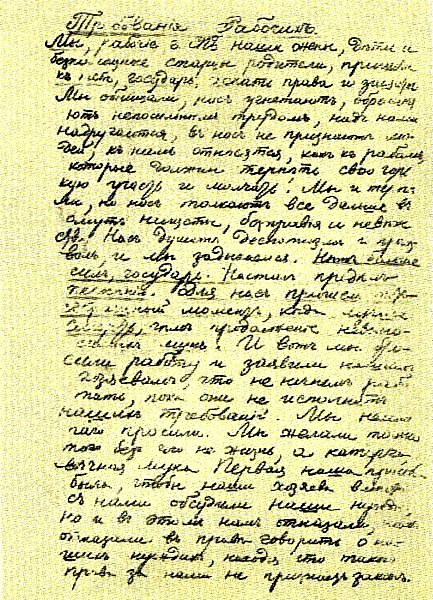
St. Petersburg Workmen's Petition to the Tsar
Georgy Gapon · January 1905
Primary source
Russian Constitution of 1906
Nicholas II of Russia · 6 May 1906
 Letter
Primary source
Willy–Nicky Correspondence
Nicholas II of Russia and Wilhelm II · July–August 1914
Ready when you are
Start chatting with Tsar Nicholas II now.
20 messages free · No credit card · Available in 50+ languages.