


Primary sourceDocument1654
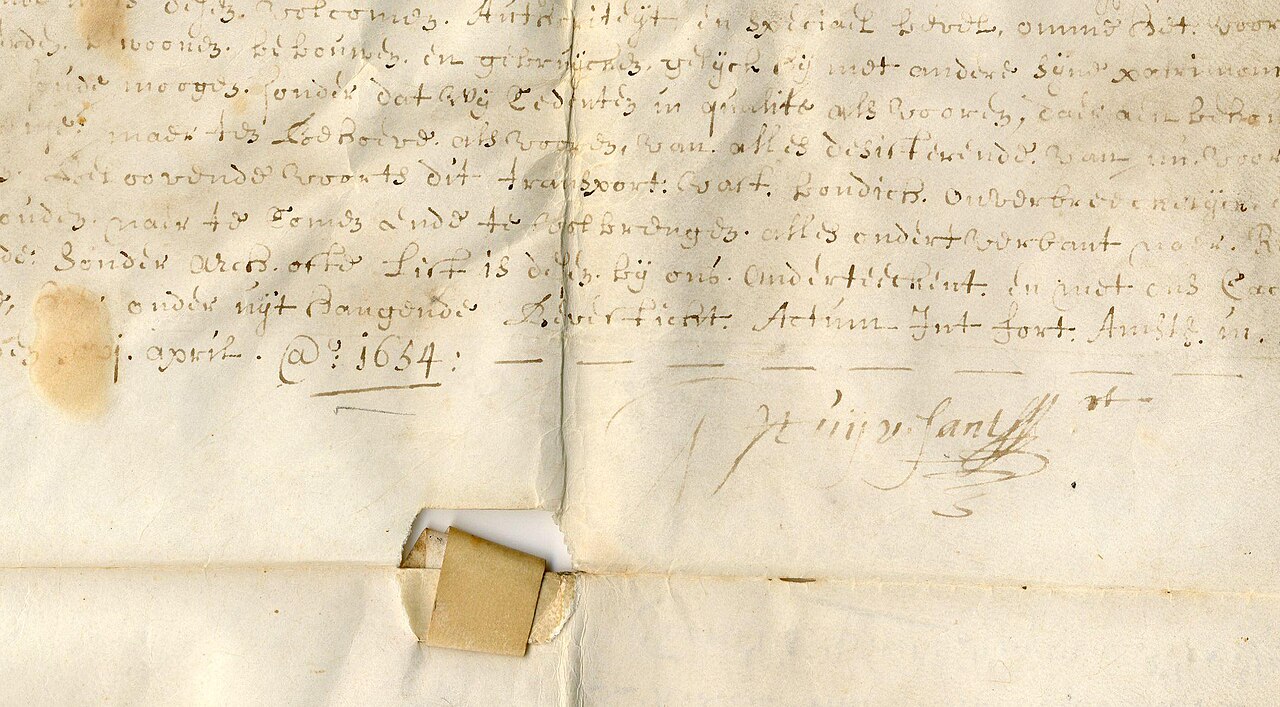
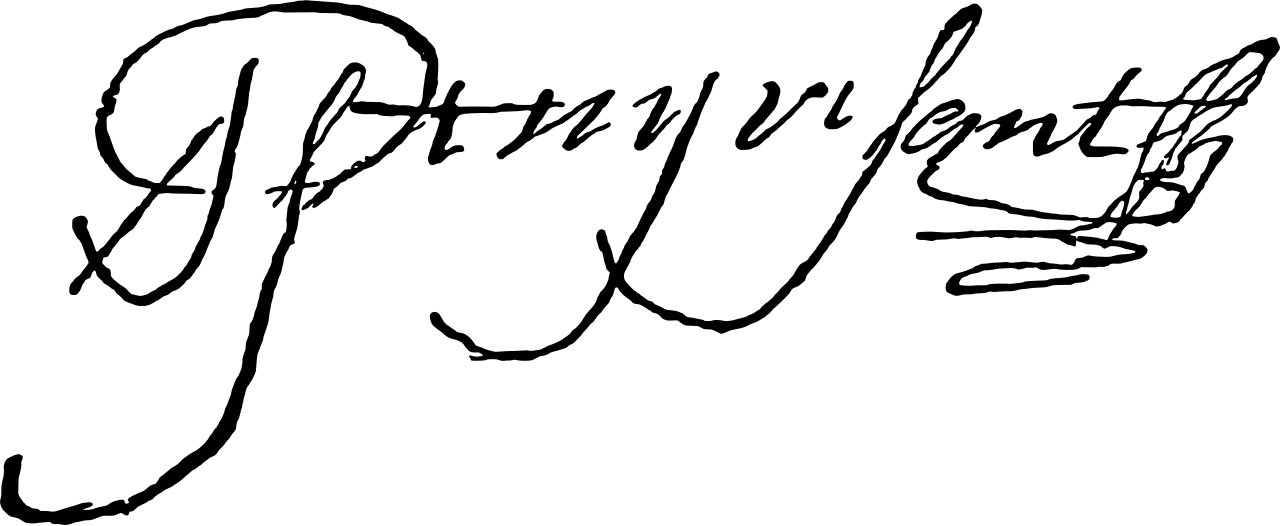
Signature on Manhattan Deed, 1654
Peter Stuyvesant · 1654
A close-up of Peter Stuyvesant's own signature on a 1654 land deed for part of Manhattan, co-signed by Cornelis van Ruijven.
Stuyvesant personally signed this deed as director-general, making it direct evidence of his rule.
About this source
What it is
This image shows a close-up detail of a handwritten Dutch deed from 1654, bearing the signature of Peter Stuyvesant and co-signed by Cornelis van Ruijven. The land described is now part of Manhattan's Financial District, near Wall Street and the New York Stock Exchange.
Why it matters
As a document actually signed by Stuyvesant during his time as director-general, this is a primary source of his administration. It shows how land in the Dutch colony was formally granted and recorded, connecting Stuyvesant directly to decisions that shaped the land that later became New York City.
Look closer
- What can you tell about 17th-century writing and sealing practices from the paper, ink, and folded tab?
- Why would a signature like this matter as legal proof of a land transfer?
- What does the deed's survival for over 350 years suggest about how such documents were kept?
This document is part of the curated material that grounds the AI version of Peter Stuyvesant on Humy.ai — when students ask about related events, the AI can quote it and cite it.
More Peter Stuyvesant sources
Meet the AI Peter Stuyvesant →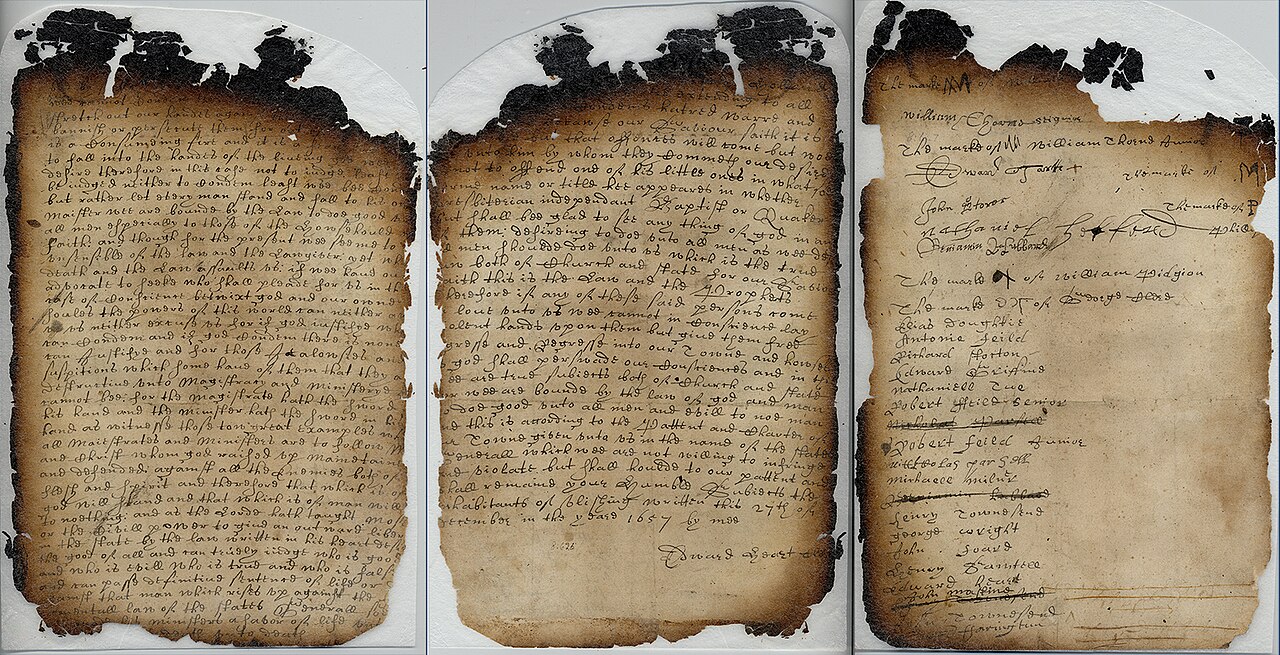 Document
Primary source
Flushing Remonstrance
Edward Hart · 27 December 1657
 Document
Primary source
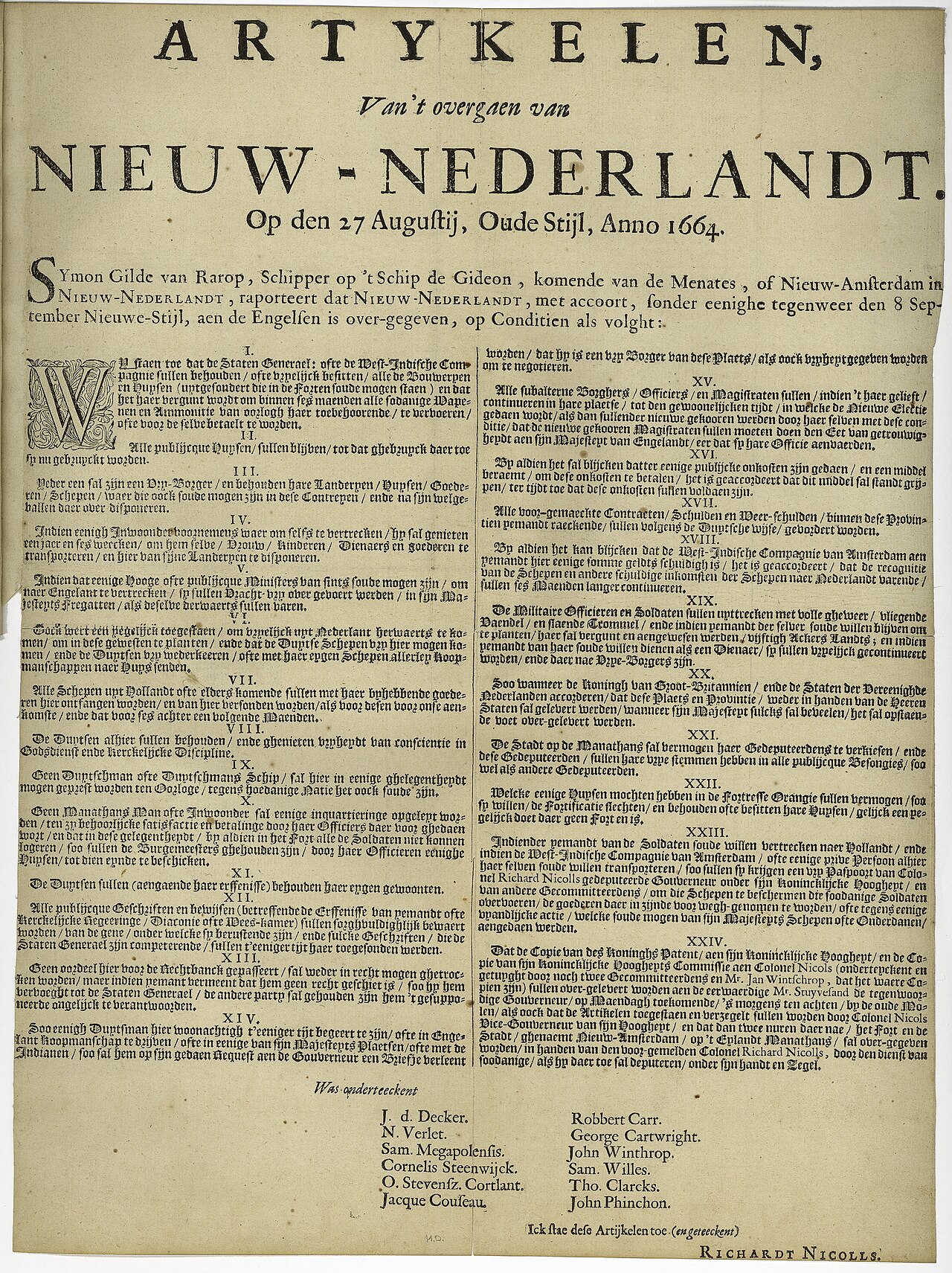
Articles of Capitulation on the Reduction of New Netherland
29 September 1664
 Painting
Primary source
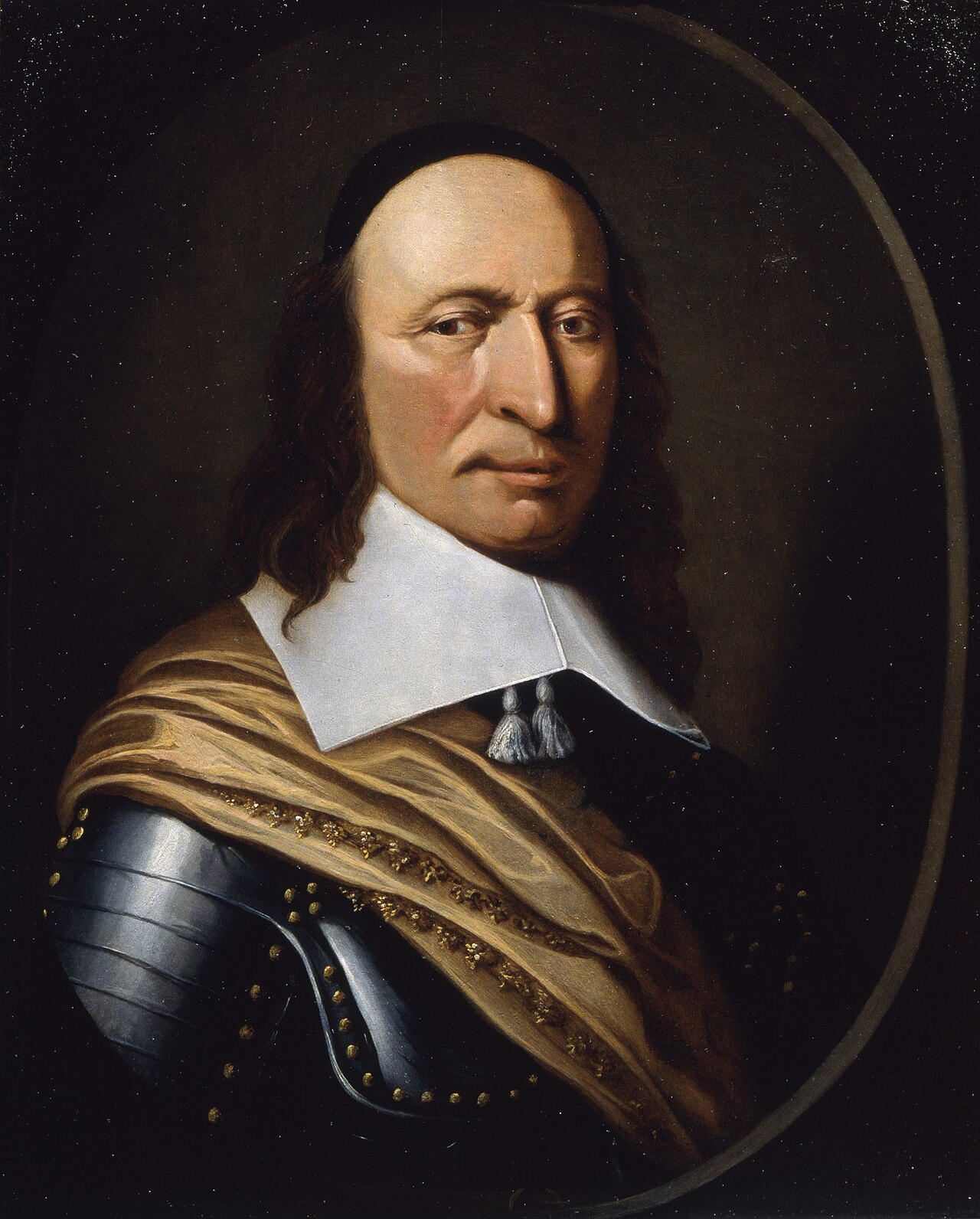
Petrus (Peter) Stuyvesant
Hendrick Couturier (attributed) · 1652
Secondary source
Laws and Ordinances of New Netherland, 1638–1674
E. B. O'Callaghan · 1647–1664 (compiled 1868)
 Artifact
Primary source
Signature of Peter Stuyvesant
Peter Stuyvesant
Ready when you are
Start chatting with Peter Stuyvesant now.
20 messages free · No credit card · Available in 50+ languages.