


Primary sourceArtifact47-46 BCE
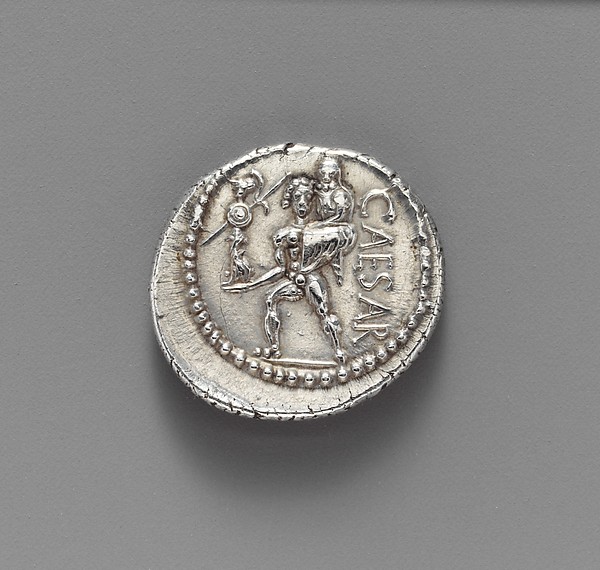
Silver Denarius of Julius Caesar
47-46 BCE
A silver coin struck in Caesar's name around 47-46 BCE, showing armed figures and the inscription CAESAR.
Struck under Caesar's authority, this coin is direct physical evidence of how he presented himself during his rule.
About this source
What it is
This silver coin, called a denarius, was struck in Julius Caesar's name around 47-46 BCE. It is held today at The Metropolitan Museum of Art.
Its reverse side shows a standing figure holding a spear next to a helmeted figure with a shield, with the word CAESAR inscribed beside them.
Why it matters
This coin was produced under Caesar's rule and used imagery connected to military power. Coins were an important tool for rulers in Rome to communicate messages about themselves to ordinary people who used money every day.
Look closer
- Why might Caesar choose armed figures for the design of this coin?
- What does the word CAESAR on the coin tell us about how he wanted to be recognized?
- What can a coin's imagery tell us that a statue or painting cannot?
This artifact is part of the curated material that grounds the AI version of Julius Caesar on Humy.ai — when students ask about related events, the AI can quote it and cite it.
More Julius Caesar sources
Meet the AI Julius Caesar →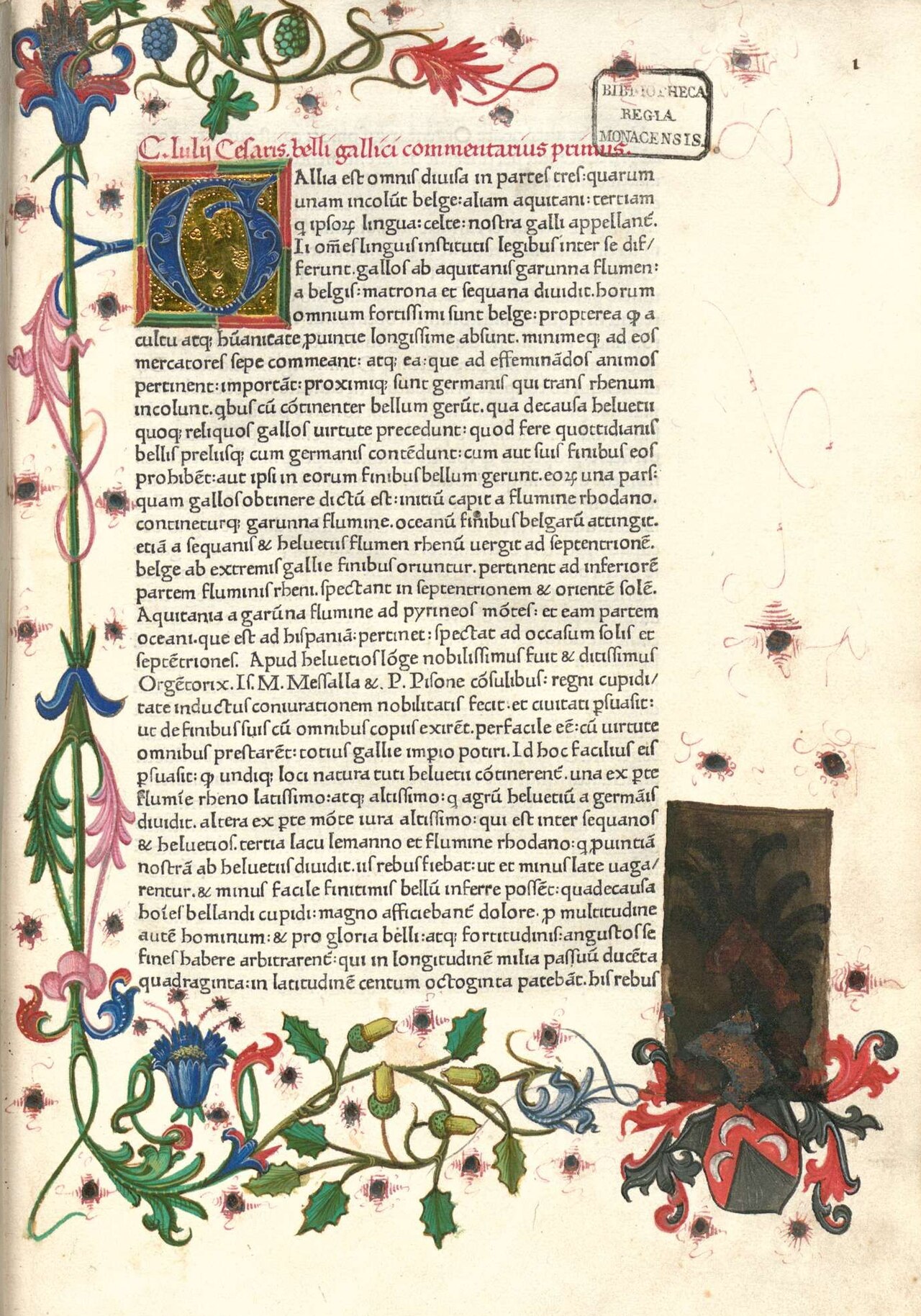 Book
Primary source
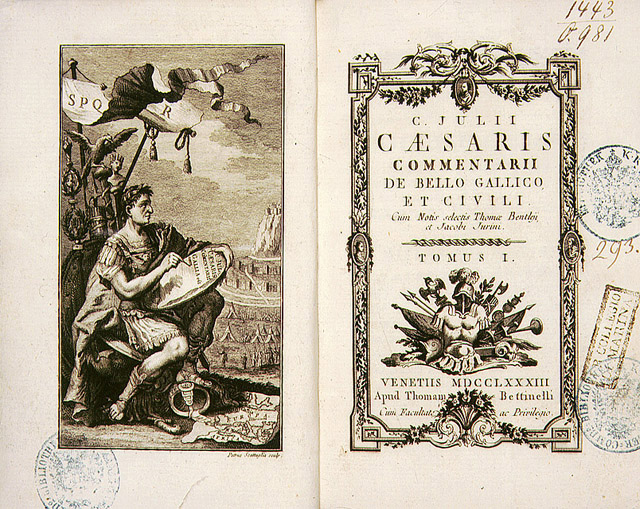
Commentarii de Bello Gallico
Julius Caesar · c. 58-50 BCE (this copy 1469)
 Painting
Secondary source
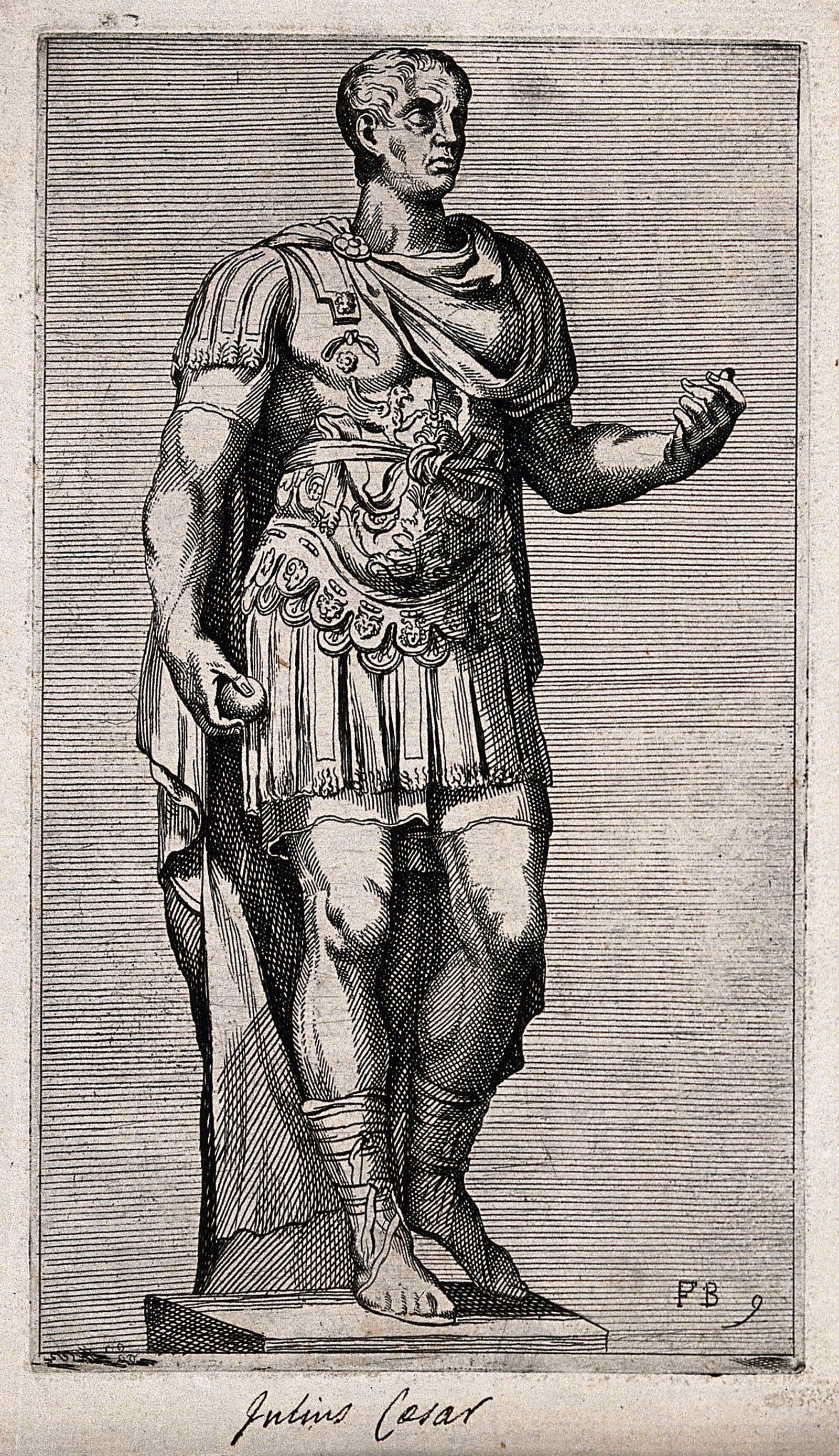
Etched Portrait of Julius Caesar
F. Perrier
 Painting
Secondary source
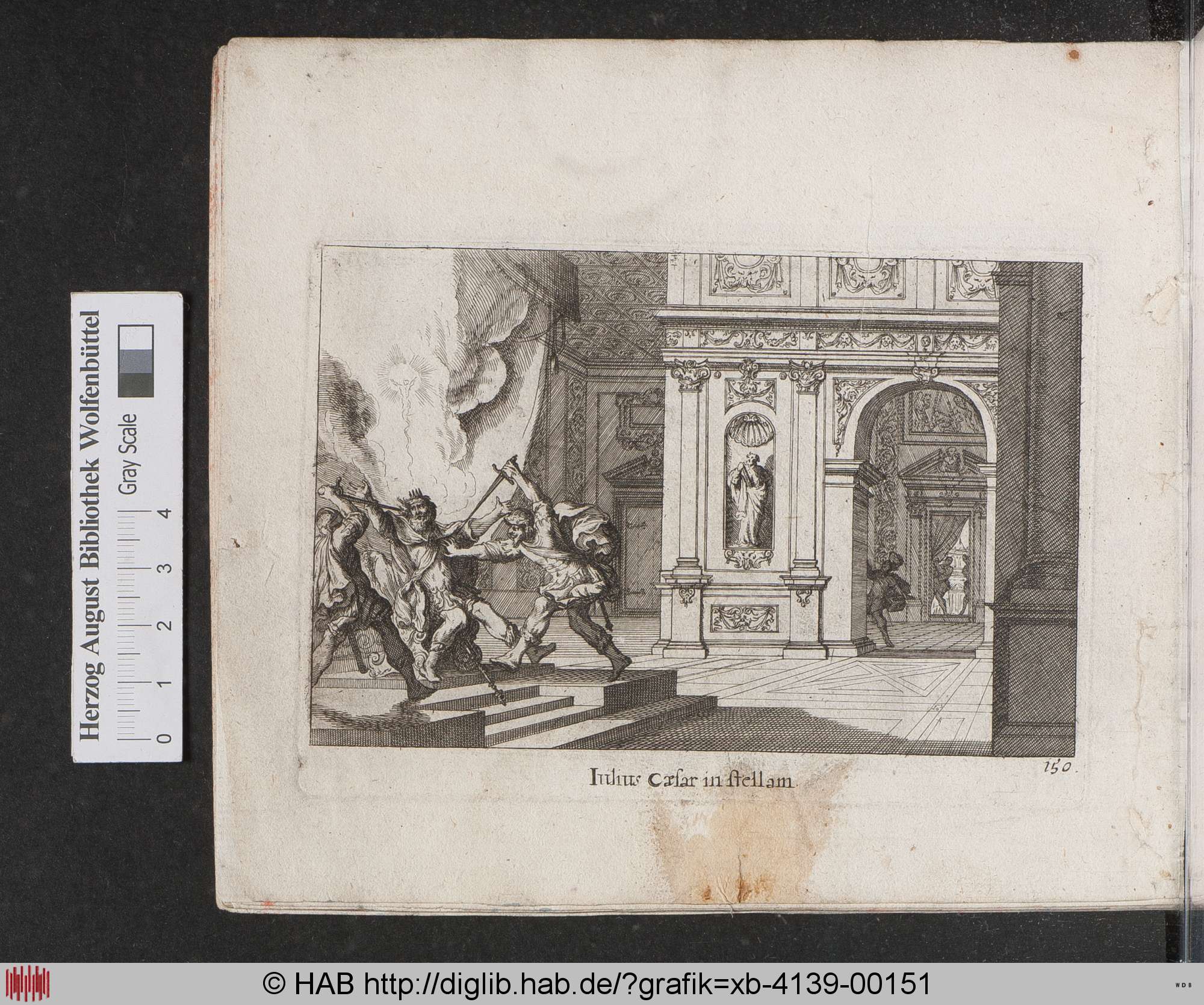
Murder of Julius Caesar in the Senate
 Book
Primary source
Commentarii de Bello Civili
Julius Caesar · 49-48 BCE
 Painting
Secondary source
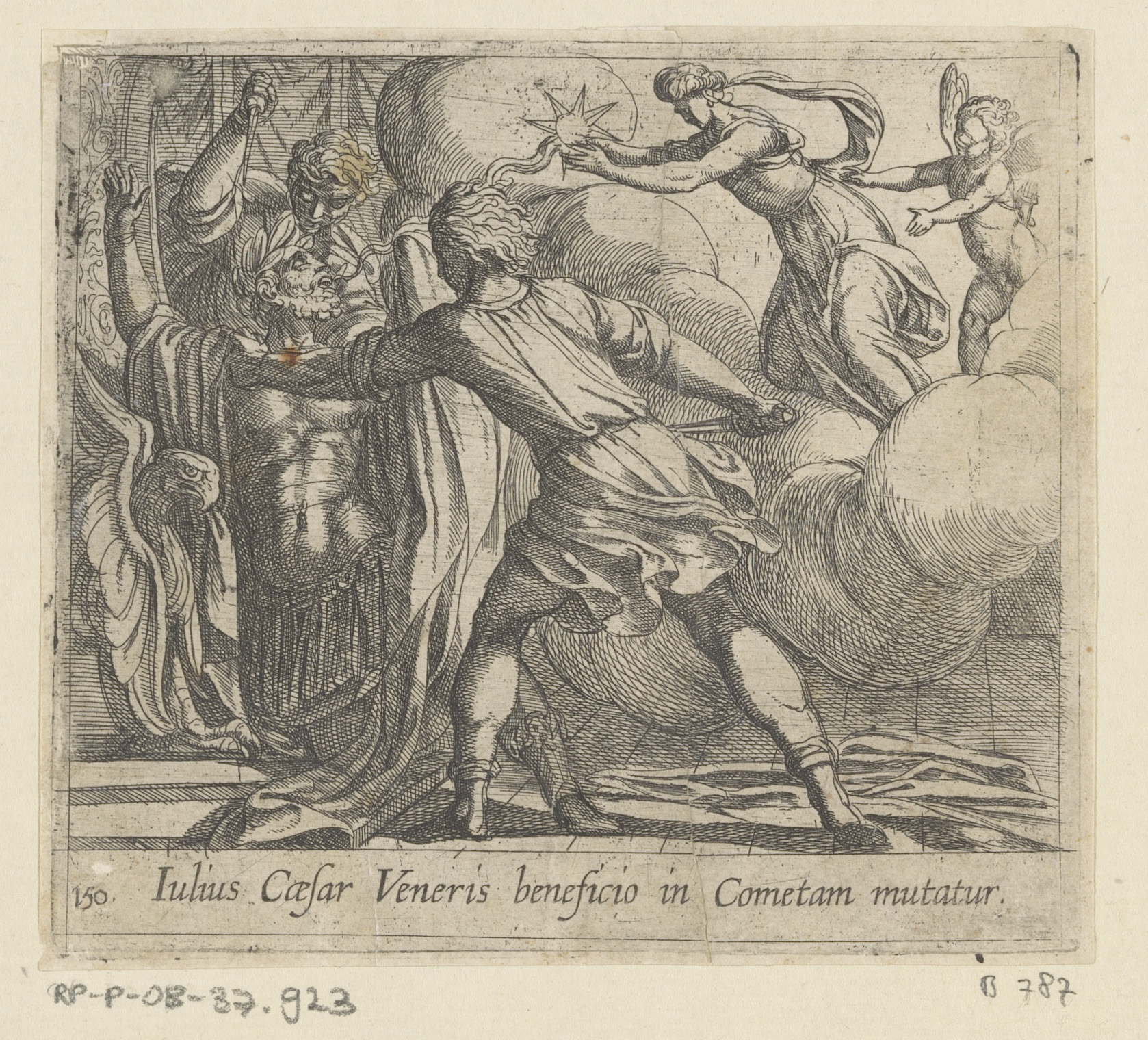
The Murder of Julius Caesar
1606
Ready when you are
Start chatting with Julius Caesar now.
20 messages free · No credit card · Available in 50+ languages.