


Primary sourceArtifactc. 280 BC
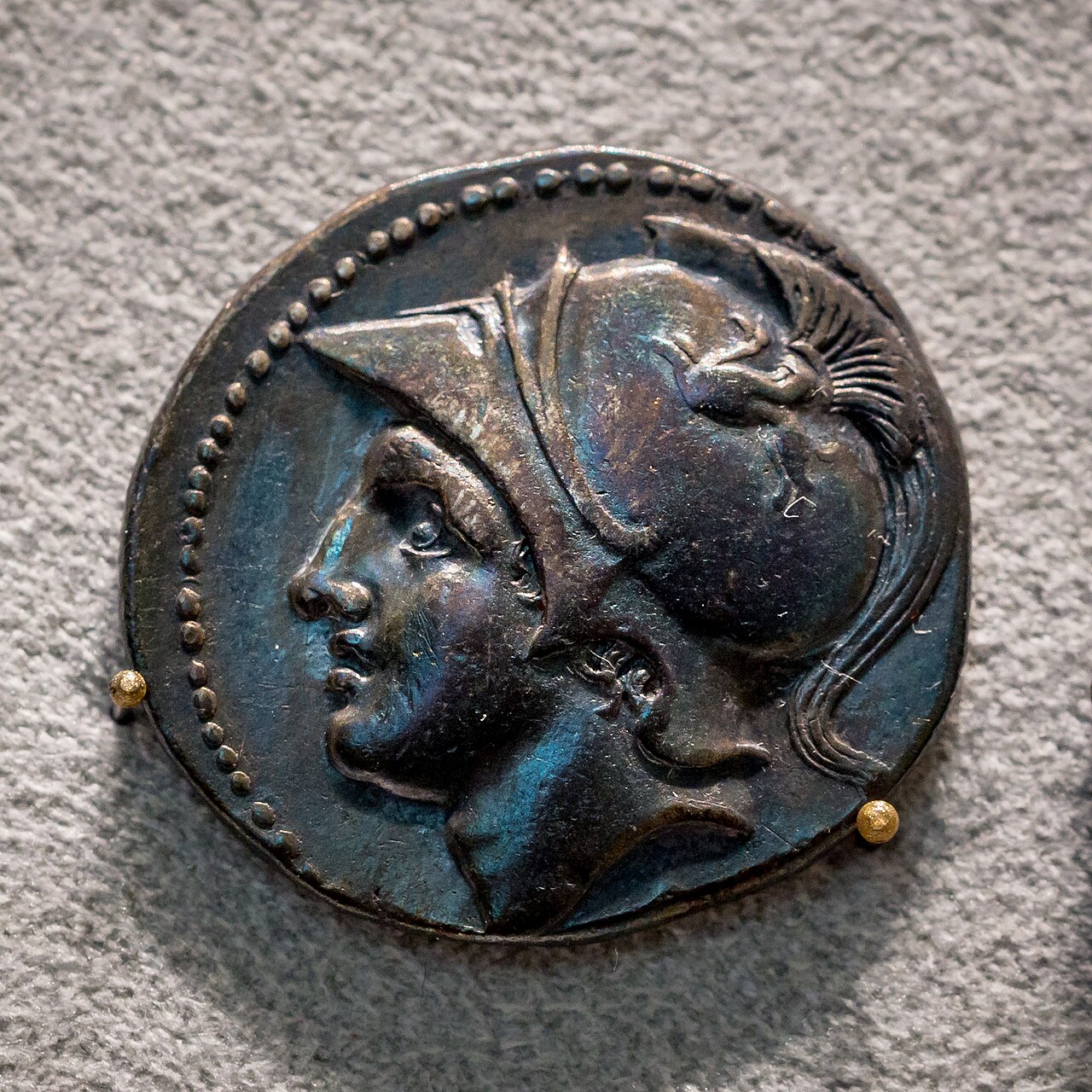
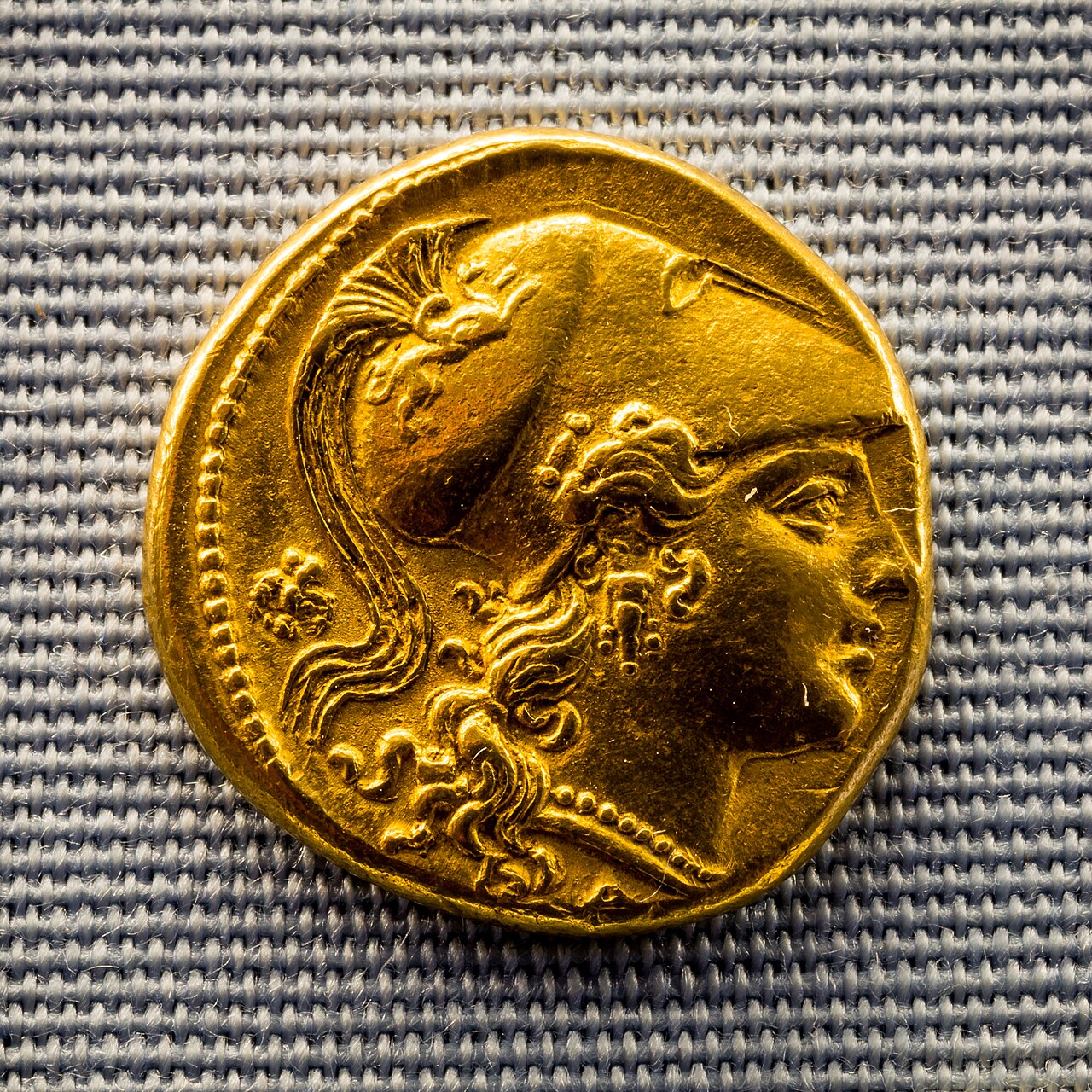
Silver Didrachm of King Pyrrhus with Head of Achilles
c. 280 BC
A silver coin issued by Pyrrhus around 280 BC, showing Achilles on one side and Thetis bringing him a new shield on the other.
This coin was issued by Pyrrhus himself and bears his name, showing how he used myth to promote his royal image.
About this source
What it is
This is a silver didrachm, a type of Greek coin, struck for King Pyrrhos of Epeiros around 280 BC. It is inscribed with his name, ΠΥΡΡΟΣ. The coin shows the head of Achilles wearing a Corinthian helmet on one side, and on the other, Thetis or a Nereid riding a hippocamp and carrying a new shield for Achilles. It is now held in the Münzkabinett of the Staatliche Museen in Berlin.
Why it matters
Coins like this were issued by Pyrrhus to pay his soldiers and to spread his royal image across the lands he campaigned in. By choosing Achilles, a legendary hero, Pyrrhus linked himself to Greek myth and claimed a heroic ancestry and reputation as a warrior-king.
Look closer
- Why might a king choose a mythical hero rather than his own face for a coin?
- What does the choice of Achilles suggest about how Pyrrhus wanted to be seen?
- What is missing from a coin that a written document might tell us?
This artifact is part of the curated material that grounds the AI version of Pyrrhus of Epirus on Humy.ai — when students ask about related events, the AI can quote it and cite it.
More Pyrrhus of Epirus sources
Browse all 78 →
Ready when you are
Start chatting with Pyrrhus of Epirus now.
20 messages free · No credit card · Available in 50+ languages.