


Primary sourceArtifactc. 295-272 BC
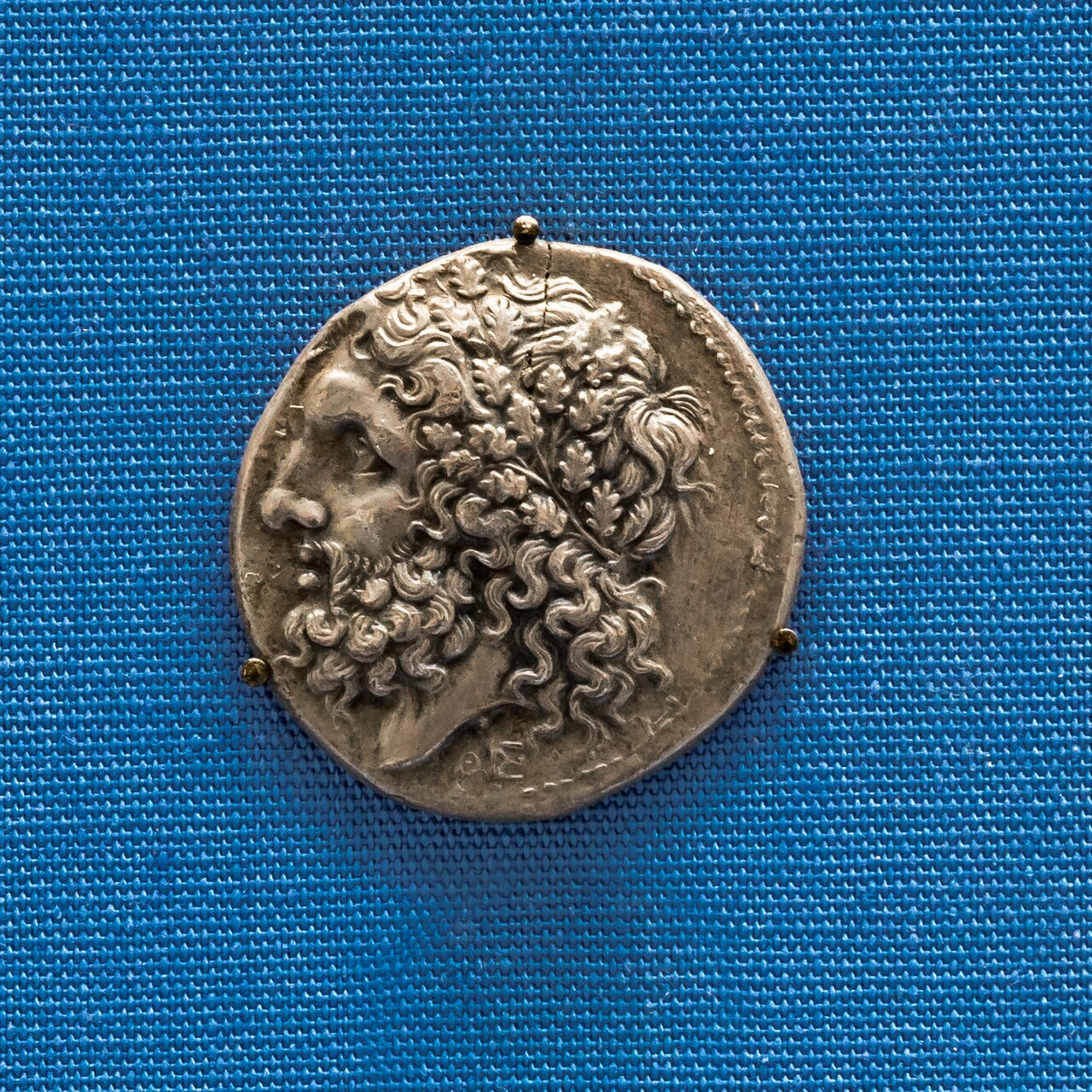
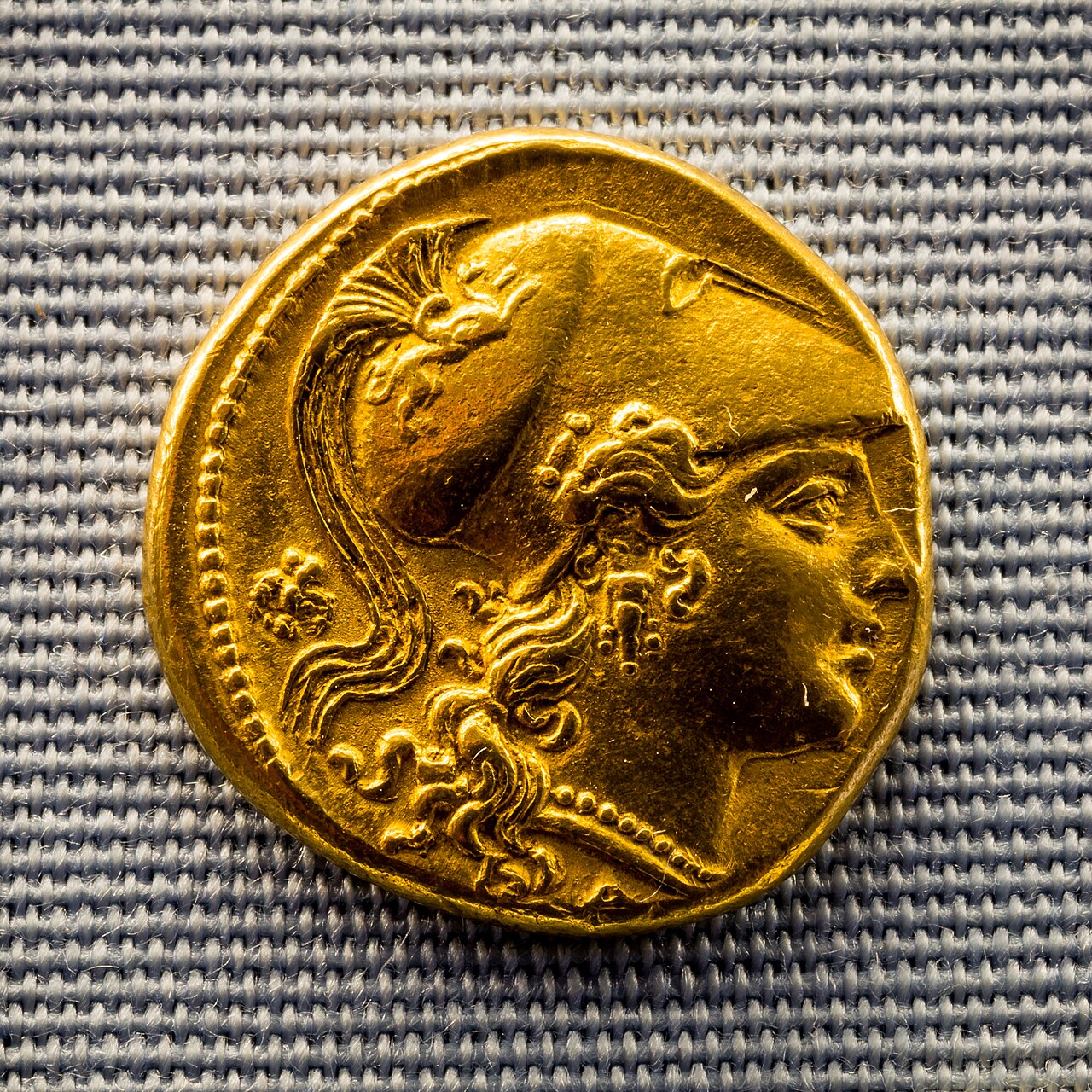
Silver Distater of King Pyrrhus with Head of Zeus of Dodona
c. 295-272 BC
A silver coin issued under Pyrrhus's rule, showing Zeus of Dodona and the goddess Dione, who were linked to his homeland of Epeiros.
Issued under Pyrrhus's rule, this coin shows his authority and his ties to the religious traditions of Epeiros.
About this source
What it is
This silver coin, a distater, was struck under King Pyrrhos of Epeiros at the mint of Lokroi Epizephyrioi, dated to about 295-272 BC. It is inscribed ΒΑΣΙΛΕΩΣ ΠΥΡΡΟΥ. One side shows the head of Zeus of Dodona wearing an oak wreath; the other shows Dione, his consort, seated on a throne holding a sceptre. It is now in the British Museum, London.
Why it matters
Zeus of Dodona and Dione were worshipped at a sacred site in Epeiros, Pyrrhus's own kingdom. By placing them on his coins, Pyrrhus connected his rule to the religious traditions and identity of his homeland, even while campaigning abroad in Italy.
Look closer
- Why might a king far from home put symbols of his homeland on his coins?
- What does the oak wreath on Zeus suggest about the sacred site of Dodona?
- What questions can't this coin answer about how people actually worshipped these gods?
This artifact is part of the curated material that grounds the AI version of Pyrrhus of Epirus on Humy.ai — when students ask about related events, the AI can quote it and cite it.
More Pyrrhus of Epirus sources
Browse all 78 →
Ready when you are
Start chatting with Pyrrhus of Epirus now.
20 messages free · No credit card · Available in 50+ languages.