


Primary sourceArtifact
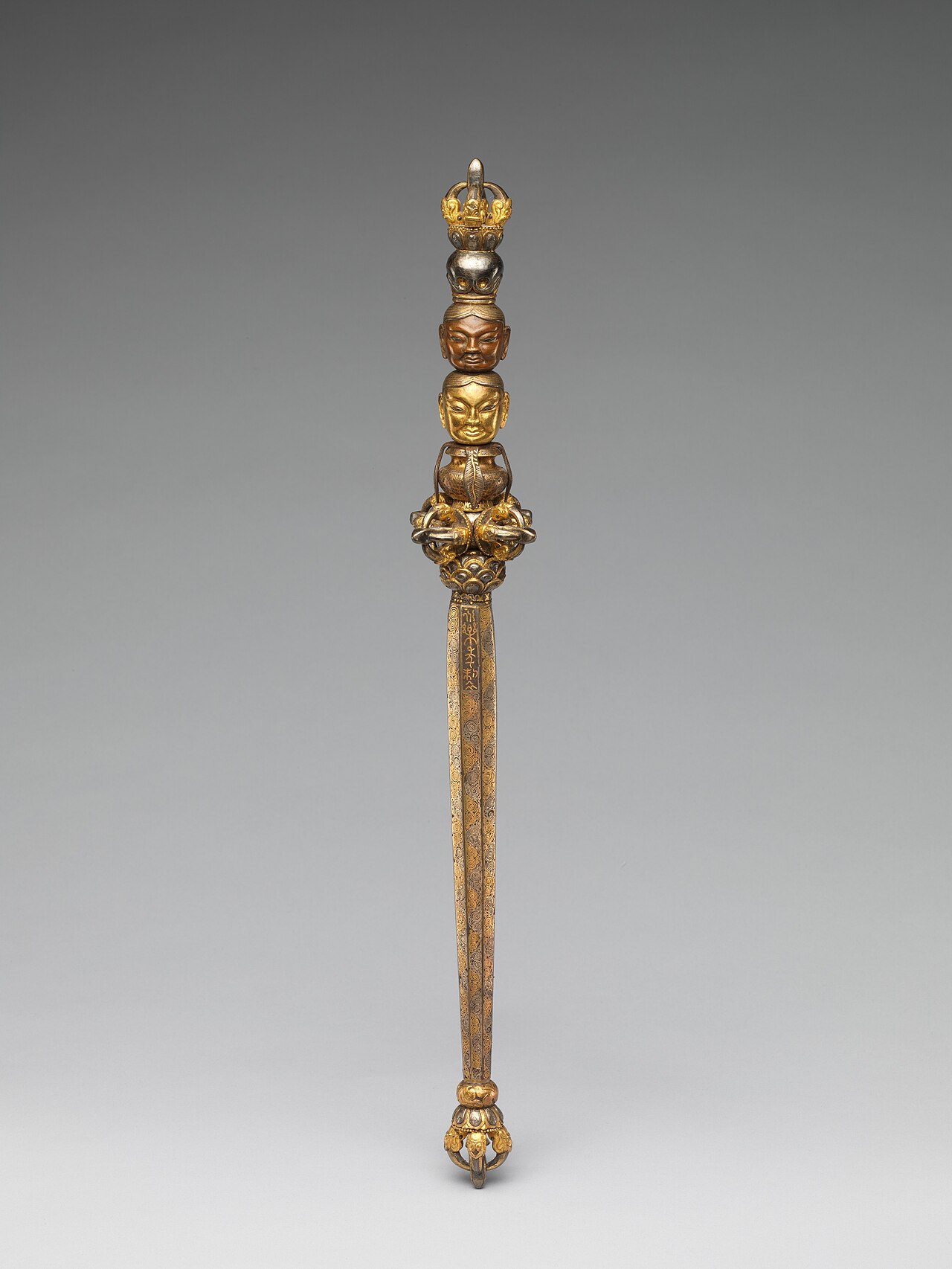
Sino-Tibetan Ritual Staff
A gilded metal ritual staff of the type produced at the Ming court as a gift for Tibetan Buddhist lamas, reflecting the Yongle Emperor's religious patronage.
This type of ritual staff, gifted to Tibetan lamas, illustrates Yongle's Buddhist patronage and his Tibet policy.
About this source
What it is
This gilt and silver metalwork ritual staff, topped with a vajra finial, stacked heads and a lotus collar, is a Sino-Tibetan Buddhist ritual object made in China.
Why it matters
Objects like this staff were produced at the Ming court as gifts for Tibetan Buddhist lamas during the reign of the Yongle Emperor, who actively supported Tibetan Buddhism and used religious patronage as a tool of diplomacy with Tibet. It shows how imperial workshops blended Chinese craftsmanship with Tibetan religious forms to serve political and spiritual goals.
Look closer
- What details in the staff's design show Tibetan Buddhist influence rather than purely Chinese style?
- Why might an emperor use religious gifts as part of his foreign policy?
- What does the craftsmanship of this object suggest about the resources devoted to it?
This artifact is part of the curated material that grounds the AI version of Yongle Emperor on Humy.ai — when students ask about related events, the AI can quote it and cite it.
More Yongle Emperor sources
Meet the AI Yongle Emperor →
Ready when you are
Start chatting with Yongle Emperor now.
20 messages free · No credit card · Available in 50+ languages.