


Primary sourceBook1795 (written 1794)
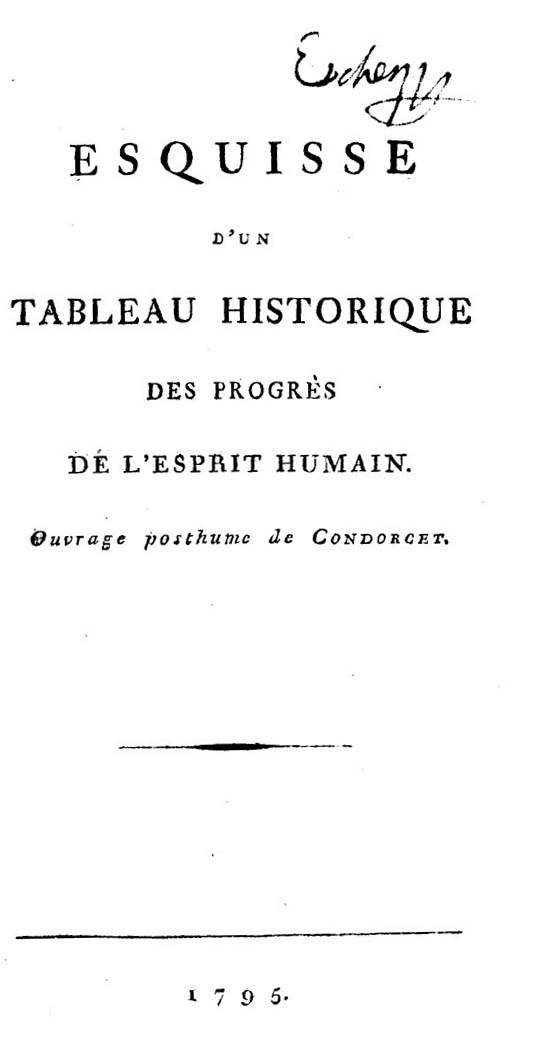
Sketch for a Historical Picture of the Progress of the Human Mind
Marquis de Condorcet · 1795 (written 1794)
Condorcet's 1795 vision of unending human progress, written while hiding from the French Revolution, was one of the works Malthus set out to refute.
Condorcet's optimistic theory of progress was one of the two writers Malthus set out to rebut in his 1798 Essay.
About this source
What it is
This book was written by the French philosopher and mathematician Condorcet in 1794 while he was in hiding during the French Revolution, and published after his death in 1795. In it he argued that growing knowledge in science and society would lead to a more just, free and prosperous world.
Why it matters
Condorcet's optimistic belief in endless progress became one of the most influential statements of Enlightenment thought. Thomas Robert Malthus directly named Condorcet, alongside William Godwin, as a target of his own 1798 Essay on the Principle of Population, which argued that population growth would always threaten such progress with scarcity.
Look closer
- Why might someone write so confidently about the future of humanity while hiding for his life?
- What kind of evidence can support a claim that progress is inevitable?
- How might Malthus's own circumstances have shaped his disagreement with this book?
This book is part of the curated material that grounds the AI version of Thomas Malthus on Humy.ai — when students ask about related events, the AI can quote it and cite it.
More Thomas Malthus sources
Browse all 55 →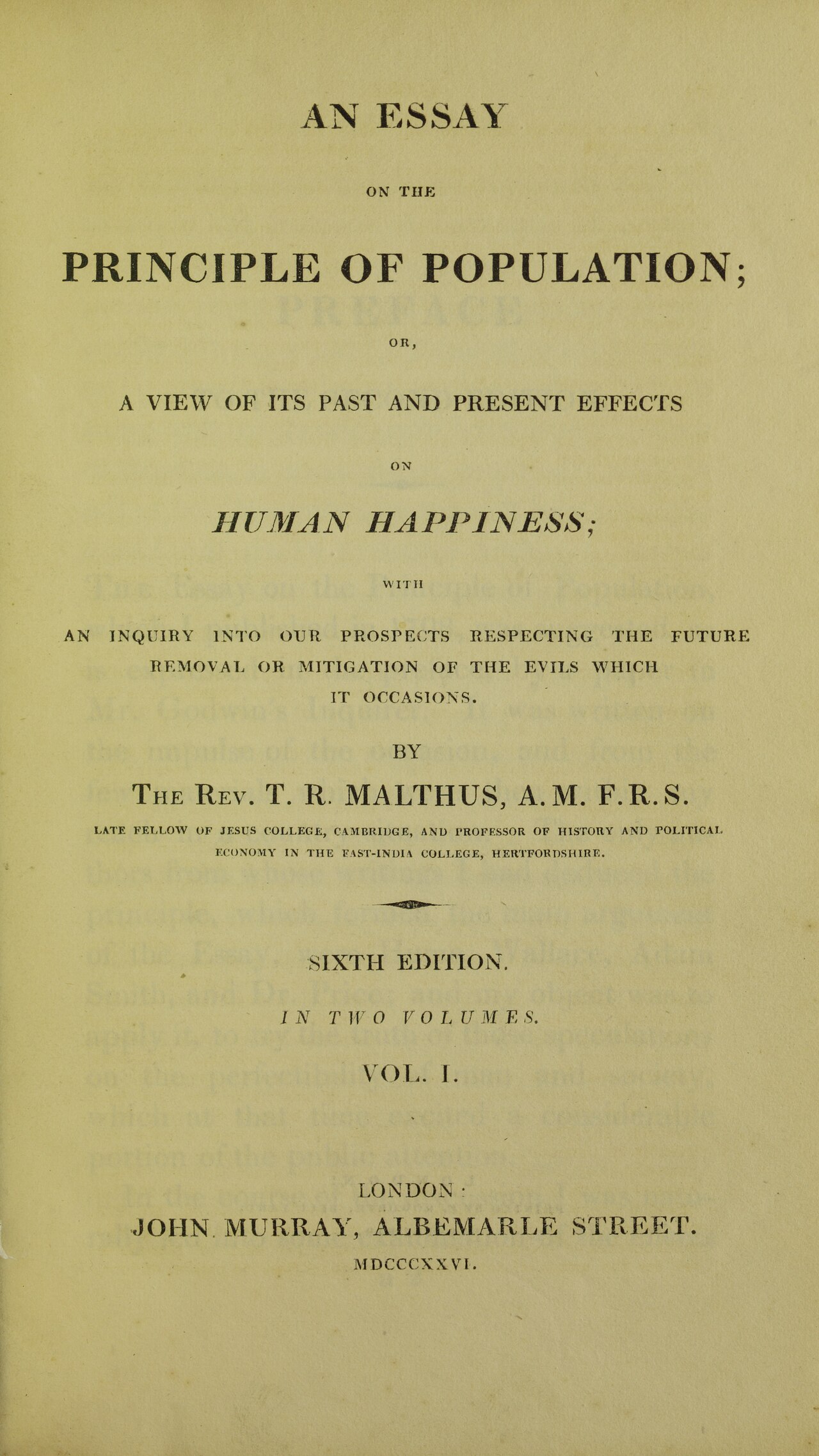 Book
Primary source
An Essay on the Principle of Population
Thomas Robert Malthus · 1798 (6th ed. 1826)
 Painting
Primary source
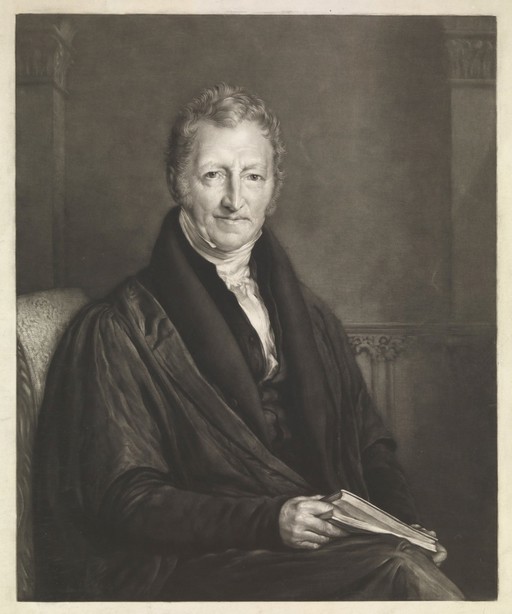
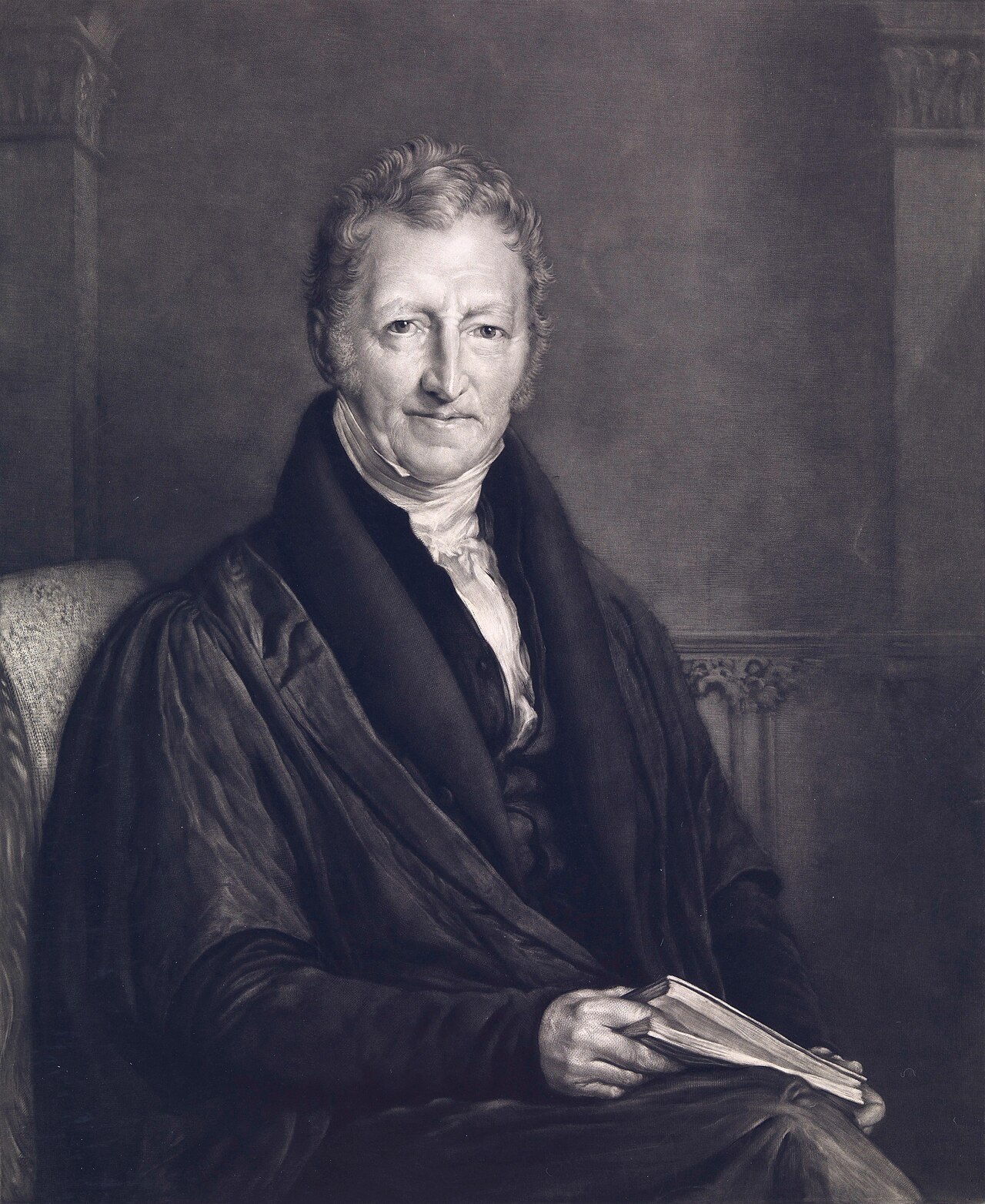
Portrait Print of Thomas Robert Malthus
John Linnell
 Book
Primary source
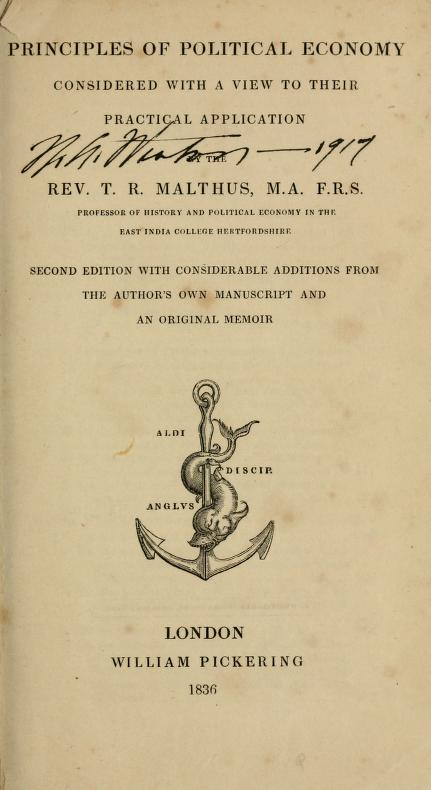
Principles of Political Economy
Thomas Robert Malthus · 1820 (2nd ed. 1836)
 Painting
Primary source
Portrait of Thomas Robert Malthus
John Linnell · after 1833
Free account
Browse every Thomas Malthus source
Sign up free →
Ready when you are
Start chatting with Thomas Malthus now.
20 messages free · No credit card · Available in 50+ languages.