


Secondary sourcePaintingc. 1450 (between 1445 and 1450)
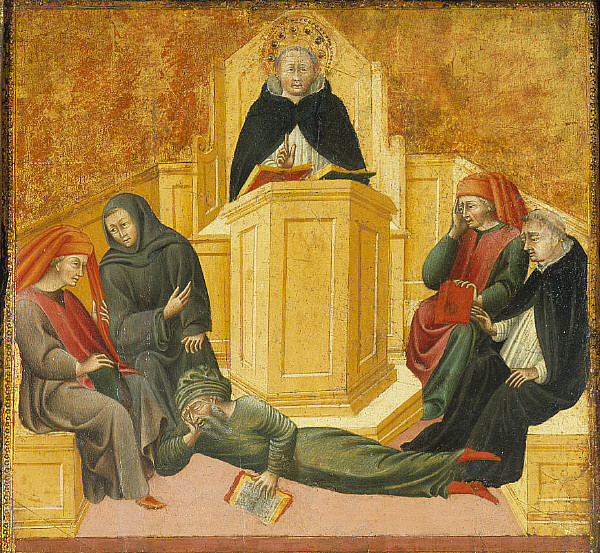
St Thomas Aquinas Confounding Averroës
Giovanni di Paolo · c. 1450 (between 1445 and 1450)
A mid-fifteenth-century painting by Giovanni di Paolo showing Thomas Aquinas debating the philosopher Averroes. It is a later artistic depiction of the figure.
Shows Aquinas as a triumphant debater of Averroes, a later image of his reputation as a defender of Christian philosophy.
About this source
What it is
This is a painting by Giovanni di Paolo, dated to about 1450 and placed between 1445 and 1450 in catalogue records. It shows a seated monk in a black cloak and white habit with a halo, on a raised golden pulpit, gesturing with an open book. Robed figures sit on benches around him. A bearded man in green lies on the floor holding a book, while others in red and black listen or gesture. The background is gold.
Why it matters
The title names the scene as Aquinas confounding Averroes, the Muslim philosopher whose commentaries on Aristotle were widely read in medieval universities. The painting was made centuries after the debate it shows, so it reflects how the fifteenth century pictured Aquinas as a champion of Christian reason. It reveals the artist's and patrons' values more than the exact events of the debate.
Look closer
- How does the painter show who is winning the argument, and what clues come from gesture, posture and the open book?
- Why might a painter place a debate in a golden, unreal space rather than a real room?
- The painting was made long after Aquinas died. What might it leave out about the real debate?
This painting is part of the curated material that grounds the AI version of Saint Thomas Aquinas on Humy.ai — when students ask about related events, the AI can quote it and cite it.
More Saint Thomas Aquinas sources
Meet the AI Saint Thomas Aquinas →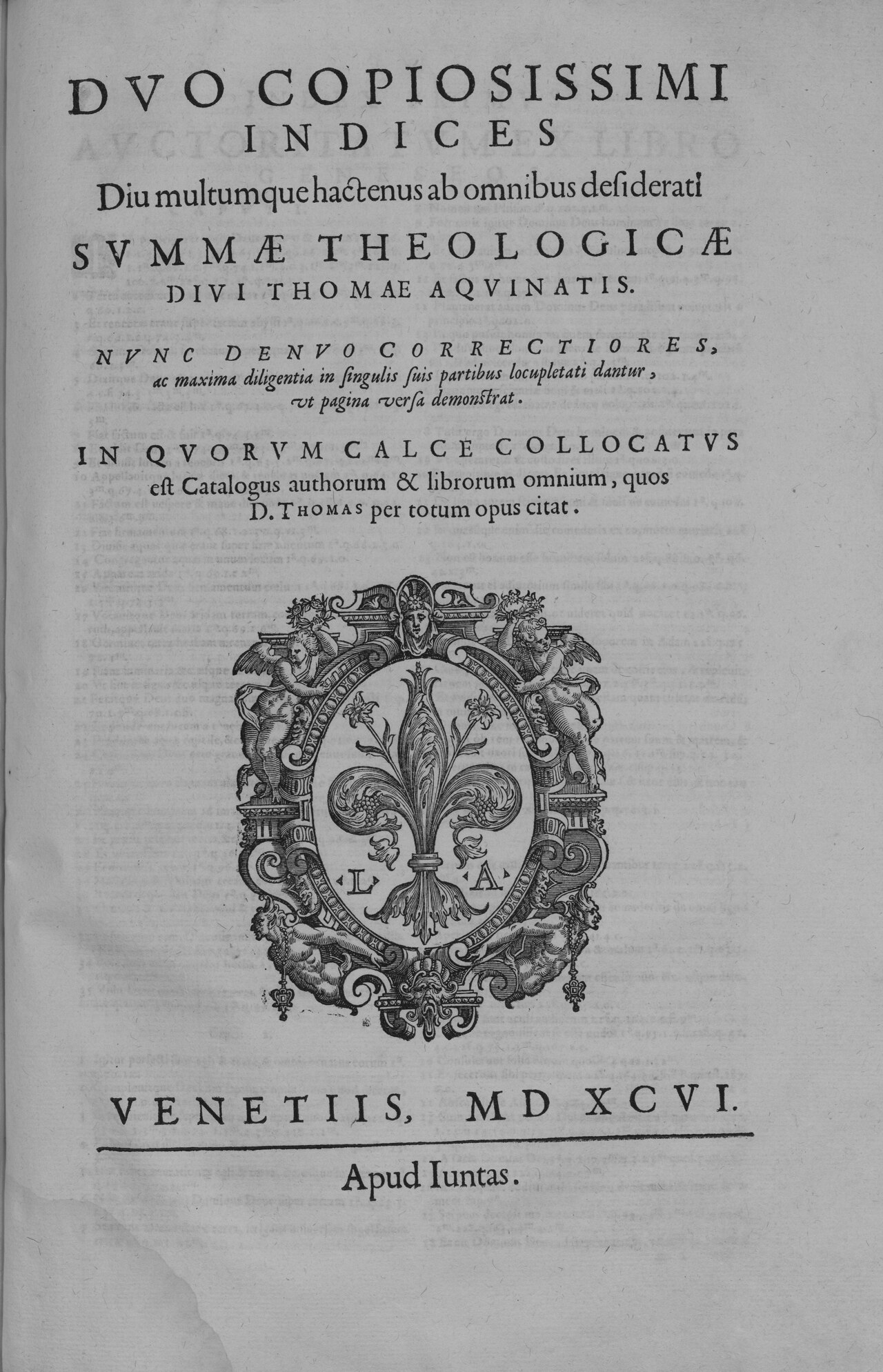 Book
Primary source
Summa Theologica
Thomas Aquinas · 1274
 Painting
Secondary source
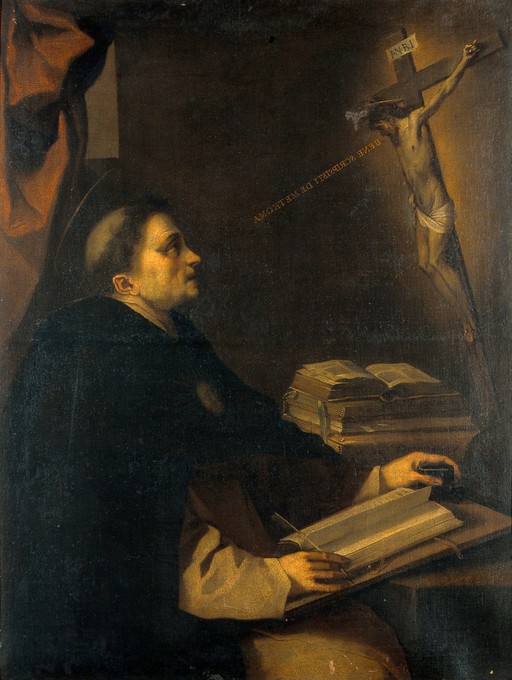
St Thomas Aquinas, 17th-century Italian oil painting
17th century
Primary source
Pange Lingua Gloriosi Corporis Mysterium
Thomas Aquinas · 1263
 Painting
Secondary source
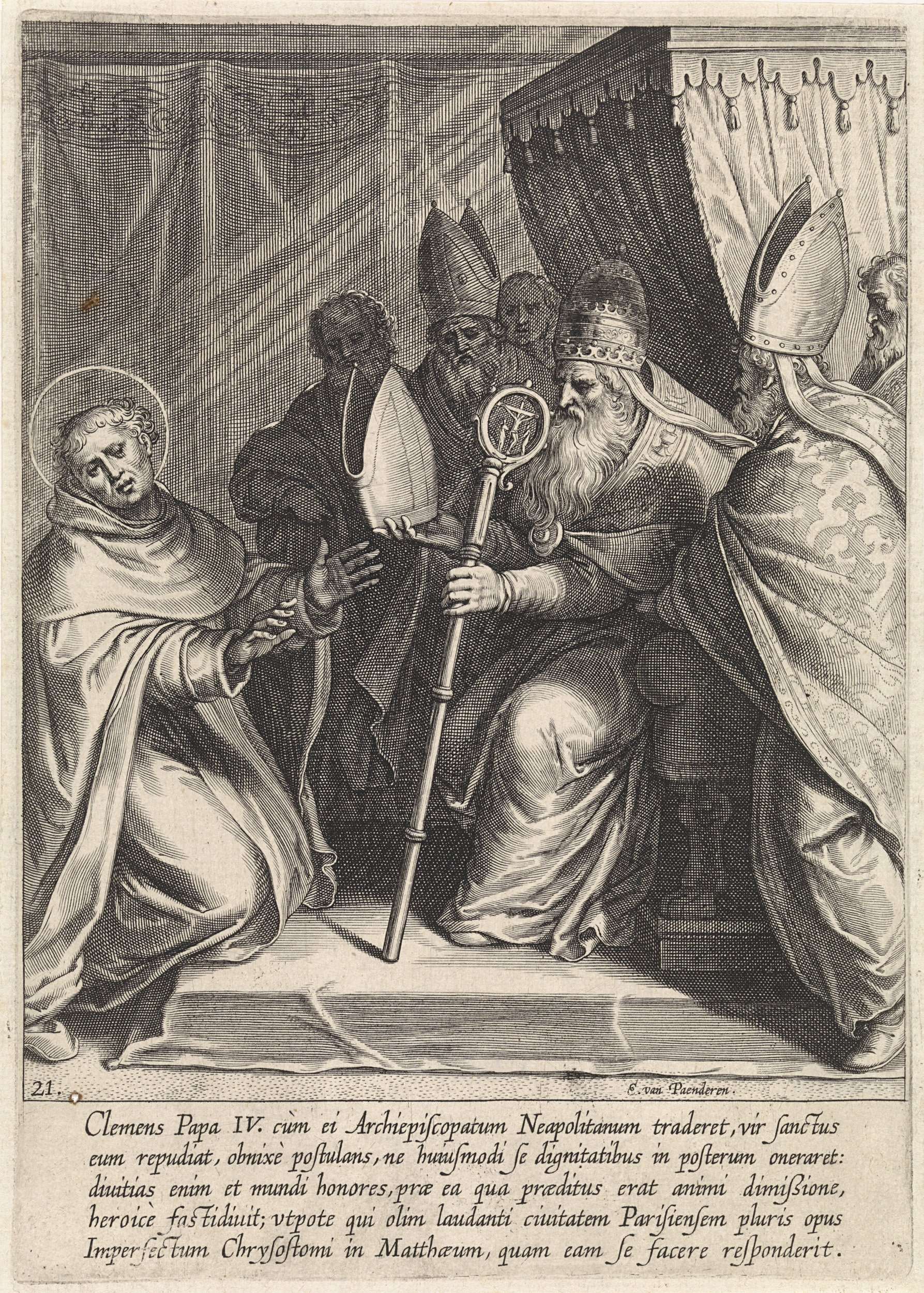
Thomas Aquinas Refuses the Archbishopric of Naples
1610
 Painting
Secondary source
Triumph of Saint Thomas Aquinas
Lippo Memmi · 1340
Ready when you are
Start chatting with Saint Thomas Aquinas now.
20 messages free · No credit card · Available in 50+ languages.