


Secondary sourceSculptureStatue donated 1872; photograph coverage c. 1870-1895
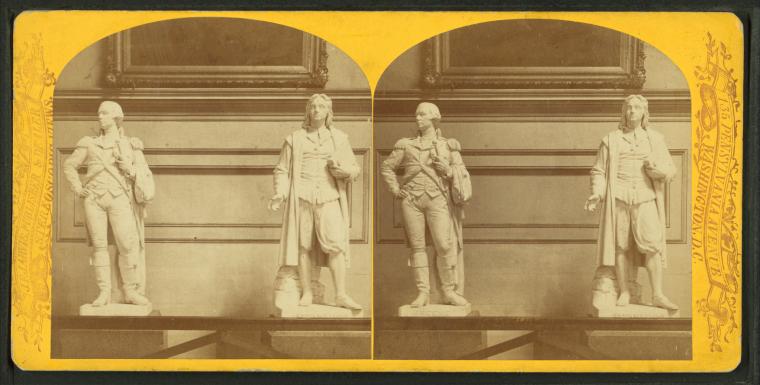
Statuary Hall, U.S. Capitol, with Roger Williams statue
Franklin Simmons (statue); John F. Jarvis (photograph publisher) · Statue donated 1872; photograph coverage c. 1870-1895
A sepia stereograph from the 1870s showing the Franklin Simmons statue of Roger Williams in the National Statuary Hall of the U.S. Capitol.
Shows the statue of Roger Williams in the U.S. Capitol, which is how the nation honors him and why it belongs in his archive.
About this source
What it is
This is a sepia stereograph of two marble statues in the National Statuary Hall of the United States Capitol. On the left is a standing soldier, Nathanael Greene, by Henry Kirke Brown, donated in 1870. On the right is a robed figure with long hair holding a book-like object, Roger Williams, by Franklin Simmons, donated in 1872. The photograph was published by John F. Jarvis in Washington, D.C., with a coverage date estimated between about 1870 and 1895. The digital copy was published in 2006.
Why it matters
Each state was allowed to place statues of notable citizens in the Capitol hall. Choosing Roger Williams, a religious dissenter who founded Rhode Island, shows how later generations wanted to honor him as a symbol of religious liberty. The statue is a later monument, so it tells us how Williams was remembered in the nineteenth century rather than what he looked like.
Look closer
- What objects and clothing does the sculptor give each figure, and what might those choices say about them?
- Why might a state want to place this figure in the national capital, and who decided?
- Whose stories are not shown in this hall of statues?
This sculpture is part of the curated material that grounds the AI version of Roger Williams on Humy.ai — when students ask about related events, the AI can quote it and cite it.
More Roger Williams sources
Meet the AI Roger Williams →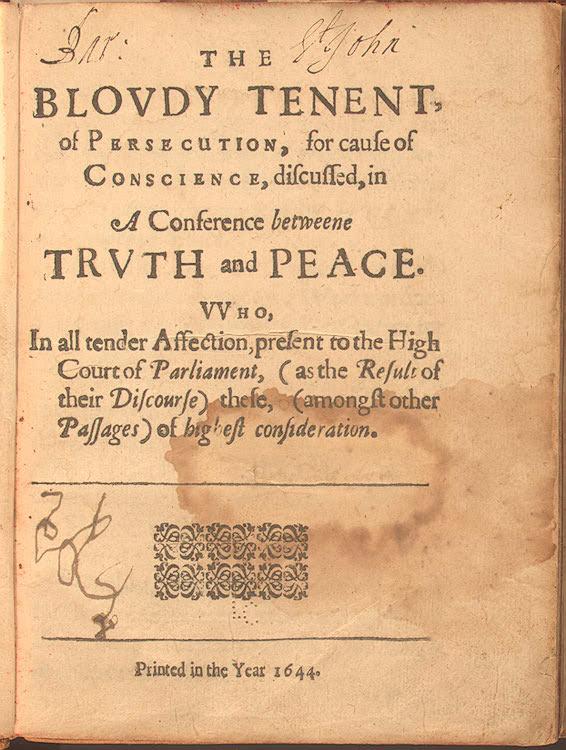 Book
Primary source
The Bloudy Tenent of Persecution for Cause of Conscience
Roger Williams · 1644
 Book
Primary source
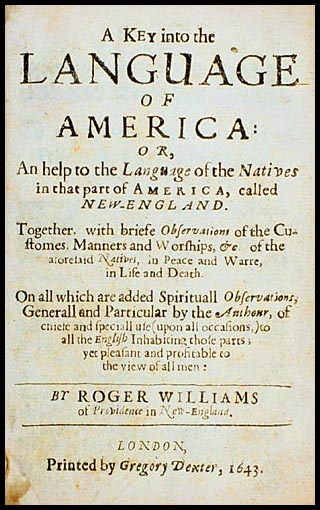
A Key Into the Language of America
Roger Williams · 1643
 Document
Primary source
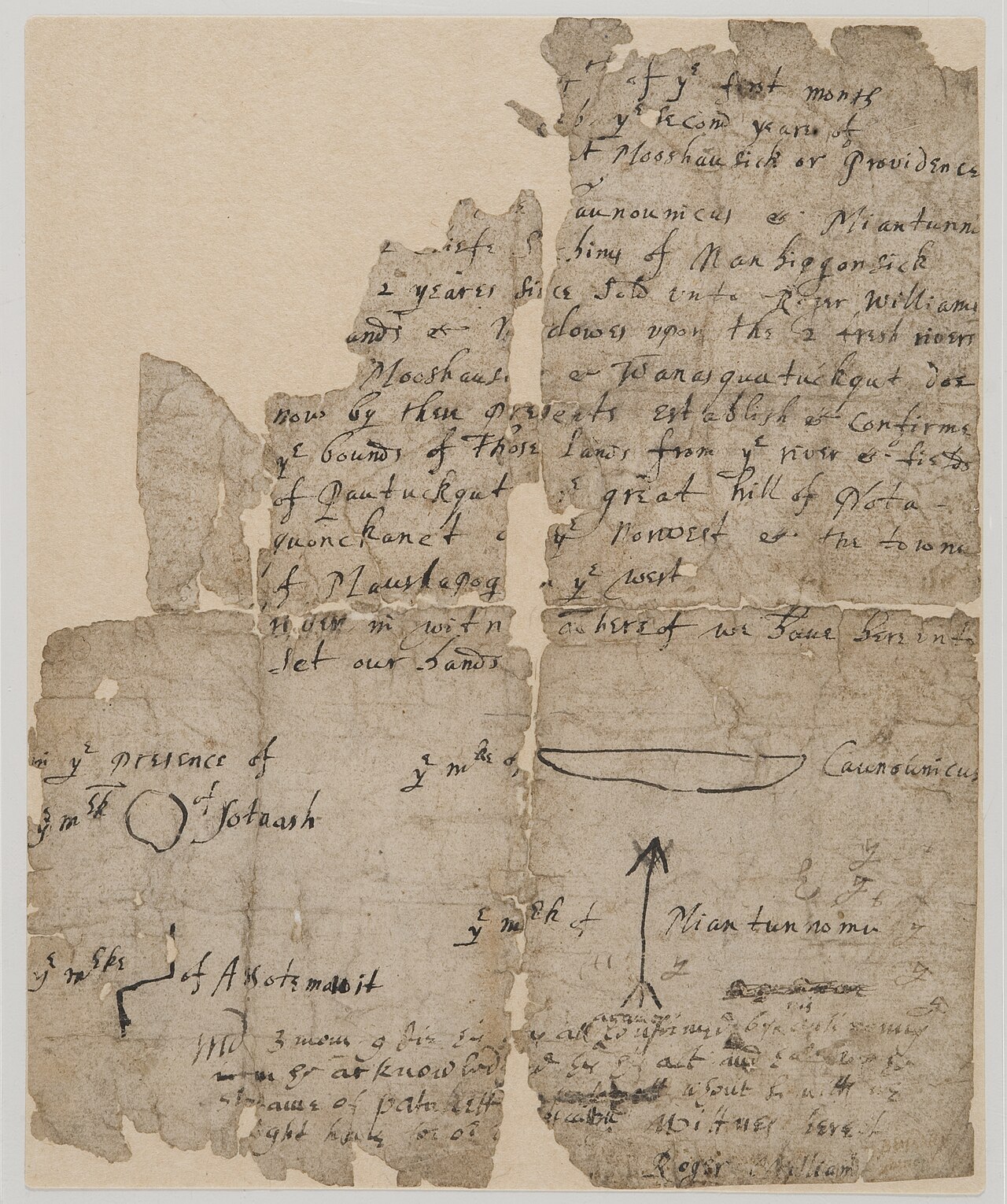
Providence, Rhode Island Original Deed
1636
 Book
Primary source
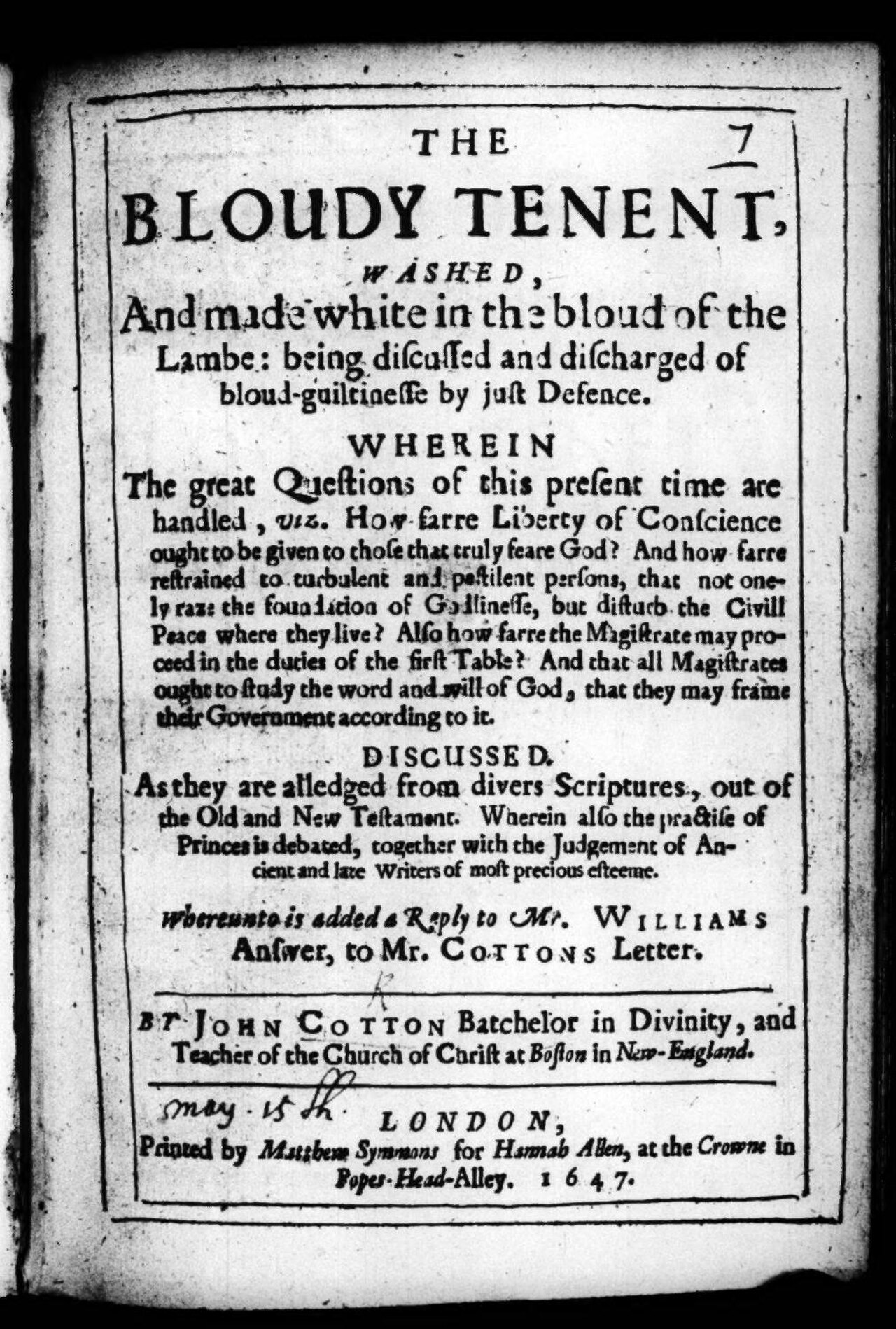
The Bloudy Tenent, Washed and Made White in the Bloud of the Lambe
John Cotton · 1647
Primary source
Rhode Island Royal Charter of 1663
Charles II · 1663
Ready when you are
Start chatting with Roger Williams now.
20 messages free · No credit card · Available in 50+ languages.