


Secondary sourceSculpture
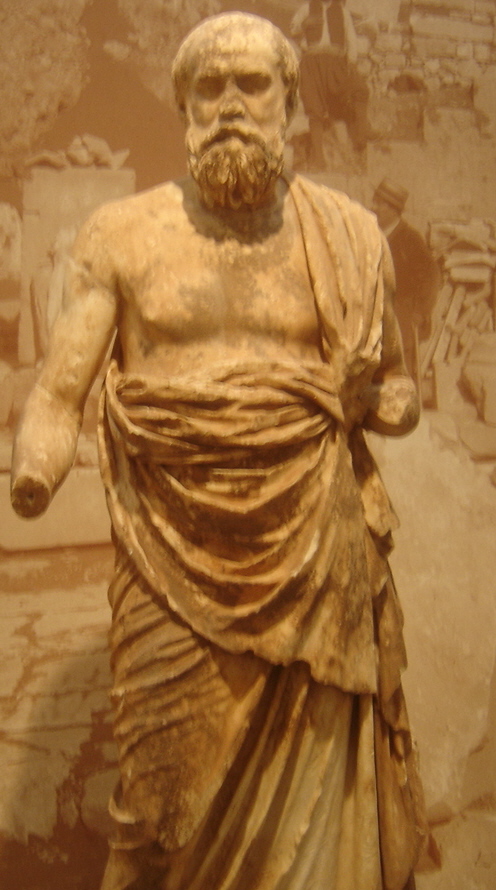
Statue of a Philosopher
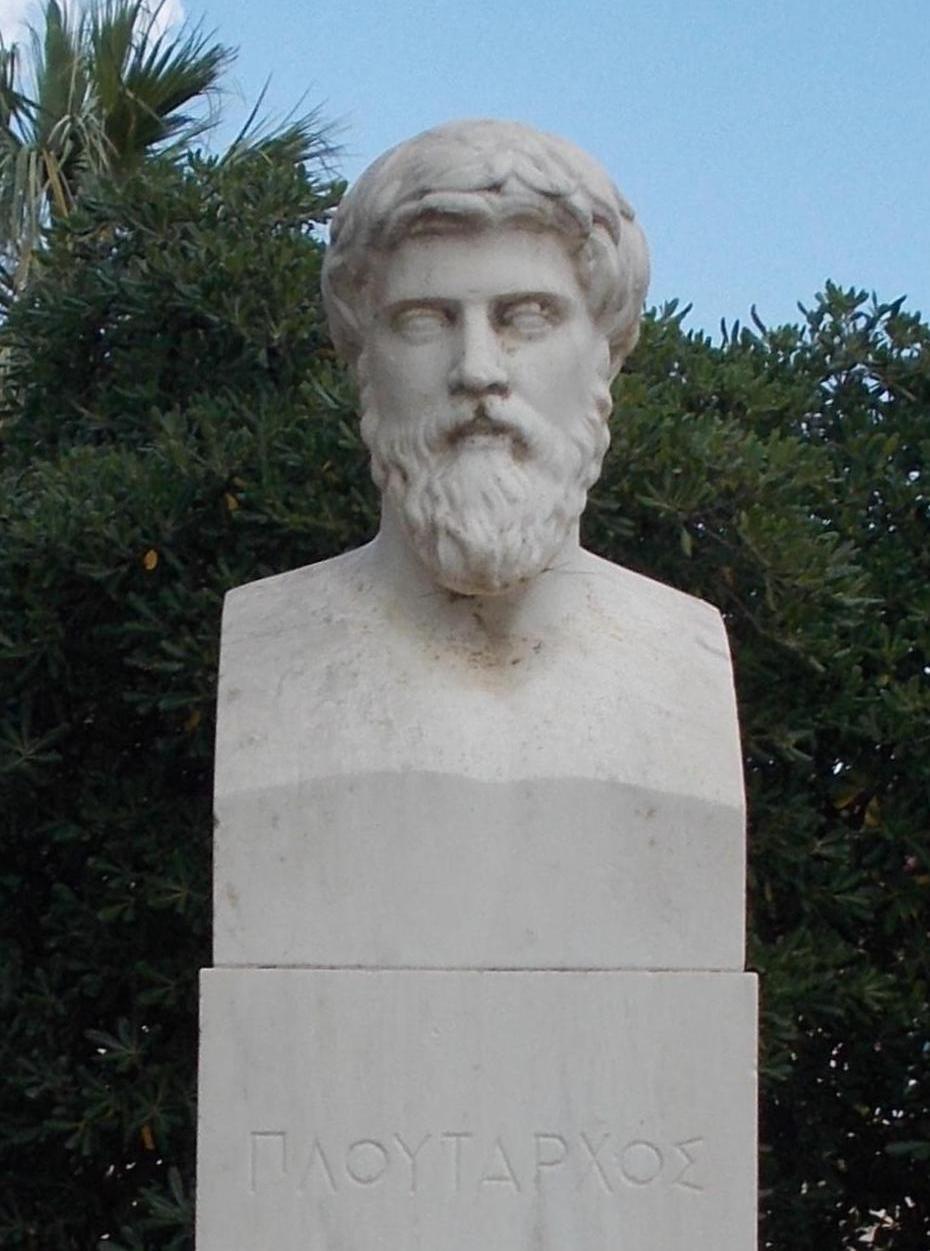
A marble statue of a bearded man in a draped cloak, displayed at the Delphi Archaeological Museum. It is said to show either Plutarch or Plato, so it is only a possible likeness of Plutarch.
The statue may commemorate Plutarch, though its identity is uncertain, so it is only a possible likeness of him.
About this source
What it is
This is a photograph of a marble statue of a bearded man with short hair. He wears a draped himation over one shoulder and around his waist, and his right arm is broken off below the elbow. The statue is kept at the Delphi Archaeological Museum in Greece. The collection record says it is said to be either Plutarch or Plato, and the identity is uncertain.
Why it matters
Plutarch was a Greek philosopher and historian, and his writings have shaped how later readers learn about famous Greeks and Romans. Statues like this one were often set up to honor thinkers. Because the statue cannot be named with certainty, it shows how hard it can be to link a surviving object to a specific person. Historians must compare evidence and admit when identification is only a guess.
Look closer
- What details of the clothing and pose suggest a thinker or a learned man?
- Why might the statue be labeled with two possible names instead of one?
- What can a broken arm and a photograph tell us about what has been lost over time?
This sculpture is part of the curated material that grounds the AI version of Plutarch on Humy.ai — when students ask about related events, the AI can quote it and cite it.
More Plutarch sources
Browse all 90 →



Ready when you are
Start chatting with Plutarch now.
20 messages free · No credit card · Available in 50+ languages.