


Secondary sourceSculpture2016 (photographed 10 September 2016; plaque dated 7 March 2004)
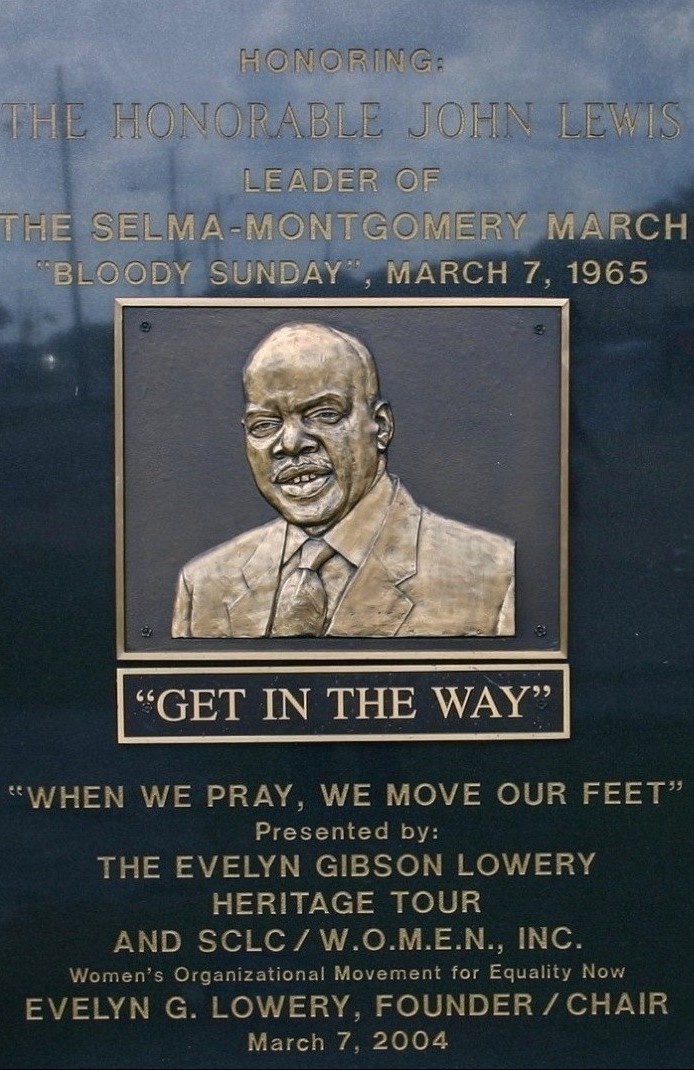
Statue of leaders of the Selma-Montgomery March, including John Lewis
Roland Arhelger · 2016 (photographed 10 September 2016; plaque dated 7 March 2004)
A bronze relief plaque on a stone base honoring John Lewis as a leader of the 1965 Selma-Montgomery March. It is a later memorial, not a record from his time.
Shows how Lewis is honored in memorial form as a leader of the Selma-Montgomery March, not as a record from his own time.
About this source
What it is
This is a photograph of a memorial made of bronze-look plaque on a stone base. It has a bronze relief portrait of a smiling bald man in a suit and tie, and the words 'GET IN THE WAY' sit below it. The text honors the Honorable John Lewis as leader of the Selma-Montgomery March and refers to Bloody Sunday, March 7, 1965. It also includes the line 'WHEN WE PRAY, WE MOVE OUR FEET' and credits the Evelyn Gibson Lowery Heritage Tour and SCLC/W.O.M.E.N., Inc., with a date of March 7, 2004. The photo was taken on 10 September 2016 by Roland Arhelger.
Why it matters
Memorials like this one show how later communities chose to remember the people who led the struggle for voting rights. The plaque connects Lewis to the march in Selma, Alabama, and to the events of Bloody Sunday. It was made long after those events, so it tells us how people in later decades understood the movement.
Look closer
- Which words on the plaque did the makers choose to emphasize, and why might they have chosen them?
- Who do you think the plaque was made for, and what does it ask visitors to do?
- What does a monument like this leave out about the ordinary people who marched?
This sculpture is part of the curated material that grounds the AI version of John Lewis on Humy.ai — when students ask about related events, the AI can quote it and cite it.
More John Lewis sources
Meet the AI John Lewis →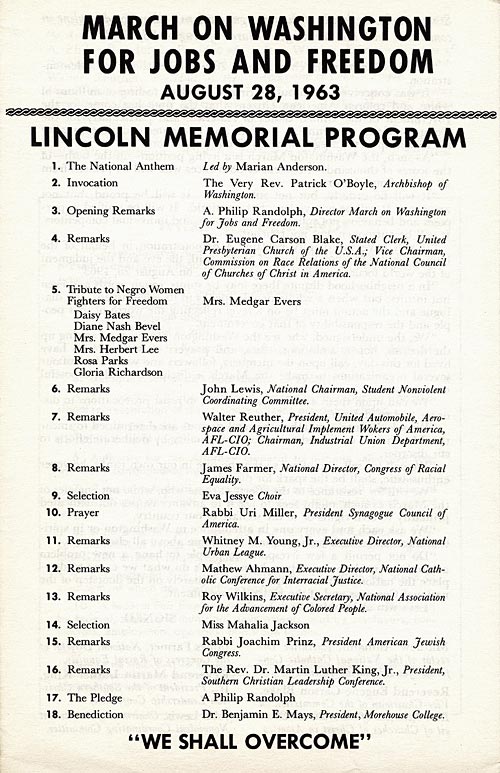 Document
Primary source
Official Program for the March on Washington
28 August 1963
 Artifact
Primary source
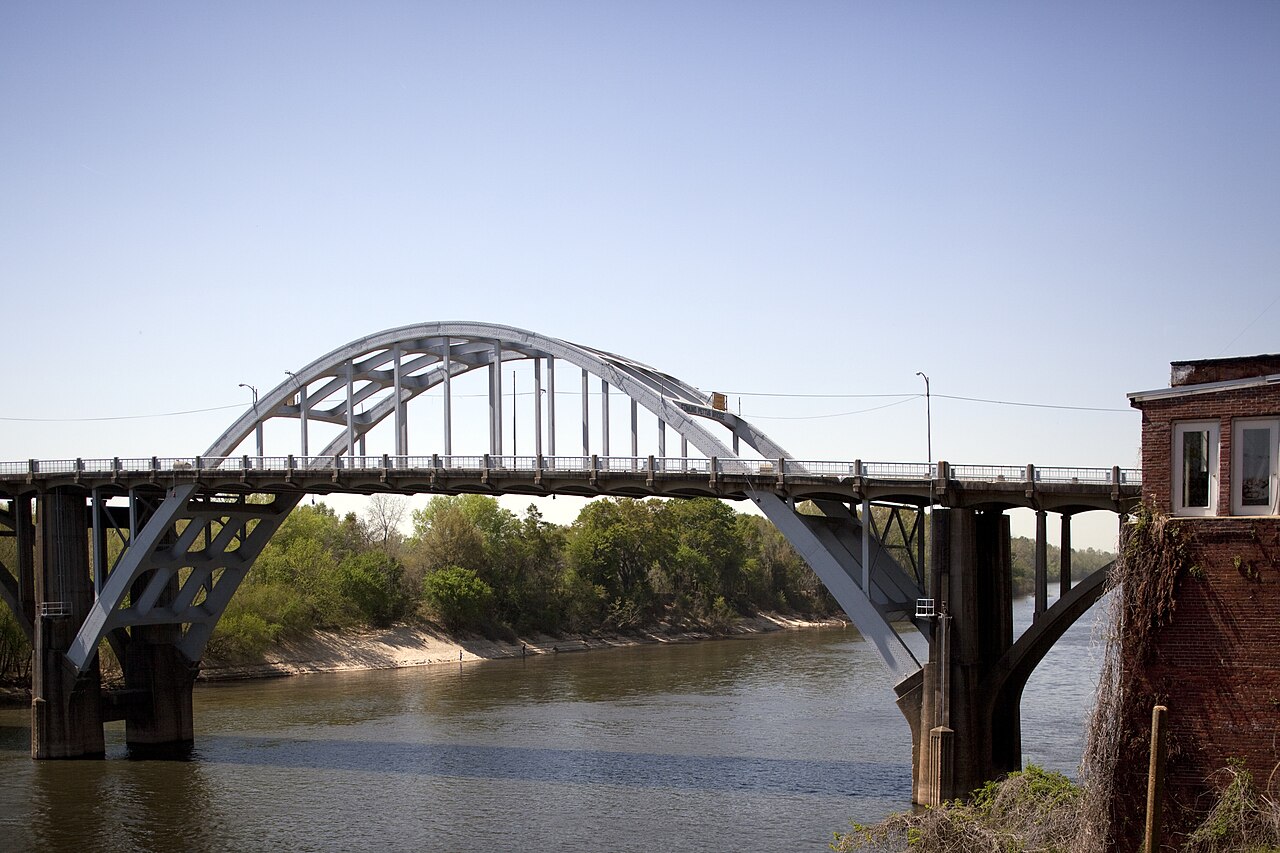
Edmund Pettus Bridge
Henson Stephenson · 1940
 Photograph
Primary source
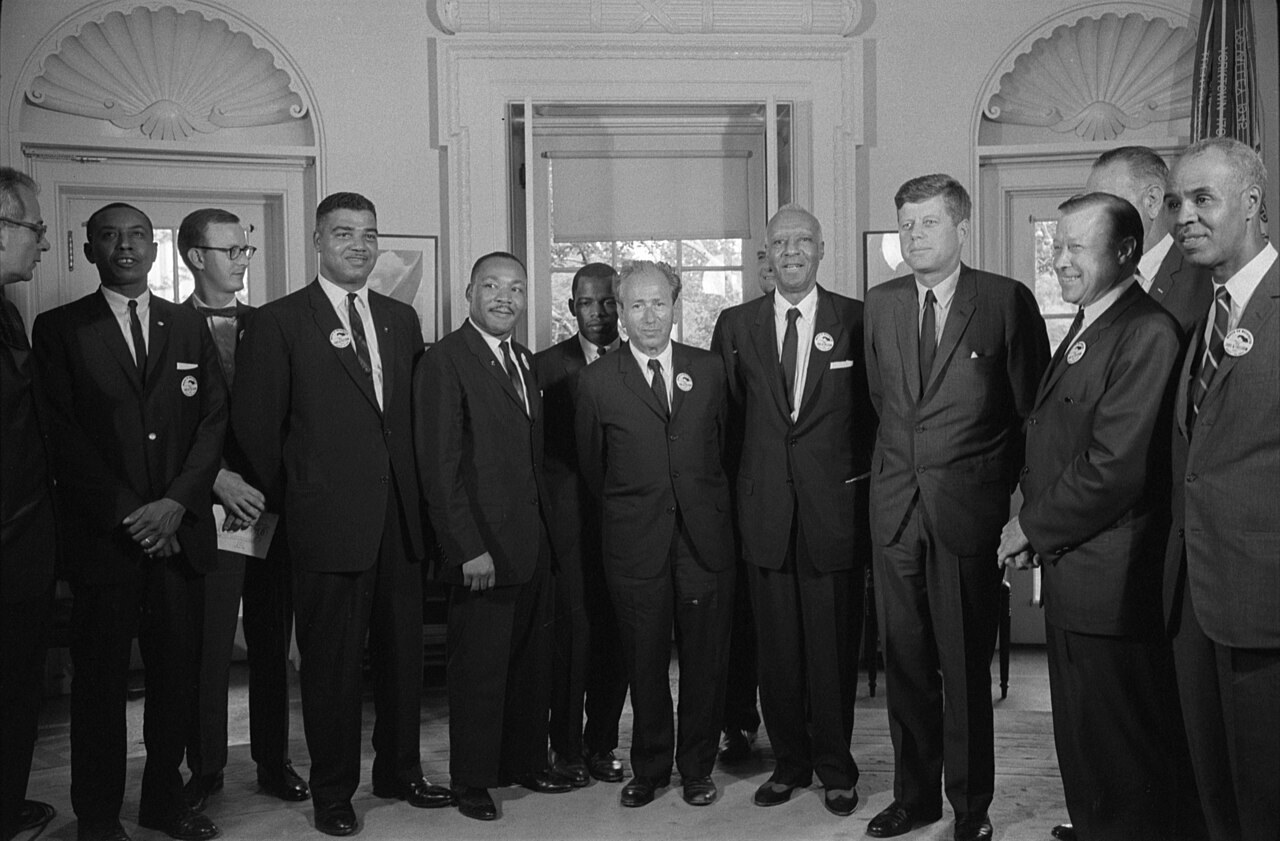
Photograph of civil rights leaders meeting President Kennedy after the March on Washington
White House photographer · 28 August 1963
Primary source
House Democrats Stage Sit-in on House Floor
2016
 Photograph
Primary source
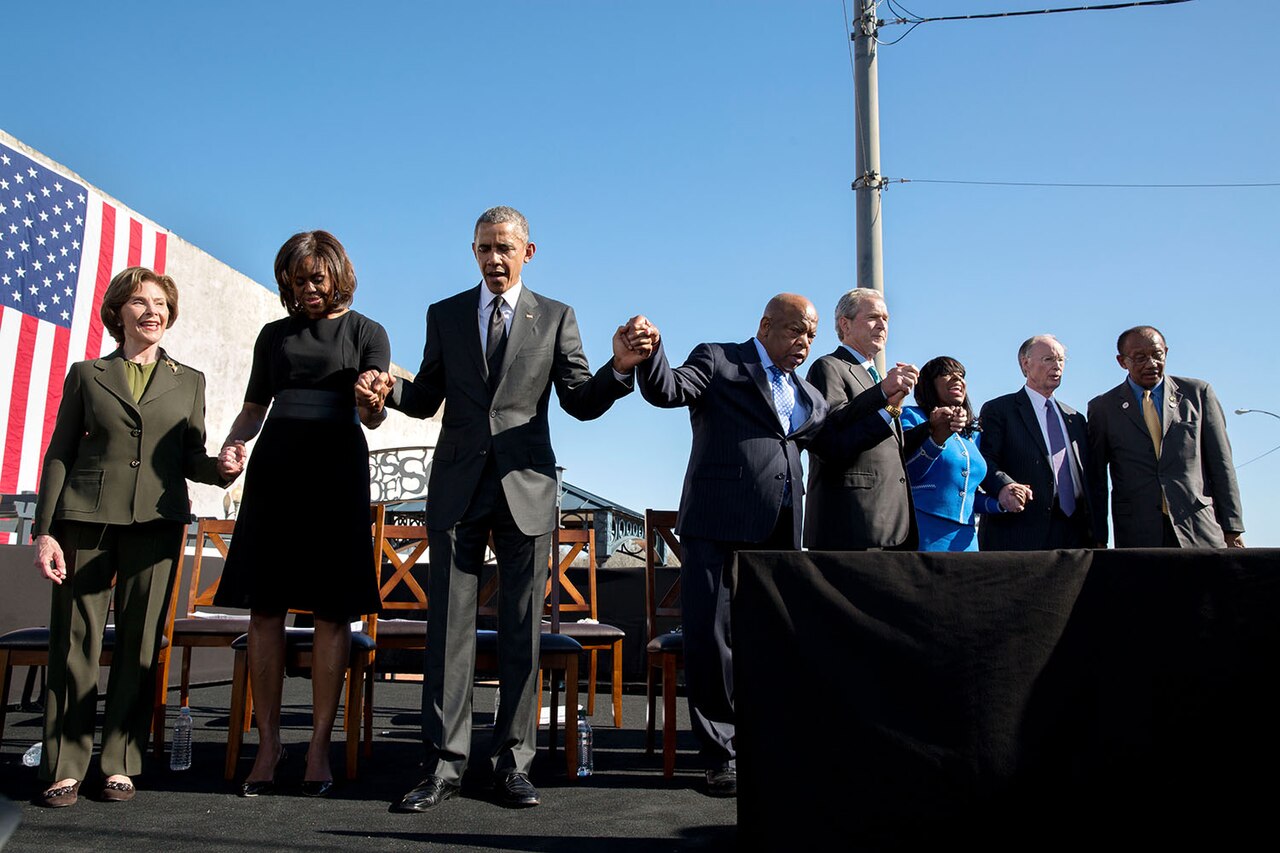
Commemoration of the 50th Anniversary of Bloody Sunday at the Edmund Pettus Bridge
Pete Souza · 7 March 2015
Ready when you are
Start chatting with John Lewis now.
20 messages free · No credit card · Available in 50+ languages.