


Secondary sourcePainting
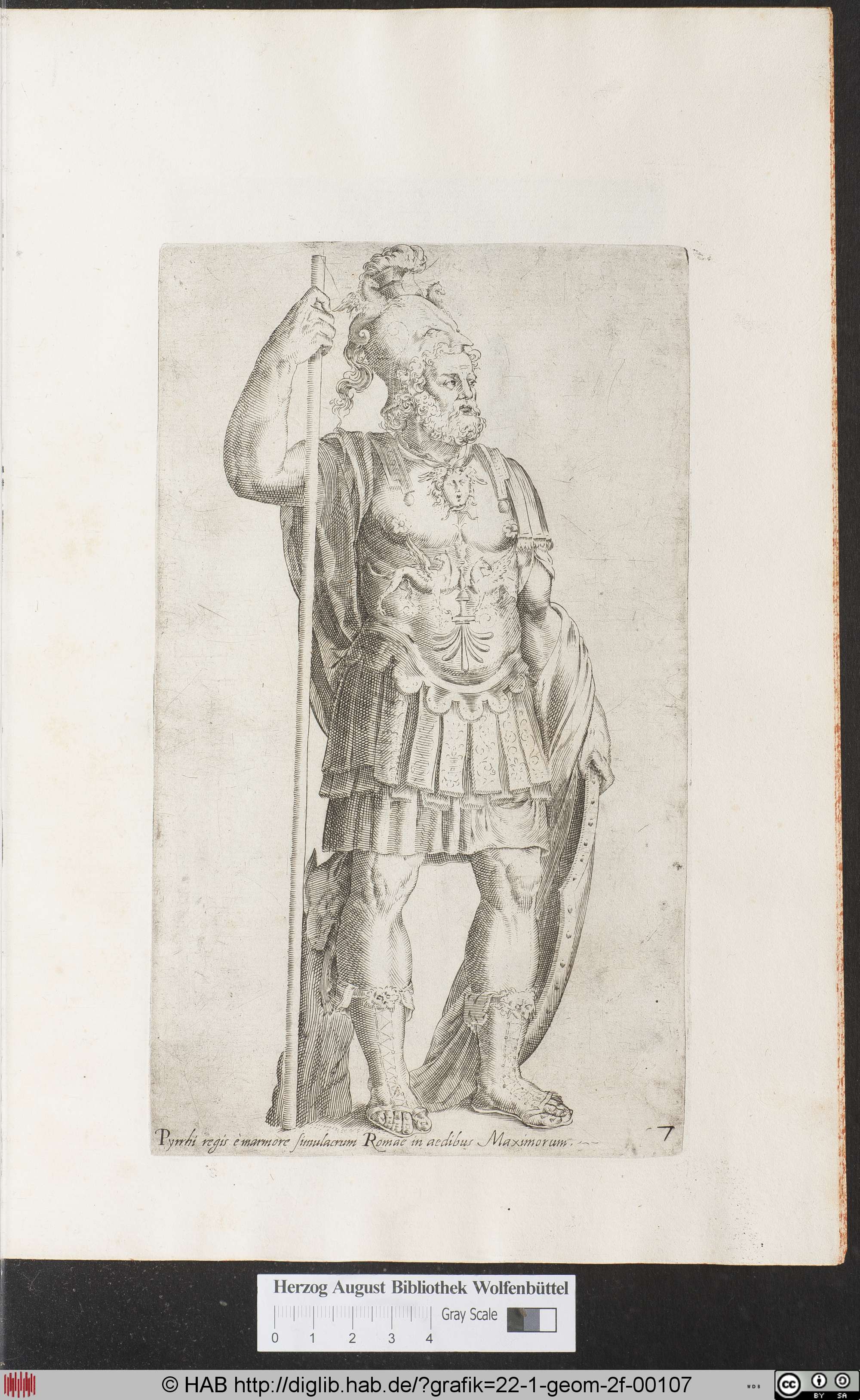
Statue of Mars identified as Pyrrhus
Giacomo Marcucci
An engraved print by Giacomo Marcucci of a marble statue that was once identified as Pyrrhus. The print is a later reproduction of the statue.
Shows a statue that was once identified as Pyrrhus, reproduced in a print. It records a later attempt to link the king to ancient art.
About this source
What it is
This is an engraving by Giacomo Marcucci, held by the Herzog August Library in Germany. It shows a standing armoured male figure with a plumed helmet, a curly beard and a raised spear, wearing a cuirass with a Medusa head. The Latin caption reads 'Pyrrhi regis e marmore simulacrum Romae in aedibus Maximorum', which means a marble image of King Pyrrhus in the house of the Maximi in Rome. The print is a later copy of a statue, and the library record gives no date for it.
Why it matters
Early modern scholars and collectors in Rome sometimes identified ancient statues with famous figures. This statue was linked to Pyrrhus, although the print's own label also describes it as a statue of Mars. Such prints spread images of ancient art across Europe. They show how people tried to connect the king to surviving objects, even when the identification was uncertain.
Look closer
- What details make the figure look like a warrior, and which ones suggest a god?
- Why might a print label a statue as Pyrrhus while the figure is also called Mars?
- What can we not know about the original statue from an engraving made later?
This painting is part of the curated material that grounds the AI version of Pyrrhus of Epirus on Humy.ai — when students ask about related events, the AI can quote it and cite it.
More Pyrrhus of Epirus sources
Browse all 78 →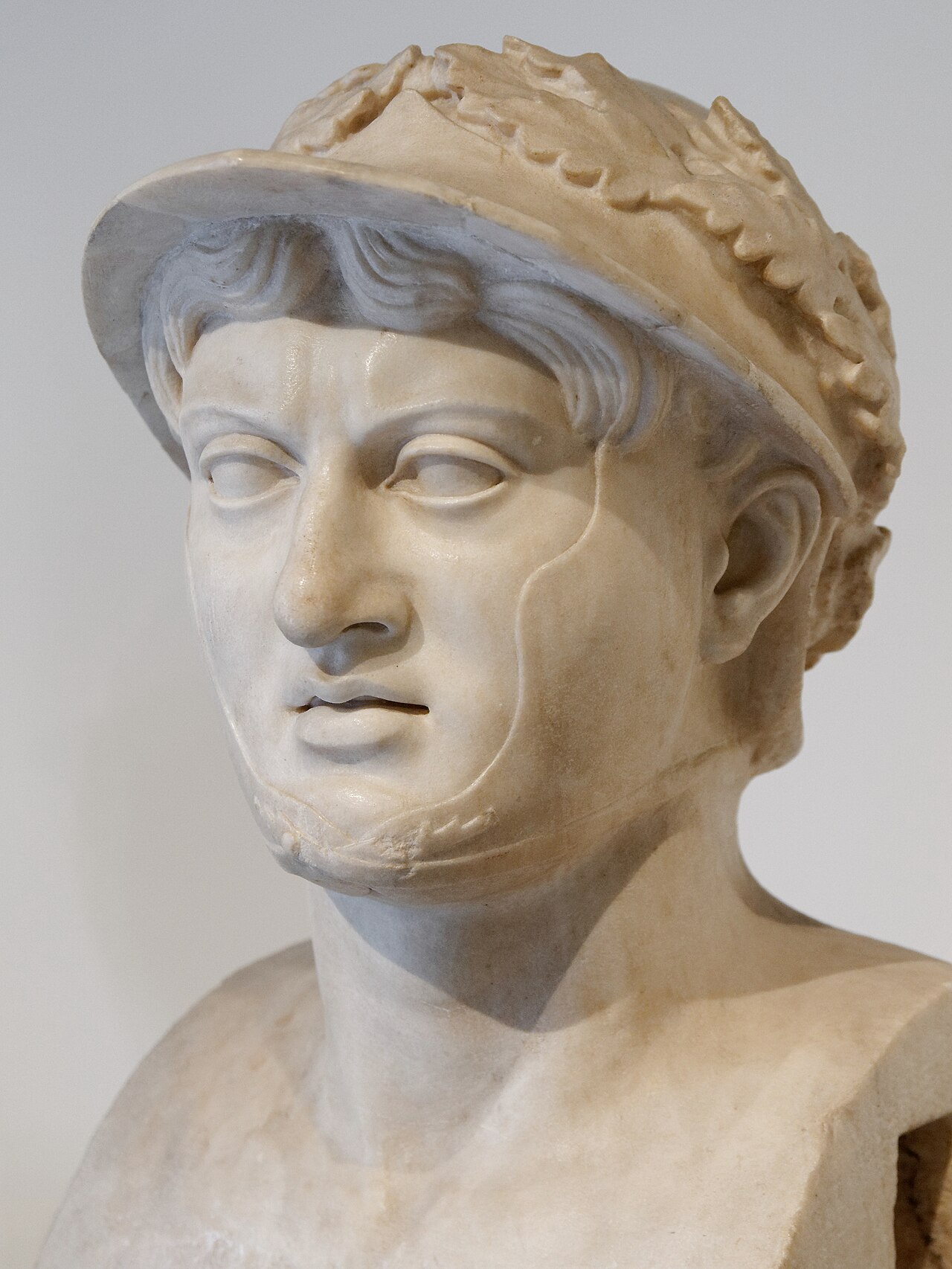
Ready when you are
Start chatting with Pyrrhus of Epirus now.
20 messages free · No credit card · Available in 50+ languages.