


Primary sourceSculpturecirca 1479-1458 BC (statue); photographed 2009
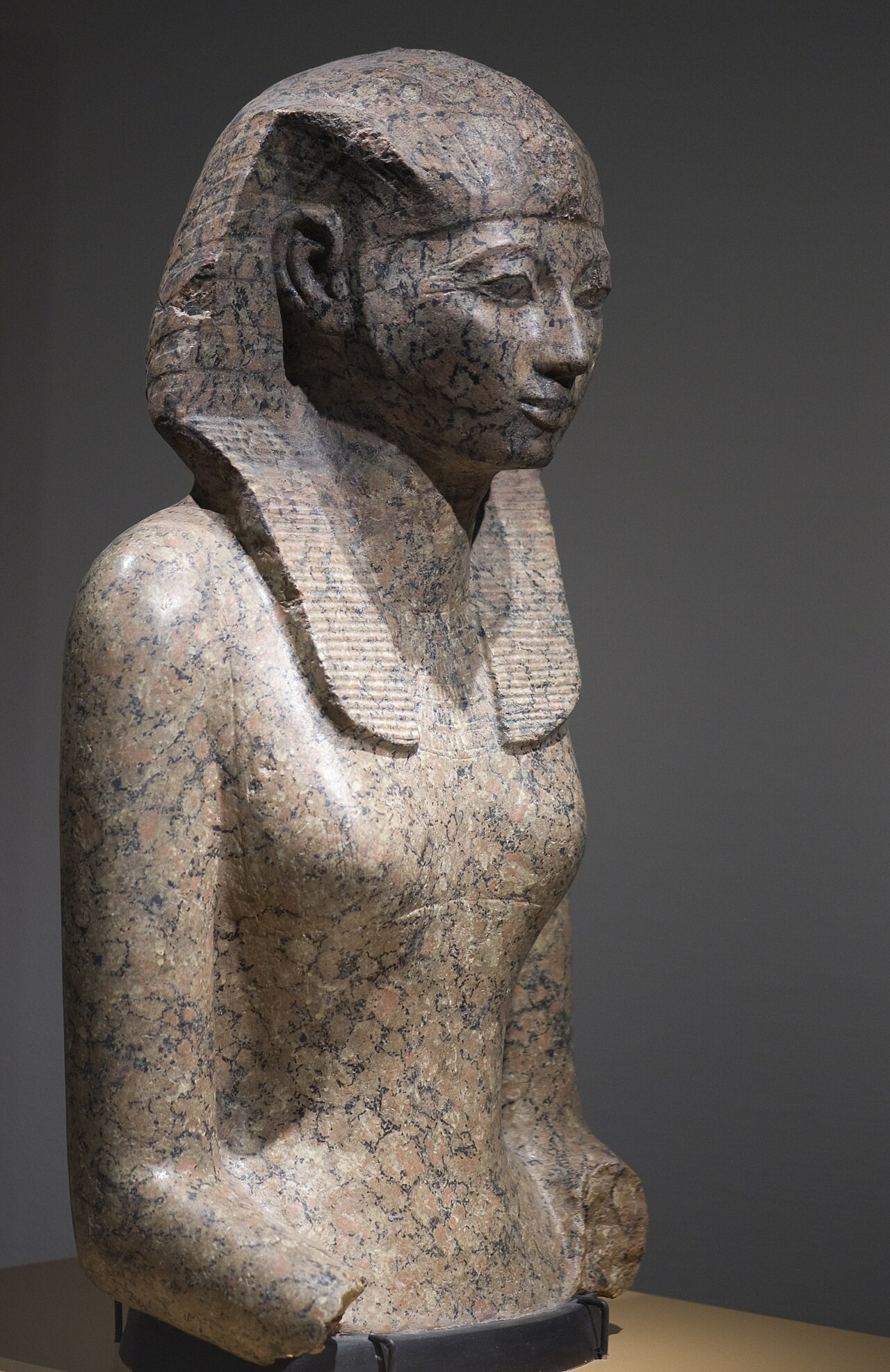
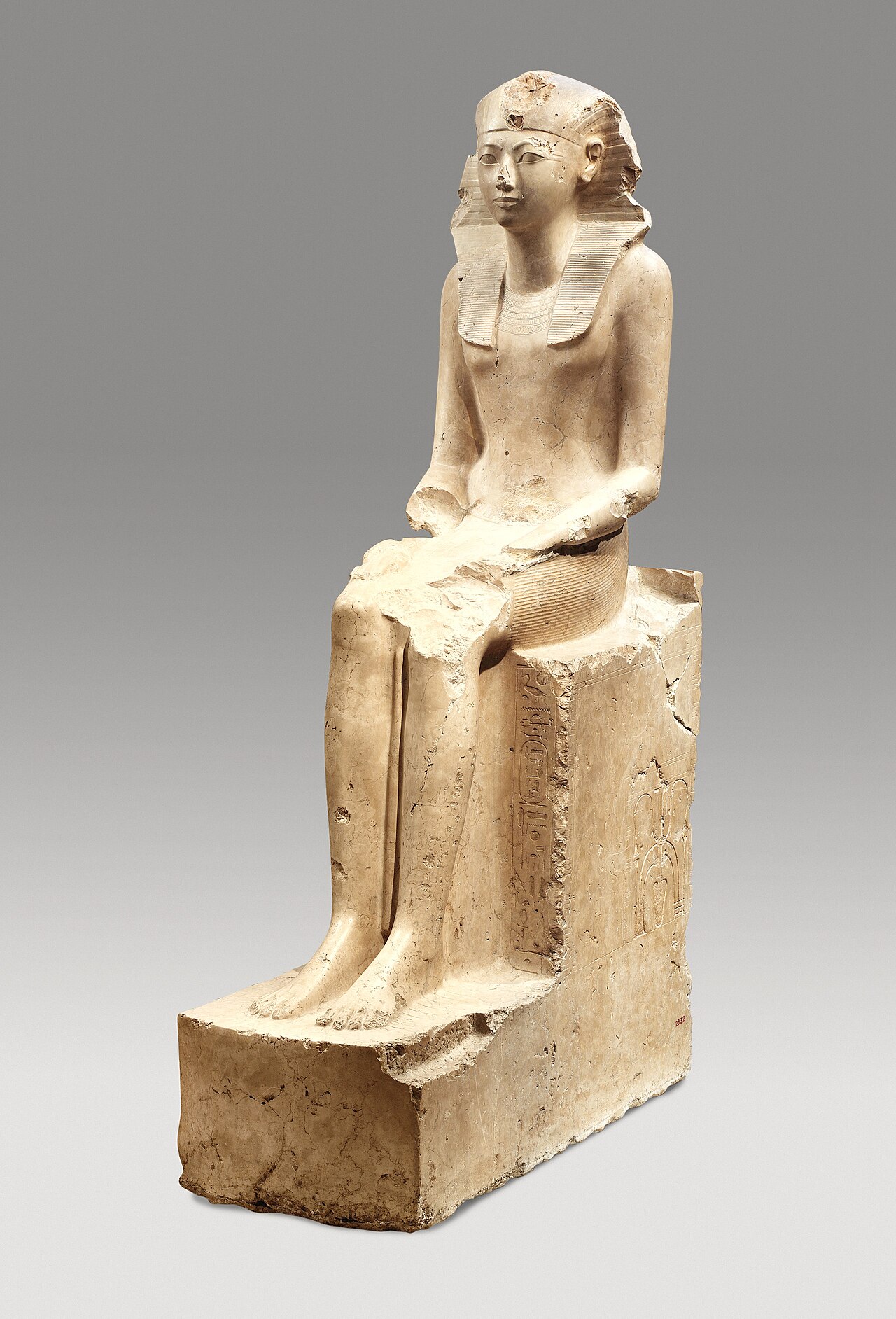
Statue of Queen Hatshepsut (Maatkare)
circa 1479-1458 BC (statue); photographed 2009
A museum statue of Hatshepsut seated and shown with the nemes headcloth and the throne name Maatkare, at the Rijksmuseum van Oudheden in Leiden.
This statue, carved during her reign, shows Hatshepsut as pharaoh under her throne name Maatkare.
About this source
What it is
This is a photograph, taken in 2009, of a stone statue held at the Rijksmuseum van Oudheden in Leiden. It shows Hatshepsut seated, wearing a striped nemes headcloth and a pleated collar, identified by her throne name Maatkare.
Why it matters
Hatshepsut ruled Egypt as pharaoh and had herself shown with the traditional symbols of kingship, including the nemes headcloth usually worn by male rulers. Statues like this reveal how she presented her authority during her own reign.
Look closer
- Why might Hatshepsut have chosen to be shown with symbols usually used for male pharaohs?
- What does the posture and clothing of the statue tell you about how rulers wanted to be remembered?
- What is missing from a stone statue that a written record might tell us about her reign?
This sculpture is part of the curated material that grounds the AI version of Hatshepsut on Humy.ai — when students ask about related events, the AI can quote it and cite it.
More Hatshepsut sources
Meet the AI Hatshepsut →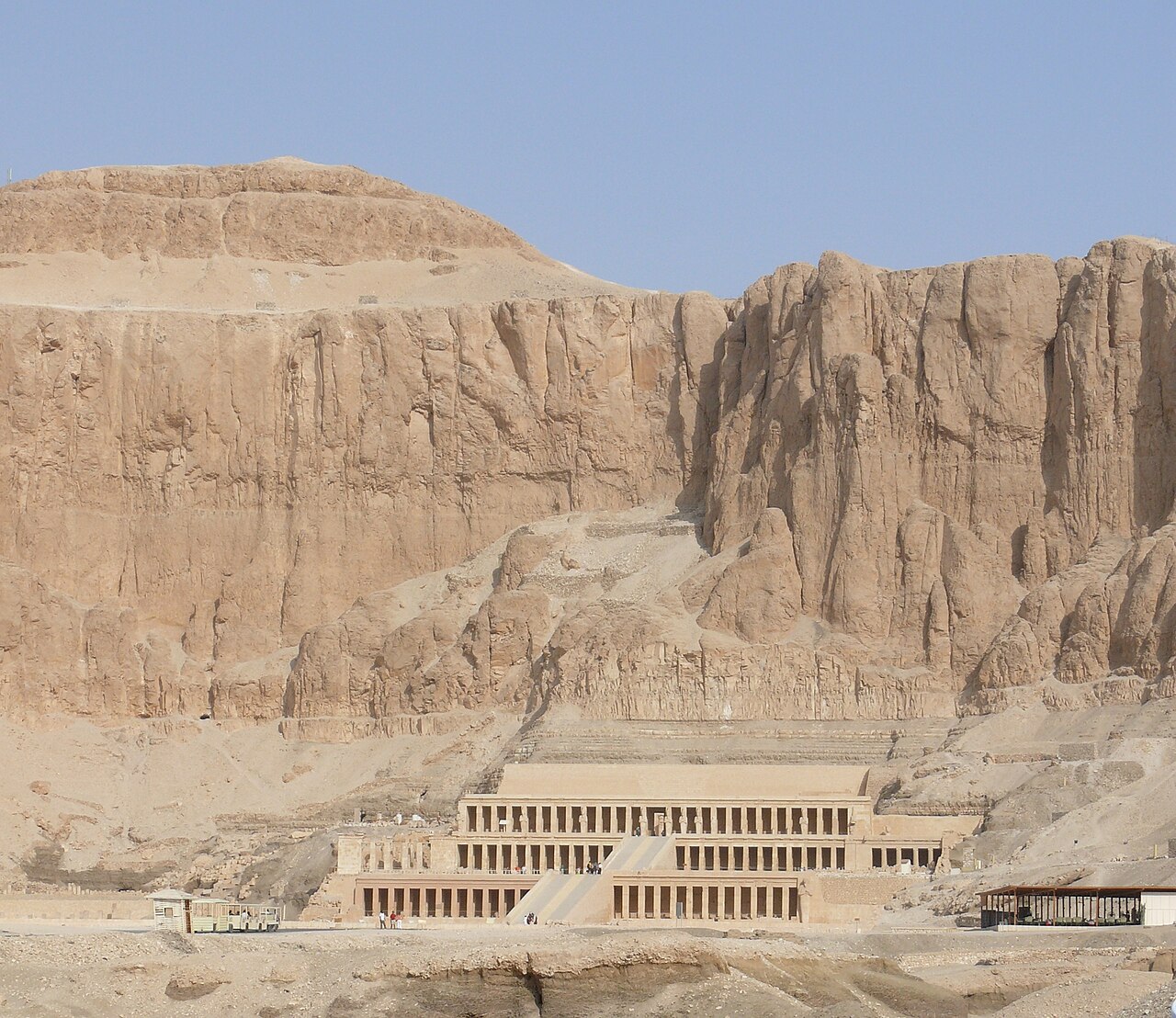 Artifact
Primary source
Mortuary Temple of Hatshepsut
Senenmut and/or Hapuseneb (attributed) · c. 1479–1458 BCE
 Photograph
Secondary source
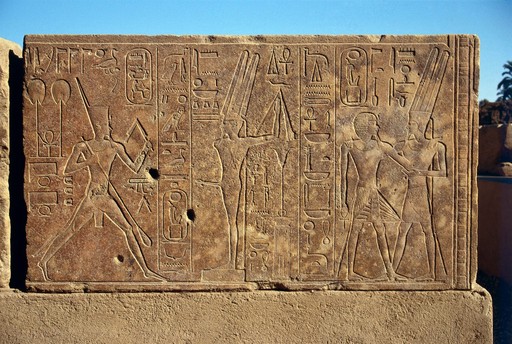
Hatshepsut Dancing Before Min, Karnak Relief
Carole Reeves · 1989
 Sculpture
Primary source
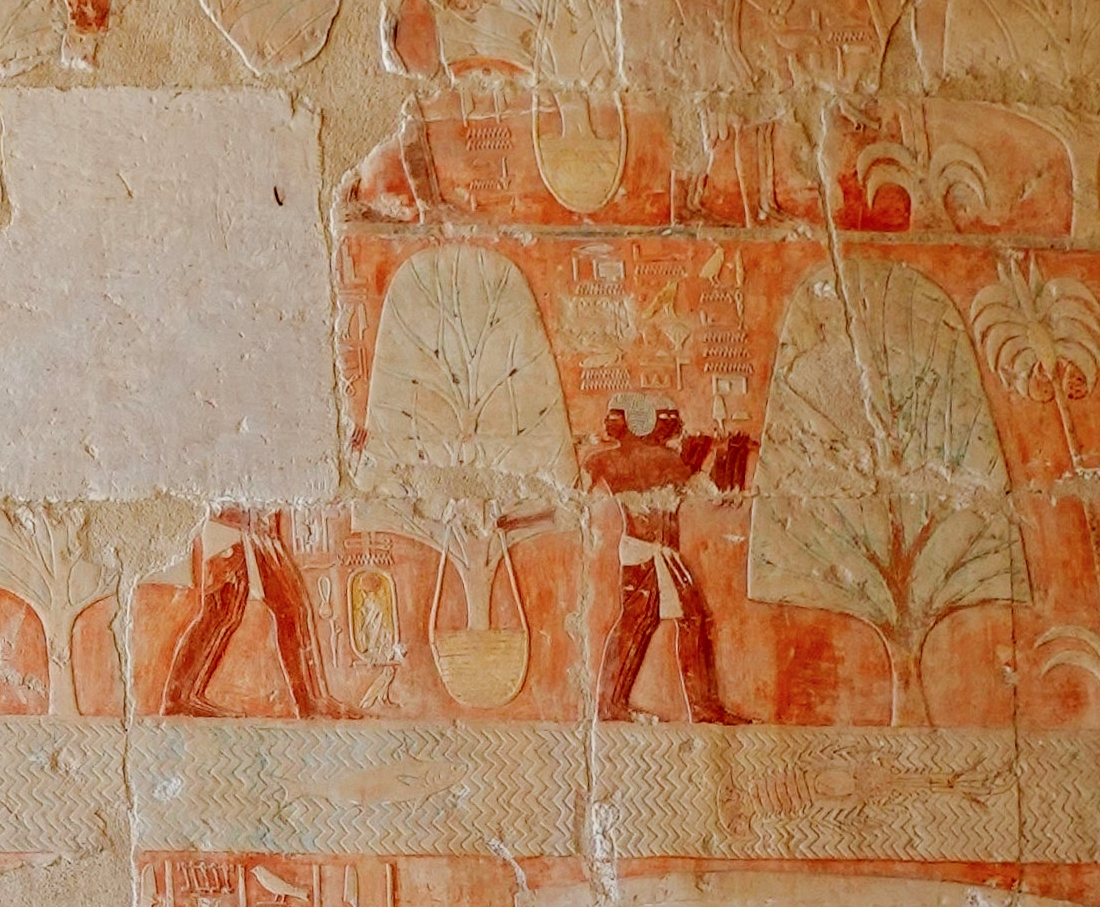
Punt Expedition Reliefs
Royal workshops of Hatshepsut · c. 1470 BCE
 Sculpture
Primary source
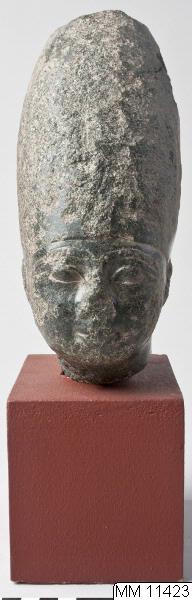
Sculpture Head Probably of Hatshepsut
 Sculpture
Primary source
Seated Statue of Hatshepsut
c. 1466 BCE
Ready when you are
Start chatting with Hatshepsut now.
20 messages free · No credit card · Available in 50+ languages.